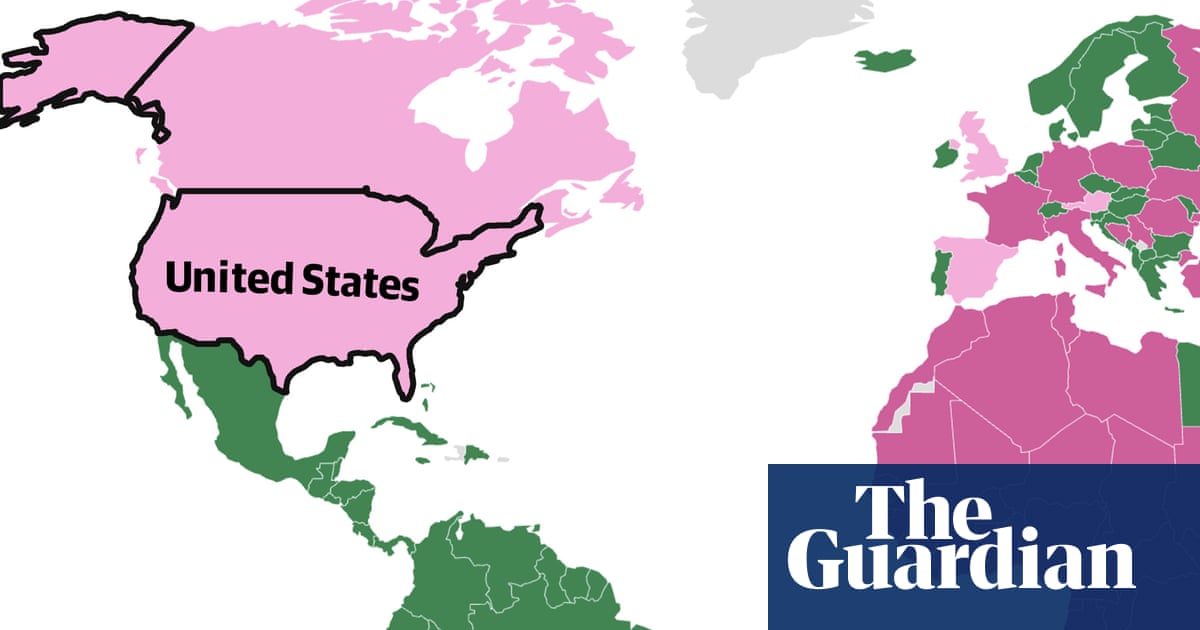
The US has hit terrible twin milestones over the past week: two more people died from measles , bringing this year’s death count to double digits, and the country officially lost its status as a country that had eliminated the highly infectious disease .
The US eliminated measles in 2000 and maintained that status for 26 years. Now, the nation faces an uphill battle to vanquish the virus once more, and it will take years to be measles-free again.
Noel Brewer, a professor of health behavior at the University of North Carolina, presented a report last week to the Pan American Health Organization showing continuous measles transmission for at least 12 months in the US—erasing one of the nation’s greatest public health achievements.
WIRED asked him how he felt after PAHO officials reached consensus the country was no longer measles-free. He paused.
“I have not actually thought about my reaction,” he says. After a beat, he says that the loss is “a somber moment for public health” that’s particularly wrenching because it’s a “completely avoidable situation.” Mexico and Canada have managed to wind down their outbreaks, but “measles in America is a runaway train,” Brewer says. “There's no end in sight, and it may even be gaining speed.”
PAHO director Jarbas Barbosa da Silva Jr. officially announced the change in status on Tuesday. “Losing a measles elimination status has broader implications than losing a public health designation,” he said at a press conference. “It means the virus has circulated for a prolonged period of time, putting families and communities at risk of preventable illness, hospitalization, and death.” Bolivia and Mexico also lost their elimination status this year; Canada lost it a year ago.
Brewer presented three key lines of evidence showing that measles has become endemic in the US. The outbreak in Utah and Arizona has gone on for more than 12 months, and the US has had measles cases every week since January 20, 2025. The genomic data also shows a great deal of similarity across states, indicating the clusters are closely linked—and each week, there are cases where the sources can’t be confirmed, indicating they didn’t come from travel or known contact with other patients.
“We have a problem on our hands,” says William Moss, epidemiology professor at Johns Hopkins. And it’s not going away anytime soon. To reclaim its status as measles-free, the US will have to prove it has gone a full year without continued transmission. That’s unlikely to happen under the Trump administration—and its actions have made it more difficult for future leaders.
“Reestablishing elimination is not just about reporting fewer cases—it also requires convincing the world that we have a strong enough surveillance system to find cases and deaths,” Jennifer Nuzzo, an epidemiologist and director of the Pandemic Center at Brown University, tells WIRED in a text.
The fact that the Centers for Disease Control and Prevention and state health departments differ on how many people have died from measles “is a sign of dysfunction,” Nuzzo says. There have been 10 confirmed measles deaths so far this year—seven in Pennsylvania, two in Wisconsin, and one in New York—but the CDC only lists six.
Such chaos also breeds distrust, says Frederic Bertley, president and CEO of the Center of Science and Industry. That's “a huge problem” for a public trying to parse who is telling the truth and whether they should listen, he says.
Even as measles was eliminated, anti-vaccine rhetoric began to rise , especially around the measles, mumps, and rubella vaccine. Vaccination rates began falling—spurred in part by Health Secretary Robert F. Kennedy Jr., an environmental lawyer turned anti-vaccine activist who published a now-retracted article alleging a link between vaccines and autism in 2005. He continued crusading against vaccines as head of Children’s Health Defense and at the helm of the Department of Health and Human Services during President Donald Trump’s second term.
The Trump administration has done little to stop the outbreaks, cutting billions in funding from state, local, territorial, and tribal public health departments and offering conflicting messages on vaccines. During a televised February 2025 cabinet meeting following the first child death in a decade, Kennedy said “it's not unusual, we have measles outbreaks every year.” The CDC hasn’t held a single press conference on measles throughout the entire outbreak; as PAHO was making its measles status announcement on Tuesday, HHS sent out an email about Kennedy’s cooking show.
“The measles elimination designation is not what protects Americans. Vaccination does,” CDC director Erica Schwartz said in a statement . “Losing a designation doesn't mean we abandon an evidence-based approach. It means we remain focused on stopping outbreaks.” Kennedy posted on X that “I continue to recommend MMR vaccination as the most effective way to prevent measles.”
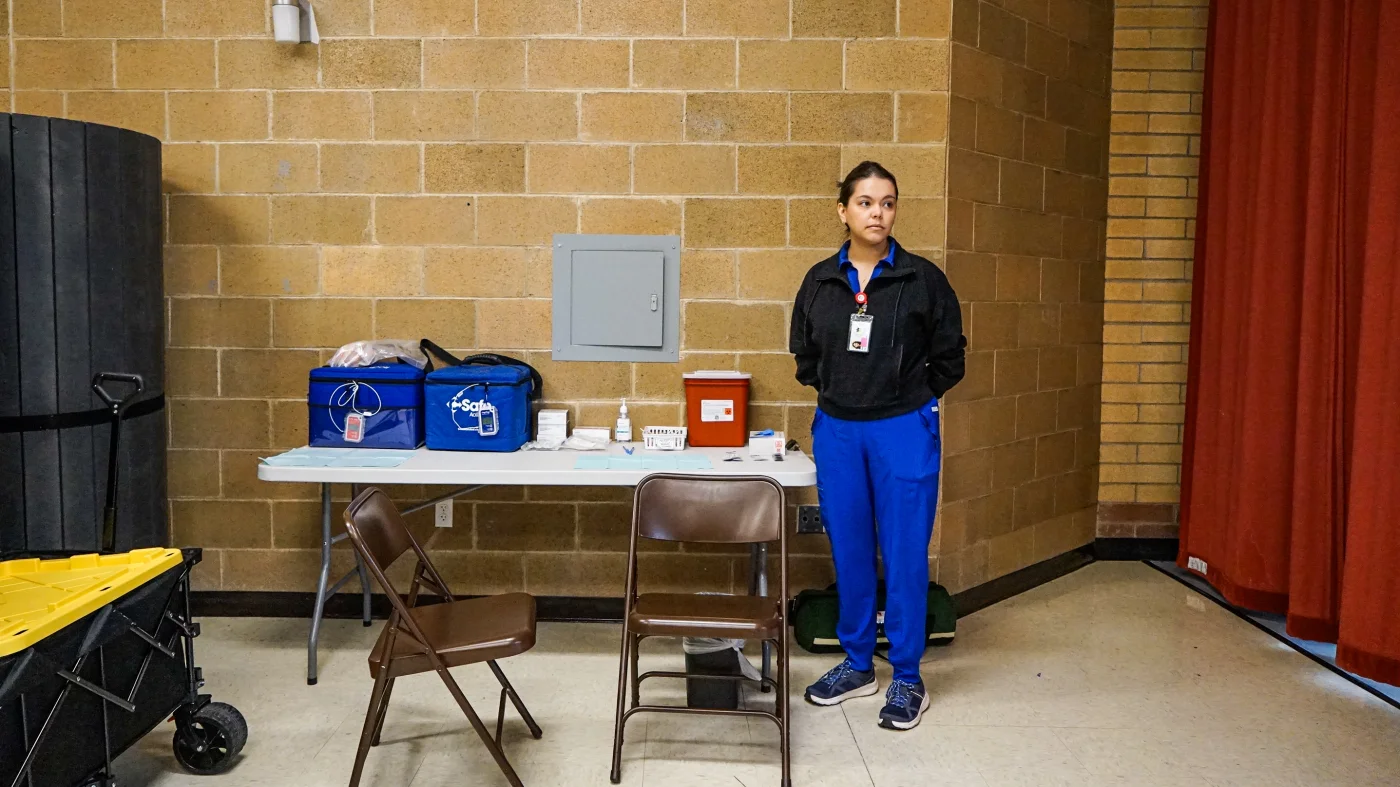
To regain its elimination status, the US needs to address barriers to healthcare access, missed vaccination opportunities, misinformation, and vaccine hesitancy, Barbosa said. That includes mounting wide-reaching vaccination campaigns, expanding laboratory testing capacity, and responding quickly to cases, including contact tracing. It’s the bread and butter of public health, but the longer it takes to create a comprehensive response, the more it will cost, experts warn.
Future efforts to contain measles will require “a stronger centralized federal response to these outbreaks” paired with support for “very local responses,” says Moss. That means identifying communities with longstanding under-vaccination and understanding why, he says, as well as improving trust in public health guidance.
“Immunity gaps” tend to concentrate in specific geographic areas and communities, and national or even state-level data can “mask these significant inequalities, providing an incomplete picture of the population's actual level of protection,” Barbosa said.
The CDC announced $100 million in August and September—more than a year after the outbreak began—to help fund state and regional efforts to combat measles, but Congress will need to allocate $100 million to $400 million more for measles elimination in coming months, Brewer says.
“More than 90 percent of children get the measles vaccine, Brewer points out. “This is a vaccine that has extraordinary public support, and it goes across the aisle.”
But to achieve herd immunity, vaccination rates need to be at least 95 percent due to how contagious the disease is. High transmissibility also means measles is very hard to uproot once it begins to spread.
Yet ending national measles transmission is “its own reward,” Brewer says. It spares children’s lives, keeps them out of hospitals, prevents blindness and other lifelong complications. “We no longer have that benefit,” he says. “Children are now being stalked by this incurable and deadly disease.”
In your inbox: Inside WIRED’s newsroom with Katie Drummond
Nvidia employees want Jensen Huang back
The Big Interview: Zohran Mamdani on data centers, AI in schools, and the Democrats
Stephen Miller wants a “servant class, not a working class”
Introducing the app: More ways to make the most of WIRED