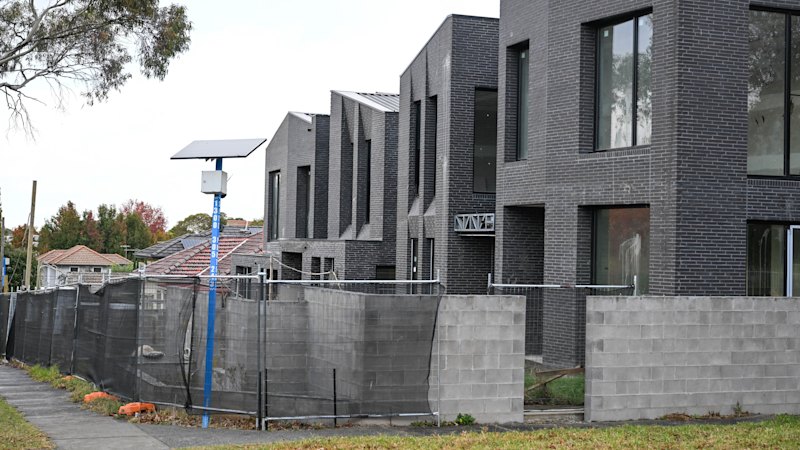
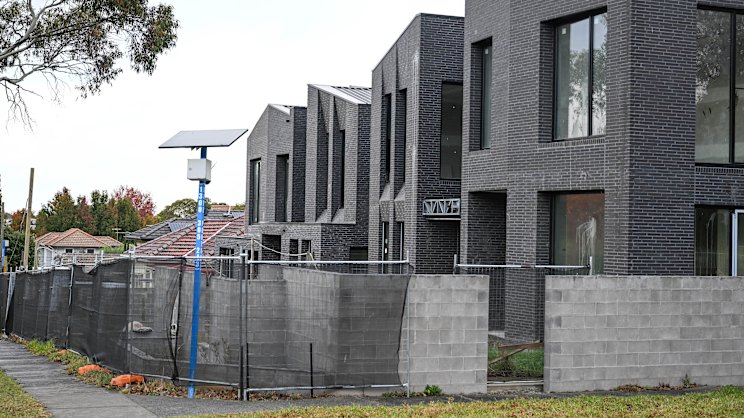
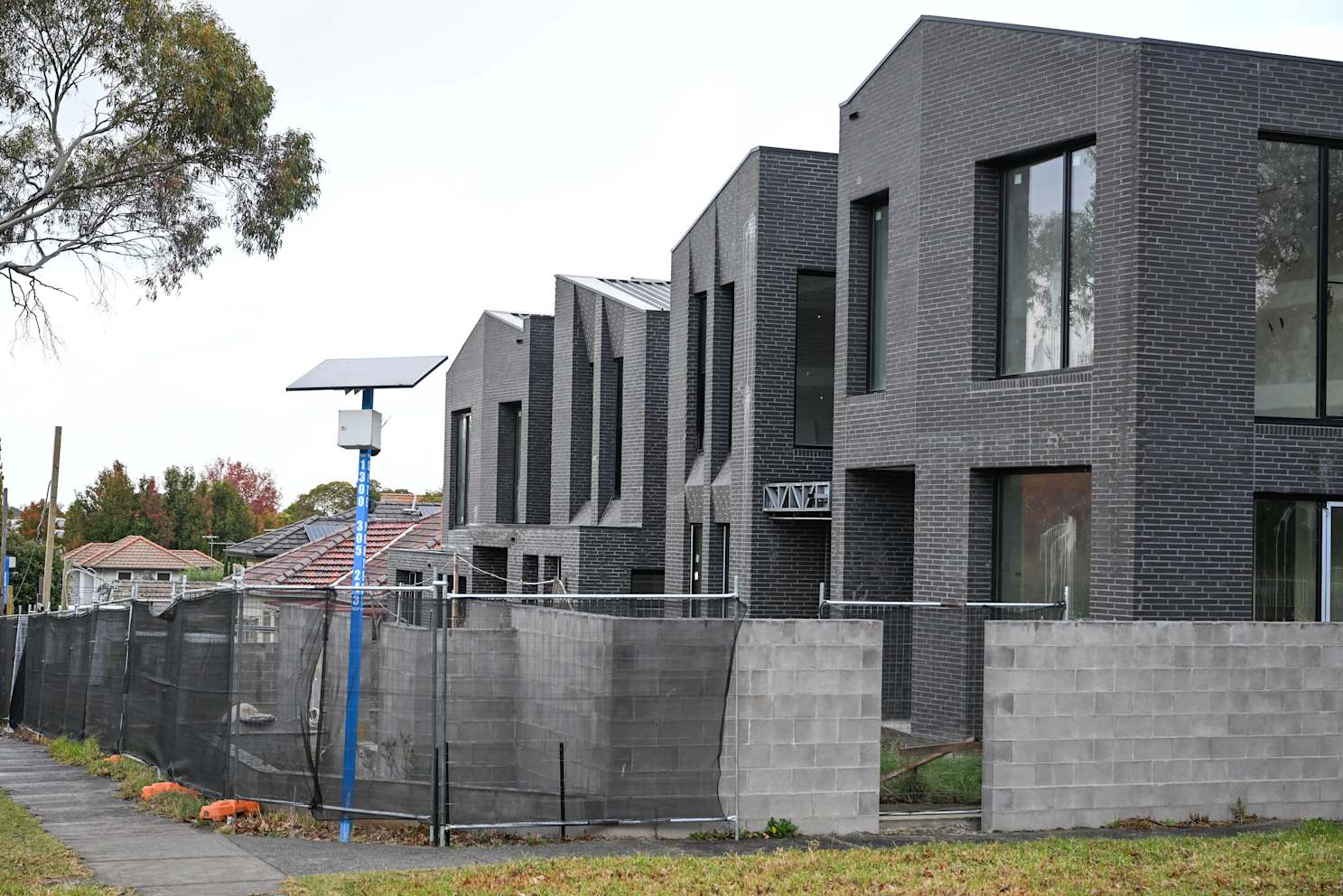
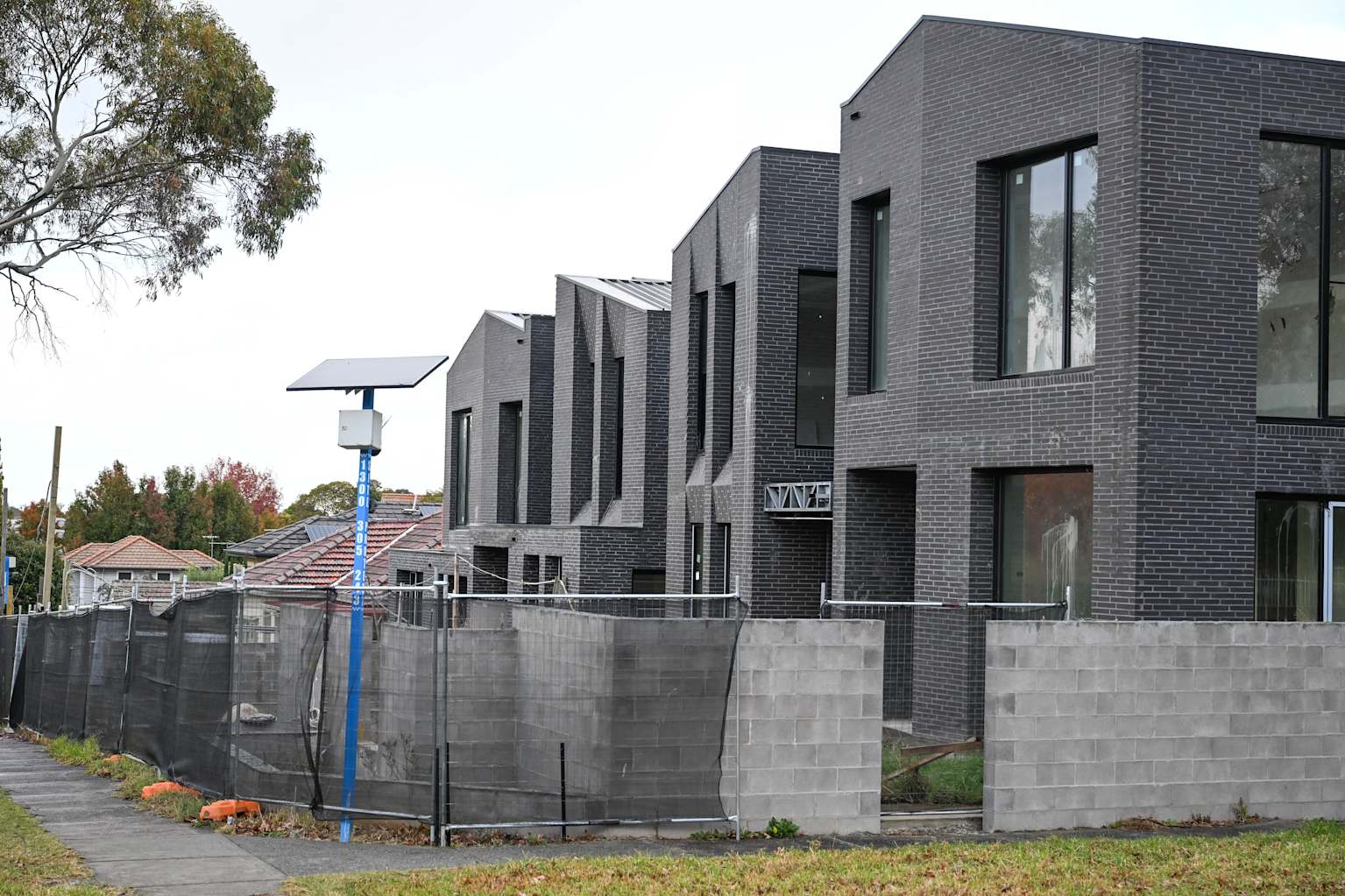
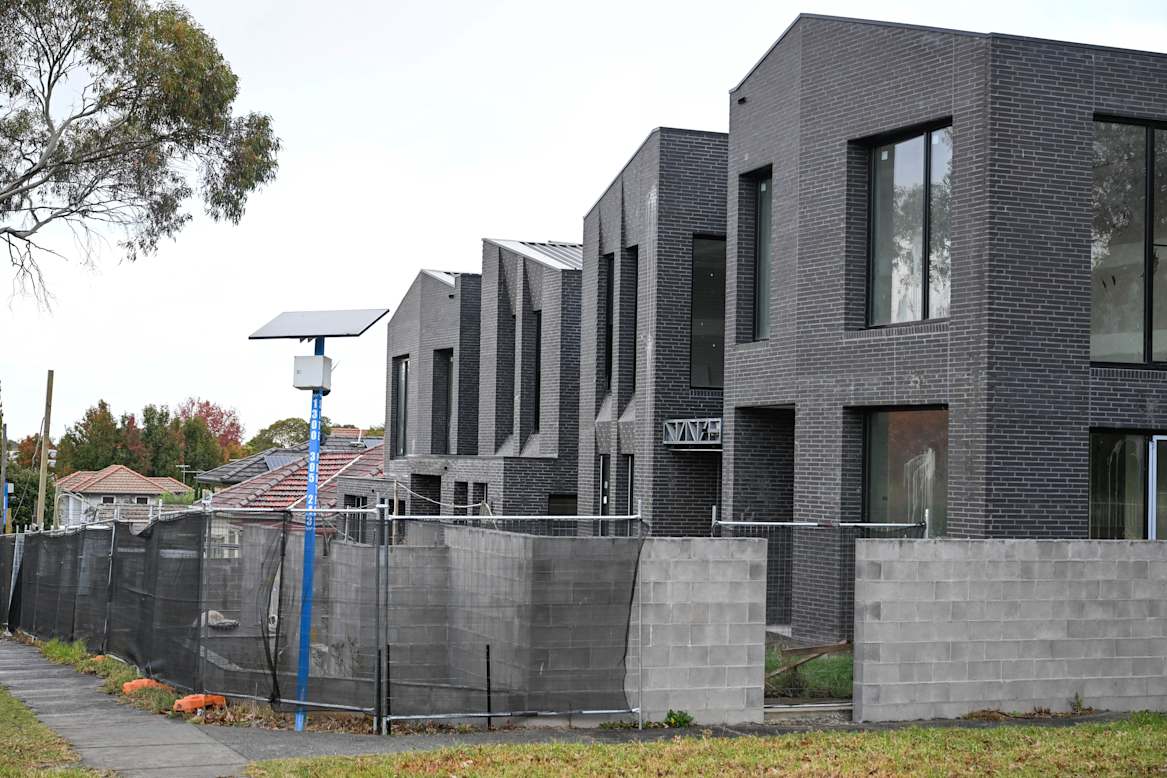
Local councils would regain the power to reject townhouses and low-rise apartments under a Liberal promise to wind back fast-track approval for suburban housing, with neighbours also given the right to challenge new builds.
Community groups opposing Labor’s suburban housing push have welcomed the pledge, but housing advocates and developers say it risks strangling supply during an affordability crisis.
Labor has introduced changes intended to help meet the demand for new housing in existing suburbs, including through its controversial activity centre program and codes that fast-track approval for townhouses and apartments.
Opposition housing spokesman David Southwick said this month his party supported the townhouse codes’ principles but only where local councils approved.
In a letter sent to community activist group Liveable Victoria last week, and seen by this masthead, Southwick expanded on that position by saying a future Coalition government would significantly roll back the codes that had “run rampant through our suburbs”.
“We will keep clear, measurable design standards for townhouses and apartments, but restore local decision-making on where those standards apply,” he wrote.
“Councils will no longer be required to approve proposed developments on the basis of the existing Low Rise/Townhouse and Mid Rise Codes alone. They will be able to take into account other considerations … such as neighbourhood character, visual amenity, and patterns of local urban structure.”
Southwick said he would also restore residents’ right to challenge proposed developments in the Victorian Civil and Administrative Tribunal.
The townhouse and low-rise code, in place since March 2025, applies to most of the state and fast-tracks approval for buildings up to three storeys if they meet a set of design standards. The mid-rise code fast-tracks building four to six storeys high in areas with existing height restrictions set at that level, and has been in place since April.
The two codes bypassed the previous system in which local councils could block developments based on “neighbourhood character” and other factors. Third parties, such as neighbouring residents, were also stripped of their right to object to developments that met the code’s design standards.
Grattan Institute housing program researcher Matthew Bowes said the townhouse code had been one of Victoria’s most impactful policies to improve housing supply and affordability.
In NSW, the Coalition backed calls for the state to adopt Victoria’s changes.
Bowes said the townhouse code had given home owners and developers certainty that they could proceed with a plan to replace a single house with multiple dwellings. But re-establishing subjective assessments such as “neighbourhood character” would create uncertainty and potentially costly delays.
“It also just means that there are many projects that people won’t try to pursue because they know that going through a tortuous tribunal and approval process just isn’t worth their time,” Bowes said.
“It would mean fewer housing choices for Victorians, more uncertainty for developers and less ability for Melbourne to continue its relatively affordable housing success story.”
Townhouse development applications jumped 45 per cent – from 4800 to 7000 – in the year after the code was introduced, according to data released by Labor in June.
Jane Oldham, president of Livable Victoria – an alliance of community organisations opposing Labor’s planning changes – said the group welcomed the Liberal commitment to end “tick-a-box planning”.
“It has taken away councils’ power to really consider the impact of large developments on surrounding neighbourhoods,” she said. “The loss of sunlight and loss of privacy … has been a major issue for people nearby. There’s just no discretion.”
Oldham agreed the planning process could be more streamlined, but said it was unfair to blame councils and communities for blocking housing at a time when developers were not building projects for which they had already been issued permits.
The Coalition has previously promised it would abolish Labor’s activity centre program, which allows taller buildings around 60 transport hubs to unlock 300,000 additional homes over the next three decades.
Instead, it proposes to accelerate greenfield housing development on Melbourne’s outer fringe, and to expand the CBD into neighbouring suburbs such as Parkville, Fitzroy, Collingwood and North Melbourne.
Planning Minister Sonya Kilkenny said rolling back Labor’s changes would make building and buying homes more expensive.
“The Liberals want to push more and more families to the outer suburbs, but they haven’t committed to deliver a single new road or school in the west,” she said in a statement.
Linda Allison, chief executive of Urban Development Institute of Australia Victoria, said she was concerned the Liberals’ policies would make it harder for developers to make townhouse and apartment projects stack up.
“These types of applications are often overruled at councillor level and they end up in VCAT,” she said. “It just adds costs and it adds uncertainty to the whole process.
“We should be supporting and enabling townhouse development, but really all types of housing, rather than trying to make it more difficult for industry to deliver them.”
The Planning Institute of Australia’s Victorian president, Patrick Fensham, said the institute supported some reduction in third-party objection rights on projects with minimal impact. But he was also concerned Labor’s fast-track codes could lead to bulky, poorly designed and overdeveloped projects.
“We found it difficult to support the unilateral expansion of what’s permissible without any engagement with local communities or with councils about what that might look like,” he said. “Our concern is that undermines the social licence for development and for good local planning.”
You have reached your maximum number of saved items.
Remove items from your saved list to add more.
You've used all of your gift articles. 3 more will become available on the 1st of every month.