A rift between United States Treasury Secretary Scott Bessent and Commerce Secretary Howard Lutnick over sales of advanced computer chips to China has spilled into public view.
On Monday, the administration of President Donald Trump introduced new rules requiring licences to sell advanced chips to buyers in named third countries suspected of being conduits to China. The new restrictions were written by Bessent’s Department of the Treasury and the White House – not Lutnick’s Department of Commerce, which usually oversees chip exports.
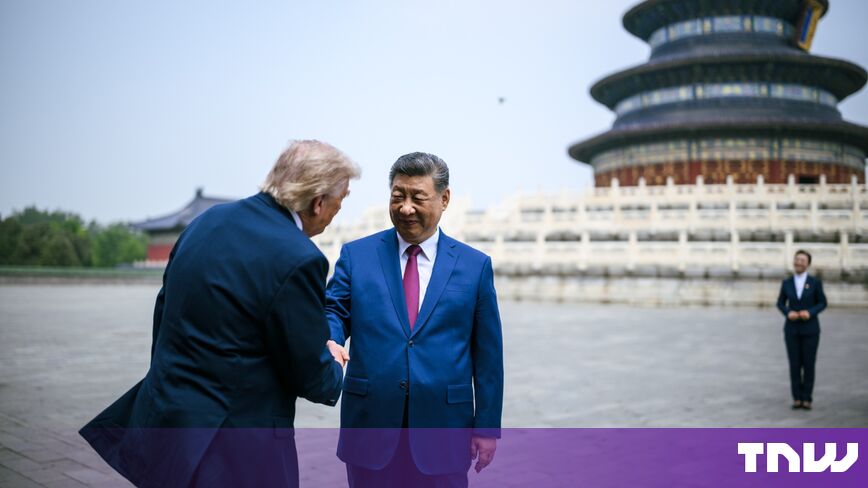
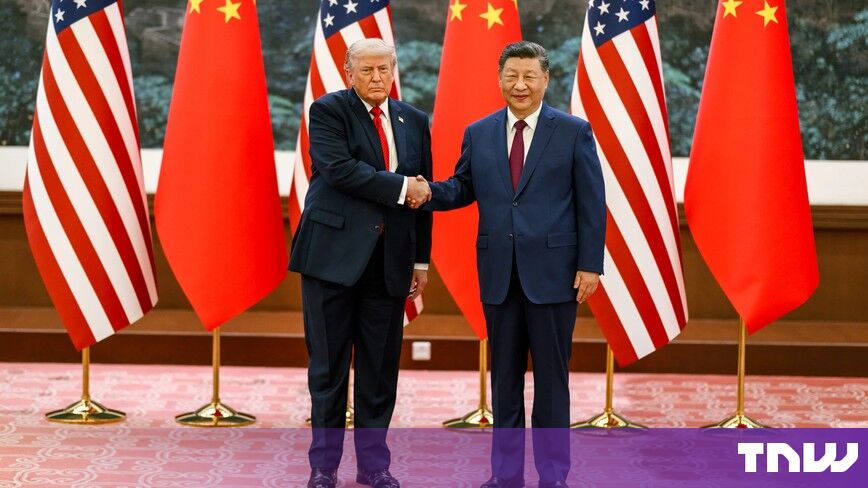
Trump, who is due to meet Chinese President Xi Jinping on Thursday on the sidelines of the Asia-Pacific Economic Cooperation (APEC) summit in China’s Shenzhen, has so far not taken a side.
As the US reels from the resignation of chip maker Nvidia’s CEO Jensen Huang last week over revelations that he had an affair with a woman suspected of spying for China, here’s what this all means.
The two cabinet members, who are both veteran investors, disagree over how strictly the US should limit China’s access to the advanced chips that power artificial intelligence (AI).
The US restricts exports of certain advanced AI chips to China. In December 2025, Trump announced that Nvidia could sell its H200 chip to approved Chinese customers, on condition that 25 percent of the revenue would go to the US government. In January, the administration relaxed licensing rules for the H200 and similar chips.
On Monday, new controls were issued to monitor access to US chips in Southeast Asia and Brazil – penned by Bessent with the backing of the National Security Council, not by Lutnick.
As commerce secretary, Lutnick oversees these export controls and is charged with determining which critical technologies US companies can sell abroad, with an eye towards national security.
He has been one of the administration’s most vocal supporters of allowing Nvidia, the world’s dominant maker of AI super chips, to sell to China, despite the fact that it is racing against the US to dominate development of the AI industry.
“You want to sell the Chinese enough that their developers get addicted to the American technology stack,” Lutnick said in July 2025.
But US rules still bar the most advanced chips from being sold to China, and reports of restricted Nvidia chips allegedly being smuggled into the country through unofficial routes have put Lutnick’s role under the microscope.
Lutnick’s department was accused of turning a blind eye to such smuggling and stalling a planned crackdown on actors thought to be involved.
Fellow cabinet members and lawmakers have questioned his department’s handling of the issue, and some lawmakers say it has undermined US national security.
Bessent has pressed for tougher enforcement of existing export rules.
“We have all the authorities that we need. They just need to be implemented,” he said on Friday.
The two men have been rivals for some time. In 2024, Elon Musk and other Trump allies lobbied for Lutnick to get the Treasury job, but it ultimately went to Bessent.
Nvidia controls nearly 90 percent of the market for the most advanced chips used for AI. Worth trillions of dollars, it is among the world’s most valuable companies, and its customers include tech giants Microsoft, Google, Amazon and Meta.
Nvidia’s cofounder and chief executive, Jensen Huang, resigned last week after admitting to an affair with Alice Huang, whom some US officials have suspected of working for Chinese intelligence – a claim denied by China.
Alice Huang is a former senior executive at Megaspeed, a Singapore-based company that builds data centres in Southeast Asia which cater for Chinese clients.
Megaspeed bought more than $4.8bn of Nvidia chips in about two years, but US authorities suspect that many of these chips were then smuggled into China rather than used in Megaspeed’s data centres, a charge it denies.
On Friday, Bessent said four government agencies, including the Treasury, had pushed for months to put Megaspeed on a US trade blacklist, but Lutnick’s Commerce Department had not acted.
“Commerce has the pen,” Bessent told CNBC. “You will have to ask them about their internal processes.”
He also questioned whether Nvidia had properly vetted its customers.
“The real story here should be, did Nvidia know their client, and was there a robust effort at Nvidia to make sure that there was no leakage and that they were selling to what were obviously pass-through shell companies?” Bessent said.
The new rules require companies to obtain a US licence before shipping advanced chips to Singapore, Malaysia, Thailand, Indonesia and Brazil – countries Washington suspects of acting as conduit routes for chips to reach China.
It also requires any data centre in the world using Nvidia chips to obtain Washington’s permission before it can “rent” computer power to Chinese customers. This closes a loophole that previously allowed Chinese companies to “rent” the use of advanced chips without purchasing them outright.
China’s Ministry of Foreign Affairs condemned the restrictions as “economic coercion” and said Beijing would take “necessary measures” in response.
In Washington, the new restrictions were welcomed by John Moolenaar, the Republican chair of the House Select Committee on China.
The committee, a panel of lawmakers focused on competition with China’s ruling Communist Party, is one of the most hawkish voices on Beijing in Congress. Moolenaar criticised the administration’s decision last year to ease curbs on Nvidia’s chip sales to China.
“Our most advanced AI chips are simply not for sale to our foremost enemy,” he said.
Senior officials including Secretary of State Marco Rubio and US Trade Representative Jamieson Greer have argued for keeping the most advanced chips out of China, while lawmakers from both parties have criticised Lutnick.
“It would be dumb and stupid for us to sell that to anybody, especially a country that’s going to reverse-engineer it and leapfrog us,” Rubio said in May.
Greer made a similar case last week, saying that US “crown jewels” should remain in US hands or in the hands of allies.
David Sacks, Trump’s former AI adviser, however, defended selling chips to China and dismissed those pushing for tighter controls.
“The policy of the China hawks is effectively the policy of the CCP [Chinese Communist Party]. Neither one wants American chips in China,” he said in a podcast appearance on Saturday.
On the other side of the political aisle, some Democrats have called for Lutnick to step down from his position for his failure to police chip smuggling.
“Making powerful Nvidia chips available to China through an apparent spy undercut both national security and economic competitiveness,” Senator Richard Blumenthal said in a post on X.
Both Lutnick and Jensen Huang have been summoned to testify before the Senate on December 3.
Trump has swung between restricting and allowing Nvidia’s sales to China. In April 2025, the White House curbed sales of the H20, a chip Nvidia made for the Chinese market – only to agree to allow them three months later.
His later decision in December to permit sales of the more powerful H200 marked a further easing of those restrictions.
Trump has stood by Lutnick, saying on Monday that he was not planning to remove him, days after the Reuters news agency reported that top White House aides had debated whether he should go.
Trump has acknowledged that the issue is splitting his cabinet, without explicitly taking sides.
“It’s a different viewpoint. One wants to be friendly with China and one wants to have a blowup with China,” Trump said. “They both are acceptable, but they are different views.”
Trump has also said it “certainly isn’t a bad idea” for Huang to return to Nvidia .
Trump and Xi are due to meet in Shenzhen on Thursday, during this week’s APEC summit. Ahead of their last meeting , when Xi visited the US in September, Washington banned imports of Chinese-made humanoid robots and threatened to sanction Chinese AI firms.