This audio is voiced by AI and may occasionally mispronounce words.
Share your feedback and help us improve this feature. Read more about how we use AI at SBS here.
As Donald Trump makes his post-midterm return to the world stage, one of the more uncertain fixtures on his frenetic schedule has been the oft-delayed Quad leaders meeting between the United States, Australia, Japan and India.
It's been some two years since the grouping — a diplomatic partnership between four Indo-Pacific democracies focused on regional security, maritime cooperation and maintaining a favourable balance of power in the region — last brought its leaders together in the same meeting room, under then-US president Joe Biden.
India's Prime Minister Narendra Modi has been among the most consistent participants in the grouping's diplomatic engagements.
The meeting, expected to take place on the sidelines of the ASEAN Summit in Manila on Tuesday, comes despite nearly two years of increasingly tense ties between the US and India, with New Delhi frustrated by the Trump administration's unpredictable foreign policy.
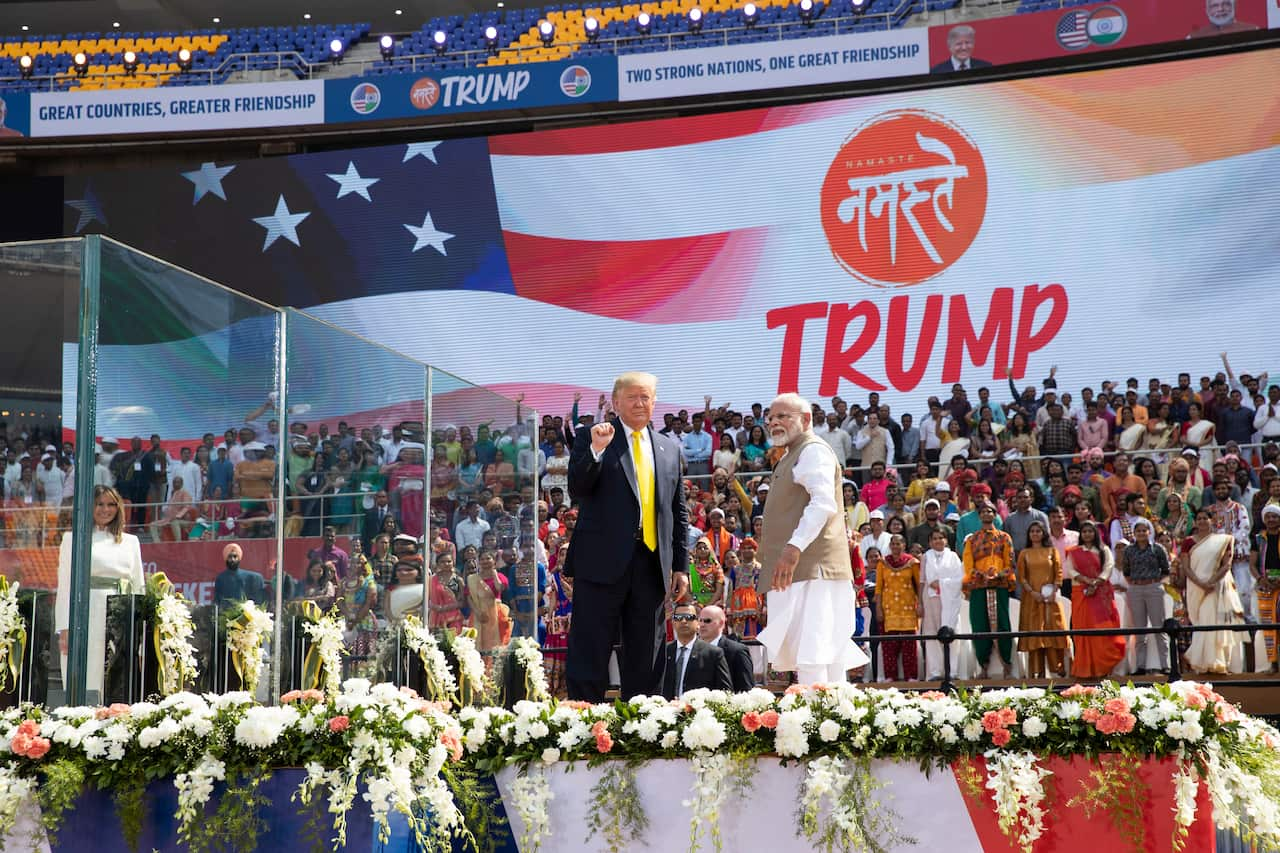
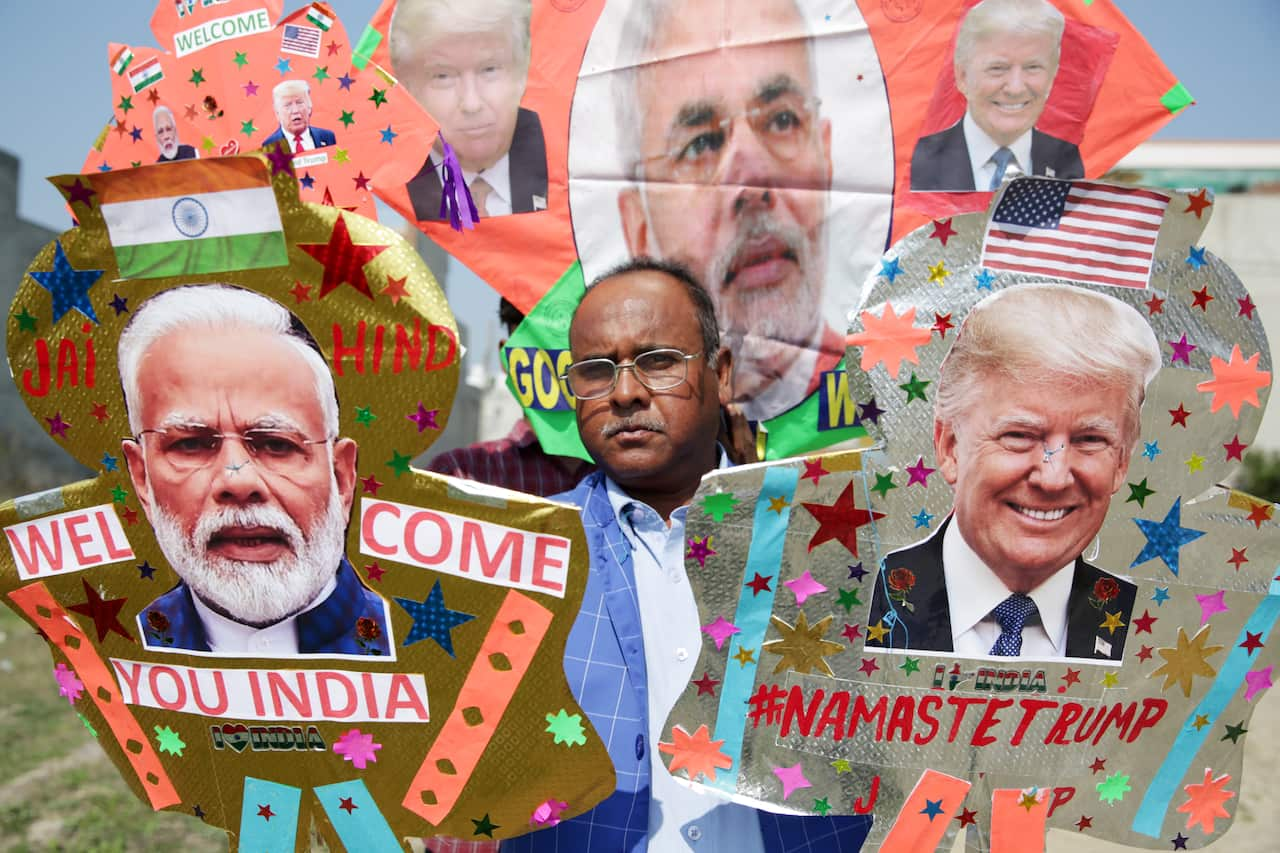
In 2020, the reddest of carpets was rolled out for a first-term Trump by Modi , with Namaste Trump — a sprawling event in the world's largest cricket stadium, with more than 100,000 people — seeing the US president greeted by an enthusiastic crowd as he talked up cricket greats, even if his pronunciation of Sachin Tendulkar proved a wrong 'un.
Your trusted source for staying up-to-date with the world around you. Get free daily news updates and analysis, straight to your inbox.
"America loves India, America respects India, America and India will always be faithful and loyal friends," Trump said at the time.
When Trump was re-elected, the Modi government would have expected a continuation of that warmth. Instead, the relationship has taken a markedly different turn.
"We really have to throw away the old playbook," India's external affairs minister S Jaishankar told the Asia Society gathering in New York in September, painting a picture of the US as a "lonelier power".
India has long pursued a policy of strategic autonomy, maintaining diplomatic and economic ties with a range of global powers, including those with competing interests.
Ian Hall, professor of international relations at Griffith University, points to the so-called Liberation Day tariffs, which, he said, "have really devastated big chunks of Indian industry in important parts of India, in the north, where jobs are scarce".
Another point of tension has been Trump's intervention during the May 2025 India-Pakistan conflict over Kashmir, when he said he had helped broker a ceasefire.
"Modi apparently is feeling personally insulted about the way that he was treated over the crisis," Hall told SBS News.
Experts say trade nevertheless offers a potential avenue for both governments to stabilise the relationship, with negotiations underway to finalise the first tranche of a new agreement.
Premesha Saha, a senior fellow at Asia Society Australia, said the relationship has increasingly become "transactional".
"Even with the trade, India wants to be in a position where it has that leverage, it has that bargaining chip, and it has, and it can maintain its transactional attitude while working with the US", she told SBS News.
Despite the bilateral tensions, Jared Mondschein, research director at the US Studies Centre, told SBS News, the Quad itself "is here to stay, regardless of any tensions between the current leaders of the US and India".
The Quad meeting will fall approximately halfway through Trump's summit schedule, which is set to culminate in meetings with China's President Xi Jinping and Russian President Vladimir Putin.
Beyond the immediate US-India relationship, the question is also how Trump's domestic political position could affect his approach to international diplomacy.
While Mondschein says a "direct line" can be drawn between the midterm repudiation of Republicans, which handed Democrats control of both chambers of Congress, and the political consequences of Trump's Iran policy , he concedes it would be a "fools errand" to try and predict how the US president's behaviour on the world stage might change.
"Constitutionally there are really a lot less restrictions on what a US president can do in foreign policy than there are domestically," he says.
At the same time, however, he believes "the ugly secret in US foreign policy is that there's a lot more continuity from one administration to the next than any president would want you to believe".
"The more he veers away [from the status quo], the more ephemeral the impact of those efforts will be."