China’s preeminent tech metropolis has more billionaires than any city outside New York. And this week it will get a visit from the world’s most famous billionaire New Yorker.
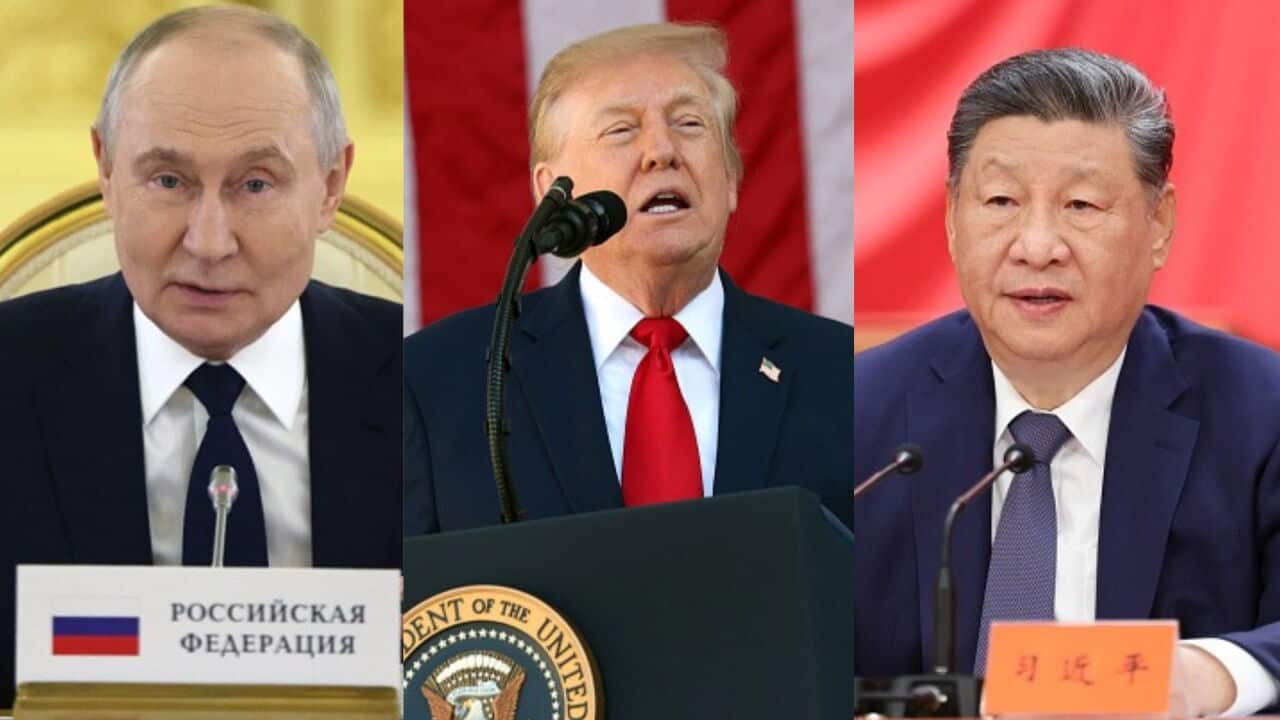
Donald Trump will become the first sitting US president to land in Shenzhen when he arrives for an APEC summit where Chinese leader Xi Jinping will show off the urban microcosm of his nation’s modern story: high-level planning, roaring technological advancement, and rapid wealth creation.
There, a stone’s throw from Hong Kong, Trump will find China’s answer to Silicon Valley; a futuristic city that’s home to tech entrepreneurs, food-delivering drones and the world’s fastest supercomputer.
It’s a city that launched many of the tech advances that have put Trump and Xi on a collision course over access to raw materials, advanced chips, and lucrative markets. (A fragile trade truce between the world’s two biggest economies will expire in January.)
And it’s quickly becoming one of China’s top destinations for foreign travelers.
If you chat with any of Shenzhen’s 18 million people, they will proudly tell you it is a “miracle city.”
Built out of mangrove wetlands over just four decades, the gleaming city boasts more skyscrapers than New York City and roughly three times more than Chicago, according to the Council on Vertical Urbanism.
One of these megastructures resembles the tip of a bamboo shoot, while another looks like a folded sheet of metal. It also boasts the world’s fifth-tallest building: the Ping An Finance Centre.
Walking through its streets, everything feels brand new. Self-driving electric taxis purr quietly along the roads, while drones fly around delivering hot meals and iced coffee. Crystal-like orbs dangle from roadside trees, collecting solar energy and illuminating the streets at night.
The names of those streets are also telling: Talent Park; Start-up Road; Garden of Knowledge; and many named after famous Chinese scientists.
In its myriad sleekly designed cafes, young people – the city’s average age is only 32 – earnestly talk about ways to make more cash, and polished middle-aged parents discuss where they should send their children to study abroad.
Fifty years ago – around the time a bullish young Trump was inking his first Manhattan real-estate deal – this city did not exist.
What stood there was an economic backwater surrounded by farmland where families struggled to put enough food on the table, overshadowed by a much wealthier city across the water, the British enclave of Hong Kong. A farmer who kept more than three ducks would be condemned as “pursuing a capitalist path,” according to a documentary on Shenzhen released in 2019 by state broadcaster CCTV.
China’s then paramount leader Deng Xiaoping was desperate to liberalize the economy of his isolated and impoverished country, which was still recovering from the decade-long trauma of the Cultural Revolution.
It was Xi’s father, Xi Zhongxun – then governor of Guangdong province, which includes Shenzhen – who suggested that Deng use several towns on China’s southern coast to stage experiments in free-market economics to attract foreign capital.
Shenzhen was chosen for its proximity to Hong Kong, from which – it was hoped – it would learn about modern business practices.
The government offered financial incentives for the best talents to head to the city. Among them were Chen Daiyao’s grandparents, who arrived in Shenzhen in 1983.
Back then they thought Shenzhen “was pretty shabby,” the 33-year-old university assistant professor told CNN. But they would not be alone in heeding the call of this free-market incubator.
Four years later, former People’s Liberation Army engineer Ren Zhengfei founded his own company in Shenzhen – taking advantage of a new law allowing researchers to establish their own firms for the first time. A decade later, Wang Chuanfu left his job at a battery maker to follow the same dream.
The companies they founded in Shenzhen are now some of the best-known in the world – Ren’s Huawei is one of the world’s biggest tech conglomerates, while BYD, the company Wang founded, overtook Elon Musk’s Tesla to become the world’s biggest seller of electric vehicles last year.
“At the time, Shenzhen offered what was probably the best environment in China for innovation and entrepreneurship,” Wang told CCTV in 2019.
The two firms will be on display at the Asia-Pacific Economic Cooperation (APEC) summit, where the “official designated vehicles” are advanced BYD models, powered in no small part by Huawei technologies.
The city is also home to several other business behemoths driving China’s rapid transformation, including social media giant Tencent and DJI, the world’s largest drone maker.
As a child, Chen could feel the speed of her hometown’s development.
“By the time I was in primary school, the city was already urbanizing at a remarkable pace.”
In 1990, the city became the first in China to have a McDonald’s restaurant – with the appearance of the American chain’s iconic golden arches viewed as a milestone moment in China’s opening up.
The APEC invitations last year saluted the city’s remarkable journey. “Shenzhen has transformed from a backward little fishing village into a modern international metropolis over the past few decades,” hailing the achievement as – there’s that word again – “a miracle.”
Development at the pace and scale of Shenzhen’s is much easier to accomplish in a top-down, one-party state, observers say.
Even before APEC hosting duties put it on the diplomatic map, Shenzhen had rapidly become foreign tourists’ second-favorite Chinese destination, behind only Shanghai.
In 2025, more than 2 million foreign tourists stayed overnight in Shenzhen, up a staggering 70% compared with a year earlier, according to city government data. In 2026, more than 6.6 million foreign tourists visited the city, mostly from countries in the Asia-Pacific region .
And these figures don’t account for the more than 10 million visitors in 2025 from the nearby semi-autonomous Chinese cities of Hong Kong and Macao – a 25% jump on 2024. Shenzhen has become a popular destination for Hong Kongers to spend the weekend, thanks to its proximity (just a 14-minute high-speed rail journey) and its relative affordability.
Unsurprisingly, the first thing Western visitors notice about Shenzhen is its tech-forward vibe.
Megan Jarrett, a South Carolina native in her early thirties who called Shenzhen home for three years from 2023, told CNN she loved living there.
“It is high-tech and modern, it is very convenient, but to me, it was also very friendly,” she said.
Will McCaskill, a 28-year-old video producer based in London, visited in May. “Everything that could be a screen was a screen or a drone or whatever. [Shenzhen] was very forward in that regard,” he said.
But what surprised him was that the city didn’t feel busy, or intense. “You’ll drive past this really dense, built-up area with lots of skyscrapers, but then on the street level, it’s quite calm or just quite local.”
“The city is so clean, well-built and easy to navigate.”
Chen, the university professor, said she is proud to be a Shenzhen native – a rare distinction in a city constantly attracting outsiders to live, work and settle. Official data shows about half a million people move to Shenzhen from elsewhere in China each year.
“Because Shenzhen is such a young city, you get this sense that everything is changing at an incredible pace. The metro system is still expanding nonstop, and the high-speed rail network is constantly being upgraded to run faster,” said Chen.
“You just feel that things are always moving forward here.”
China has made it easier than ever to visit in the past few years. UK and EU nationals enjoy visa-free entry to China . American tourists do too – sort of. Travelers can fly into Shenzhen and stay within Guangdong province – which also includes the megacity of Guangzhou – for up to 10 days, but must fly out to a third destination outside mainland China. That can include Hong Kong and Macao.
Shenzhen is also easy to visit from neighboring Hong Kong, which has six border-crossing points with Shenzhen (a passport is required, as Hong Kong is a Special Administrative Region of China). The easiest option is simply to take the subway, as the city’s East Rail Line goes from Admiralty Station in central Hong Kong to either Lo Wu or Lok Ma Chau at the border. There are also buses, the bullet train and even ferry options.
Meanwhile, Shenzhen’s Bao’an Airport is constantly adding new routes for air travelers. These days, it has nonstop flights to Los Angeles as well as more and more destinations in the Asia-Pacific region like Kuala Lumpur, Melbourne and Surabaya in Indonesia.
Many expats have settled in Shekou district in the city’s southeast. These days, it has a chilled-out vibe with bars and restaurants serving up global cuisines. Huaqiangbei – the world’s largest electronics market – is worth a stop. More than 100,000 businesses pack into the building’s dense, maze-like grids and sell their goods at cheap prices.
But Shenzhen is working hard to become known for more than just low-cost food and electronics. The city has a growing number of new museums. The Stockholm-founded museum Fotografiska just opened a Shenzhen outpost in October. In May, the city celebrated the opening of Shenzhen International Museum of Art, which houses works from Renaissance painters Titian and Tintoretto, seven Chinese zodiac bronze animal heads, renowned Chinese calligraphy and pieces from art masters Qi Baishi and Zhang Daqian.
CNN’s Sierra Chen contributed to reporting.