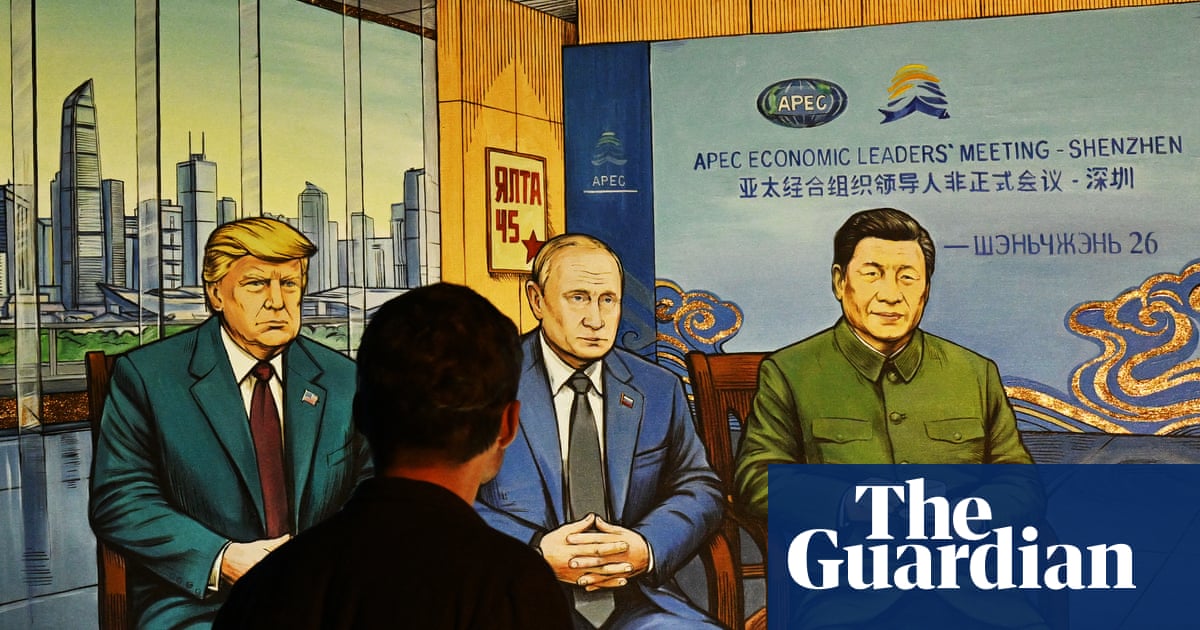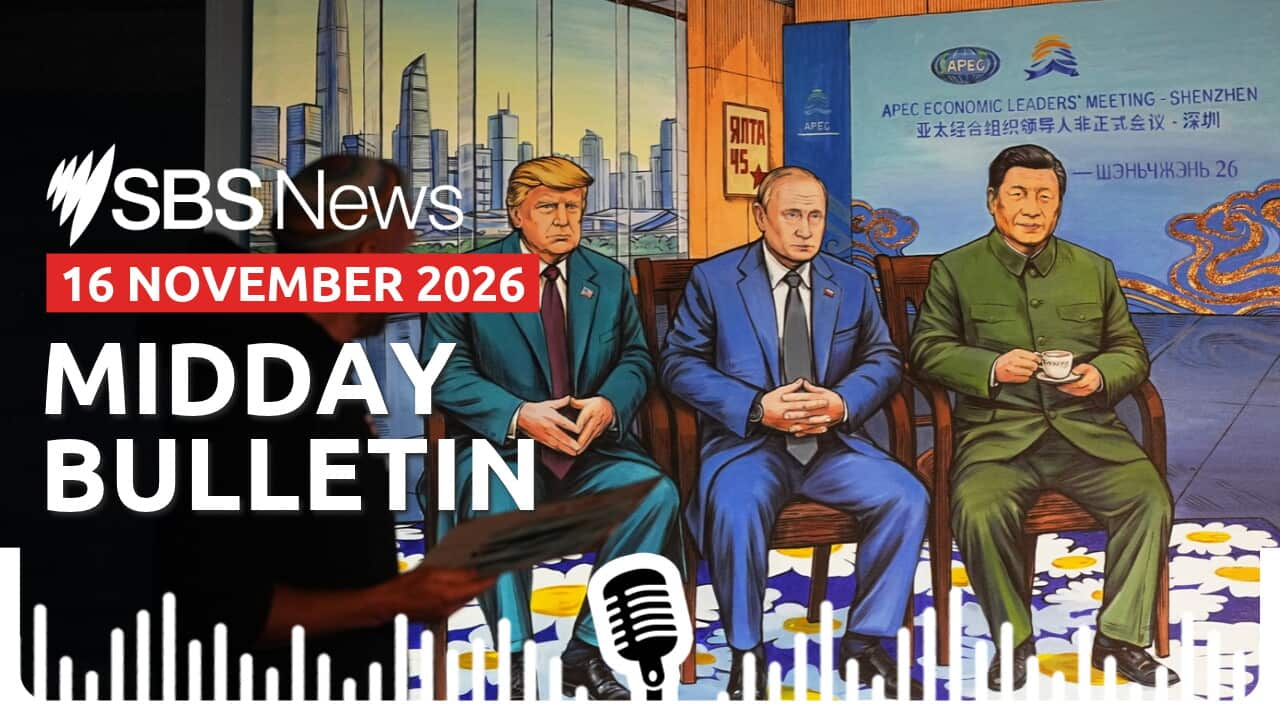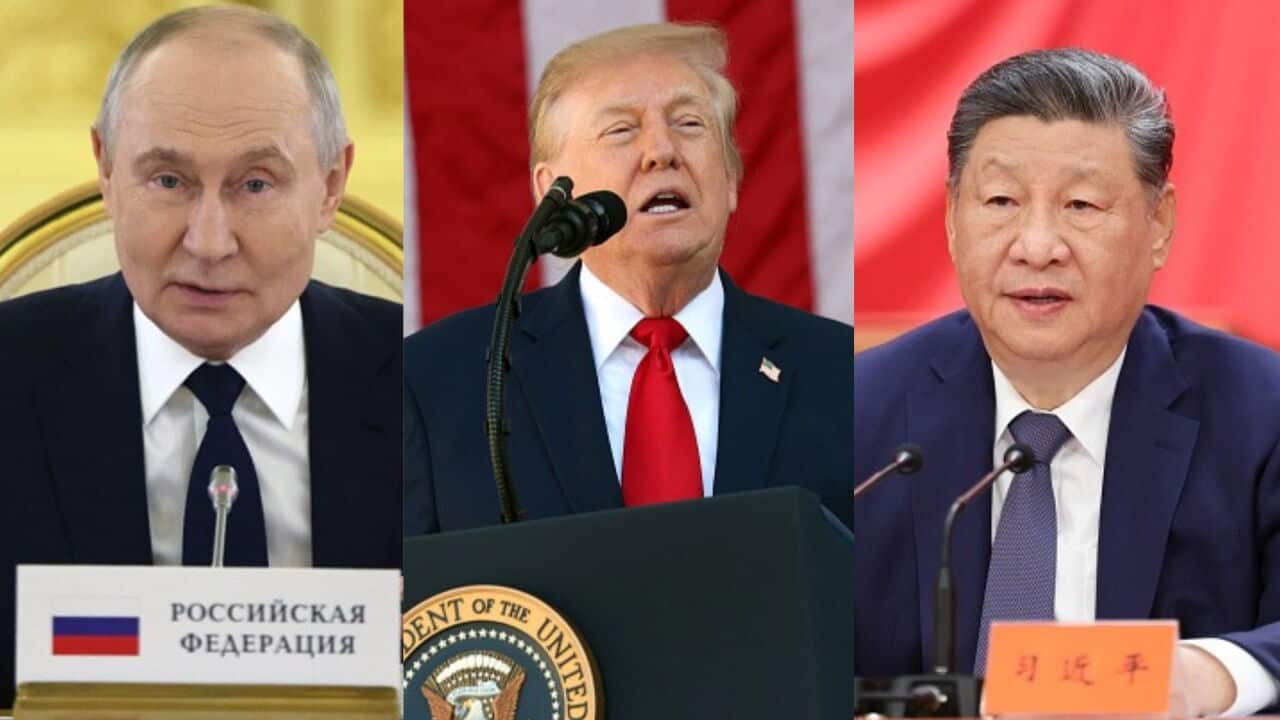
A historic meeting between the leaders of the United States, Russia and China slated for later this week has received mixed responses amid concerns that the three could seek to carve out new spheres of territory and influence.
The meeting between US President Donald Trump, Russian President Vladimir Putin and Chinese President Xi Jinping will take place in Shenzhen, China, the White House has confirmed.
The Kremlin has also confirmed the meeting on 19 November on the sidelines of the Asia-Pacific Economic Cooperation (APEC) summit.
Trump will look to discuss reducing nuclear arsenals and is also set to bring up his war in Iran, according to White House officials.
"The president has made it clear that, among other topics, he will discuss the reduction of nuclear weapons in the world," White House spokesperson Olivia Wales told reporters.
Your trusted source for staying up-to-date with the world around you. Get free daily news updates and analysis, straight to your inbox.
"This proliferation, President Trump believes, is very dangerous."
However, Trump is not expected to discuss Russia's war in Ukraine .
Trump will also hold a bilateral working lunch and meeting with the Chinese president on Thursday, their fourth meeting of the US president's second term. A one-on-one meeting between Trump and Putin has not been planned.
Asked about the three-way summit in Manila, where Albanese is currently attending the Association of Southeast Asian Nations (ASEAN) Summit, the prime minister said "dialogue is a good thing", and that he will await the outcome of the meeting.
Albanese also said he would be with Trump in the coming weeks at ASEAN and APEC.
A Quad meeting between Albanese, Trump, Japanese Prime Minister Sanae Takaichi and Indian Prime Minister Narendra Modi is also due to take place Tuesday in Manila.
Albanese reiterated his call for de-escalation of the conflict in Iran and noted that the US president is "aware of Australia's very strong views" on the issue.
While the prime minister has welcomed the meeting, other world leaders have been more cautious.
Ukrainian President Volodymyr Zelenskyy expressed alarm over the weekend about Trump's meeting with the Chinese and Russian leaders, suggesting the Shenzhen meeting could be a "Yalta 2.0".
The Yalta summit was a 1945 meeting between then US president Franklin D Roosevelt, United Kingdom Prime Minister Winston Churchill and Soviet leader Joseph Stalin. Meeting in the Soviet Union, the leaders laid out the post-World War Two settlement and new territorial boundaries in Europe.
Zelenskyy said Tuesday's meeting could map out a similar "redistribution of spheres of influence".
German Chancellor Friedrich Merz has also urged Trump to stay aligned with European allies during the trilateral meeting.
"Please, no surprises," Merz asked whilst speaking to reporters at an EU summit in Dublin. "Stay on Team Europe and Team Ukraine and let us work together for a genuine peace in Ukraine."
The Trump administration has taken a hardline approach to the conflict in Ukraine, with Trump recently calling Zelenskyy unfit for office over his demands for peace.
The meeting follows negotiations in Abu Dhabi last week between Russia and Ukraine, where negotiators for the former pushed for a review of European security architecture as part of any peace deal.
Moscow's chief negotiator, Vladimir Medinsky, called for a "new, modern Yalta", drawing criticism from European leaders, including Merz, who said they "do not need to discuss that, it already exists," referring to NATO.
According to the Ukrainian leader, US envoys also floated the possibility of Ukraine ceding its eastern region of Donbas to Russia in exchange for joining NATO.
In comments released over the weekend, Zelenskyy reported that the possibility of joining the Western military alliance is "back on the agenda" in negotiations.
However, he reiterated his position that Kyiv is not willing to retreat from its territory and said the question would only be put to a referendum if Ukraine was guaranteed a comprehensive security package.
— With reporting by the Agence France-Presse news agency.