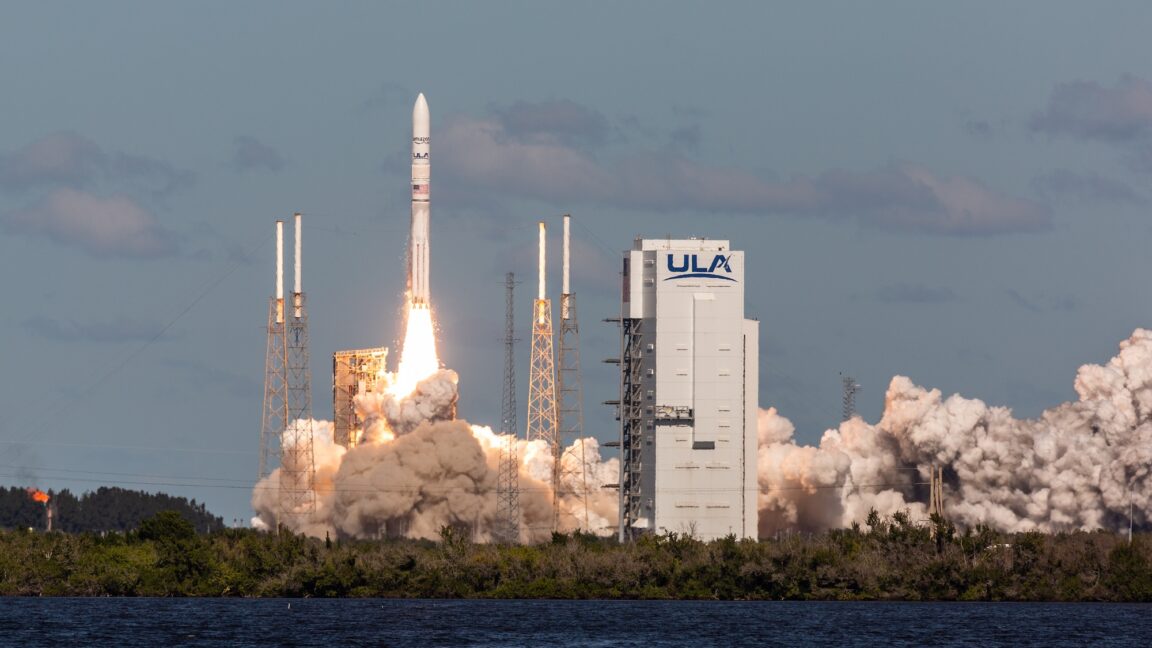
United Launch Alliance’s Vulcan rocket and 40 Amazon Leo broadband satellites fell back to Earth minutes after liftoff Sunday, a crushing setback that will ripple across all sectors of the US space industry.
The Vulcan rocket is on contract to launch roughly half of the US military’s national security space missions in the next few years, and Sunday’s mission was the first of 38 Vulcan launches booked by Amazon to build out its network of broadband Internet satellites aimed at competing with SpaceX’s Starlink. Sunday’s failure is expected to ground the rocket for an indefinite period of time.
Vulcan is no stranger to close calls, having overcome failures with its strap-on solid rocket boosters on two of its four previous flights. In each case, the rocket corrected for those problems and continued into orbit to deploy its payloads. The incidents trigged months-long reviews and investigations before ULA could resume Vulcan flights.
Sunday’s launch succumbed to a different kind of failure. The six solid rocket boosters appeared to perform well in the first two minutes after Vulcan’s liftoff from Cape Canaveral Space Force Station, Florida, at 12:40 pm EDT (17:40 UTC).
In a statement, ULA said the rocket “suffered an anomaly 10 minutes into the flight and failed to deliver the Amazon mission to orbit.” The company said it did not immediately have “any specific data to understand what occurred.”
“ULA exists to provide assured access to space for our nation and for the customers who depend on us,” the company said in a statement. “That purpose is why we take on some of the hardest missions in spaceflight, and why we hold ourselves to the standard of mission success. Today, we did not meet that standard.”
Engineers will investigate the failure to “find the cause, determine the appropriate corrective action, and return to flight as quickly as possible,” ULA said.