Thousands of migratory birds are crossing the Himalayas to reach Chitwan for the winter. Green shoots emerging from paddy stubble after harvest provide food. But changing farming practices, shrinking wetlands, and pesticide use are steadily reducing their feeding and resting grounds.
Manesh Limbu, a seasoned nature guide and chair of Meghauli Ghatgai Nature Guide Association, regularly walks along the Narayani river to observe changes in its course and their effects on birds. Recent floods in the Bhotekoshi, the Narayani basin and the Budhigandaki have changed the river course, prompting him to watch its banks closely.
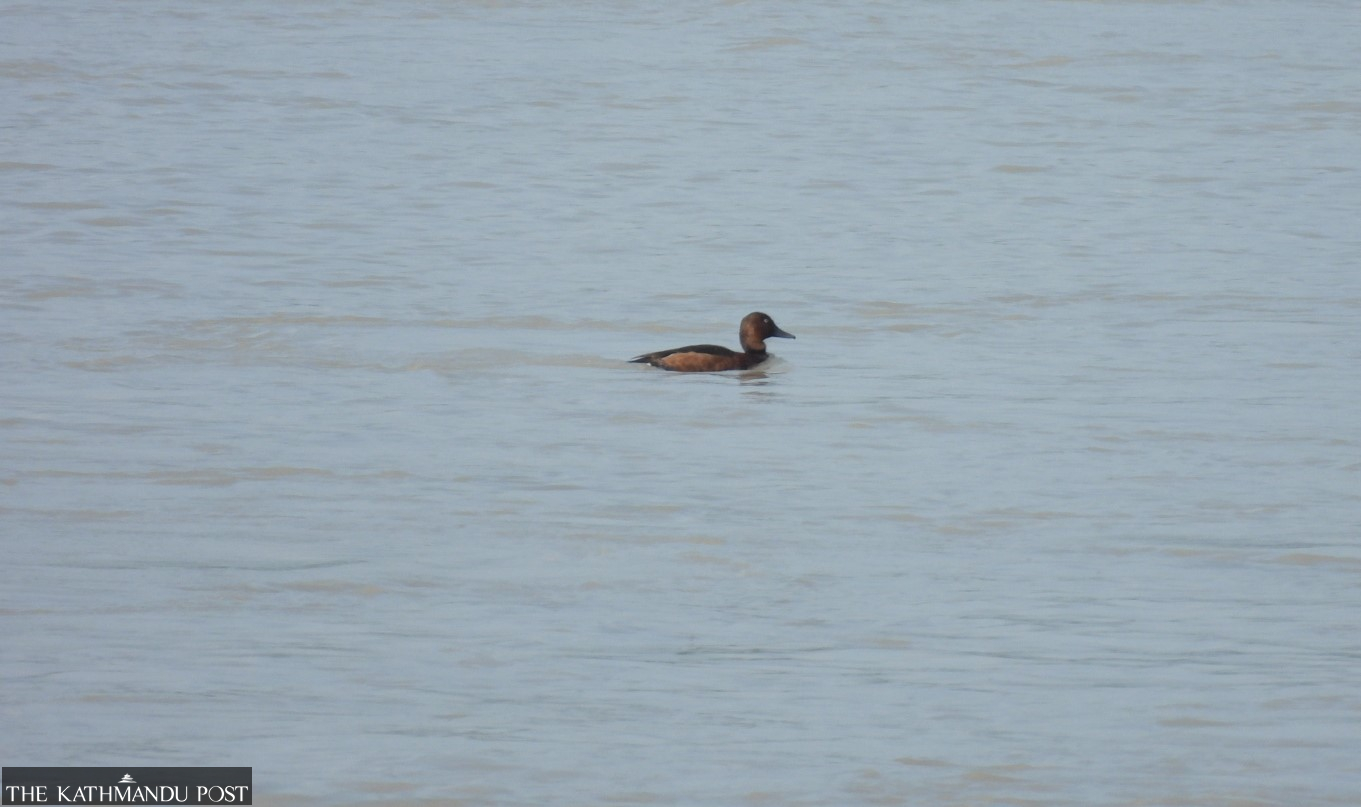
On November 3, Limbu was in Hirapur when he heard the calls of ruddy shelducks and other water birds. “The birds are starting to arrive now,” he said. He suddenly sighted a bird dipping into the river. He took out his binoculars and found that it was a ferruginous duck. “It is not extremely rare, but this is the first time I have seen it in Chitwan. I had seen it earlier at Jagadishpur Lake in Kapilvastu,” he said.
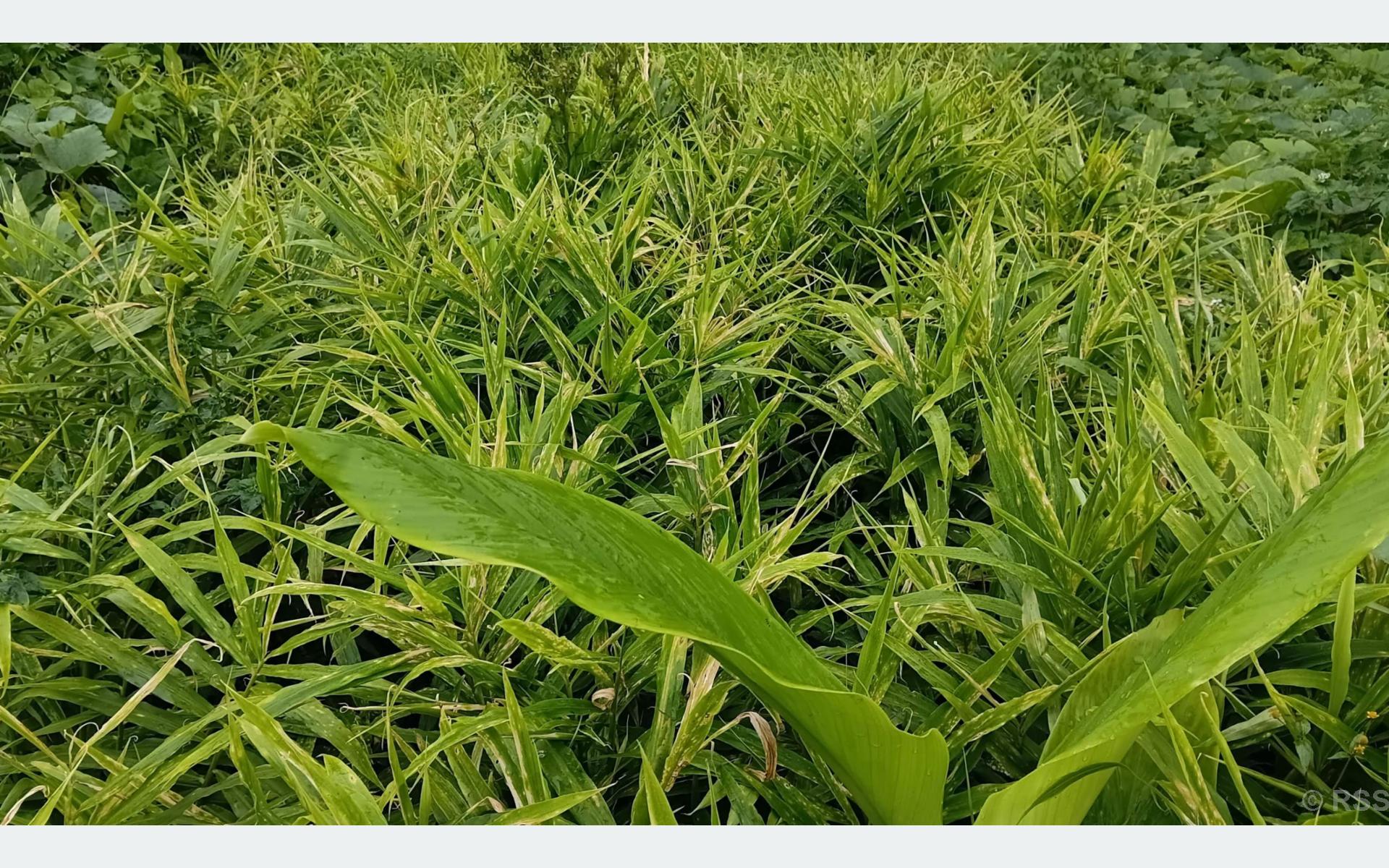
Limbu promotes bird conservation among communities along the Narayani river. He pointed to Chuhadi Ghol, a wetland the community has cleaned. Nearby paddy fields were sprouting fresh shoots. “If we keep the wetland clean, birds will find food here. These visitors fly a very long way, so we must provide them a safe place to stay,” he said. The shoots and grains left after harvest provide valuable food.
But this food source is disappearing as farmers plant other crops immediately after harvesting paddy. Mustard, buckwheat, lentils, peas, and maize are replacing the practice of leaving fields fallow and damp through winter. “People need food, so they do not leave the land fallow. But that creates a problem for visiting birds,” Limbu said.
Rajendra Suwal, an ornithologist and partnership development chief at WWF Nepal, said the presence of water alone does not make a wetland suitable for migratory birds. Ponds around four feet deep, often suitable for fish farming, do not provide the shallow feeding grounds waterbirds need.
Wetlands with water between half a foot and a foot deep, as well as damp fields left after the paddy harvest, offer better feeding conditions, said Suwal.
Dibyanagar in western Bharatpur, within the Kalabanjar buffer zone, has traditionally been an important feeding ground. But multiple cropping has reduced the area of open fields. According to Suwal, embankments along the Narayani have also reduced the flow of water into farmland and this makes the soil less moist.
Suwal identified Dibyanagar and Chuhadi Ghol in Chitwan, and Budhaulikuna in Nawalparasi East, as important habitats for winter migratory birds. Wetlands, paddy fields, the national park’s forest, and the Narayani river attract a variety of birds. Ruddy shelducks and bar-headed geese arrive in large flocks, alongside other waterbirds and cranes. Around 60 species of winter visitors arrive in the area from late October through November.
In 2025, observers counted around 4,500 ruddy shelducks and 2,500 bar-headed geese in the area, said Suwal. It is 15 percent more than the previous year. But he fears the trend will not last. “Few farmers leave their fields fallow after harvesting paddy. If land is not farmed, it may be sold for housing. Fields that grow rice today could soon be covered with houses,” he said.
The threat extends inside Chitwan National Park, where grasslands and wetlands are shrinking . Debital, a large lake in the park’s western sector, is filling with sediment and vegetation. Suwal said many wetlands formed inside the park after the 1961 floods, but several have since silted up or disappeared. “If we do nothing now, birds may have nowhere to feed or stay here in the next 20 years. We need to act immediately,” he said.
In January 2023, conservationists reported a decline in the number of migratory waterbirds in Chitwan, citing shrinking water bodies, pollution, and encroachment. A count recorded 49 aquatic bird species, down from 54 the previous year, alongside a sharp fall in common cranes.
Suwal said WWF Nepal had trained young volunteers in Kalabanjar and Lamichaur areas. Twenty young people have spent the past three years raising awareness, monitoring birds, and helping manage wetlands. Prem Mahato, chair of Lamichaur’s community-based anti-poaching unit, said they had explained why migratory birds and their habitats matter.
“Our three-year project is nearing its end. We mobilised young people in places where many migratory birds arrive and also supported wetland management,” said Suwal.
At Budhaulikuna, octogenarian Man Bahadur KC was chasing birds from his paddy. He bought one and a half bigha (1.02 hectares) of land beside the wetland in 1963. Using two empty plastic bottles, he made a loud clattering noise to scare the birds away.
“The paddy is ripening. The large geese that come to the wetland have not caused any damage, but there are flocks of smaller birds. I fear they will eat the crop, so I came to chase them away,” he said.
Suwal said scarecrows and noise were acceptable deterrents, but birds should not be shot, trapped or poisoned. They feed on algae, insects, fish, and leftover grain; some also eat mice and crop pests, benefiting farmers. But growing three crops a year and repeatedly spraying pesticides threaten birds and their food sources.
The local people, according to Limbu, have reported that some winter visitors occasionally eat lentils and other crops, creating tensions with farmers. “When birds eat what people have planted, farmers become angry. We need to think about what is the right way to manage this,” he said.
WWF Nepal has helped restore 11 existing wetlands and create four new ones, Suwal said. One of them is Boringdhap marshland in Kawasoti beside about three hectares of farmland. The wetland had been filling up with soil.
Bikan Kumari Mahato, chair of the Krishnasar Buffer Zone Community Forest, said that Rs448,000 had been spent to clear Boringdhap. Residents initially feared that attracting birds would lead to crop losses, but agreed to help after learning that wetlands also benefit people.
“Wetlands are not only for birds. They support wildlife and create opportunities for ecotourism and local income,” said Suwal. Many young volunteers work as nature guides and benefit from healthy habitats and birdwatching tourism.
Many species of winter migratory birds visit Nepal in winter. Bar-headed geese can fly higher than Mount Everest. They come from the Tibetan plateau, Mongolia and Siberia, where long summer days provide food and abundant time to breed. When winter brings snow and food becomes scarce, they travel south.
“Their feeding and resting grounds here are shrinking rapidly, while human pressure is increasing,” said Suwal. He urged communities and authorities to protect water sources before habitats disappear.
Ramesh Kumar Paudel is the Chitwan correspondent for Kantipur Publications.