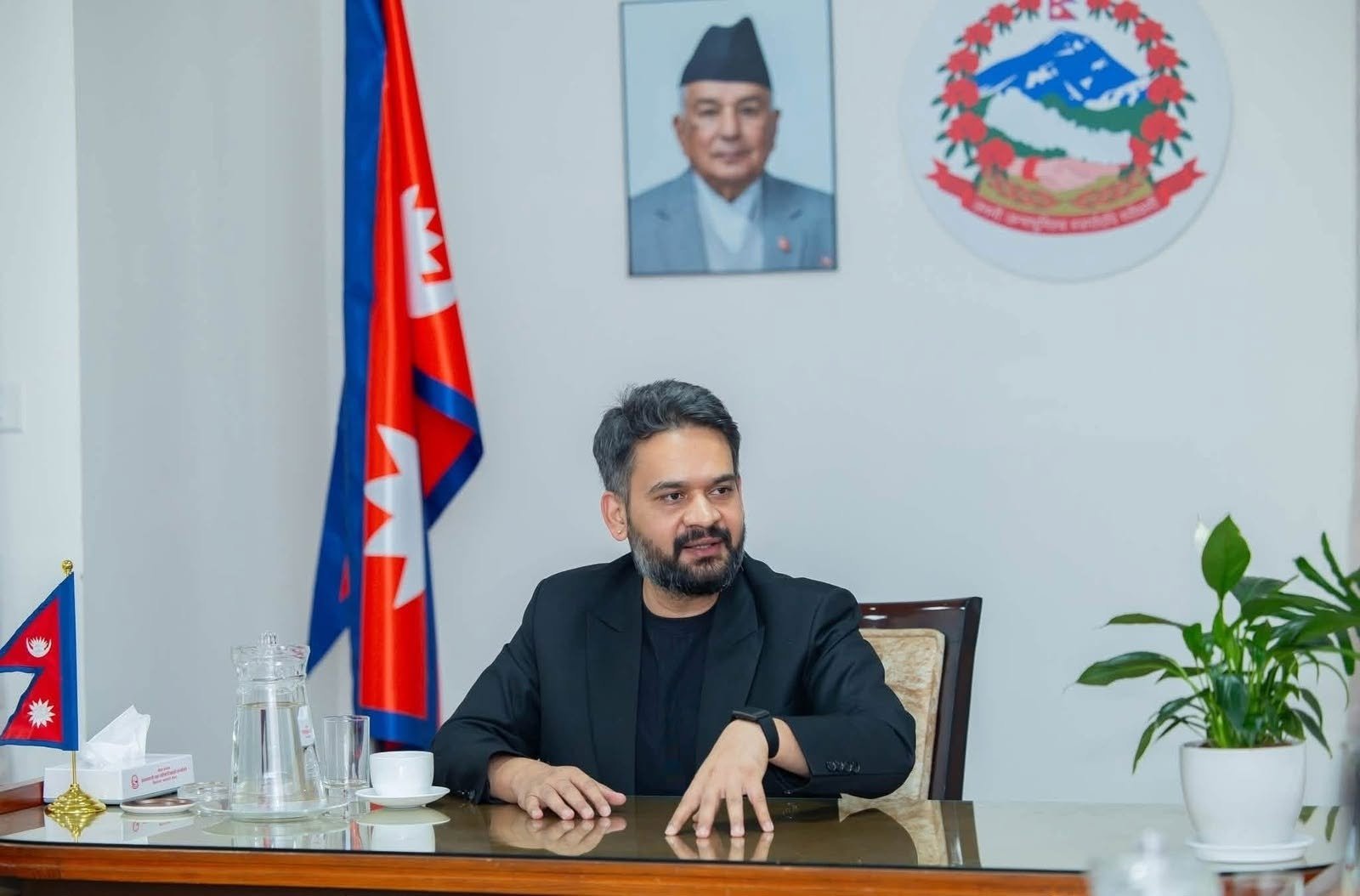
The Balendra Shah administration is increasingly relying on ordinances to govern, bypassing the legislature. Since the Rastriya Swatantra Party came to power in March, the government has issued 13 ordinances, while two more ordinances have been recommended to the President for promulgation.
The pace has raised questions about the government’s commitment to lawmaking through Parliament. Ordinances are meant to address situations in which immediate legal action is necessary while Parliament is not in session.
Constitutional experts and former parliament officials say that the Shah administration has used the exceptional provision as a routine governing tool, even when there is no apparent emergency.
“Only in extremely exceptional circumstances like war, epidemic, or a state of emergency can the government issue an ordinance,” said constitutional expert Bhimarjun Acharya. “The previous governments followed a wrong practice. A government that has nearly a two-thirds majority is repeating the same thing.”
Acharya said that allowing the executive to amend laws enacted by Parliament after extensive debate and consultation undermines the separation of powers principle. “When the executive gradually takes over the work of Parliament, there is a risk of arbitrariness,” he said.
Under Article 114 of the constitution, the President may issue an ordinance on the Cabinet’s recommendation when Parliament is not in session and immediate action is necessary. An ordinance has the force of law, but must be presented to both houses when they meet. It ceases to operate if either chamber of parliament rejects it or if it is not endorsed within 60 days of the first meeting of both houses.
The reliance is striking because the ruling Rastriya Swatantra Party (RSP) has a near two-thirds majority in the 275-member House of Representatives. A simple majority is enough to pass most bills in the lower house. The ruling party has no representation in the National Assembly but that does not prevent the government from introducing bills and pursuing the normal legislative process.
The first batch of eight ordinances came in April-May, barely a month after the Shah government took office. President Paudel, on the government’s recommendation, summoned a joint session of both houses of the federal parliament for April 30. A day later, the decision was suspended.
The unexplained reversal caused confusion. The reason became clear when the government began sending ordinances to the President from April 30. The constitution does not allow ordinances to be issued while both houses are in session. The government had cleared the way for its ordinances by suspending a session it had itself requested.
The eight ordinances issued between April 30 and May 5 amended 81 laws. They covered cooperatives, public procurement, universities, money laundering, health science academies, the removal of public office-holders, amendments to various Nepal Acts and the Constitutional Council. One ordinance on the removal of public office-holders amended 24 laws, while the university ordinance changed 14 university-related laws. Another amended six laws governing health science academies, and the omnibus legislation changed 19 laws.
The government said the changes were needed to improve administration and address legal gaps. But one measure enabled it to remove more than 1,500 officials appointed to public bodies, universities and academies by previous administrations. The ordinance on public office-holders amended the laws governing those institutions to facilitate their removal.
The Constitutional Council ordinance also changed the rules for meetings and decisions of the body responsible for recommending appointments to constitutional positions, including the chief justice and heads of constitutional commissions. The council is chaired by the prime minister and includes the chief justice, the Speaker, the National Assembly chairman, the opposition leader in the House and the deputy Speaker. The law minister participates when the council recommends a chief justice.
The amendment allowed the council to make decisions at a meeting attended by at least three members under the revised provision. The change strengthened the prime minister’s position and made it easier to secure decisions when some members did not attend.
Soon after the ordinance was issued, Shah convened a council meeting on May 7. The council recommended Supreme Court justice Manoj Kumar Sharma, then fourth in seniority, for appointment as chief justice. On July 3, the council also decided to recommend a chief commissioner and two commissioners to fill vacancies at the Election Commission.
The government did not take a replacement bill for the Constitutional Council ordinance through Parliament after opposition parties refused to cooperate. Four of the eight ordinances eventually lapsed because they were not endorsed by both houses within the constitutionally prescribed 60 days. They related to the Constitutional Council, removal of public office-holders, universities and amendments to various Nepal Acts.
The lapse did not automatically undo all actions taken while the ordinances were in force. The government had made appointments to vacant positions in public bodies, universities and academies, abolished civil servants’ trade unions and formed a commission to address informal settlers’ problems. The validity of some decisions remains contested.
Writ petitions challenging the Constitutional Council and public office-holder ordinances are being heard by the Supreme Court’s Constitutional Bench.
Soon after Parliament’s session ended on October 2, the government issued five more ordinances. They amended laws on disaster management, forests and land, and established the Nepal Academy of Science, Technology and Innovation and a separate framework for science and innovation. Some forest and land provisions had been included in April’s omnibus ordinance. After it lapsed, the government reintroduced them through ordinances rather than bills.
On November 3, the Cabinet recommended two more ordinances—one to amend the Press Council Nepal Act, 1991, and the other to amend some Nepal Acts, including those related to culture, tourism and civil aviation. The government is also preparing changes to investment and infrastructure laws ahead of a conference in Kathmandu on December 9 and 10.
Former federal parliament general secretary Surya Kiran Gurung said repeated ordinances showed disregard for parliament. “This is not the culture of a democratic system. An ordinance is meant to make a legal arrangement when something is immediately necessary and parliament is not in session,” he said. “The way ordinances are being issued shows that the government is trying to take legislative powers into its own hands. This is interference in Parliament’s jurisdiction and an affront to the sovereign legislature,” said Gurung.
Gurung said the practice had been encouraged by the previous government led by KP Sharma Oli and was now being continued by the Shah administration. In a democracy, elected representatives should make laws through discussion and public participation. Ordinances, by contrast, are prepared by the government without the same opportunity for Parliament, opposition parties or the public to scrutinise them.
According to Gurung, ordinances could be justified during a pandemic such as Covid-19 or a major disaster such as the Bhotekoshi flash flood, when urgent relief or legal measures were needed. “But bringing ordinances on any subject, at any time, is not in keeping with a democratic practice,” he asserted.
The Supreme Court has set limits on ordinances. In a June 2021 ruling, its Constitutional Bench said the government could not bypass Parliament to introduce laws on matters of long-term importance. It held that issuing ordinances for administrative convenience or a particular political purpose could improperly interfere with the legislature’s authority and effectiveness.
The ruling came in a case involving the citizenship ordinance issued by the Oli government after the House of Representatives had been dissolved. The court said the ordinance could create legal complications if it failed to secure parliamentary endorsement and questioned the decision to issue it immediately after dissolving the House. It said the proposed law could instead follow the regular parliamentary process.
Ordinance use has continued across successive governments. During Oli’s tenure from February 2018 to 2021, 31 ordinances were issued, according to a report published by the federal Parliament. His government also twice amended the Constitutional Council Act through ordinances, enabling recommendations for dozens of appointments while Parliament was dissolved or unable to function normally.
A parliamentary study, ‘Ordinances in Nepal: Status and Practice’, traces the pattern back to the 1990 constitution. Only 30 ordinances were issued up to 2002, with none in the fiscal year 1996-97 or 1999-2000. The number rose after the House was dissolved: 27 were issued in the fiscal 2003-4, 33 in 2004-5 and 79 in 2005-6.
During the interim constitution period from 2007 to 2015, a total of 39 ordinances were issued. Under the current constitution, none were issued in the fiscal years 2015-16, 2016-17 or 2019-20; three were issued in 2017-18, five in 2018-19, 11 in 2020-21, 28 in 2021-22, four in 2022-23, two in 2023-24, seven in 2024-25 and three in 2025-26.
The 13 ordinances issued in the fiscal year 2026-27 as of mid-November, with two more awaiting presidential decision, represent a sharp rise for a short period. The figures show that the practice is not confined to one party: parties have criticised ordinances while in the opposition and resorted to them after taking office.
Acharya said a government with a strong parliamentary mandate was expected to avoid repeating its predecessors’ mistakes. Instead, he said, it was using the same approach to make changes that should be debated in Parliament. Gurung warned that normalising the practice weakens the institution elected for making laws.