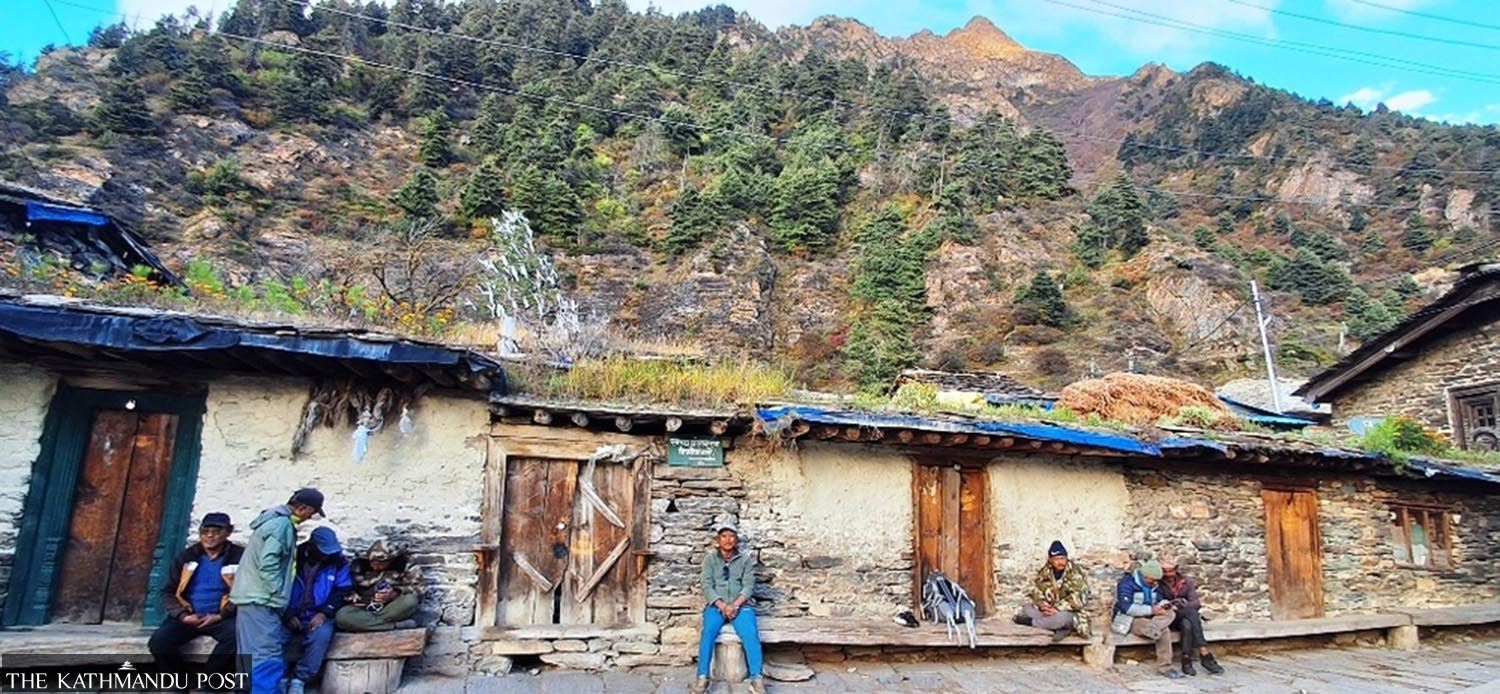
Whenever the dispute over Lipulekh, Limpiyadhura and Kalapani flares up in Kathmandu, residents of Chhangru and Tinkar in Nepal’s far northwest feel the consequences in their everyday lives. The villages, both in ward 1 of Byas Rural Municipality in Darchula, have no reliable road connection to the rest of Nepal. Residents must cross Indian territory to reach the district headquarters, Khalanga, and to bring in essential supplies. When tensions over the border rise, access to that route becomes more difficult.
For people living in these settlements, the political debate in Kathmandu is not an abstract question of territorial sovereignty. It can determine whether they can travel, transport goods or obtain necessities.
Dan Singh Tinkari, 65, a former member of the then district development committee, says residents bear the consequences whenever the border dispute dominates political debate in Kathmandu. Restrictions on movement and the difficulty of bringing essential supplies through India leave families struggling to meet even their daily needs. “They make speeches in Kathmandu. Here, our cooking fires go out,” he says. “It is as if their words burn us here.”
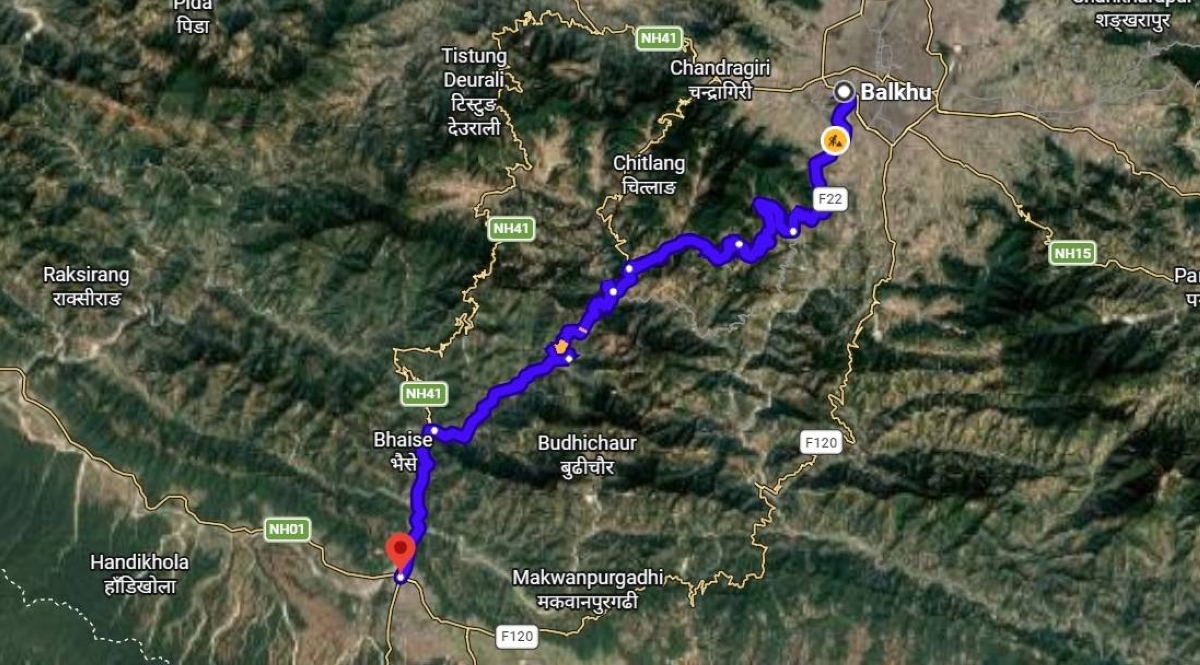
For residents, the alternative route through Nepal is arduous. The journey to Khalanga takes four to five days on foot and is frequently disrupted by monsoon floods and landslides or heavy snowfall in winter. With no reliable road or safe foot trail connecting the settlements to the rest of the country, residents rely on a route through Dharchula in India’s Uttarakhand state.
They need permission from Indian authorities to use it and are subject to checks and questioning by Indian security personnel. When tensions over the border rise, restrictions become tighter, making even routine journeys difficult.
The problem goes beyond travel. Residents say Indian authorities also restrict the movement of goods, leaving them struggling to bring home basic supplies. Bhupendra Singh Budhathoki says they depend entirely on India for essentials such as rice, flour, salt and cooking oil. Even these can become difficult to transport when restrictions are imposed.
Such treatment, he says, undermines their dignity and leaves them feeling abandoned by the Nepali state.
For 80-year-old Radha Bohara, the recurring debate over the disputed territories has brought little benefit to the people living closest to the border. She says politicians, activists and senior officials visit the area and make speeches in Kathmandu about going to Kalapani and Lipulekh, but leave residents to deal with the consequences. The government should either resolve the border dispute once and for all or stop raising it in ways that make life harder for people living there, she says.
The difficulties are not new. In 2021, Indian authorities refused to allow a Nepali census team to use the route through Indian territory to reach the settlements. The team had to take a hazardous route within Nepal and walk for four days to reach Chhangru and Tinkar.
Residents say people who speak publicly about the border dispute also face restrictions on their movement through India. Dev Lal Budhathoki says political statements achieve little if villagers encounter difficulties crossing the border the following day. Beyond providing citizenship documents, he says, the Nepali state has done little to ease their predicament.
Mangal Singh Dhami, chair of Byas Rural Municipality, says he too has faced restrictions because of his public stance on the border issue. In August 2023, while travelling through India to open an Armed Police Force border security post in Tinkar, Indian authorities stopped him midway and sent him back. He has not been allowed to use the route since. He believes his comments to the media about the border dispute may be the reason.
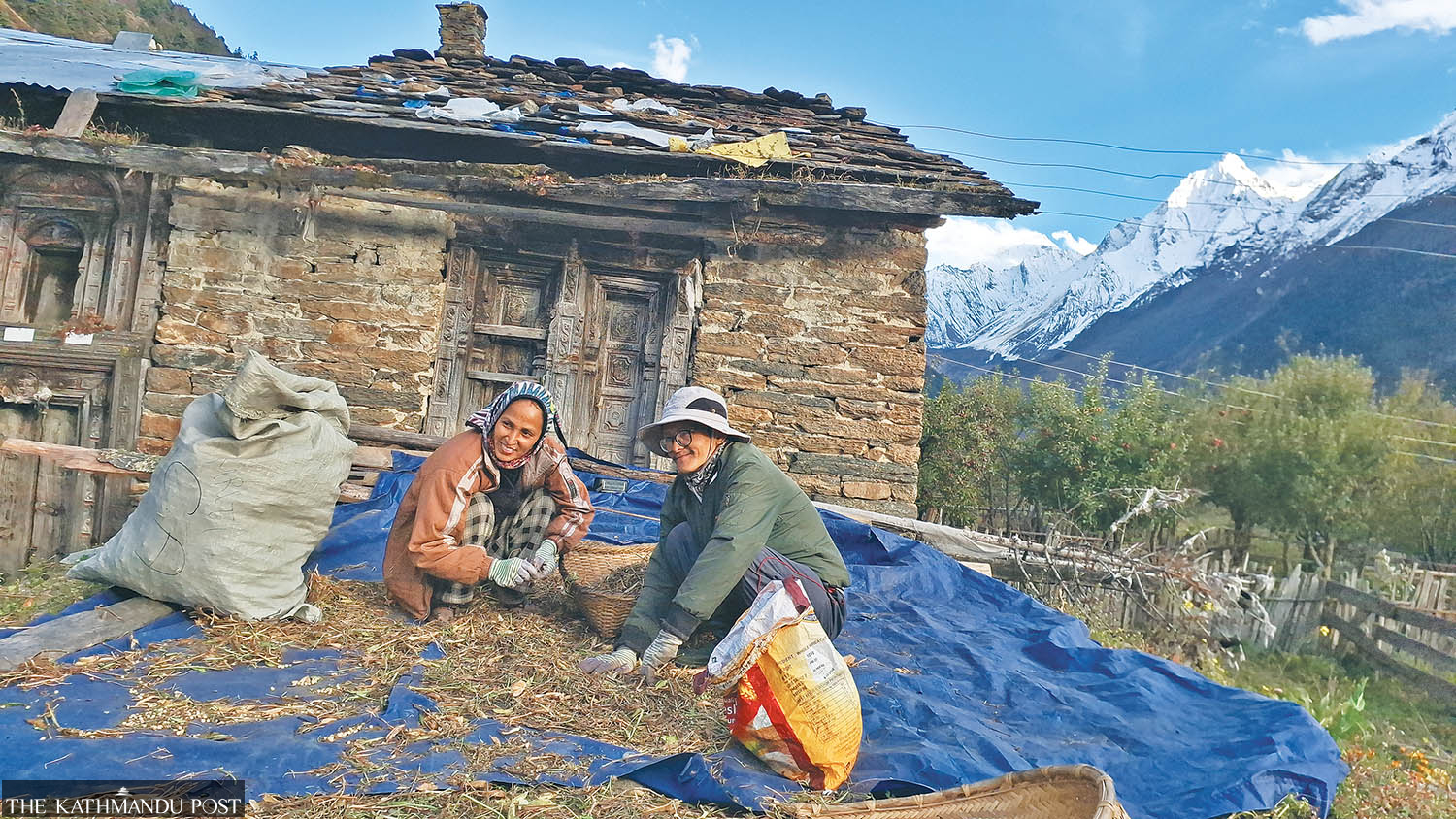
Chhangru and Tinker are home to around 200 families. After Tihar, they move to lower elevations with their livestock to escape the severe cold and heavy snowfall, staying there for about six months. They return to their villages in April, using the route through India.
Anjani Bohara of Chhangru says residents have no convenient route through their own country. When disputes over the border lead to restrictions on the Indian route, they have nowhere else to turn. The result is hardship for people whose daily lives depend on crossing a border that is repeatedly at the centre of national politics.
The restrictions have also disrupted a long-standing trading tradition. For generations, traders from the area travelled to India during the monsoon to buy goods such as jaggery, rock sugar, biscuits, sweets and utensils, which they then sold in Taklakot in Tibet. Indian authorities have stopped them from carrying goods for trade for the past four to five years, traders say.
Yogesh Bohara, president of the Darchula-Taklakot Trade Association, says the trade was a tradition passed down through generations. But traders have been unable to continue it for years. Whenever the Kalapani-Lipulekh dispute comes to the fore, he says, restrictions extend beyond commercial goods to food supplies and ordinary travel.
Political leaders raise the issue for their own interests, Bohara says, arguing that it should instead be resolved through diplomacy so residents do not have to bear the consequences.
Chief District Officer Bartaraj Paudel, who has been in the post for only four months, says he has not encountered any major problem so far. There have occasionally been complaints that security personnel stopped people carrying goods, he says, adding that local authorities coordinate with their Indian counterparts when such concerns arise.
For former minister and Darchula lawmaker Ganesh Thagunna, the situation reflects the state’s failure to understand the difficulties faced by people living along the border. He says neighbouring authorities become irritated when Nepal asserts its rights, but residents of Chhangru and Tinkar bear the greatest burden.
If Nepal had built a route connecting these settlements to the rest of the country, residents would not have to depend so heavily on India, Thagunna says. The state has yet to understand their predicament, leaving people in the country’s farthest northwestern settlements to pay the price whenever border politics heats up.