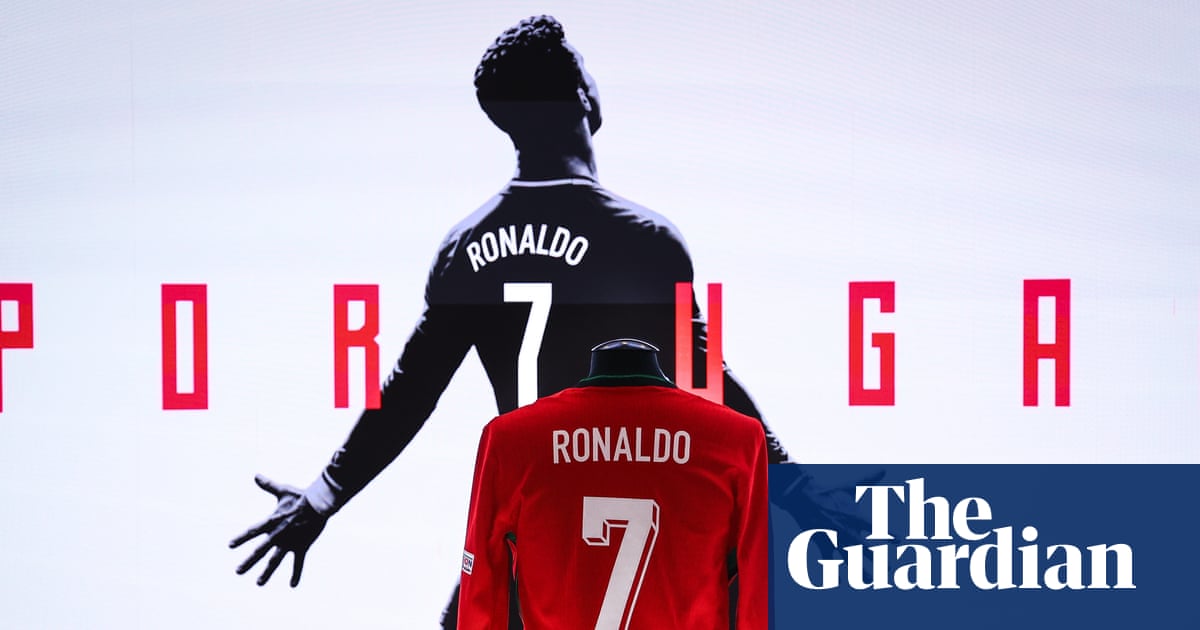
T here are days football fans hope will never come. For Portugal, this is one of them. For 23 years, Cristiano Ronaldo has been more than the country’s greatest footballer; he has been its defining sporting figure, a symbol of national pride and constant presence in the lives of supporters. After 234 appearances and 146 goals, the No 7 brought that chapter to a close and on Saturday night the team will play their first game without him .
The national side are losing more than a great footballer; they are also losing one of the world’s biggest brands. Daniel Sá, the executive director of the Portuguese institute of marketing administration, believes Portugal require reinvention to attract at least some of the millions of viewers who tuned in because of CR7.
“According to our latest evaluation, his brand alone is worth €850m (£710m),” he says. “People identify with his story: a young boy who travelled to Lisbon alone, lost his father and achieved success through his own hard work. Portugal has a long history of great players but no one has ever enjoyed this kind of global exposure. From a marketing standpoint, I have absolutely no doubt that most of the world watched Portugal’s matches because of Cristiano Ronaldo .”
Leonel Pontes, the technical director at Shanghai Shenhua, sees this reality in his everyday life. Pontes played an important role in shaping Ronaldo’s career at Sporting’s academy and became a mentor, helping the teenager from Madeira to cope with homesickness. He later coached Ronaldo as Portugal’s assistant manager and has been in China since 2023.
“When I tell people here in China that I’m Portuguese, the first thing they talk about is Cristiano,” Pontes says. “Just earlier this week, I visited an exhibition about his career here in Shanghai. I think his departure from the national team, which was always going to happen sooner or later, wasn’t handled properly. There were mistakes on both sides [by the player and the coach] but the country missed an opportunity to pay tribute to everything he has given us.”
So, what do the national team, who host Denmark in Braga, have left? A wealth of talent, certainly. Vitinha, Bruno Fernandes, João Neves, Nuno Mendes and Diogo Costa are some of the most prominent names in a squad packed with technical quality and tactical intelligence.
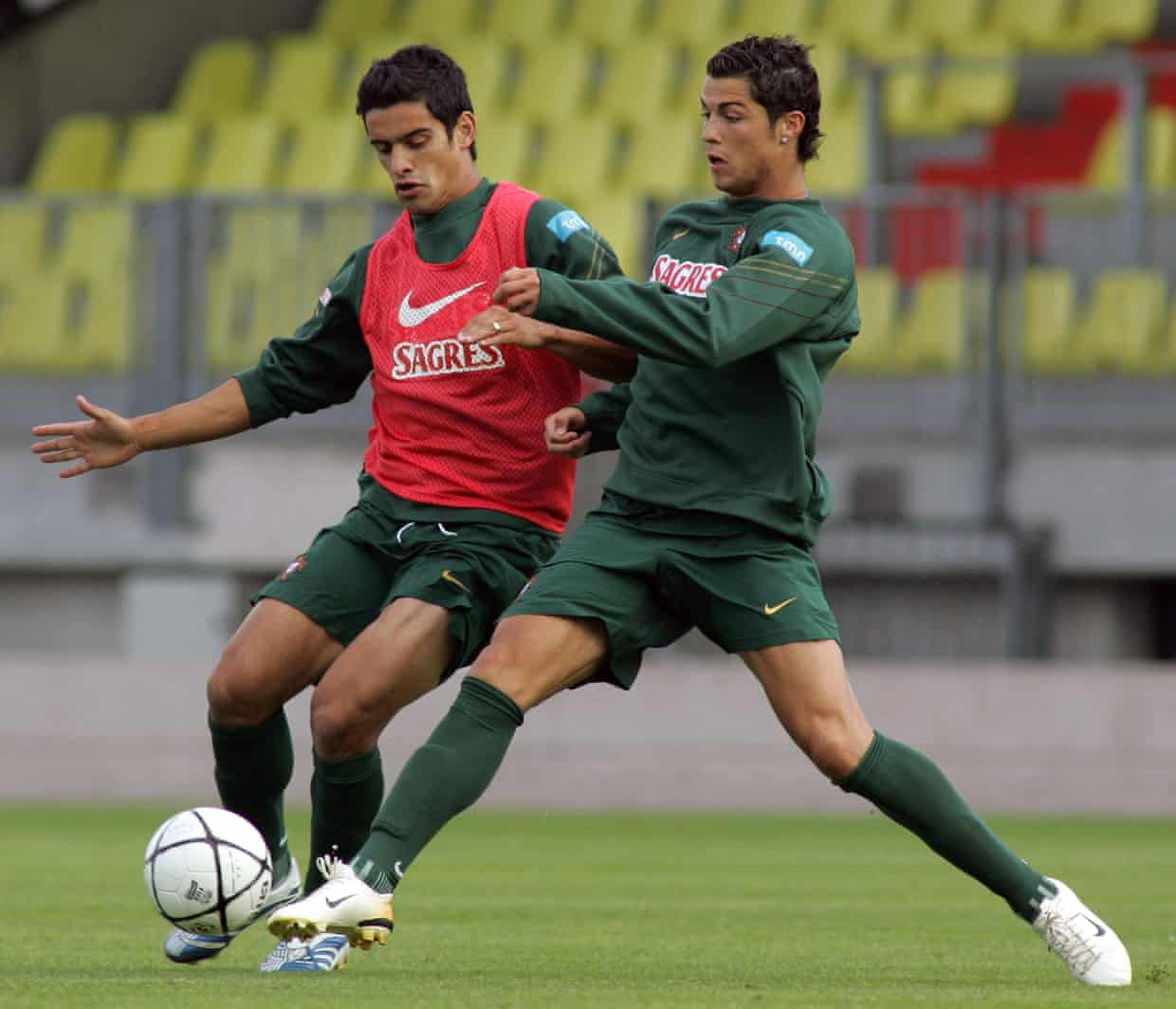
Petit, who played with Ronaldo for Portugal between 2003 and 2008 and manages the Azores club Santa Clara, says that talent must take responsibility. “Ronaldo could single-handedly solve a difficult game inside the box, with a free-kick or with another set piece. We, as teammates, were aware of it. But now we have great players from top clubs, they need to stand up. For some of them, this could be their last chance [for international success]. We are getting some younger players now. But Portugal has style and game ideas to be able to reach success.”
Replacing Ronaldo will mean more than finding someone capable of scoring his goals or wearing the No 7 shirt. He has been part of what it has meant to support Portugal. Fans grew up watching him, celebrating with him and, through the disappointments and triumphs, believing their national team could achieve something extraordinary with him leading the way. The country will move on but the era he leaves behind will be extraordinarily difficult to replicate.
Pontes, who assisted Paulo Bento with Portugal between 2010 and 2014, says: “He sacrificed a great deal for the national team. He played injured, he played when he wasn’t fully fit, but he was always there. He always gave his best.”
Ronaldo’s commitment to the game and love for Portugal was clear to Dany Mota, a Monza forward who trained with him at Juventus and with the national team. “When I arrived at Juventus, I had already heard the saying: ‘First to arrive at the training ground, last to leave.’ I wanted to see it for myself. So, one morning, I arrived really early, went to the gym, and there he was, already working out. After a few particularly demanding days, you would naturally start to feel a little tired or less motivated but that never seemed to happen to him. He would still be swimming, running or lifting weights in the gym. He was a machine and had an endless love for the national team.”
Portugal were blessed with talent before Ronaldo but major honours remained elusive. The so-called Golden Generation, featuring Luís Figo, Rui Costa and João Pinto, reached the semi-finals of Euro 2000 and, with a young Ronaldo, the final of Euro 2004, only to fall short. For Portugal supporters, there was a growing feeling that if the country was to triumph, it had to be with Ronaldo leading the way. He used defeat by Greece in the Euro 2004 final , on home soil, as fuel.
“He had a very particular ability to turn frustration into a desire to improve,” says Maniche, who shared the dressing room with Ronaldo during Portugal’s greatest football disappointment. “That characteristic has stayed with him throughout his career. Talent can open many doors, but it is that mentality that allows you to remain at the top for so many years.”
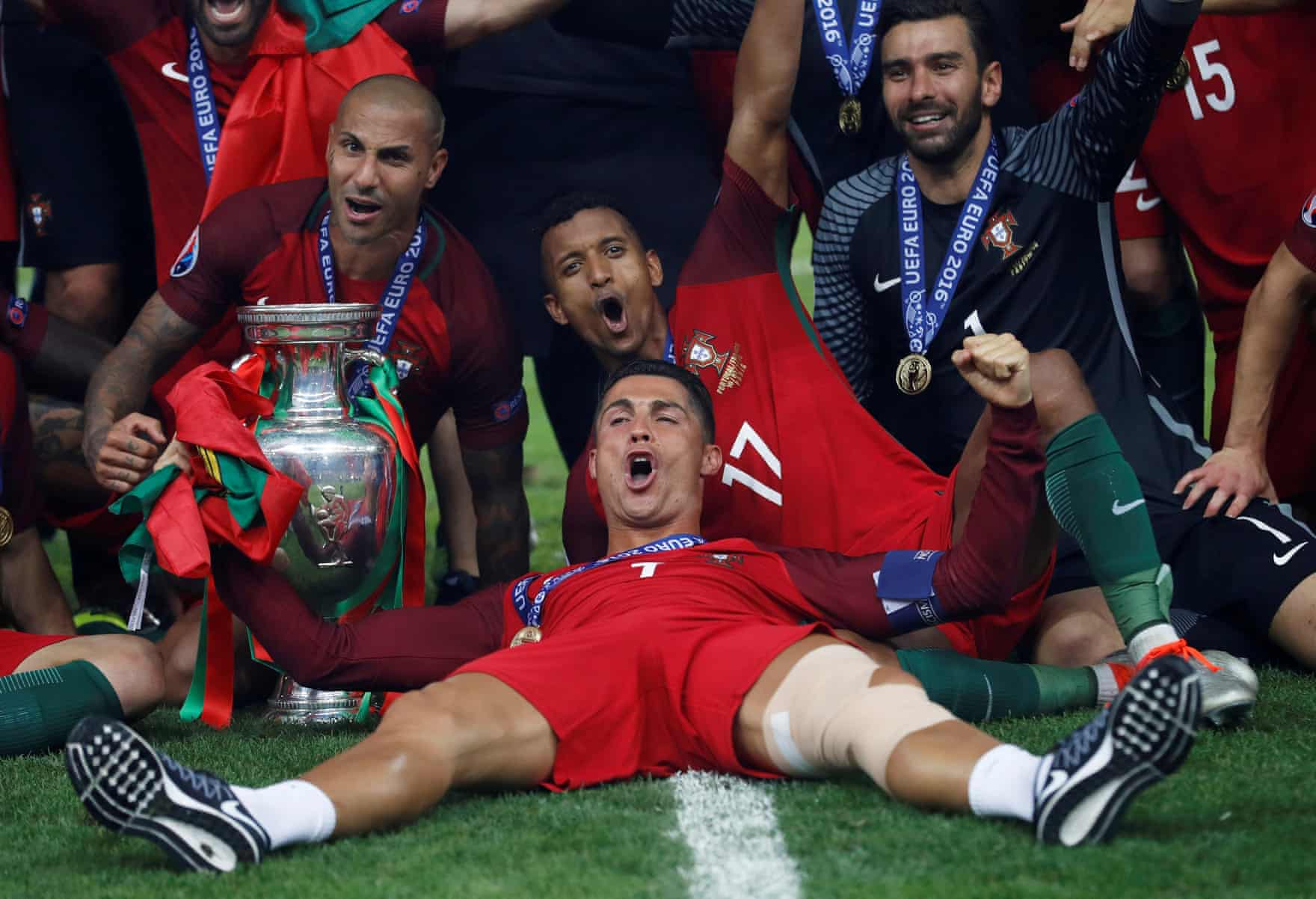
After Ronaldo’s 2004 tears of disappointment came tears of joy 12 years later when Portugal won the Euros in arguably the defining moment of his international career. Ronaldo was forced off injured against France but from the sidelines he encouraged his teammates, celebrated every intervention and experienced the final with the intensity of someone who understood what victory would mean to his country.
Millions around the world have identified deeply with Ronaldo’s journey. He embodies the fact that, regardless of where you come from or how difficult your circumstances, dedication, self-belief and an unwavering determination can take you further than anyone might have imagined. From a modest upbringing, with a father battling alcoholism, he has reached the pinnacle of football.
“When I first took him to the airport so he could fly back to Madeira for Christmas, I was afraid he wouldn’t come back,” Pontes recalls. “But he did. I’ve coached a lot of kids but Cristiano had two qualities I’d never seen in anyone else. First, he had a natural leadership ability and an extraordinary influence over his teammates, driven by his technical quality and fearlessness. Second, he possessed an exceptional mechanical understanding of his own body. He knew exactly how to position himself to achieve what he wanted, whether that meant adjusting his movement or striking the ball.”
At 41, his club career – with Al-Nassr in Saudi Arabia – has no end in sight. What still drives him, apart from the objective of scoring 1,000 career goals?
“It is a competitive mentality deeply ingrained in his personality,” Maniche says. “It is about the challenge of continuing to prove to yourself that you are good enough, that you can push beyond your own limits and sustain an extraordinary level of performance.”
Portugal did the extraordinary with Ronaldo. Can they do it without him?