Vivien Topalovic, Property Journalist
First published 11 Sep 2026, 2:09pm
The ambitious vision detailed in a recent report would create a new neighbourhood around major health, education and sporting institutions — but the stadium’s future is still up for debate.
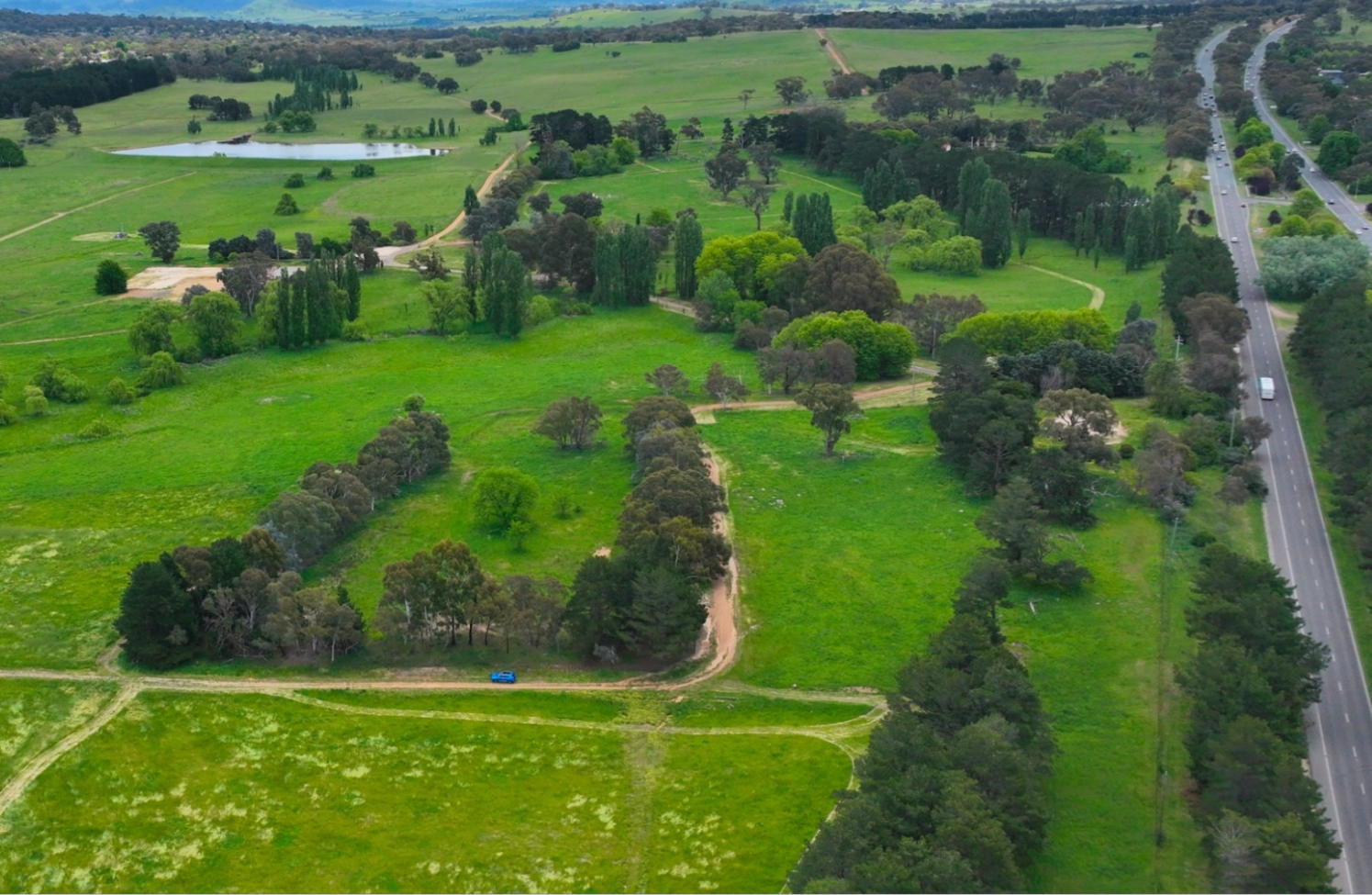
Up to 5800 new homes, a redeveloped Canberra Stadium precinct and a new rapid-transit corridor are among the possibilities outlined in a master plan for Canberra’s Bruce precinct.
The potential development area in Bruce, about 5.5km north-west of Canberra, has a population of 8119 people.
The Bruce Precinct Master Plan accommodates for up to 5800 new dwellings. Picture: Getty
The area has been identified as a priority location to help the ACT meet its target of about 21,000 well-located dwellings under the National Housing Accord by 2029, given its links to health, education, employment and public transport.
The Bruce Precinct Master Plan sets out two possible futures for the Belconnen suburb, bringing together the Australian Institute of Sport, Canberra Institute of Technology, University of Canberra, North Canberra Hospital and Canberra Stadium.
It identifies capacity for up to 5800 dwellings and about 41,410sqm of commercial space across the precinct.
Housing Industry Association ACT and southern NSW executive director Geordan Murray said the plan presented an opportunity for between 4000 and 5800 new homes to be built on underutilised land.
“Development of the underutilised land in Bruce has been foreshadowed for many years. It is great to finally see a vision for the precinct,” he said.
The report describes a medium-density, mixed-use neighbourhood with housing, commercial space, public areas and links to the precinct’s existing institutions.
It also proposes a neighbourhood centred on a green public heart, with typical buildings of four to six storeys and taller buildings in selected locations.
The report tests two different approaches to the precinct’s future.
Under the first scenario, Canberra Stadium would move to Canberra Institute of Technology (CIT) land, while the CIT campus could be relocated. The stadium would sit closer to rapid transit, with housing, mixed-use development and public spaces surrounding it.
Under the second scenario, the stadium would remain on its existing site for redevelopment, while CIT would stay where it is and be intensified over time.
A central rapid-transit corridor would run through the precinct, with the stadium, CIT and North Canberra Hospital connected by pedestrian-focused routes.
Both scenarios retain the North Canberra Hospital site and explore stronger connections between the precinct’s major institutions.
Property Council ACT executive director Ashlee Berry said the plan was an important blueprint for unlocking new housing, investment, jobs and economic growth.
“The inclusion of Canberra Stadium within the broader precinct vision demonstrates how major sporting infrastructure can support wider economic and community outcomes, creating opportunities for new investment, hospitality, tourism and activity across the district,” Ms Berry said.
“However, making sure transport infrastructure keeps pace with growth will be vital to long-term success. Moving tens of thousands of people to and from major events is a significant challenge that requires strong transport connections and improved accessibility across the precinct.”
The report’s transport principles prioritise walking, cycling and public transport within the precinct, while seeking to manage congestion during major events.
It also proposes a network of green spaces and waterways, with the report calling for at least 30% tree canopy cover and at least 50% of the site to remain a nature reserve.
Mr Murray said governments needed to agree on a pathway forward and identify early opportunities to release land for housing.
“Canberrans have become understandably cynical about the seemingly endless procession of strategies and visionary plans that do not include any timeline for delivery,” he said.
“The report identifies the possibilities. The next step must be for the Federal and ACT governments to agree on a viable pathway forward and provide a realistic timetable for delivery.
“That timetable should include early opportunities to release suitable land for housing.”
Ms Berry said the success of the precinct would rely on coordinated efforts in “turning the vision into delivery”.
“The Master Plan provides an important blueprint, but industry and the community need certainty and a clear pathway to delivery,” she said.
“The vision is compelling but without clear timeframes and milestones there’s a risk this Master Plan remains a concept rather than a catalyst for change.”
Are you interested in learning more about buying and building new? Check out our New Homes section.
Help us improve your reading experience
Got a minute? Your feedback will help us build a better experience for you.