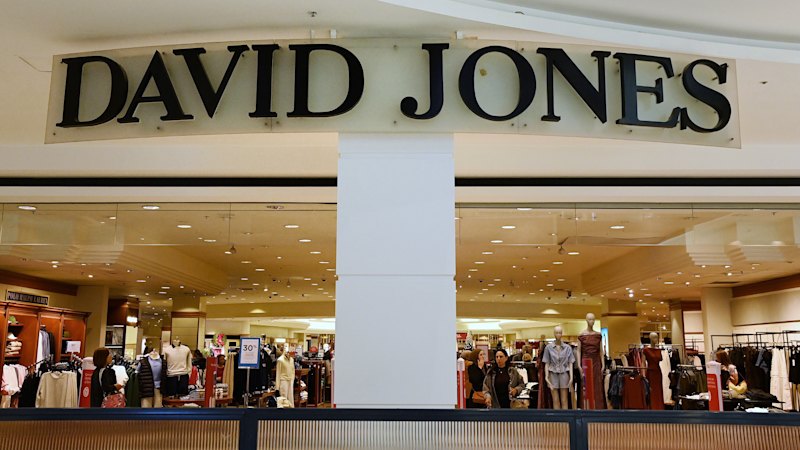
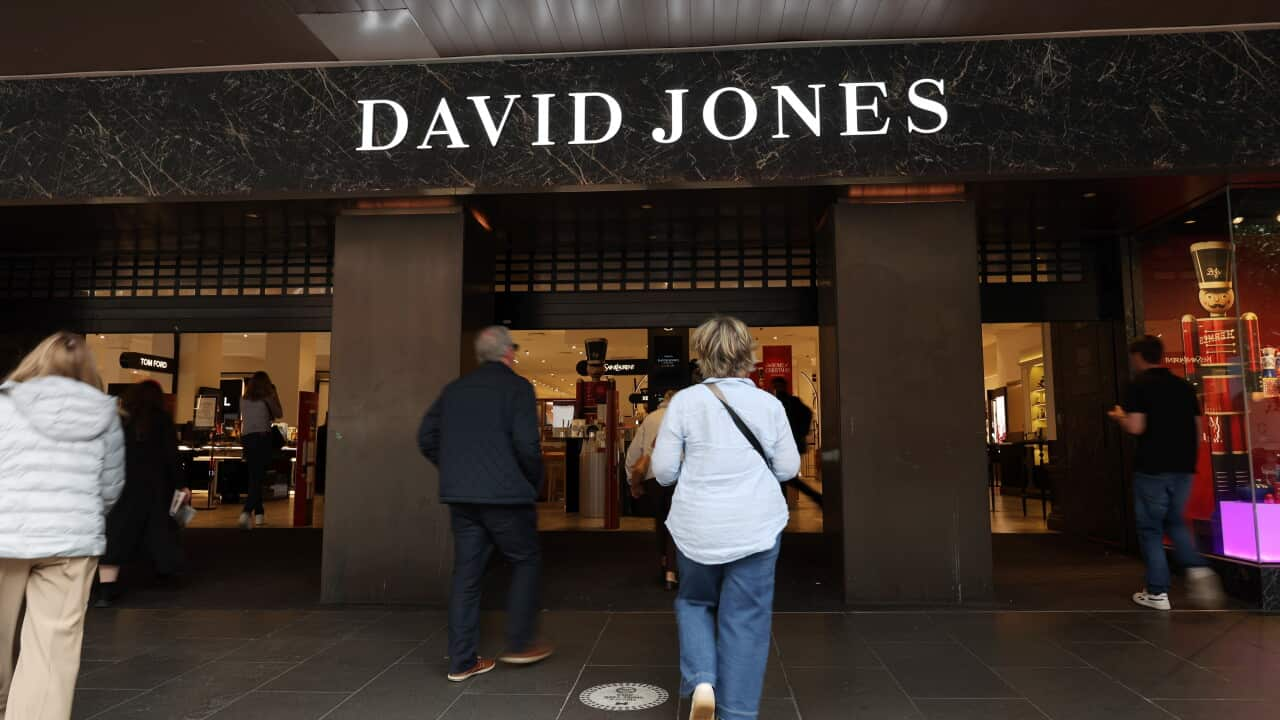
Economic pain felt in outer suburban areas could have fast-tracked the problems that overtook David Jones. ( ABC News: Fletcher Yeung )
David Jones is closing 19 stores across Australia and New Zealand, with the majority to close in metropolitan outer suburbs.
Property analyst Howard Penny says outer suburbs were disproportionately feeling mortgage stress.
According to retail expert Gary Mortimer, a changing business model is forcing major suburban centres to adapt to survive.
Acute economic pain being felt in the outer suburbs may have accelerated the demise of David Jones, according to property and retail experts.
The 188-year-old shopping giant announced on Wednesday that it would close 19 stores across Australia and New Zealand, with the vast majority being in metropolitan outer suburban areas.
Among those are stores in areas like Hornsby, Parramatta and Campbelltown in Sydney, Maribyrnong and Glen Waverley in Melbourne, and Robina on the Gold Coast.
Howard Penny says retail challenges reflect negative consumer impacts in emerging areas. ( ABC News )
Howard Penny is the head of Real Estate and Infrastructure Research for Australia and New Zealand at Citigroup.
He said that was a symptom of the financial strain in those areas after five interest rate hikes this year.
S&P Global Ratings data this week revealed that households in some outer suburbs in Sydney, Melbourne and south-east Queensland are more than twice as likely to be experiencing mortgage stress than the national average.
"It's new home buyers, it's young families, et cetera, and naturally the areas where these types of consumers are, are in the newer areas further out in the cities," Mr Penny said.
The announcement has also raised questions about how large suburban shopping centres will fare losing a large anchor tenant.
Nine of the stores that are closing are in Westfield shopping centres, owned by Scentre Group.
Scentre had offered David Jones discounted rents to continue trading, after the department store stopped paying rent in September.
Howard Penny said there was likely to be a short-term impact on Scentre Group, but that was unlikely to threaten the viability of its shopping centres in the outer suburbs.
"Although we are, in the short term, a little concerned as to the short-term impacts on income and rent due to the disruption, in the medium term, we remain optimistic, and we believe that in 18 months, these shopping centres may actually look even stronger on the back of this," he said.
After Wednesday's news, Scentre Group chief executive Eliott Rusanow was similarly confident.
"Our business is practically full, with occupancy at 99.8 per cent and strong demand for space," Mr Rusanow said in a statement.
"We have a unique opportunity at 17 Westfield destinations to introduce and grow local and international brands and experiences that our customers want."
Gary Mortimer says the fall of David Jones comes as major suburban centres shift. ( Supplied: Gary Mortimer )
Gary Mortimer is a professor at the Queensland University of Technology who specialises in retail and marketing.
He said the closures represent the changing business model of major suburban centres.
"A big centre once might have included an anchor tenant, be that a department store, and possibly a discount department store and a supermarket," Professor Mortimer said.
"Today, those centres have changed. Those centres are now underpinned by precincts: health precincts, services precincts, libraries, gyms, childcare, car wash facilities and a whole wide range of experiences and offers."
He said the changes in the composition and socio-economic pressures in outer suburban areas require shopping centres to adapt to survive.
"As the demography of those suburbs changes and the centre now is better representative of a Kmart, Target, Big W discount department store than a traditional department store, I think they'll have no problems filling that space," Dr Mortimer said.