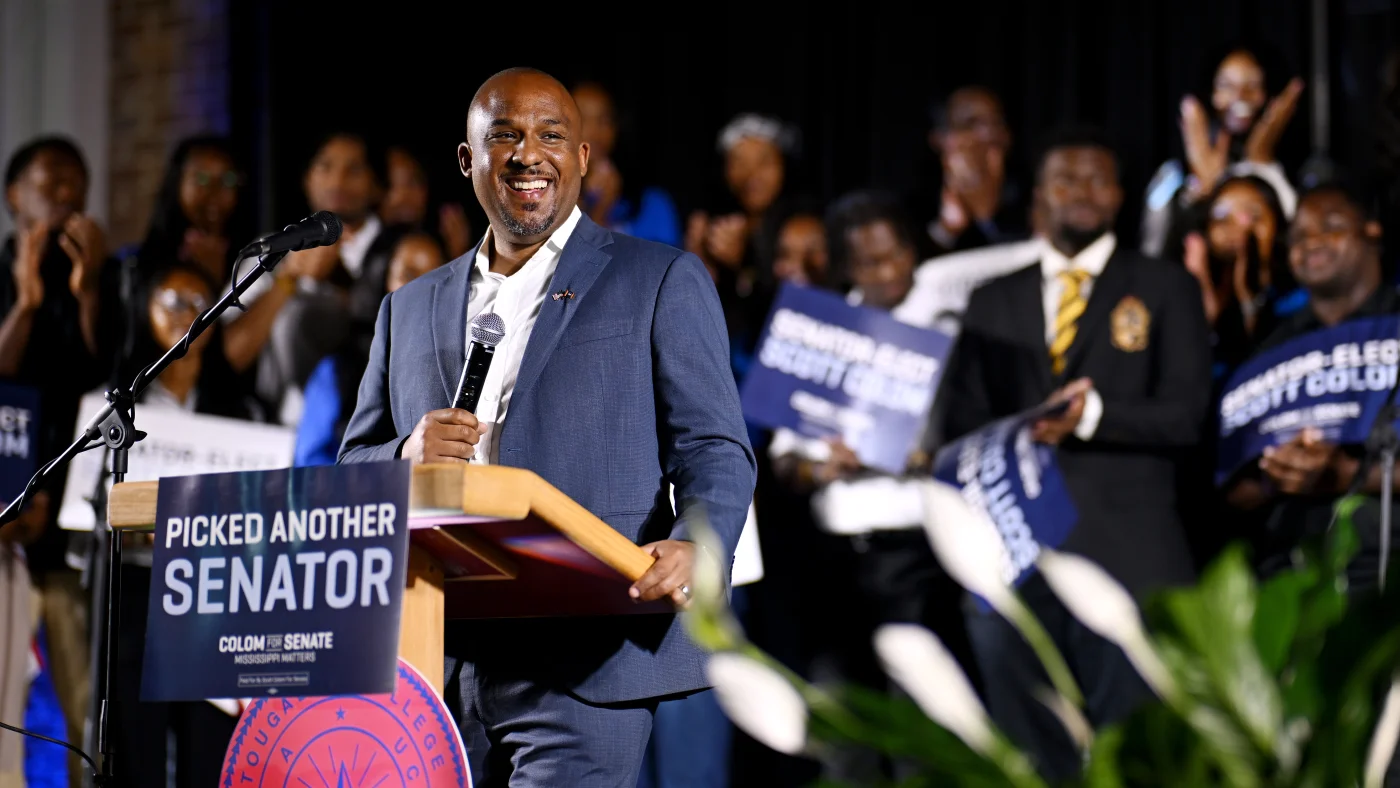
Democrats are celebrating a wave election in which they were handed control of both the House and the Senate.
But buyer beware: The pendulum of power is swinging more and more frequently in the United States.
In the 100 years between 1900 and 2000, control of the House, Senate or White House changed hands in Washington with relative infrequency, and never in more than two elections in a row.
In the 25 years since 2000, the party controlling the White House and/or at least one chamber of Congress changed in all but two US elections.
It is an unprecedented period of political turnover in which voters have pulled the lever for some kind of change — either picking a president from a new party or flipping the majority in the House or Senate — nearly every time they’re given the chance in recent years.
Voters increasingly complain the country is headed in the wrong direction no matter who is in charge of the executive or the legislative branch.
There is bipartisan frustration at a system that feels “rigged,” a perception that cuts across political lines and is driven by income inequality. Many Americans feel left behind and neither party has found the answer, despite promises made every election season.
At least one lever of power has flipped between Republicans and Democrats in Washington in each of the last seven elections — the most consecutive power changes going back to before the Civil War.
In five of the last seven presidential elections, voters opted for a president from the other party. In the same time period, voters elected a new Senate majority six times and picked a new House majority five times.
The only elections this century in which the House, Senate and White House all remained under control of the same party were the only two successful presidential reelection campaigns, for George W. Bush in 2004 and Barack Obama in 2012. Those are also the only times the same party held on to the White House this century.
Today’s politicians have come to expect frequent shifts in power.
The last four presidents have all assumed office with unified control of Washington and worked as quickly as possible to exploit it. Barack Obama, Donald Trump, Joe Biden and Trump again in his second term all utilized reconciliation to get around the roadblock of the filibuster in the Senate and pass some sort of sweeping agenda item without help from the other party.
For Obama, it was the Affordable Care Act. For Trump, it was tax cuts in his first term; in his second, it was a sweeping tax cut and agenda bill that pared back social safety net spending. For Biden, it was the Inflation Reduction Act, which had a lot more to do with clean energy and climate change than it did with reducing inflation.
President George W. Bush defied political gravity and picked up House seats after his first two years in office, but that had a lot to do with his popularity after the 9/11 terror attacks.
Bush lost the House four years later, after his reelection, when the public had turned on the wars.
Bill Clinton lost the House in his first midterm, the 1994 Republican revolution. It was the first time Republicans had gained control of the House since the 1950s. They’ve lost and regained the House twice in the years since.
Clinton picked up seats in the 1998 midterm, when the country turned against Republican efforts to impeach him.
One way the blue wave of 2026 is different is that Democrats will have a large majority in the House. With potentially 260 or more Democrats, they could end up with the largest majority since the early 1990s, the end of an era in which they routinely had large congressional majorities over the course of decades after World War II.
The closest corollary to today in terms of change elections is probably the late 19th century, according to Sarah Binder, a senior fellow in governance studies at the Brookings Institution.
“It was similarly a period of high partisanship and ideological disagreement,” she said back in 2025.
In fact, the 2026 midterm may be compared the most to 1894 , during the second term of Grover Cleveland — the only president besides Trump to serve nonconsecutive terms in the White House.
That midterm, when Democrats lost more than 100 seats, came during a period of economic uncertainty and railroad speculation, and the midterm helped usher in a major political realignment. This year will return Democrats to the kind of majority that has not been seen in the House since the early 1990s.
A larger realignment also does not seem implausible today as Democrats struggle to reconcile democratic socialists pulling them to the left with majority making moderates who won in red states. For Republicans, Trump’s MAGA coalition feels completely broken at the moment.