This audio is voiced by AI and may occasionally mispronounce words.
Share your feedback and help us improve this feature. Read more about how we use AI at SBS here.
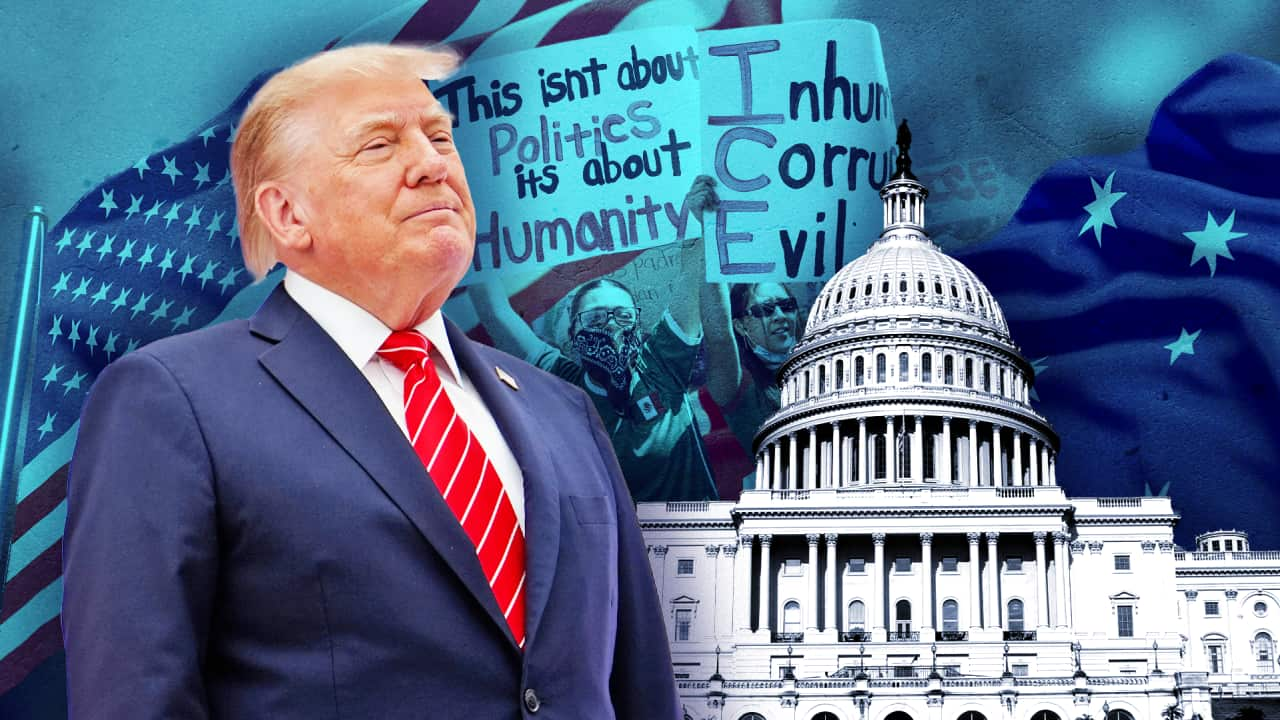
Despite long labelling itself a "nation of immigrants", the United States is in the middle of one of the most aggressive immigration crackdowns in modern history.
It was meant to be Donald Trump's strongest card — but with the 3 November midterm elections approaching, the question is whether it could become his biggest downfall.
The midterms fall halfway through a president's four-year term, when voters decide who controls Congress and, with it, how much Trump can get done.
That makes them a potential "referendum on the president", says Jared Mondschein, director of research at the United States Studies Centre.
Your trusted source for staying up-to-date with the world around you. Get free daily news updates and analysis, straight to your inbox.
"That's why the vast majority of midterm elections over the last half century have gone against the president's party," he tells SBS News.
If that pattern holds, Trump's immigration crackdown will be put to the test in the midterms and could determine whether one of his signature policies remains a political strength or becomes a liability for his party. Experts say the outcome could also impact Australia, where immigration remains a hotly debated political issue.
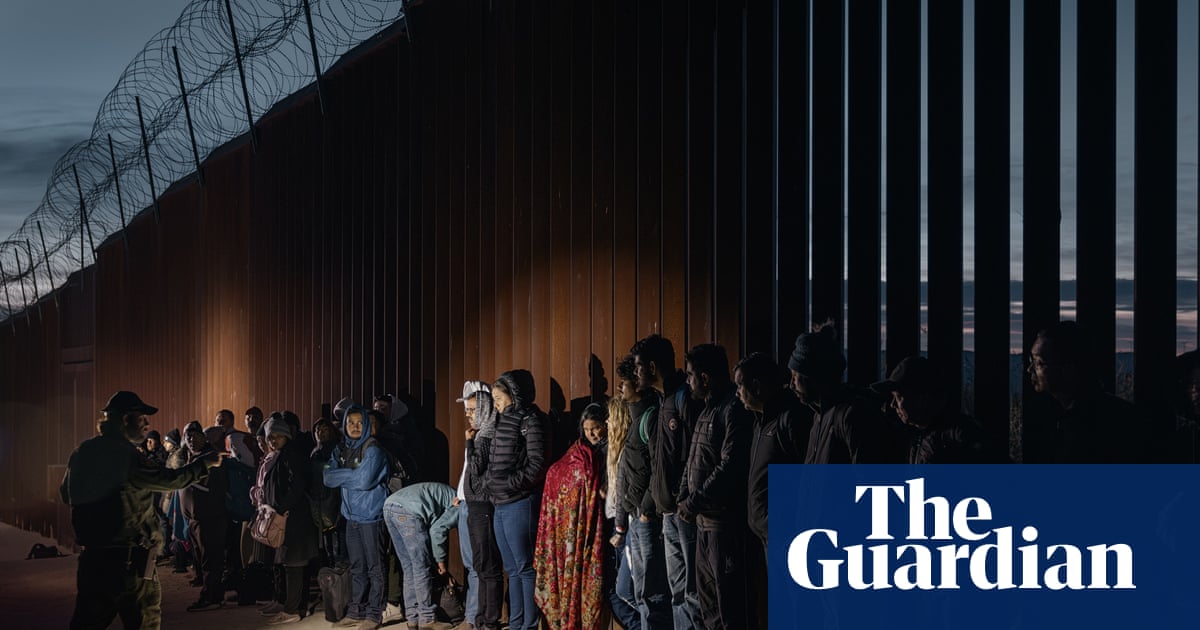
Trump has billed his immigration enforcement program as the largest deportation operation in US history.
It has played out through heavily armed Immigration and Customs Enforcement (ICE ) agents patrolling the streets, an expanded US-Mexico border wall , travel restrictions on people from so-called "high-risk" countries, and tighter vetting of visa applicants, including scrutiny of their social media activity.
This week, Trump froze green cards for Microsoft and other major IT outsourcers while opening investigations into nine top universities, marking one of the most significant moves against skilled-worker immigration programs and widening a crackdown the administration says targets fraud and protects American jobs.
The Department of Homeland Security says the administration has deported more than 605,000 people, with a further 1.9 million "self-deporting".
Emma Shortis, director of International and Security Affairs Program at left-wing think tank the Australia Institute, says the issue may have slipped out of the headlines, but not off the streets.
"The policy and the implementation of that policy continues on as is," she tells SBS News.
Mondschein, however, argues Trump's immigration policy is less fixed than it looks.
"The thing to understand about Donald Trump is that policy continuity is not his homework," he says, pointing to Trump's past suggestion of giving green cards to every graduate of a US university.
In his view, the crackdown has been as much a political strategy as a deeply-held position — one that worked for Trump in 2016 and 2024.
But experts say it might not work again.
Mondschein says public sentiment on immigration has shifted since Joe Biden's presidency, when concerns about the US-Mexico border became a significant issue in the 2024 election and helped shape Trump's campaign .
"Thanks to President Trump's significant [immigration] crackdown, there's now basically greater support for increased migration than there has been in years," he says.
He points to June polling by Gallup, a US-based polling and analytics company, which found 31 per cent of Americans want immigration increased and 29 per cent want it decreased, while 35 per cent want it kept at its present level — down from 55 per cent wanting less in 2024.
"It's only a few [percentage] points shy of where it was back in 2020, but that's the second-highest rate it's been since polling began in 1966," Mondschein says.
That does not necessarily mean Americans oppose tougher border enforcement.
Mondschein says border control is a different matter.
A majority of Americans still back tighter regulation at the border and enforcement against migrants with significant criminal records, he says.
What they oppose, he argues, is the way enforcement is being carried out— particularly the ICE raids that have become synonymous with Trump's second term.
"On the whole, what we're seeing is that a majority of Americans are not in favour of immigration authorities in everyday towns and streets taking on anyone they can find."
That's "entirely possible", according to Shortis.
"I think the cruelty and the overt racism and illegality of that policy has had a huge impact on the ground in the United States," she says.
She says mass organising against ICE , most prominently in Minnesota, "may well turn into voter turnout".
But she cautions the effect is hard to isolate from broader opposition to what she calls a "historically unpopular president".
She says besides immigration, other issues are also likely to influence voters. In some communities, opposition to data centres will drive voters; in others, it could be the overturning of Roe v. Wade.
Mondschein is more sceptical that immigration will be the deciding issue.
"The percentage of Americans who say that the economy is the number one issue has remained consistent since 2022," he says.
"Immigration was associated with that in 2024, but more than anything else, it was economic problems in 2024 that won Donald Trump the election.
"I think in many ways, the economy is the number one problem leading to record-low approval ratings for him right now."
Polling from The Economist/YouGov from 25-28 September asked Americans what they considered the most important problem facing the US at the time of the survey.
Taking out the top spot was inflation (29 per cent), followed by the economy (14 per cent) and presidential leadership (10 per cent).
Immigration came in at 6 per cent — tying with corruption, political polarisation, foreign policy and democracy.
Gallup polling from September found economic problems took up 31 per cent of responses for the same question, with the high cost of living, inflation, and the general economy among the key concerns identified.
Ranking high under non-economic problems was poor leadership (30 per cent), immigration (10 per cent) and the war in the Middle East (7 per cent).
The polling suggests immigration remains an important concern for some voters, but it ranks behind economic issues and presidential leadership in both surveys.
However, the two issues can easily become entangled, both experts note.
When population growth outpaces housing and affordability worsens, Monschein says "immigration is one of the first places many look to articulate their grievances".
Shortis says Trump has already used immigrants as "scapegoats", repeatedly singling out communities such as Somali Americans.
The Trump administration, however, frames its immigration policies around enforcement, national security and public safety.
Trump's immigration push is also creating friction within his own political base.
Last month, Republican senator Jim Justice, a Trump ally from West Virginia, told Politico the administration should "step back" and rethink its approach after three rancher associations said ICE operations were delaying beef shipments and causing financial losses.
Justice quickly reversed course, saying he supports Trump's immigration strategy "full stop" and accused the media of "twisting my words to score political points".
Mondschein says the incident was "telling".
"Not only is the Trump administration's immigration policy in terms of having immigration authorities in the streets unpopular, but ever-increasing numbers of Republicans are willing to speak out about it, at least not in a hard and aggressive way, but perhaps in a tepid way," he says.
He says lower levels of immigration could also have flow-on effects for the economy, which could perhaps sour opinion of Trump even more.
"So much so that economists are increasingly concerned about the economic impact."
What happens to the policy after 3 November is far less clear.
Shortis says Trump is unlikely to back down .
"He sees this as a winning issue," she says, and expects him to lean on it to energise his supporters before the election.
What happens afterwards, she says, depends on the make-up of Congress, how willing leaders are to use their powers, and the role of the courts.
Polling at the time of writing suggested Republicans could be at risk of losing control of the House and potentially the Senate, although Shortis stresses it is "not a normal electoral cycle".
Mondschein views a longer-term shift that may outlast Trump. Politicians on both sides took lessons from the Biden years, he says, when the border was seen as "out of control".
"Obviously, the Trump administration has gone perhaps further than most in terms of immigration enforcement, but I sincerely doubt that any future Democratic administration will look admiringly upon the Biden administration's immigration record."
The outcome of the midterms will be watched closely in Australia, where immigration is also a major political issue.
Labor aims to cut net overseas migration (NOM) from its current annual level of nearly 300,000 people to 225,000 per year.
One Nation has proposed a goal of 130,000, while the Coalition announced last week that it would aim to cut NOM even further to 100,000 — about a third of current levels.
The Greens are the only party that has not proposed any cuts to migration.
Both experts say whatever the result, there will be ripple effects here.
"The most similar dynamic would be the One Nation Party, but even then, their policy coherence really isn't all that apparent," Mondschein says.
For him, it's less a straight import of immigration policy than a shared sentiment flowing through Western democracies: that social welfare systems are failing people.
"Affordability and feeling like they are just not being able to keep their head above water is the dynamic that is seemingly shared across many developed world countries," he says.
But Shortis says there's a "reinforcement cycle" between Australia and the US, highlighting Trump's own admiration for Australia's offshore detention system.
"The Republican Party managing to hold on to power in this election cycle would certainly embolden racist rhetoric and the far right more broadly here in Australia."
But the opposite is also true, she says.
"The possibility that there's an enormous electoral backlash against this policy emboldens those in Australia who are fighting for a more just and fair approach to immigration and the kind of language that is proud of Australia's vibrant multicultural democracy."