Just over a week since a historic midterm election in the United States that brought sweeping 'blue wave' victories for Democrats and crushing defeats for Republicans, there has been a major change in the White House and fallout in Congress.
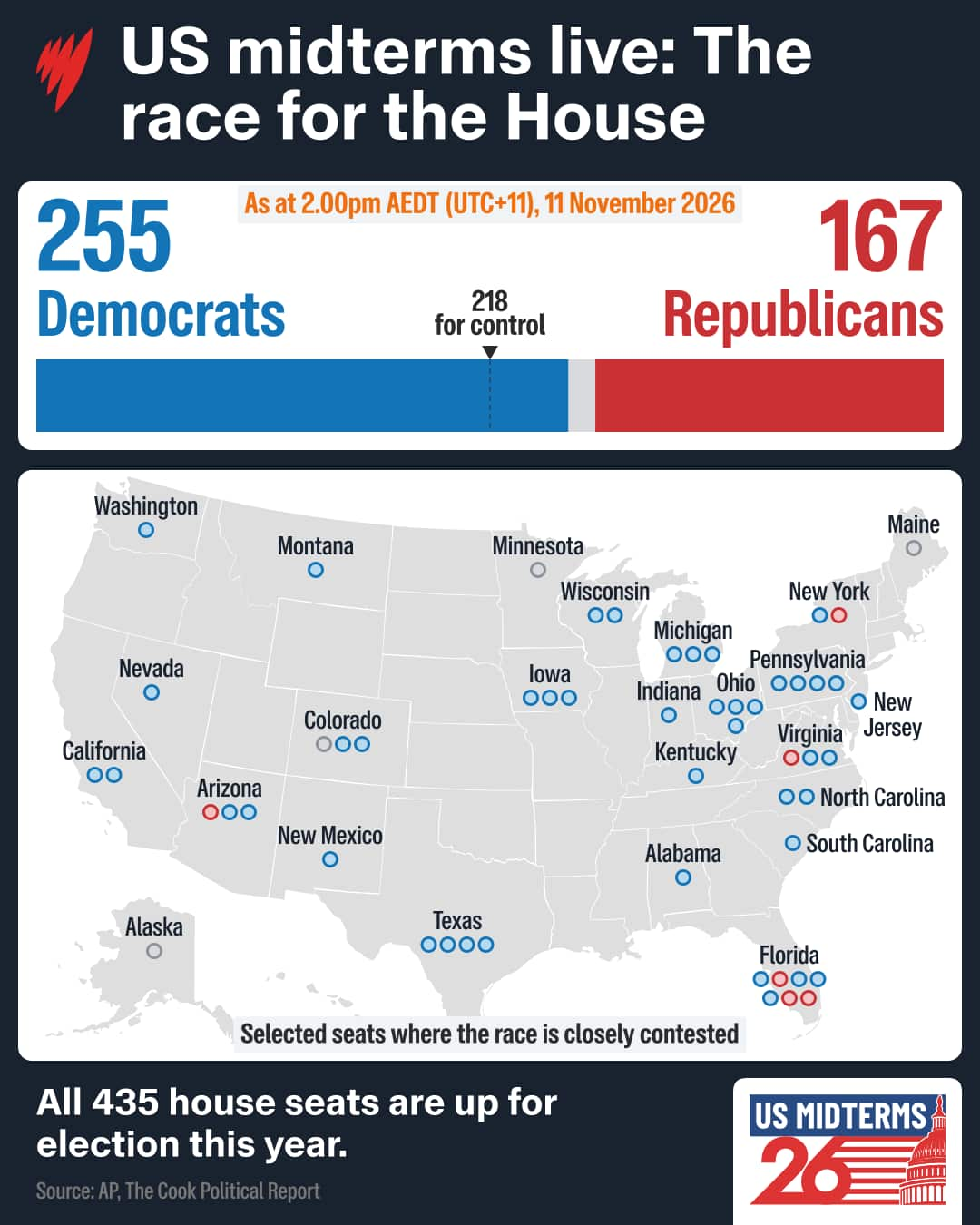
While some races have not been called yet, Democrats have so far secured 255 seats in the House of Representatives, compared to 167 seats for the Republicans.
In the Senate, Democrats have secured a majority with 54 seats so far, compared with 44 Republicans.
While Republicans still hold the majority in both houses, Democrats will take control of Congress in early January.
Your trusted source for staying up-to-date with the world around you. Get free daily news updates and analysis, straight to your inbox.
However, significant changes and political action have already been seen in recent days.
Following the midterms, Trump made a major staffing change in his cabinet, appointing Stephen Miller, the architect of his extreme immigration policy , as his new White House chief of staff.
The chief of staff typically organises the president's time and controls access to the president and who he meets with.
In a post on his Truth Social platform, Trump called Miller one of his "most trusted advisors".
The move to replace the former chief of staff Susie Wiles with a MAGA hardliner signalled Trump's defiance in spite of the bruising outcome for Republicans in the election.
After big defeats, US presidents typically fire high-profile members of cabinet, according to associate professor David Smith from the United States Studies Centre.
"Trump's really showing he is not listening to anybody about why Republicans lost the election," Smith said.
"Stephen Miller was the architect of the mass deportation policies that, instead of targeting violent criminals, targeted farm employees and 7-Eleven workers, which really changed mass deportation from Trump's most popular issue to one where Democrats now have an advantage."
Earlier this week, an impeachment attempt was launched against US defence secretary Pete Hegseth by Republican Trump critic Thomas Massie, who introduced articles of impeachment in the House detailing a series of controversies involving the former National Guard officer.
Several of the articles of impeachment related to the Iran war, accusing Hegseth of violating the War Powers Resolution, which requires congressional consultation and oversight of US military interventions.
In a speech praised by Trump, Hegseth denounced the impeachment attempt as a "political spectacle, a personal manifesto driven by ego and resentment".
On Wednesday, Republicans in the House blocked the effort, handing Trump a much-needed victory after the Republicans' midterm defeat.
The House voted 211-204 to send the impeachment resolution to the Judiciary Committee, effectively derailing a planned vote on whether to bring formal charges against the embattled Pentagon chief.
Trump called the procedural defeat an "EXONERATION of a Great American Patriot" in a post on Truth Social.
However, this may not be the end of Republican-led action against the administration in Congress, according to Smith, who said there are a number of disillusioned Republicans who, like Massie, are soon to leave office and are "going to make a noise on their way out".
"I think that this illustrates how much Republicans blame the war in Iran for their defeat in the midterms," Smith said.
Democrats will be looking to create their own noise, too, with Democratic committee leaders already drafting an oversight agenda targeting both the Trump administration and major corporations.
Democratic representatives have started putting Republicans on notice. Democrat Robert Garcia, who is set to become chairman of the House Oversight Committee, posted the words "LAWYER UP" to X last week.
Democratic senator Ron Wyden, expected to lead the Senate Finance Committee, simply posted "Subpoenas" an hour later. Delia Ramirez, a Democratic representative from Illinois, named several Trump administration officials in a post, telling them to "clear [their] schedule".
Congressional leaders from the Democratic Party continued these messages in appearances on political talk shows over the weekend.
While Trump signalled last week that he might be willing to work with Democrats in Congress, he's since doubled down on his plans to become "Mr Veto" — referring to the US president's power to reject bills passed by Congress.
With this potential stalemate, "Democrats are going to be making full use of the investigative powers of Congress", Smith said.
While they will have limited powers to stop Trump's war in Iran, Smith said they will use "investigatory power, both to try to sort of embarrass the Trump administration and also to put pressure on it".
Smith said there are a number of other targets Democrats will likely pursue, including Elon Musk and his role in the Department of Government Efficiency , as well as the US justice department and any figures in the administration associated with alleged corruption.
For the Democrats, it's likely the current minority leaders will become the leaders in Congress, with Hakeem Jeffries expected to become the first Black speaker of the House and Chuck Schumer to likely lead in the Senate.
However, there has been opposition within the party's progressive wing, which has called for Schumer to step aside and bring in the party's new guard.
Meanwhile, Republicans reelected John Thune as their leader in the Senate and elected Jim Jordan, a hardline ally of Trump, to minority leader in the House.
House speaker Mike Johnson announced he was stepping down from leadership after Republicans lost control of both chambers last week.
— With additional reporting by Reuters and Agence France-Presse.