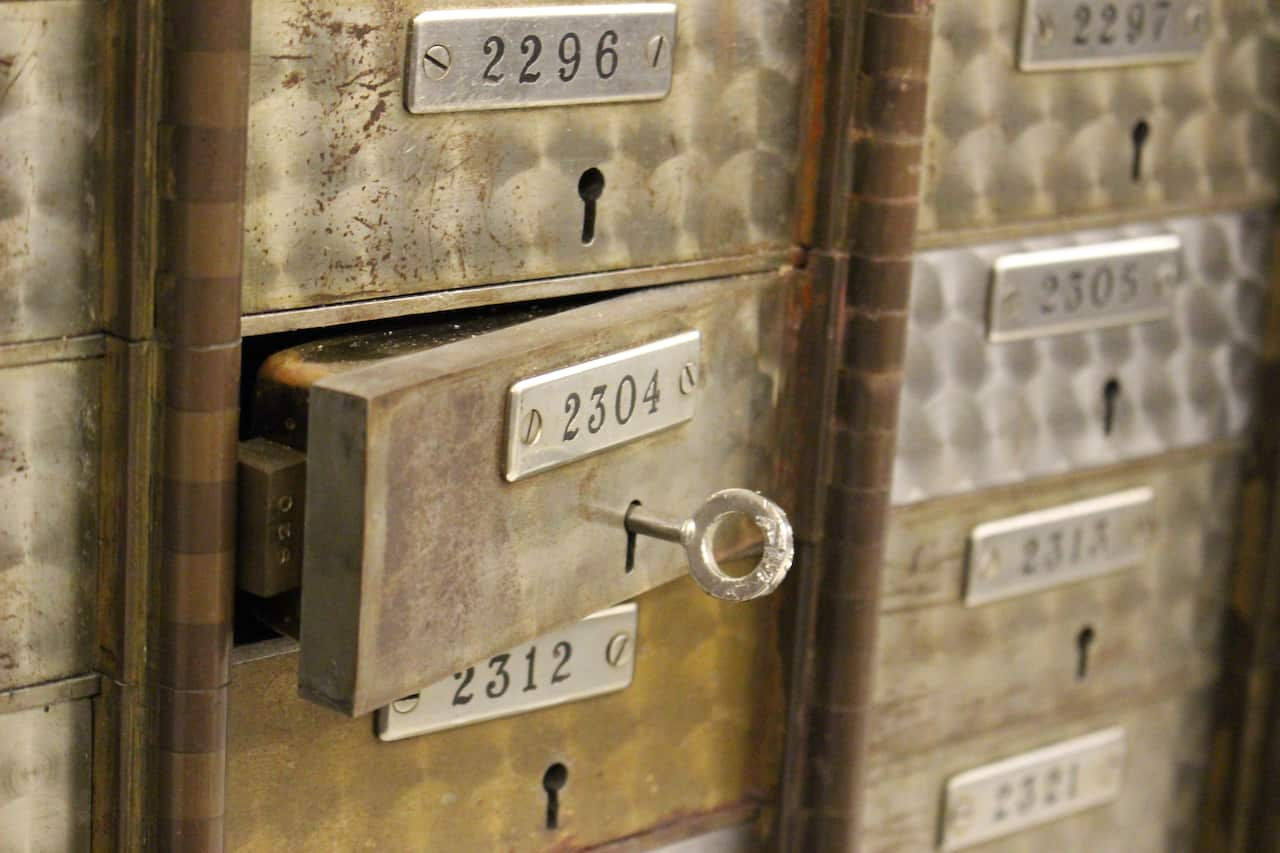

The 27-tonne door to this vault has been under Sydney's centre for a century.
In October 1926, it took around 25 horses to move it from the wharf to its destination in Martin Place, where the rest of the building was constructed around it.
It's also one of the few still operated by a big bank.
Australian banks have reportedly closed hundreds of vaults alongside the closure of physical branches, with the costs of maintaining vaults becoming too expensive.
But as banks withdraw from the market, private operators are picking up their unwanted facilities.
Your trusted source for staying up-to-date with the world around you. Get free daily news updates and analysis, straight to your inbox.
ABC Bullion is among companies that manage private vaults. General manager Jordan Eliseo the company has found demand demand had at least "doubled, if not tripled in the last decade".
Volatility in financial markets and higher inflation tend to stimulate higher demand for gold and precious metals.
"We had the global financial crisis 20 years ago. You had the European debt crisis about 15 years ago. You had Brexit. You had the pandemic, and then you had last year," he told SBS News.
"All of those all of those events have seen gold demand, and therefore demand for things like private vaults increased quite quite substantially."
Eliseo said there is strong demand in migrant communities, particularly those from China, India and Bangladesh.
"Consumers and households from those regions are typically quite friendly towards investing in gold. It's been a long trusted savings asset in those communities," he said.
There also tends to be higher usage of self-managed superannuation funds among these communities, according to Eliseo, where bullion can be used for retirement investment but may also require safe storage.
Westpac is the latest big bank to join ANZ and National Australia Bank in transitioning their vault services to private operators.
John Fleming, general manager at the Australian Security Industry Association, said it's a shift that allows banks to focus on their core services while private operators invest in vault offerings.
He said there has been "a lot of investment in these areas, and private people wouldn't invest in these areas if it wasn't a growth market".
As prices of precious metals like gold go up, Fleming said so does demand for ways to store them safely.
"People, even small homeowners who may have some jewellery at home who may not feel secure," he said.
Items often stored in vault security include precious metals, diamonds, family heirlooms, hard drives and important legal documents.
Fleming said vault storage operators invest in thorough security measures.
"They put a lot of effort in, whether it's video surveillance, biometrics, on-site monitoring, or seismic detection through the wall, so that somebody from the outside trying to drill or make a hole in the wall gets picked up straight away," he said.
While other big banks move away from these services, Commonwealth Bank of Australia (CBA) said it's a growing area for them.
CBA operates 135,000 safe custody vaults and have added around 32,000 new vaults over the last two years. Monica Wegner, CBA's executive general manager of everyday banking, said CBA experiences more demand around cultural festivals.
"We do see amongst our vault customers that about half of the vaults are occupied by migrants to Australia," she said.
"We observe people wanting to store things for different reasons," she said.
"Sometimes it's even natural disasters. You can imagine with things like fires, they don't want to have important documents at home. They want to have them in a safe space."
Wegner doesn't see demand shrinking any time soon.
"It's interesting because you might expect because other things are digitising, why would we still need these vaults?" she said.
"But at the end of the day, you still have customers that have things that are very precious to them."