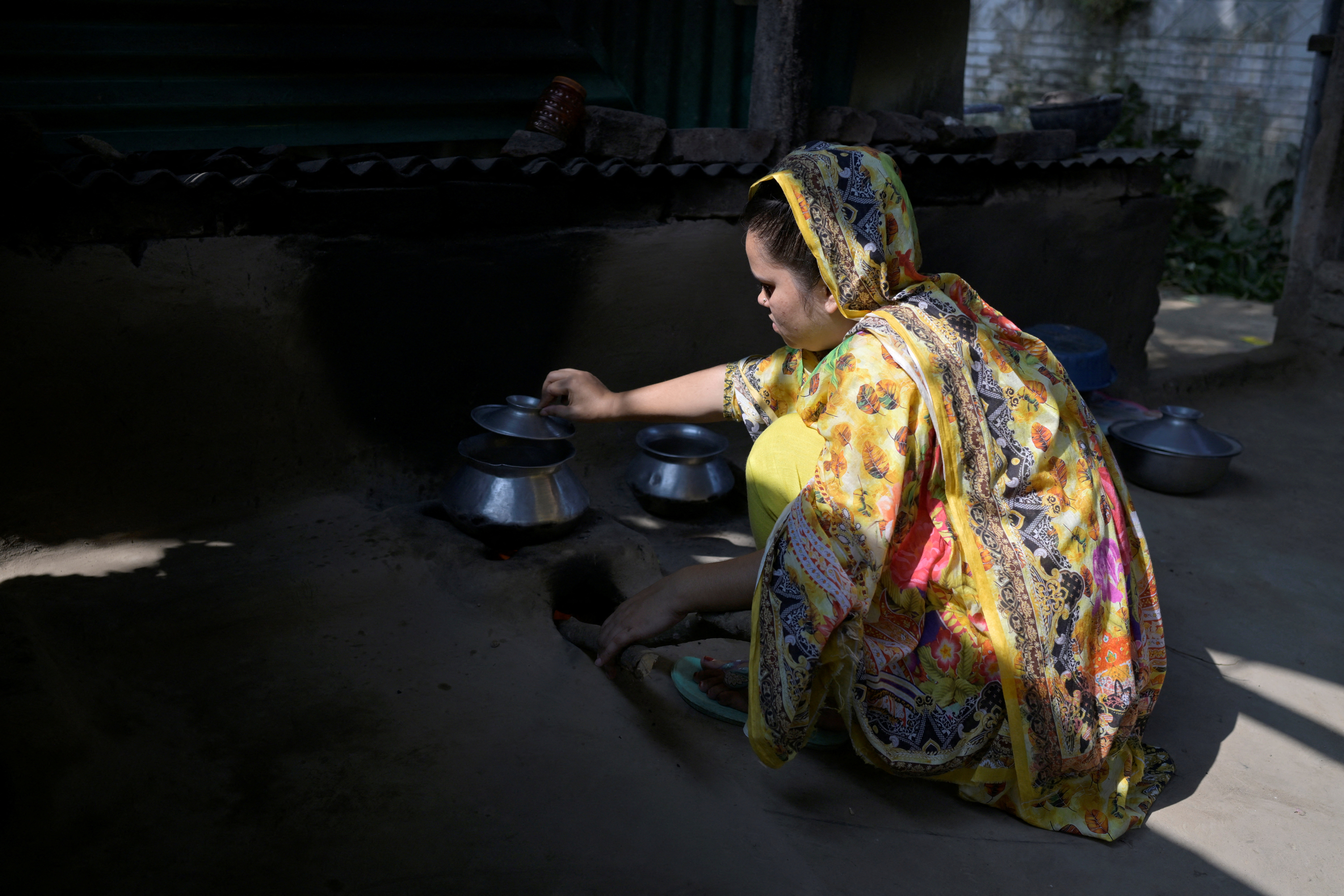
Before dawn each day, garment worker Shilpi Khatun cooks over a wood-fired clay stove because her family cannot afford gas, before heading to a factory in Gazipur, an industrial hub on the outskirts of Dhaka.
The 27-year-old is the sole breadwinner in a household where her husband is unemployed and her parents and in-laws depend on her wages.
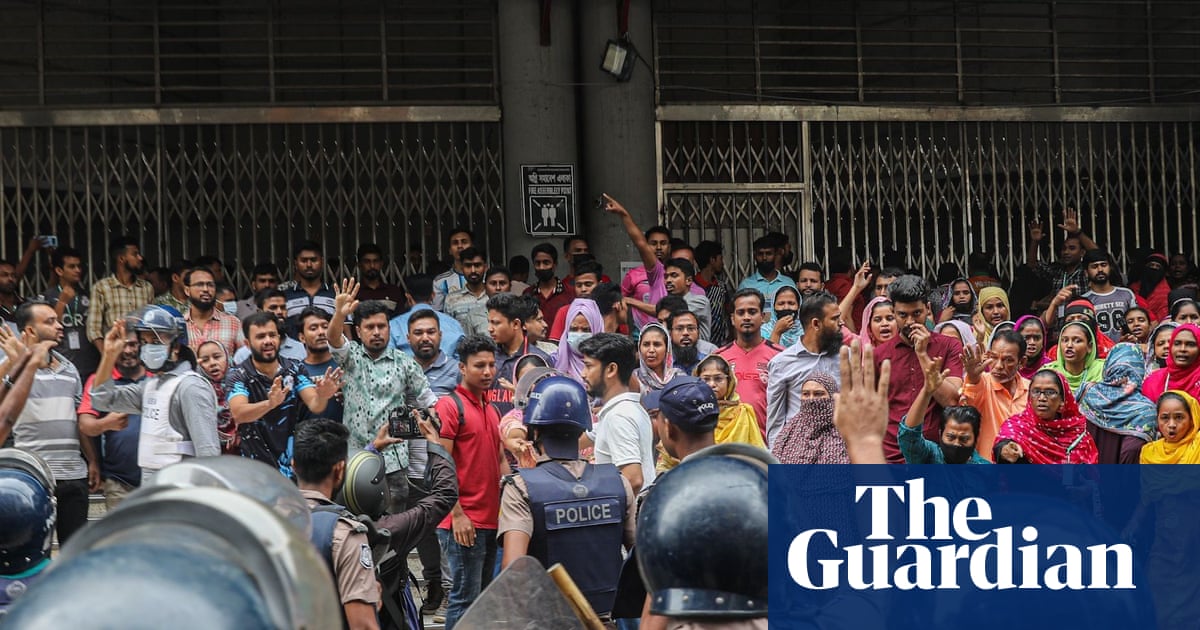
Rising prices have left Khatun struggling to afford basic necessities despite five years in the garment industry, a frustration shared by thousands of Bangladesh’s garment workers who staged protests last week demanding the minimum monthly wage be raised to 30,000 taka ($242.82) from 12,500 taka.
“Everything costs more now. Rent has doubled, food is more expensive and whatever I earn disappears before the month is over,” Khatun said as she gathered leafy greens outside her home to eat with rice for lunch.
Last week’s unrest, some of it violent, forced hundreds of factories to shut down as workers staged protests and clashed with police, who used tear gas and sound grenades to disperse demonstrators.
The government’s wage board agreed on November 4 to implement a revised wage structure from December, with workers set to receive their first pay under the new scale in January, but has yet to determine the size of the increase.
Low labour costs have helped make Bangladesh the world’s second-largest apparel exporter after China and a preferred manufacturing base for global brands including H&M, Zara, Gap, Primark and Walmart. The industry generates more than 80% of the country’s export earnings and employs more than 4 million people.
Manufacturers, however, say a steep wage increase would erode Bangladesh’s cost advantage over rivals such as India and Vietnam and further squeeze margins already under pressure from higher energy costs.
Workers also receive a 9% annual increment and two festival bonuses in addition to their basic wages, manufacturers say, arguing there is limited room for substantial pay increases.
Workers like Khatun say the wage increase has not kept pace with rising prices, forcing them to make difficult choices over everyday spending.
On the hardest days, Khatun’s family survives on puffed rice, she said. Sitting in the small tin-shed room she shares with her husband, she said she had not seen a doctor in three years despite worsening health problems.
Her salary has crept up over five years but not enough to match rising costs. She now earns 13,500 taka ($108), up from 9,000 taka when she started. With overtime, she earns about 16,000 taka, but the money rarely lasts until the next payday, she said.
Bangladesh has faced a prolonged cost-of-living squeeze since 2022, with inflation averaging around 9%. Food prices initially drove the surge, but non-food costs have remained high.
“I think twice before buying anything, even food,” said Roksana Parveen, a 29-year old sewing operator in a factory in Ashulia on the outskirts of Dhaka. “I know my daughters should be eating better, but I just can’t afford it.”
Parveen and her two daughters often live on little more than rice and vegetables, with meat and fish becoming luxuries beyond their reach. To cut costs, one of her daughters dropped out of school.