India is ready to help broker “food corridors” through the Black Sea, Ukrainian President Volodymyr Zelenskyy said after a phone call with Indian Prime Minister Narendra Modi on Monday.
The announcement came on the eve of United States-mediated talks in Abu Dhabi , with Russia and Ukraine returning to the negotiating table after a nine-month pause.
Hours later, India’s External Affairs Minister Subrahmanyam Jaishankar spoke with his Russian counterpart, Sergey Lavrov.
Russia and Ukraine have attacked one another’s ports this year, choking off grain and oilseed exports that feed import-dependent countries in Africa and South Asia, and leaving India short of sunflower oil.
What is India offering, why does it want the role, and can it deliver?
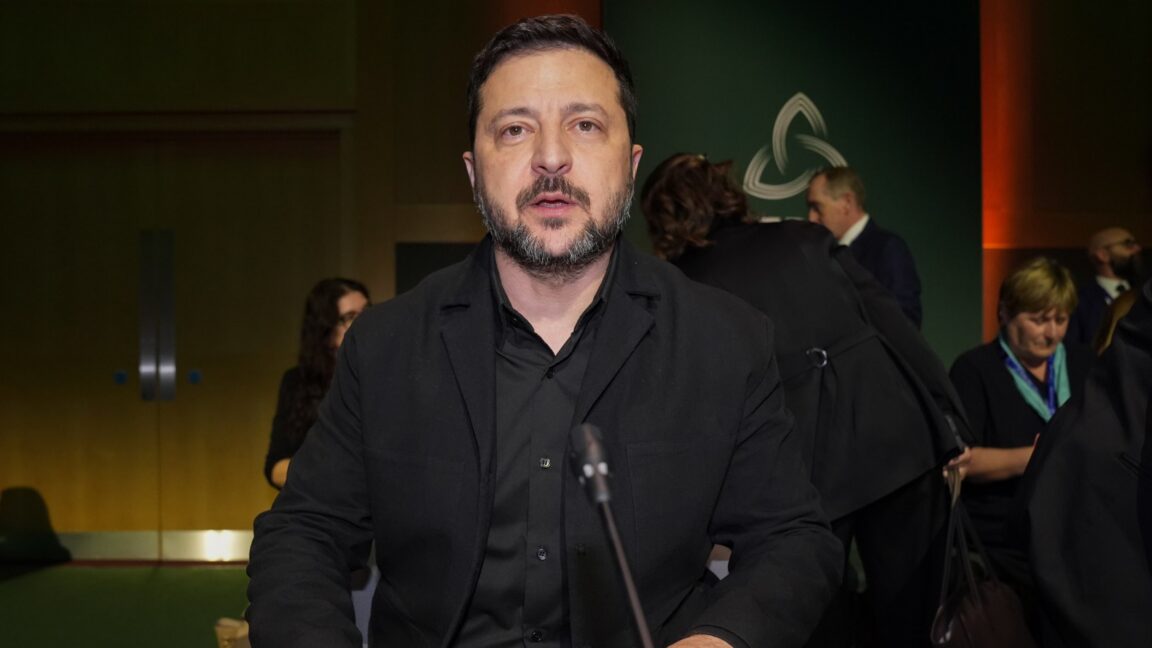
“India is ready to mediate in establishing food corridors, and we are counting on these efforts to continue,” Zelenskyy posted on X after the call. The leaders discussed Russia’s blocking of grain exports in the Black Sea, he said.
Modi did not mention food corridors or the Black Sea, but reaffirmed India’s commitment to contributing “in every possible way” towards a peaceful resolution.
Jaishankar said his call with Lavrov focused on the war and “ongoing diplomatic initiatives”.
While New Delhi has not published a formal plan, the offer builds on proposals Indian officials floated for weeks.
During a visit to Kyiv in September, Jaishankar reportedly spoke of a potential pause on strikes against Black Sea shipping and energy infrastructure. On October 4, he said India was talking to both Russia and Ukraine about shipping safety, grain and energy exports and “non-attack possibilities”.
“India has become quietly proactive of late,” Praveen Donthi, senior India analyst at the International Crisis Group, told Al Jazeera.
Previously, India was “reticent … regarding a mediation role” and limited to “rhetorical calls for diplomacy and dialogue”, he added. Jaishankar’s September visit was a sign of stepping up, he said.
By early October, Kyiv received four ceasefire proposals from India, Turkiye, Egypt and the US.
Ukrainian Foreign Minister Andrii Sybiha called India’s proposal “the broadest”, because it covers both the Black Sea and energy infrastructure. The US plan offers only a halt to strikes on energy facilities.
Kyiv says it will accept an energy and Black Sea truce only if the two come together. Russia has so far rejected partial ceasefires, insisting on a comprehensive peace agreement instead.
Ravi Joshi, a visiting fellow at the Observer Research Foundation in New Delhi and former civil servant, told DD India that “an immediate understanding or a ceasefire is important, and that’s what India can talk about”.
He added that insurance remains a current challenge.
“The ships are not being adequately insured. The insurers are not guaranteeing the safety of the ships,” he said.
The Black Sea tensions cost India directly.
On November 3, the Ministry of External Affairs said five Indian nationals had been killed in attacks on commercial vessels in the Black Sea and two more had gone missing.
India is also the world’s biggest importer of vegetable oils and buys most of its sunflower oil from Russia and Ukraine. Its edible oil imports fell 7 percent in September.
Sunflower oil imports fell to 108,837 tonnes that month, the lowest since April 2022, the Reuters news agency reported. In October, a 20,000-tonne Russian cargo bound for India was cancelled because of damage to port infrastructure, and about 60,000 tonnes more were delayed.
“For India, this is a priority because this has caused fluctuations in grain prices and increases. So there’s an alignment there,” Maximilian Hess, a fellow at the Foreign Policy Research Institute, told Al Jazeera.
According to Donthi, of the International Crisis Group, US President Donald Trump “has accused India of funding the Russian war efforts for buying Russian oil “.
“By mediating in the war, with some concrete proposals, India stands to gain geopolitical heft and credibility that might blunt some of the unwarranted criticism it received in the recent past,” Donthi said, adding: “It will add to its global prestige after having lost some sheen in the past year.”
Before Russia’s full-scale invasion in 2022, about a third of the world’s grain exports passed through the Black Sea, with Ukraine supplying a tenth of global wheat exports and 15 percent of maize, Al Jazeera has reported .
Disruption hits food-importing countries hardest, particularly in Africa and parts of Asia.
This year, the Black Sea has turned into a two-way port war.
Russia has intensified strikes on Ukraine’s Odesa ports, which normally handle about 90 percent of its grain shipments, while Ukraine has hit Russian grain terminals.
In August, Ukraine’s Ministry of Agriculture cut its forecast for 2026-27 agricultural exports by more than half, to about 29.6 million tonnes, RBC-Ukraine reported . By mid-August, attacks on shipping had shut down more than 97 percent of Russia and Ukraine’s grain export capacity in the Azov and Black Sea basin, according to Reuters.
The last deal of this kind, the United Nations- and Turkiye-brokered Black Sea Grain Initiative, allowed nearly 33 million tonnes of food to leave three Ukrainian ports from July 2022, before Russia withdrew a year later.
India is one of few major powers with working relationships in both Moscow and Kyiv.
Joshi said India’s strategic autonomy puts it in a position to push for peace because New Delhi is “friends with both” sides.
In July, it summoned Moscow’s charge d’affaires to condemn a Russian strike on a merchant vessel that killed 10 people, including four Indian crew members. Days later, it summoned Ukraine’s ambassador over an Indian seafarer killed in a Ukrainian drone strike on the MV Omorfi, PTI reported.
It is also a customer both sides need.
In the 2025-26 marketing year, India imported 1.46 million tonnes of sunflower oil from Russia and 443,000 tonnes from Ukraine, according to the Indian Solvent Extractors’ Association (SEA), alongside large volumes of Russian crude.
Hess, at the Foreign Policy Research Institute, said Zelenskyy approached India “because they have leverage over Moscow, and they are one of the few major buyers of its oil still”.
He added that a large amount of Russian money sits in the Indian financial system, which Moscow wants to keep access to.
For a start, New Delhi has not publicly confirmed the offer. Modi only spoke of contributing to a peaceful resolution, leaving India’s commitment in question.
Kyiv also has doubts about India’s neutrality. Ukraine has repeatedly pressed New Delhi over its purchases of Russian oil, which Jaishankar defended during his September visit, saying they would not determine the course of the war.
Hess said Zelenskyy “wants to show India that it should perhaps revisit the state of its partnership with Moscow”.
“It’s important for Ukraine to show everybody that Russia isn’t a trustworthy partner,” he said.
India also lacks a physical foothold.
The 2022 grain deal relied on Turkiye, which controls access to the Black Sea through the Bosphorus and hosted the deal’s joint inspection centre in Istanbul. Any new corridor would need ships, insurers and inspections that India cannot supply alone.
Turkiye, Egypt and the US have all tabled proposals, and the Kremlin says the Abu Dhabi talks are trilateral, with Washington as the sole mediator.
Above all, a corridor would now require both sides to stop. Unlike in 2022, Ukraine is also striking Russian grain terminals. Russia, for its part, walked away from the last grain deal in 2023.
Hess said earlier attempts towards a standalone corridor failed “because Russia kept attacking Ukrainian ports”, and that shipping recovered only when Ukraine used naval drones to push Russia’s fleet away.
Russian and Ukrainian delegations are meeting in Abu Dhabi on Tuesday and Wednesday, but talks are stuck on the issue of territory – something that is “impossible to negotiate”, said Joshi.
Hess added, “Russia has yet to offer any concessions and has, in fact, increased its own demands in places. The negotiations and these offers have alternate aims other than an actual deal, but rather to affect the thinking and the positioning of other countries.”
With troop casualty numbers at record highs, Moscow is likely to be facing pressure domestically, he said.
“Russia’s entire purpose of engaging in negotiations with Europe and the United States is to divide and conquer,” Hess said. “For the Russians, [it is] about trying to make the Ukrainians take the blame. For the Ukrainians, it’s about trying to make others see the Russians as acting in bad faith.”