By Gabrielle Katanasho , Cameron Carr
This audio is voiced by AI and may occasionally mispronounce words.
Share your feedback and help us improve this feature. Read more about how we use AI at SBS here.
Warning: This article contains mentions of Aboriginal Elders who have passed away.
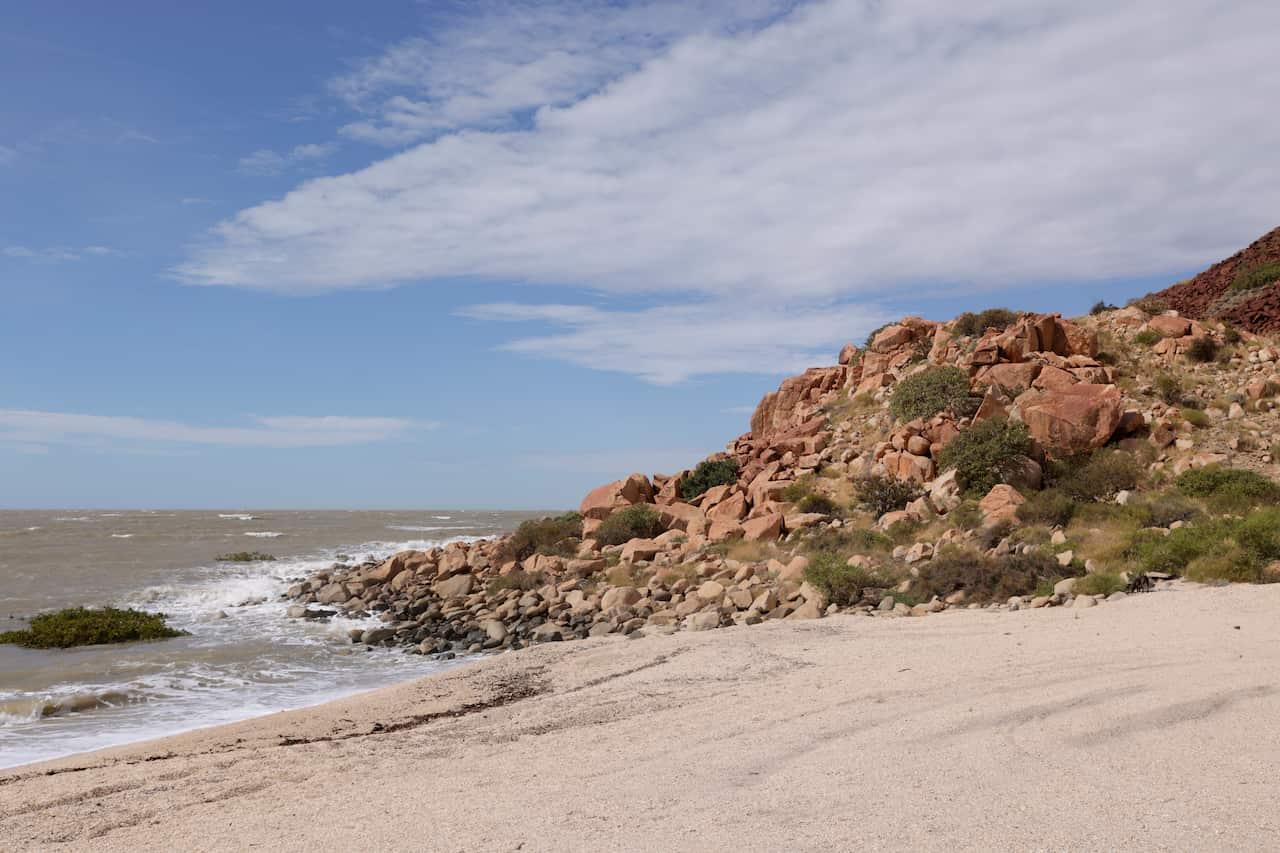
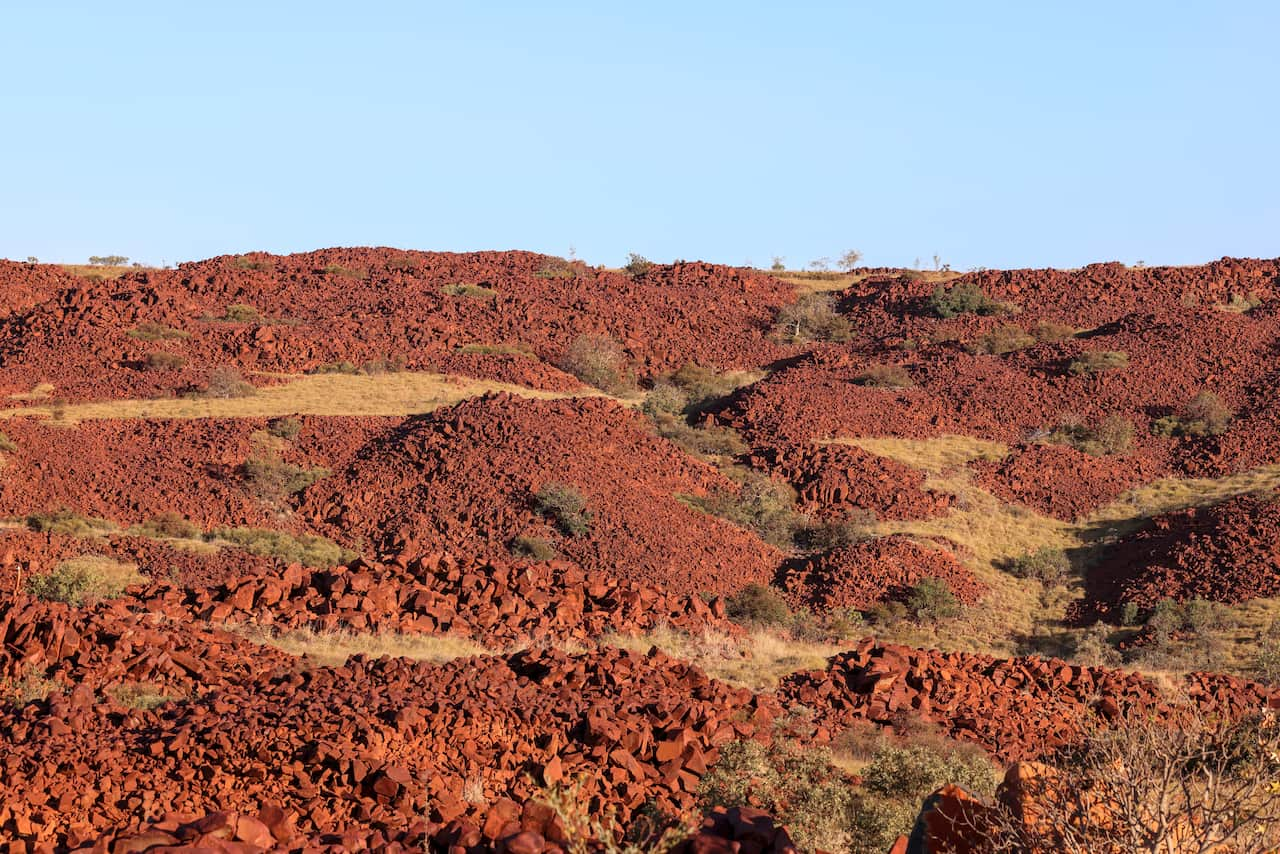
Murujuga reaches into the Indian Ocean off Western Australia's Pilbara coast, a peninsula of iron-dark rock heaped into ridges and gullies, where the tide slips in and out of its inlets.
For tens of thousands of years, this landscape has been the cornerstone of the cultural and spiritual lives of its Traditional Owners and Custodians.
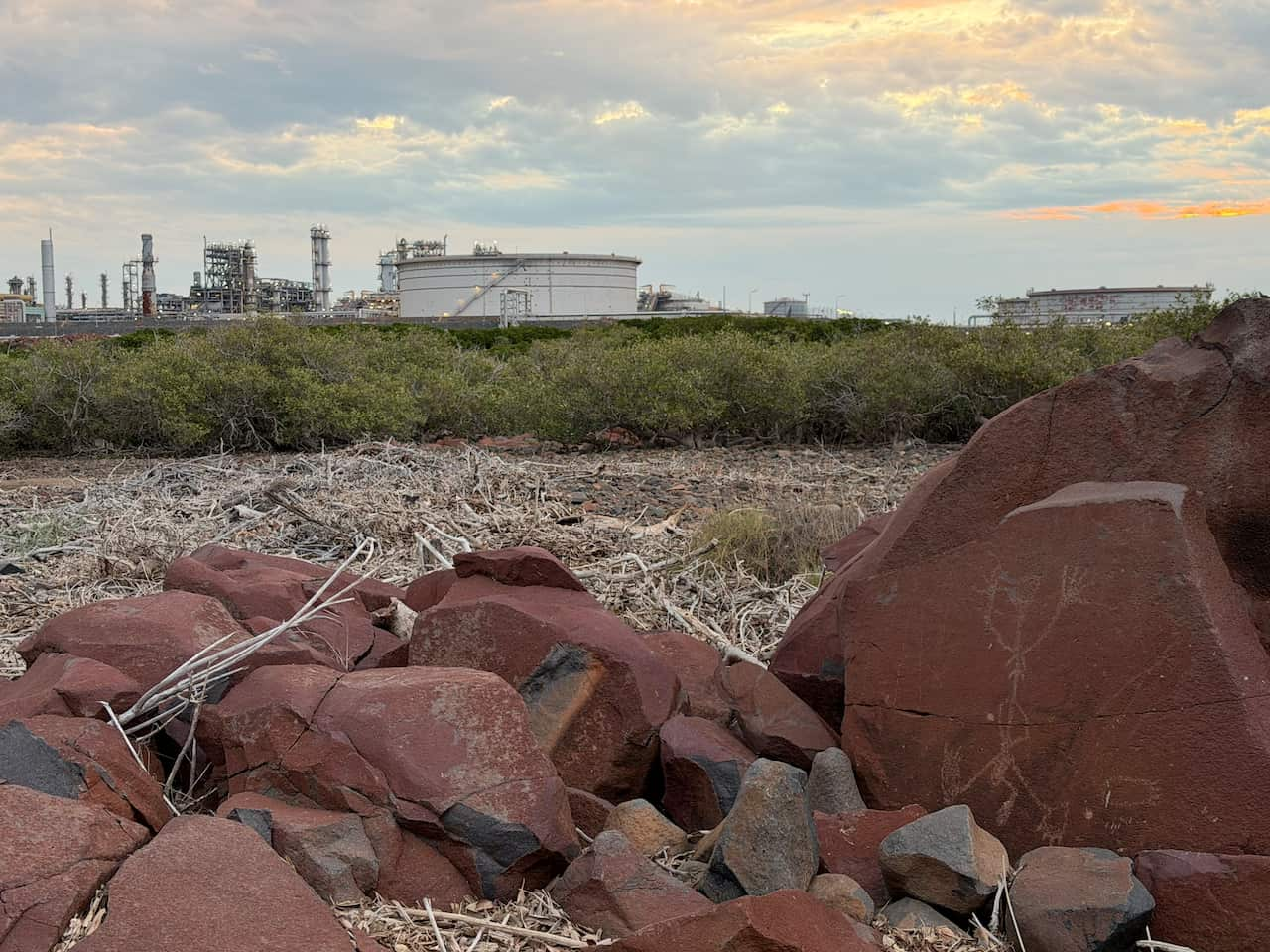
When the sun sits low, the boulders glow a deep, burnished red. Across their faces, generations of Aboriginal peoples have left a record of their culture, with an estimated two million engravings forming one of the world's largest and most significant concentrations of ancient rock art.
In 2025, the wider Murujuga Cultural Landscape, encompassing the Burrup Peninsula and the Dampier Archipelago, was added to the UNESCO World Heritage list .
Your trusted source for staying up-to-date with the world around you. Get free daily news updates and analysis, straight to your inbox.
But in places, the rock gives way to steel.
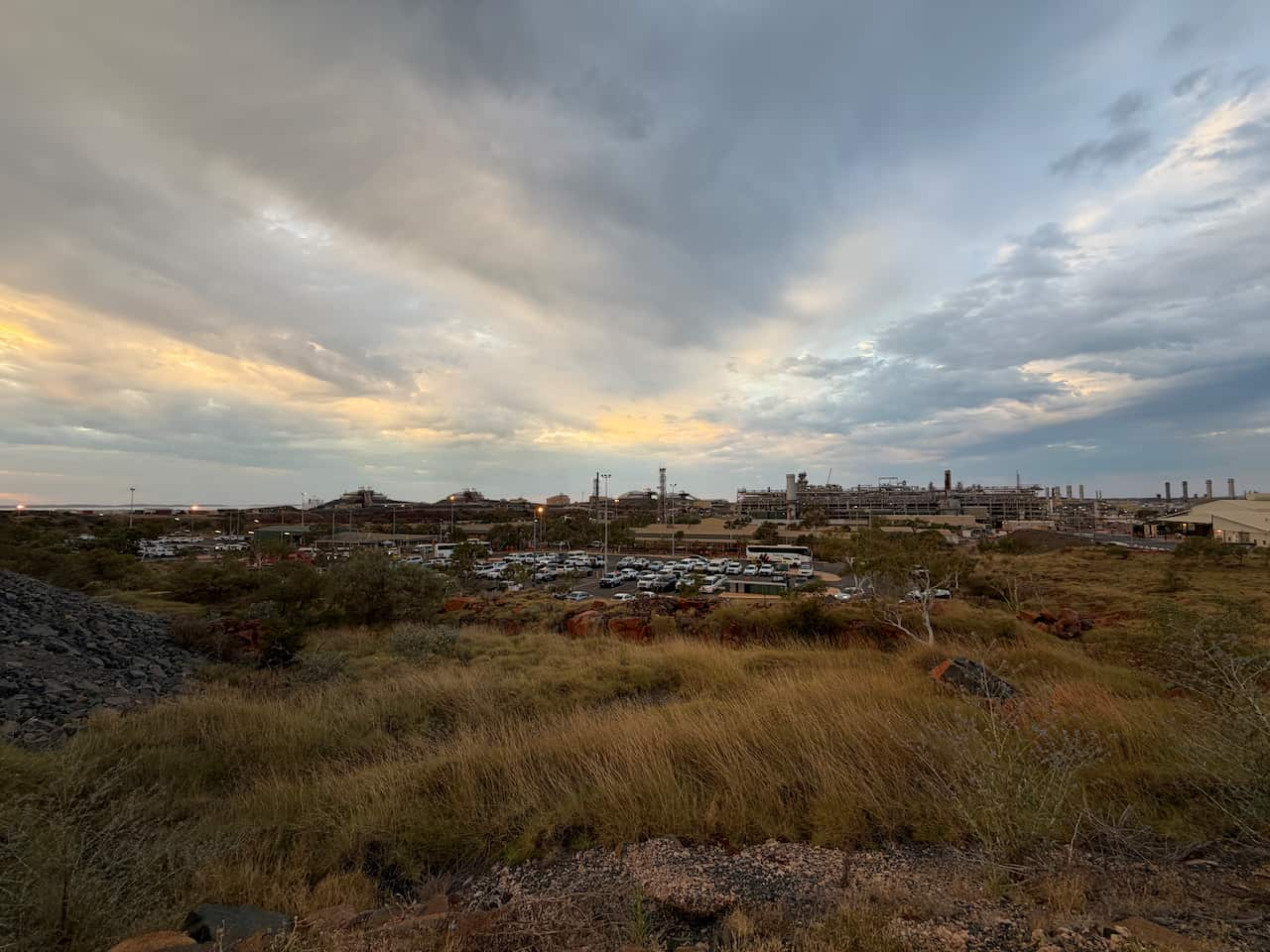
Pale storage tanks squat among the boulders, pipelines snake through the gullies, and flare stacks burn against the sky — part of an industrial estate that exports gas, ammonia and iron ore to global supply chains.
Its largest operations belong to petroleum exploration giant Woodside Energy, whose gas plants have drawn billions of dollars from this stretch of coast over four decades.
Yet just down the highway in the small, predominantly Aboriginal town of Roebourne, some Ngarluma and Yindjibarndi peoples say they have little to show for the wealth extracted from it.
And while industry now dominates much of the landscape, its presence hinges on an original agreement that some Traditional Owners tell SBS News was struck under pressure, shaping who would benefit from Murujuga's industrial transformation for decades to come.
The terms on which industry would access and develop the land were set in 1998, when the Ngarluma and Yindjibarndi people signed a Land Access Agreement with the North West Shelf joint venture, operated by Woodside.
By then, gas had been flowing from the peninsula for 14 years, and the land around the plant had already been transformed by industrial development. Much of the rock art in its path had been blasted or removed.
Negotiations to revisit the agreement, first reported by SBS News , began earlier this year, but are understood to have stalled.
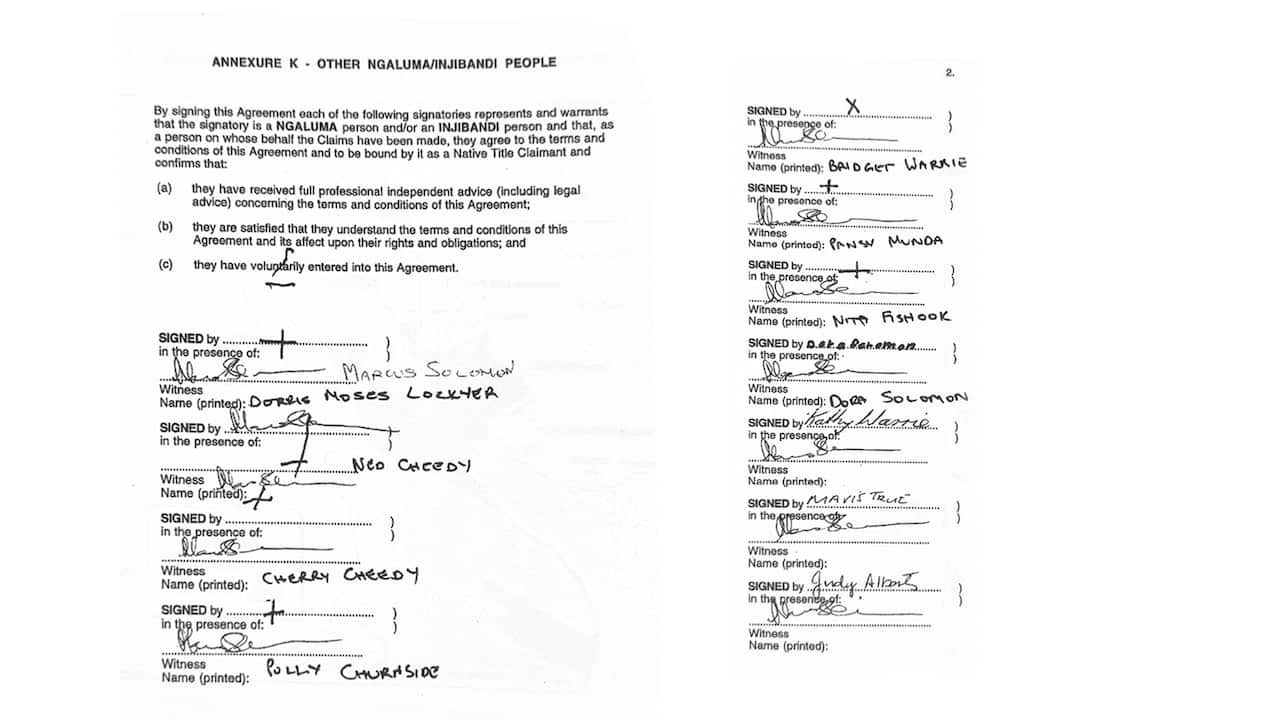
In the agreement's final annexure, seen by SBS News, several Elders have marked an 'X' where their signatures should be, their names printed beside them in the same, uniform handwriting.
By signing, each declared they were a "Ngaluma" or "Injibandi" person who had received "full professional independent advice", understood the terms and entered the agreement voluntarily.
A person who cannot sign a document, for example because they cannot read or write, can still legally sign it by making a mark such as an X, as long as the proper legal steps are followed.
But people familiar with the negotiations have told SBS News that some of those Elders could not read or write English, were not always provided independent legal advice, and were under pressure from Woodside to sign. Most of the Elders present at the signing have since passed away — which makes it difficult to resolve any questions around how the agreement was executed.
In response to SBS News' query, Woodside disputed any suggestion that the agreement was improperly negotiated, saying it was reached with the registered Ngarluma and Yindjibarndi Native Title claimants and their appointed negotiating team under the Native Title Act.
But the company acknowledged that expectations around the agreements had changed significantly since the deal was struck.
"The North West Shelf Project recognises that expectations and standards for agreement-making with Aboriginal communities have evolved significantly since 1998," the spokesperson said, adding that it was working with Traditional Owners organisation Ngarluma Yindjibarndi Foundation Ltd (NYFL) to modernise the subsisting arrangements. The Land Agreement's financial terms have also been a point of contention.
Unlike some other Traditional Owner groups in the Pilbara, the Ngarluma and Yindjibarndi people receive no royalties under the deal. Instead, the arrangements included a one-off payment, used in part to set up NYFL, and annual donations "relating to goodwill".
The agreement was followed in 2003 by a separate deal with the WA government, under which the groups surrendered native titles over parts of the peninsula designed for industrial development.
Murujuga Aboriginal Corporation chair Peter Hicks described the deal as one that "took our rights away to have any say about our Country". But then-premier Geoff Gallop defended the agreement, saying it was "freely signed".
The question of who has benefited from the development of Murujuga remains central to the dispute.
In the first half of 2026, Woodside reported about $10.4 billion in operating revenue, while the Pilbara's iron ore sales are worth about $125 billion a year, according to the Pilbara Development Commission.
But the wealth generated by industry has not translated into comparable prosperity for communities living alongside it.
In Roebourne, an estimated 87 per cent of Indigenous residents earned less than the national median weekly income of $805 recorded in the 2021 Census, according to analysis by the Ieramugadu Data Unit.
Ngarluma custodian Sam Walker tells SBS News: "You cannot have industry making billions of dollars from Murujuga while our people are living just down the road, in poverty, overcrowded housing."
Industry is everywhere in this part of the Pilbara, from the salt pans by the sea and the 2km-long ore trains rumbling towards the ports, to a coastline remade in steel.
Even a morning coffee can come with a sales pitch: in Karratha, Woodside representatives are handing out vouchers for a free hot beverage to promote Pluto Train 2.
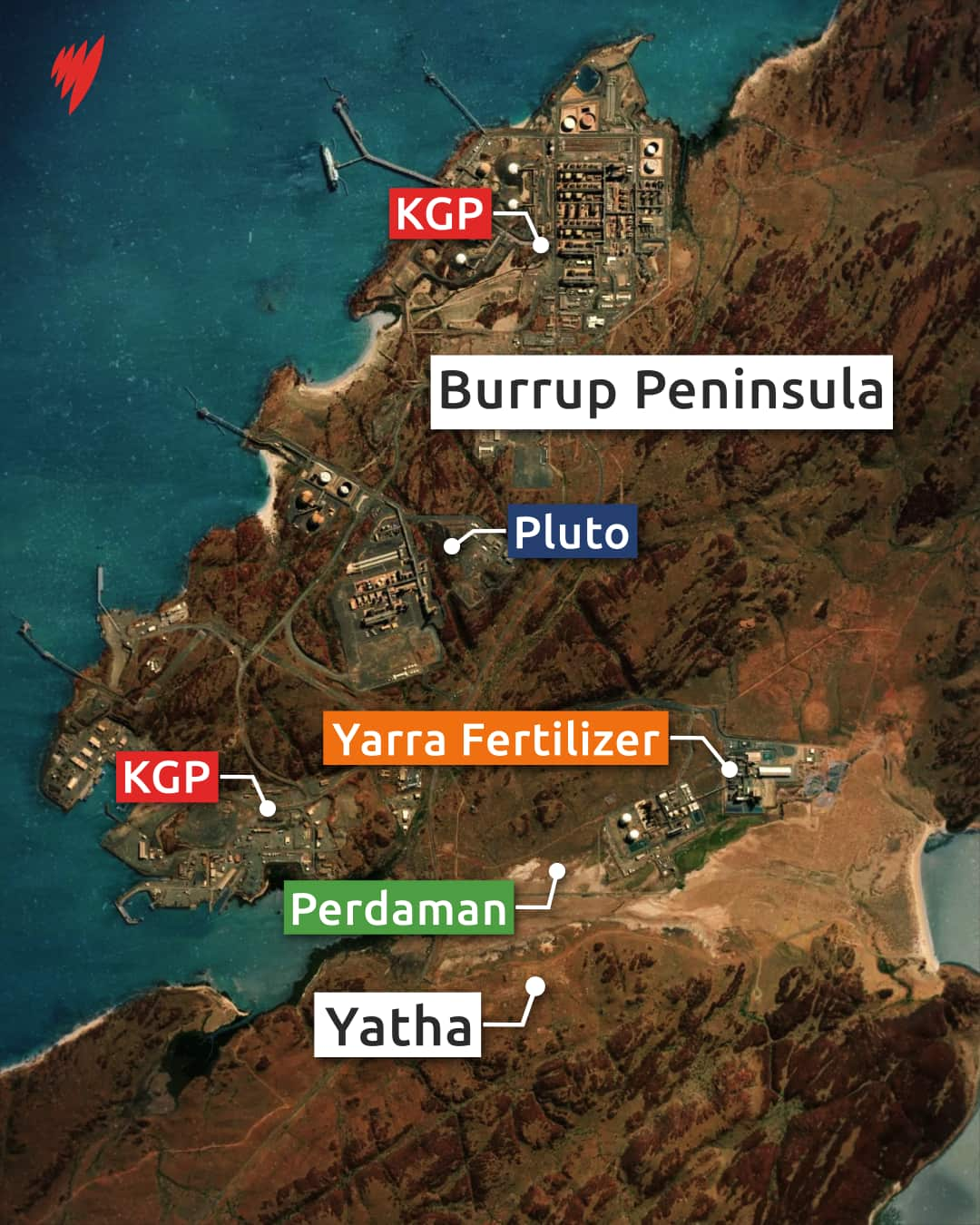
Located at the company's Pluto plant on Murujuga, the new facility is the latest addition to a site that has exported liquefied gas since 2012. It will process gas from the Scarborough field, about 375km off the Pilbara coast, delivered through a 430km pipeline, with a first LNG cargo due by year’s end.
Nearby, the North West Shelf's Karratha Gas Plant, Australia's first LNG export project, has been given decades more life after Environment Minister Murray Watt extended its operations from 2030 to 2070 in September 2025, with 48 conditions meant to shield rock art from emissions.
To keep that plant supplied, Woodside is seeking to tap the Browse Basin off the Kimberley coast and pump the gas some 900km to Karratha — a project the WA government has fast-tracked but which is yet to receive final approval.
Across Murujuga, millions of ancient carvings are etched into the landscape, pecked into the rock with harder stones, exposing the paler stone beneath its dark, weathered crust.
They record kangaroos, emus, creatures long vanished from the mainland and ceremonies still practised today.
At Withnell Bay, carved turtles paddle towards the sea. But before them now lies not open water, but the tanks, pipework and processing trains of the Karratha Gas Plant crowding the shoreline.
At night, the gas flares burn orange above them.
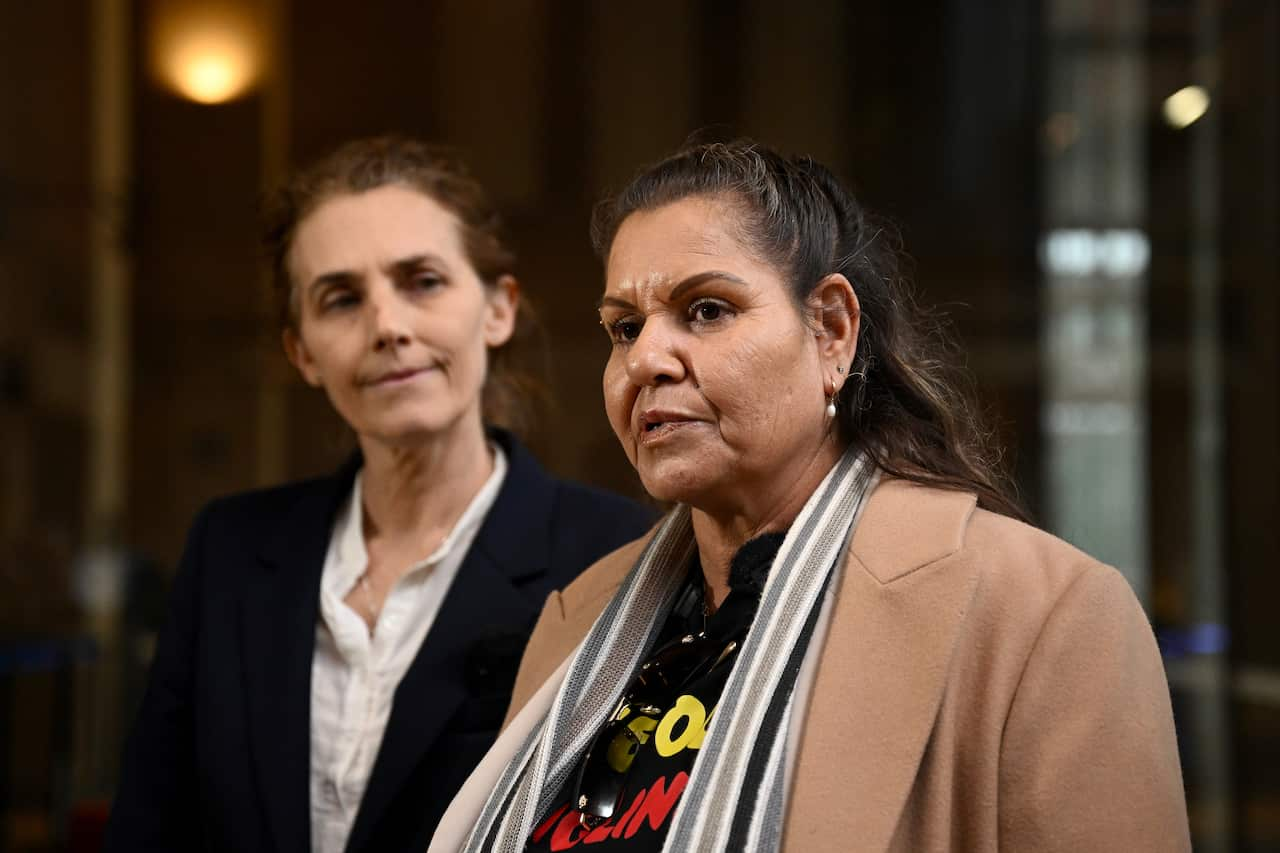
In October, Mardudhunera lore woman and Murujuga Traditional Custodian Raelene Cooper took concerns about the protection of the carvings to the United Nations Human Rights Council.
"The rock art of Murujuga has survived for tens of thousands of years," she said in a statement before travelling to Geneva.
The WA government's Murujuga Rock Art Monitoring Program found this year that rock surfaces closer to industrial activity have become more porous , likely from decades of sulphur dioxide emissions. However, it linked no measurable damage to current pollution, a conclusion some other researchers dispute.
Woodside says coexistence with the rock art is "not just possible but something Woodside has demonstrated for many years", and points to scientific monitoring that it says shows no accelerated deterioration of the rock under current air quality conditions.
It also references the project's economic contribution, saying the North West Shelf has paid more than $40 billion in royalties and excise to governments and invested more than $300 million in community contributions in the City of Karratha.
In the week of SBS News' visit, families gather 20km outside Roebourne for a coming-of-age ceremony — a rite practised on this Country for countless generations.
As night falls, those gathered take their places in skin groups, gum leaves are laid according to custom and the lights are kept low, until the singing begins.
For about 13 hours, the men sing in an ancient language that charts the landscape itself, while the women dance in a circle around them.
When the sun rises, the young initiates walk out into the bush, where they will stay for six weeks.
Ceremonies like this depend on free movement across the land. But in some places, locals say, industry has cut off access altogether.
Among those places is Yatha, a traditional meeting and ceremony site whose name loosely translates as "shelter".
Elders once gathered to plan ceremonies in the shade of a tree beside an old power shed. The Murujuga Aboriginal Corporation later met there and built a proper shelter for the community.
But when Perdaman, an Australian fertiliser company, began building a plant nearby, community members say access to Yatha was blocked by an industrial gate.
SBS News contacted Perdaman for comment but did not receive a response.
For many people SBS News spoke with in Roebourne, its loss is part of a slow, cumulative erosion, each new development claiming more of the Country left to them.
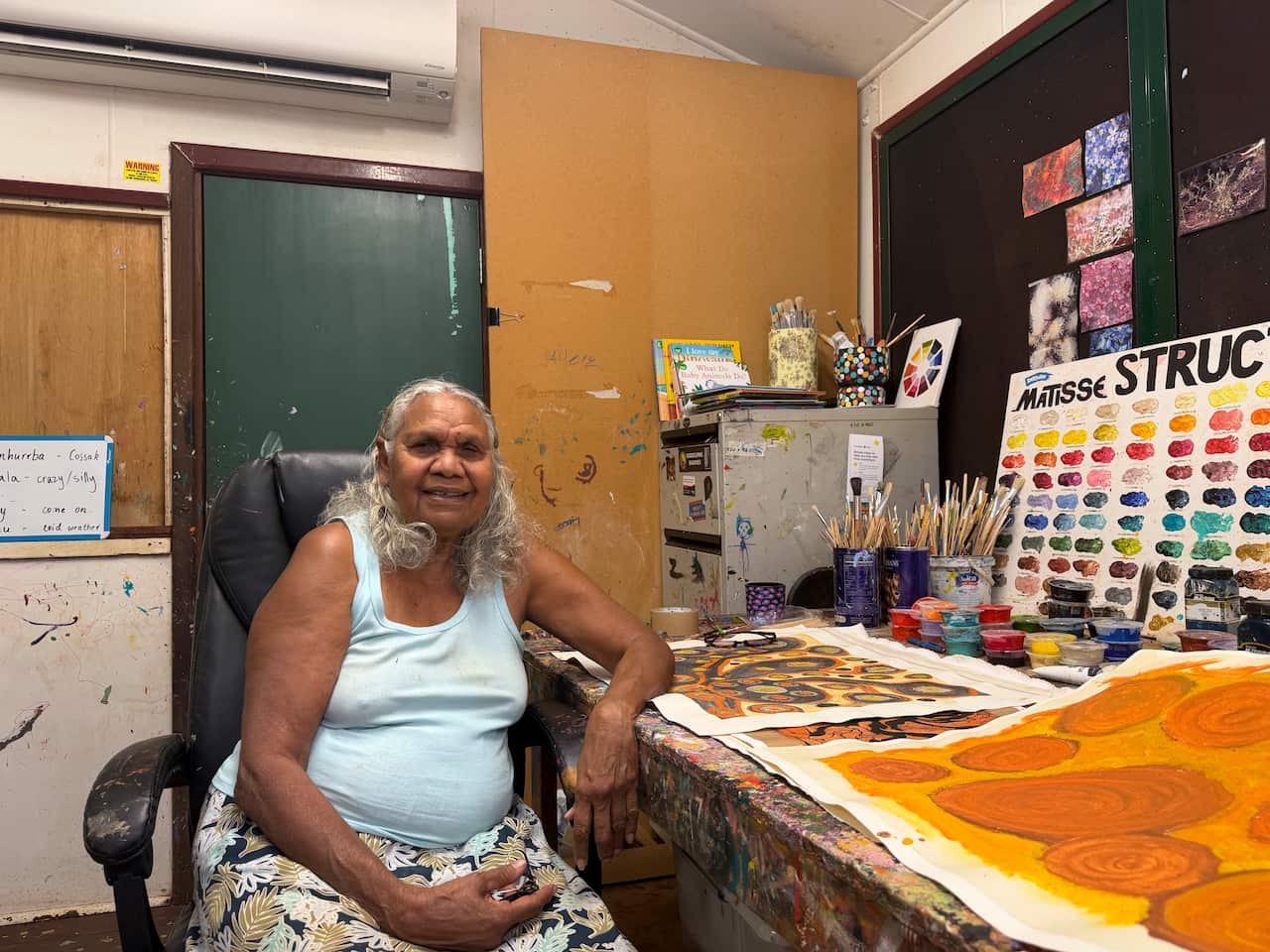
"The land means so much to me," says Yindjibarndi Elder Allery Sandy, as she sits among the large canvases at the Yinjaa-Barni Art centre.
She wistfully reflects on time when "you walked freely in the Country"
On one canvas, Sandy's grandson Rodney has painted the land as he saw it as a child, and she can name the place at a glance: Millstream, deep in Yindjibarndi country.
Another, by her daughter Melissa, traces the family's journey towards healing.
The industry around them, Sandy accepts, is here to stay.
She admits it "annoys me sometimes", but says working alongside industry is "all we can do".
Estelle Guiness, a Yindjibarndi and Ngarluma woman, describes the destruction of rock art and the displacement of her people as a personal wound.
"My heart breaks into pieces because I feel like they're shifting my family around like they're just an item," she tells SBS News.
Guiness was raised by Elders who taught her "what to fight for and what not to fight for".
Now, she says, the fight is for the next generation.
For Sandy, that fight is carried through her art.
"For us, to keep our stories alive by putting them on the canvas is what we can pass on to our children," she says.
Mining, she insists, is "not going to stop us from going to places out on bush taking our kids fishing or looking for bush food".
When mid-October arrives, Sandy and her family head into the bush to collect crystal gum, a sweet resin that forms on acacia trees and has long been gathered as a seasonal delicacy.
"I love to go and just sit down and have a meal out there with the family," she says.
Gabrielle Katanasho and Cameron Carr travelled to Roebourne with support from the Michael Gordon Fellowship, administered by the Melbourne Press Club.