Ilan Pappe is the Director of European Center of Palestine Studies at the University of Exeter.
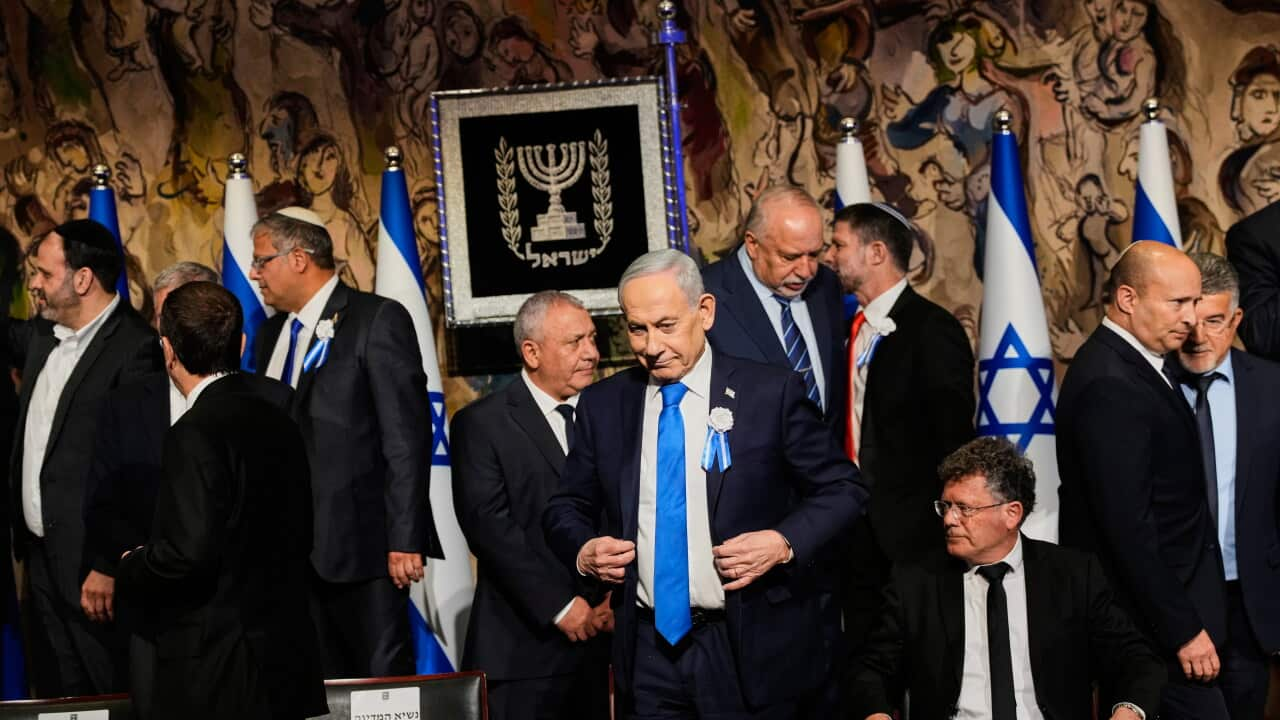
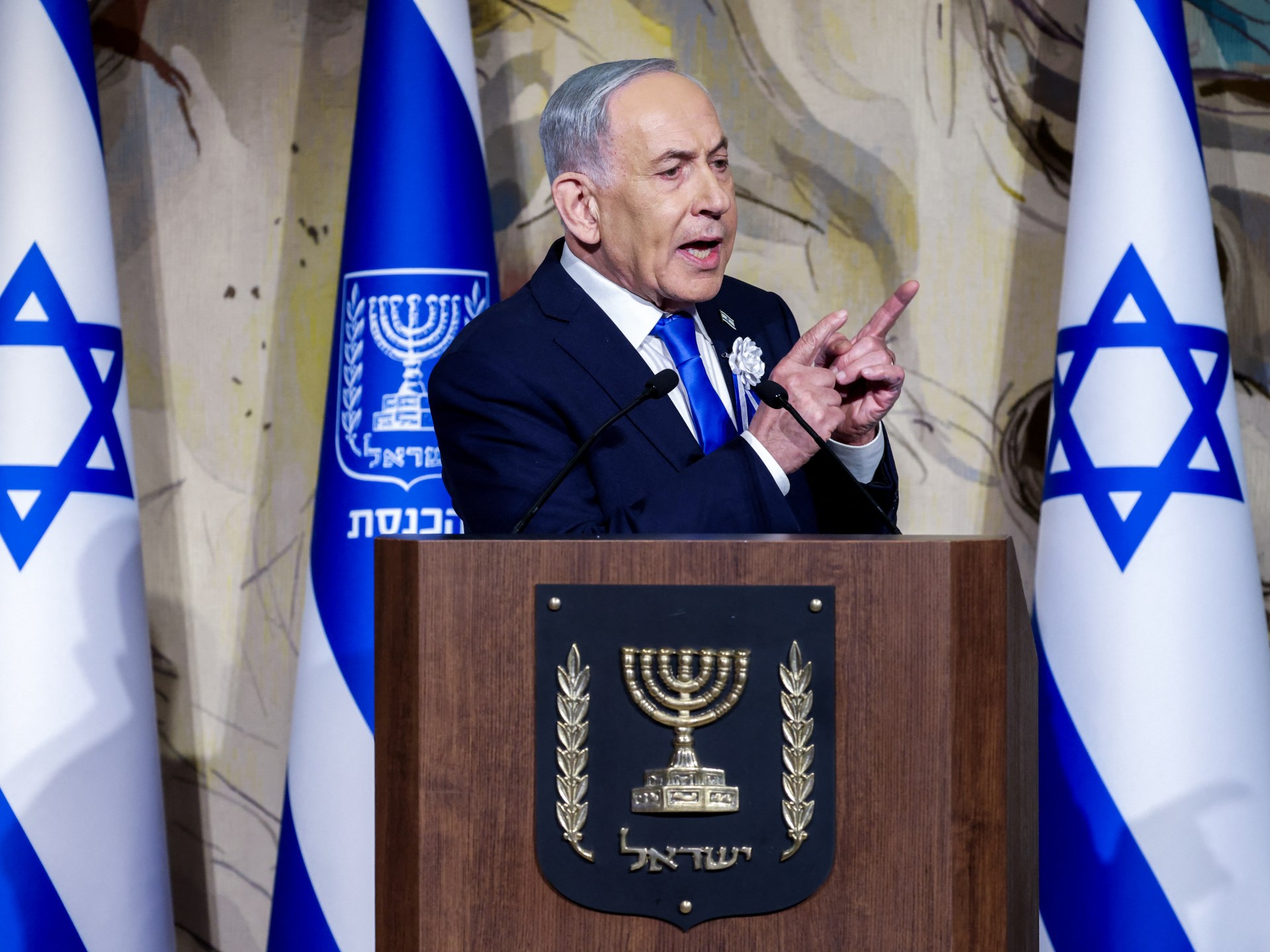
There are two ways to read the results of the Israeli elections. One way would be to see them as a defeat for the government of Prime Minister Benjamin Netanyahu. From holding a solid majority in the 120-member Knesset, the Netanyahu bloc has been reduced to a minority of 53 members. Anti-Netanyahu lawmakers, by contrast, hold 67 seats.
Had Israel been a democracy, we would have seen scenes of celebration similar to the ones we saw this year in Hungary, Brazil and Serbia, where political forces with undemocratic tendencies were defeated. But Israel is not a democracy, and Netanyahu was not necessarily defeated.
The second, more relevant way of reading the results of the Israeli election would necessitate accepting the apartheid nature of Israel and seeing the electoral arithmetic through that prism. In this case, Netanyahu won because he secured 53 seats in the Knesset – five more than the anti-Netanyahu Jewish bloc.
To form a government, a bloc needs to have the support of at least 61 members of the Knesset. The only way Netanyahu can do it is by enticing parties or lawmakers from the anti-Netanyahu bloc to join his bloc, as he has succeeded in doing many times in the past. Working with Palestinian parties, which secured 19 seats, is out of the question for him.
The obvious path for government formation for the anti-Netanyahu bloc would be to form a coalition – one that would include the two Palestinian parties. But to do so would mean to challenge Israeli apartheid. The main leaders of the Jewish anti-Netanyahu bloc, including Gadi Eisenkot, have promised not to do so under any circumstances.
There is another option: seeking the support of the religious Orthodox parties, which have so far been part of the Netanyahu bloc. To secure their backing, the anti-Netanyahu bloc would have to promise to exempt religious Orthodox youth from military service and guarantee funding for their learning centres.
However, Eisenkot’s main election promise was forcing young Haredi Jews into the army. So this is not a very likely scenario, but in politics, never say never.
There is also the option of a “unity government” led by some sort of rotation between the leading figures of the anti-Netanyahu bloc and Netanyahu. The problem here is that, according to a law passed a few years ago, as long as Netanyahu is still a defendant in an ongoing trial, he cannot serve as a minister; his coalition made sure that the legislation ridiculously would not apply to a prime minister.
Given that Netanyahu’s corruption trial is destined to go on for a very long time, the rotation would make it impossible for Netanyahu to be part of a government under Eisenkot as prime minister. That means he would demand to hold the rotating premiership first and leave open the option to collapse the government once his rotation is over.
Netanyahu has already done that before. In 2020, without any hesitation, he broke a rotation agreement with Benny Gantz, who had naively believed that after two years he would be the prime minister. This resulted in new elections, which Netanyahu won.
Finally, a very possible scenario is that neither of the two blocs would be able to form a government, which would mean new elections in six months. Netanyahu and his government would remain in office until the new polls, albeit with more limited authority.
This would give them the opportunity to reignite a war with Iran and Hezbollah and continue with their violent policies in the Gaza Strip and the West Bank in an attempt to attract more public support and win the elections.
This is the preferred option for Netanyahu because his relative defeat in the October 27 elections had a lot to do with the unprecedented galvanisation among the Palestinian voters in Israel and the more liberal Jewish Israelis living abroad who came back home in huge numbers to vote.
These possible scenarios tell only part of the story and are not enough to fully understand what the election results mean for Israel, the Palestinians and the region. Here are the more important conclusions one should draw from the results:
The first pertains to the future of the Palestinian citizens of Israel. They still could turn out to vote in large numbers if new elections are held soon. But if they are once more ignored and sidelined by the other political parties, they will never try it again.
In this case, it would be difficult for the leadership of this community to continue to delay a strategic decision: choosing which political space Palestinian citizens of Israel belong to – the Israeli or the Palestinian one?
Until today, they have given a chance to the Israeli political system despite its racism, apartheid tendencies and criminal policies towards Palestinians. Palestinian parties recommended Eisenkot for the premiership to President Isaac Herzog, who has now tasked him with forming a government.
If I can venture a prediction – and it is only a prediction – the anti-Netanyahu bloc would not engage meaningfully with the Palestinian parties. Its message, therefore, will be that the Palestinians of Israel are not legitimate players in the Israeli political field.
If I am wrong, this would be an incredible and transformative moment in the history of both Israel and Palestine, but there seems to be very little hope for such a development.
There are other lessons we can learn from where we are now with the knowledge that this is a very volatile moment in the history of Israel.
The first and most important one is that whoever forms the next government of Israel will continue the incremental genocide in Gaza, the intensified ethnic cleansing in the West Bank and the aggressive policies towards the region. These policies as before can only be stopped or tamed by the region and the international community sending a clear message to Israel that there will be a price tag attached to such policies.
The second lesson is that the Israeli Jewish society is as deeply divided as ever, to the point that it is impossible for it to maintain a stable political system, a thriving economy and a positive strategy towards the region and the world.
The third lesson is that Israel’s international isolation will increase as a result of this trajectory, including the continued dissociation from Zionism among young Jews around the world, including in the United States.
Finally and most importantly, this can have an impact on the global discussion about Zionism. The move by the Green Party in Britain to define Zionism as racism – despite being currently an exception and widely condemned – will gain validity with time.
These elections and future developments are making clear that Zionism in the current Israeli politics means the exclusion of Palestinian citizens of Israel from politics – first by ignoring them and quite possibly in the future by denying them the right to vote
Moreover, many in the international community will associate the term Zionism with a consensual Israeli policy of genocide, ethnic cleansing and apartheid.
The outlook in the short term is worrying. The overall message from the Israeli elections is that the future policies of the state will continue to threaten the lives of the Palestinians in occupied territory, Palestinian citizens of Israel, and the people of southern Lebanon and Syria. There will be more instability in the region.
In the long run, however, as bad as it is, the fundamental cracks in the Zionist project will widen, which might lead to its demise. One can only hope this will also lead to the beginning of a political reality that would benefit everyone who lives in historical Palestine and the region.
A version of this oped was first published by Al Jazeera Arabic .
The views expressed in this article are the author’s own and do not necessarily reflect Al Jazeera’s editorial stance.