You have reached your maximum number of saved items.
Remove items from your saved list to add more.
You've used all of your gift articles. 3 more will become available on the 1st of every month.
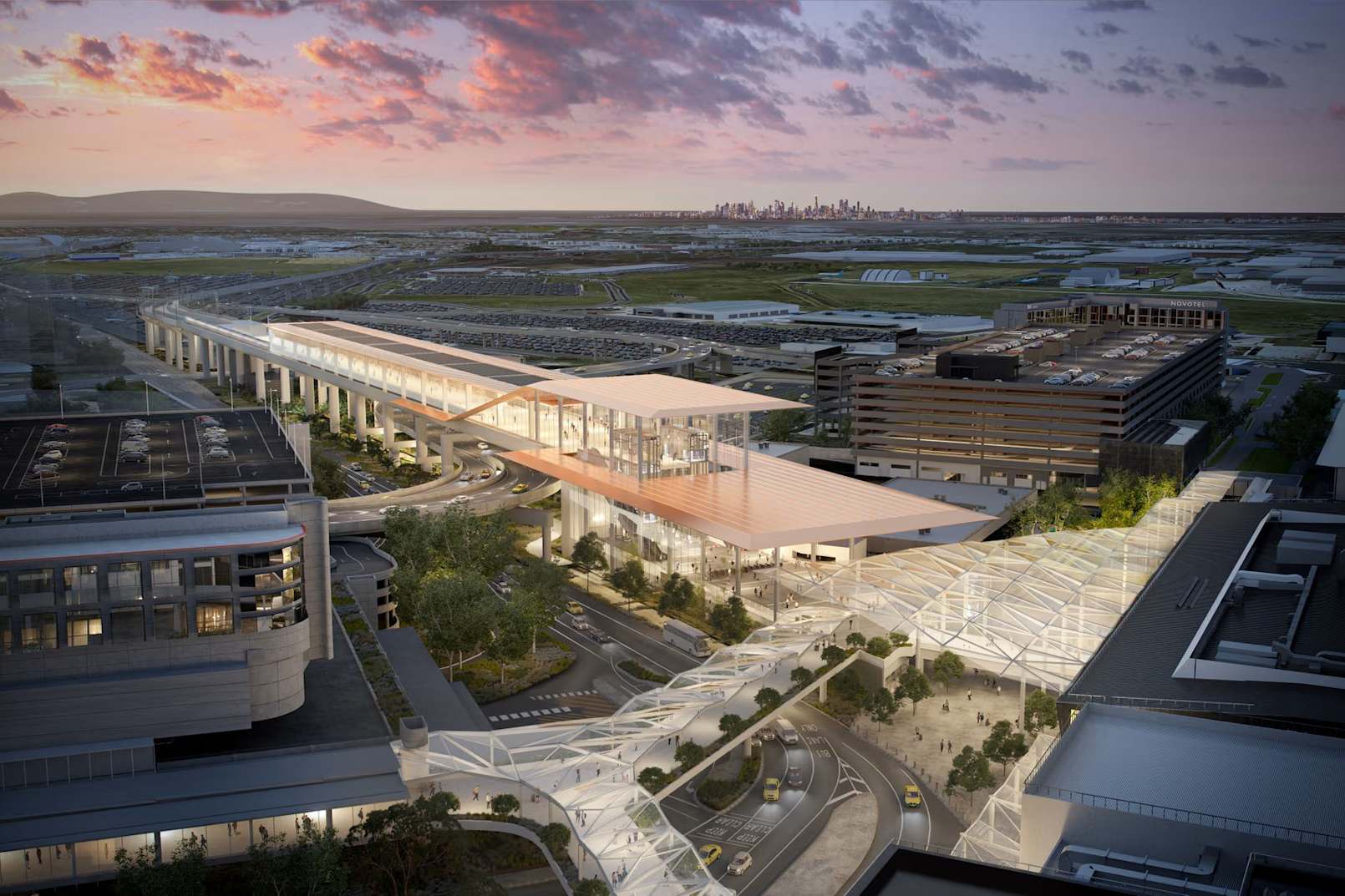
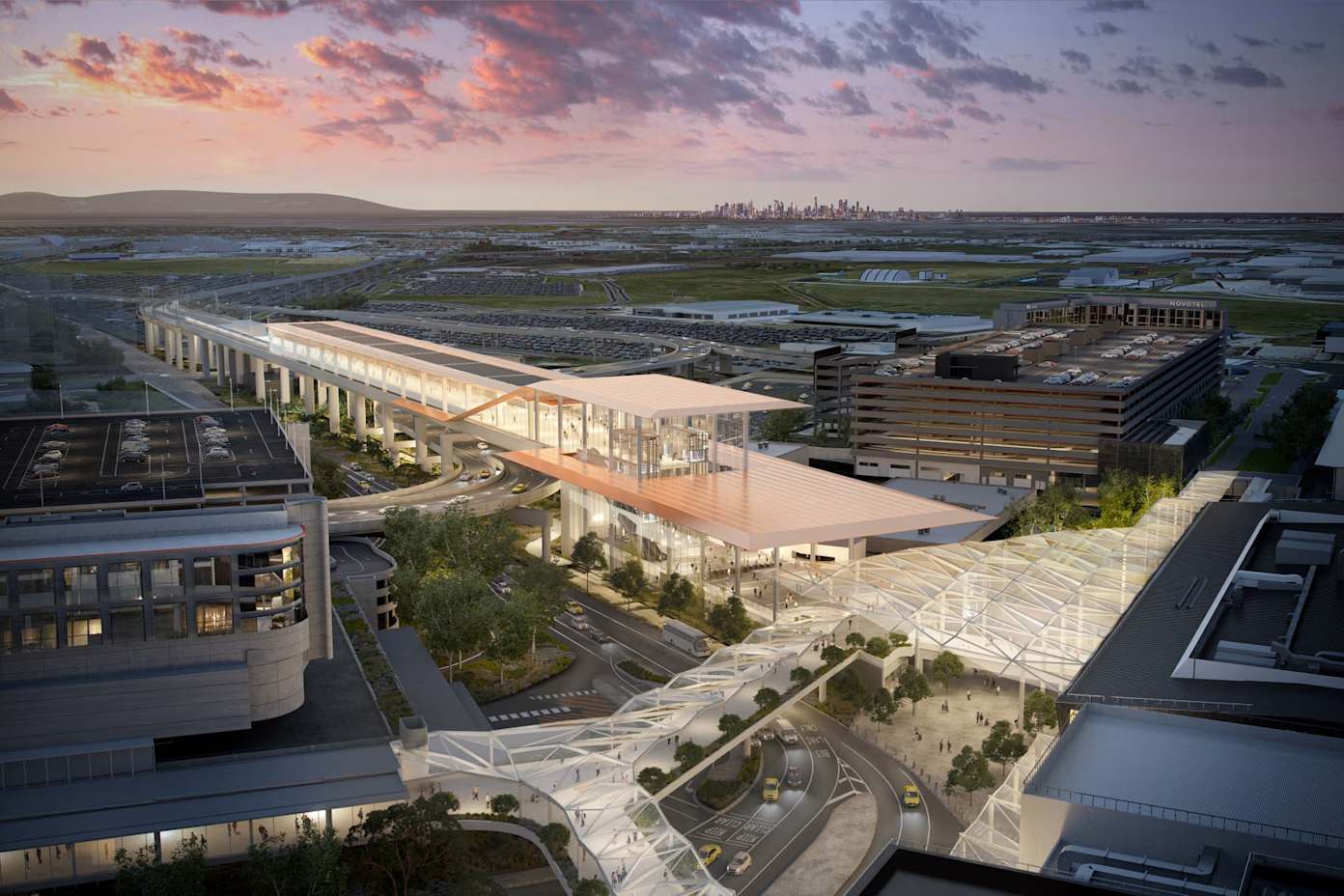
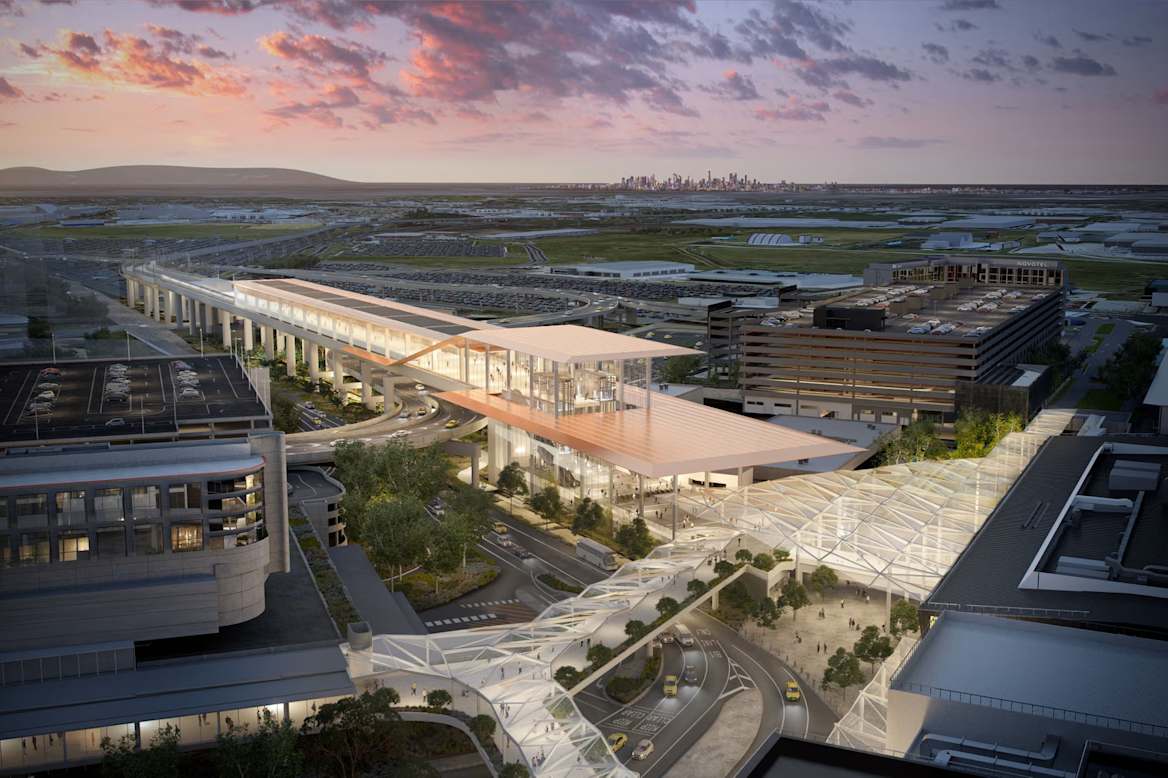
Atrain station, stacked upon another train station, at an international airport. A heavy rail line, elevated 60-70 metres in the air, not far from where long-haul planes come in to land.
This was how Melbourne’s Airport Rail Link would have met the Suburban Rail Loop .
To people immersed in major infrastructure planning, it sounded completely bonkers. But Evan Tattersall , the erudite then-chief executive of Rail Projects Victoria, was deadly serious as he outlined the government’s proposal to a room crammed with transport executives and consultants.
The meeting was in a government office space in Exhibition Street, in the latter stages of 2019, when the re-elected Andrews government was at the peak of its popularity and the world was yet to be upended by the global spread of the novel coronavirus.
The government had for the previous year been weighing the merits of AirRail Melbourne, a proposal by a private consortium financed by some of Australia’s largest super funds and backed by the operators of Melbourne Airport to build and operate for the next 40 years a fast airport rail service to and from Southern Cross Station.
Tattersall, then the face of the Melbourne Metro Tunnel, had previously met with the consortium to discuss their proposal to deliver the Melbourne Airport Rail Link (MARL) faster and cheaper than the government could. Consortium representatives had also met with the gang of three ministers who controlled what became known as the Big Build: then-premier Daniel Andrews, then-treasurer Tim Pallas and Jacinta Allan, then the minister for transport infrastructure.
Now, in 2019, Tattersall was addressing an important, previously unanswered question looming over the future shape of Melbourne Airport – how two of Victoria’s big, city-shaping projects would come together next to one of the world’s busiest air fields. The airport wanted the MARL station built underground. The government favoured an above-ground option . According to Tattersall, the SRL station could be built on top of that.
Had the idea of this 20-storey high, double whopper airport station progressed from rough conception to construction, passengers aboard SRL trains would have arrived at close to eye-level with air traffic controllers working in the Tullamarine tower. “It was insane,” an attendee at the meeting recalled. The idea was later abandoned. Tattersall, who has since left the department, declined to comment to The Age .
To this day, it remains unclear how the northern stage of the SRL, from Box Hill to Melbourne Airport, if and when it is ever built, will connect with the proposed MARL. Premier Ben Carroll has declared the airport link his “highest priority” and Opposition Leader Jess Wilson is also committed to the project.
It is emblematic of how disjointed transport planning has become in a state once renowned for doing it better than anywhere else in Australia.
Allegations before the Big Build royal commission and revealed by The Age that the MARL business case was built, in part, off doctored figures and coercion of public servants, raise fresh concerns about the politicisation of multibillion-dollar infrastructure projects under the Andrews, Allan and Carroll governments.
The allegations also question the integrity of the MARL’s current design and whether, once Melbourne gets its long-awaited train line to the airport, it will deliver its promised benefits.
A confidential submission to the royal commission alleges that in 2018, false cost estimates were relied upon and a public service executive was threatened with dismissal to bake-in the case for the government’s politically preferred route. Those allegations, which are yet to be tested by the royal commission, are denied by Allan, who was the minister responsible for the MARL at the time.
A more consequential issue for the future of the MARL is what happened next, after the state government formally endorsed the Sunshine route.
In October 2018, as Victoria was heading into that year’s state election, Andrews, as premier, included airport rail in his transport pitch to people living in Melbourne’s western suburbs, Geelong and Ballarat. Under the title “A real plan for fast regional rail and metro rail for the west”, he declared that running airport rail through Sunshine would “unlock the west of the state”.
Andrews’ pitch included a promise to electrify the Melton and Wyndham Vale lines, provide faster train services to Geelong and Ballarat, and build additional tracks between Sunshine and the Melbourne CBD to run more services, “most likely through a new rail tunnel which would also be utilised by airport-bound trains”.
A more detailed Western Rail Plan, complete with maps showing a new rail connection between Sunshine and the CBD, noted there was “limited available space for additional tracks” between Sunshine and Southern Cross. “Extra track capacity will be needed in the future to deliver new metro lines, the Airport Rail Link and fast rail services to our regional cities,” the plan said.
As people who commute by train to the city from Geelong, Ballarat, Melton and Wyndham Vale can attest, these promises were not kept. Eight years later, there is no “extra track capacity” between Sunshine and the CBD. All references to a Sunshine rail tunnel – a piece of infrastructure which genuinely would have opened the west, along with possibility of fast rail services to the airport and regional centres – were removed from government websites early in 2020, just as Victoria was entering the long, dark tunnel of our pandemic response.
The case of the disappearing tunnel , while tangential to the focus of the royal commission, has troubled rail planners, public transport experts and MARL proponents ever since. It also helps explain why AirRail Melbourne – a market-led proposal backed by Melbourne Airport, Metro Trains Australia and IFM Investors (a global funds manager which looks after the superannuation savings of about 7 million Australians) – was left on the shelf.
The Victorian government formally rejected the AirRail proposal in November 2020. The reason became clearer in the months and years that followed, when the government ditched the Sunshine tunnel and decided to run airport trains through the Metro Tunnel .
This decision, which has never been adequately explained, allowed the Andrews government to conflate airport rail with the western section of the SRL, blur the distinction between airport rail and the Metro Tunnel, absorb the Sunshine Super Hub into airport rail, and potentially cost shift between these projects. The result is profound changes to the MARL.
Instead of the 18-minute trip from Southern Cross Station to the airport promised by AirRail, the government’s forecast travel time became 29 minutes. A source with detailed knowledge of the project said the true travel time, once you factor in all the extra stops including at a proposed new station in Keilor East – a suburb in the heart of Carroll’s electorate of Niddrie – will be closer to 40 minutes. If this estimate is correct, it severely challenges the MARL business model.
“The moment you drop off 20 minutes, patronage tails off,” the source said, speaking on the condition of anonymity. “The moment you hit 30 minutes, you are better off catching a share ride or the SkyBus. The government knows this. They did the research.”
Instead of building a new rail tunnel with capacity to take 22 trains an hour in each direction from Melbourne’s west to Southern Cross Station – up to 528 extra services a day – airport trains will compete for space in the Metro Tunnel with suburban trains from Sunbury and Watergardens and eventually, Melton and Wyndham Vale.
The Metro Tunnel can take 24 trains an hour in each direction. The Melbourne Metro business case shows it will reach capacity by 2031 – before any of the six trains that are promised to depart from the airport every hour are added to the mix.
“However many trains they run through the Airport Rail Link will be at the opportunity cost for those three western suburban train lines,” a former government minister told The Age . Melbourne Airport also fears that as the western suburbs continue to grow, the travel needs of domestic voters will be prioritised over international and interstate visitors, leading to less frequent MARL services during peak times.
Instead of creating the possibility of 35-minute express trains to and from Geelong through a Sunshine tunnel, it will still take nearly an hour to get from Melbourne to its closest regional centre. That journey time is largely unchanged for 70 years. “I just shake my head, to be honest, that the government did not want to buy into that,” another invested observer said.
The private consortium’s asking price from government, both state and federal, was a combined $6.7 billion for airport rail, with a further $3.3 billion going towards other works promised in Andrews’ Western Rail Plan. The total estimated cost of the project would have been $11.6 billion – $9.8 billion to build the MARL and supply new trains, $1.2 billion of further work at Sunshine station and $600 million in further costs.
The project, had it started as proposed in 2020, would have already been built.
Today, the MARL has no final price tag or completion date. In 2021, it was costed at $11.5 billion. The state and federal governments have so far pledged $12 billion towards the project, including $4.1 billion for signalling work and complex grade separations at Sunshine station, and $4 billion for a new line and station at Keilor East. The first train is due to arrive in Carroll’s electorate in 2031.
One of Carroll’s more curious decisions, since replacing Allan as premier in July, is his pledge to wind up Infrastructure Victoria, a statutory agency established in the first year of the Andrews government to ensure, in the words of then-special minister of state Gavin Jennings, that big projects are “based on priorities, not politics”.
For more than 10 years, Infrastructure Victoria has formed its own independent views about what should be built in this state. Not once, in all that time, did the state government seek its advice about the merits of any particular project before it had decided to build it.
It is now left to the royal commission, which will hold its first public hearing on Monday, to start tallying up the cost.