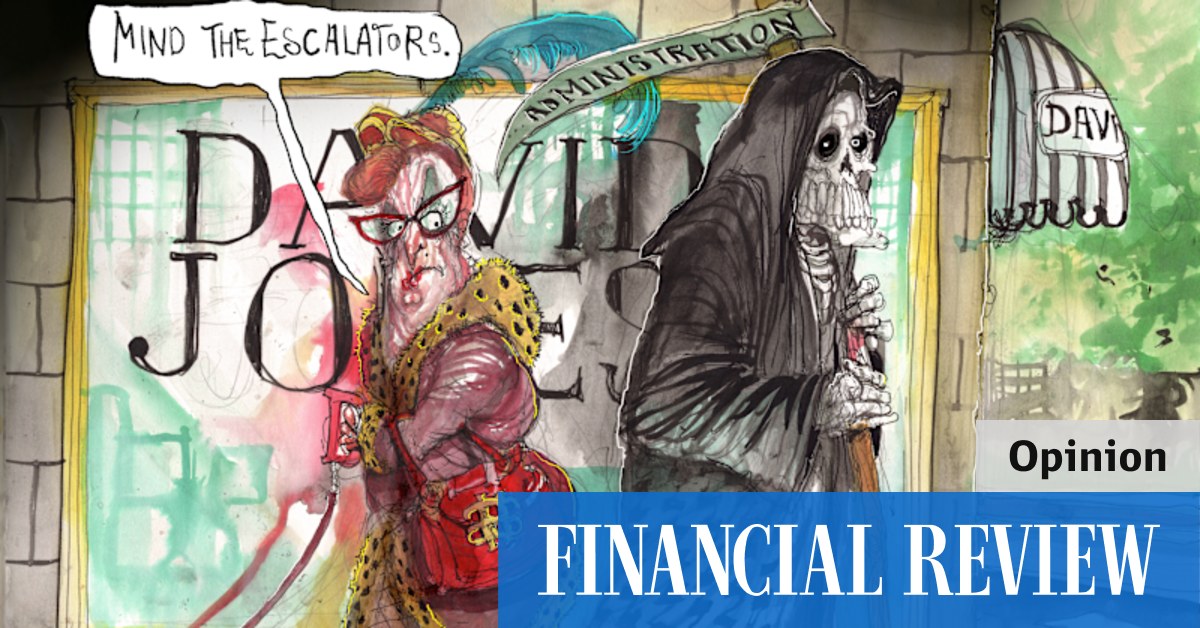
After 188 years, David Jones has entered voluntary administration after crisis meetings between the department store's owners and landlords failed to reach an agreement.
The retailer will continue to trade while administrators review its operations, but some store closures are expected as the future of the business is assessed.
The move follows years of losses and comes amid mounting pressure on traditional department stores from changing shopping habits, online rivals and specialty retailers.
The high-end chain has been struggling in recent years, like many department stores around the world, in the face of changing consumer behaviour and the rise of ultra-cheap online shopping and specialty retailers such as Mecca.
Your trusted source for staying up-to-date with the world around you. Get free daily news updates and analysis, straight to your inbox.
South Africa-based Woolworths Holdings shelled out $2.1 billion to acquire the then stock exchange-listed group in 2014, before selling it to Sydney-based private equity firm Anchorage Capital for just $100 million in 2023.
Despite efforts to revive the retailer, Anchorage has been unable to turn the business around.
David Jones posted a $95.5 million loss for 2024-25, after a $74 million loss for 2023-24.
The company is yet to file its results for 2025-26 after missing an October deadline.
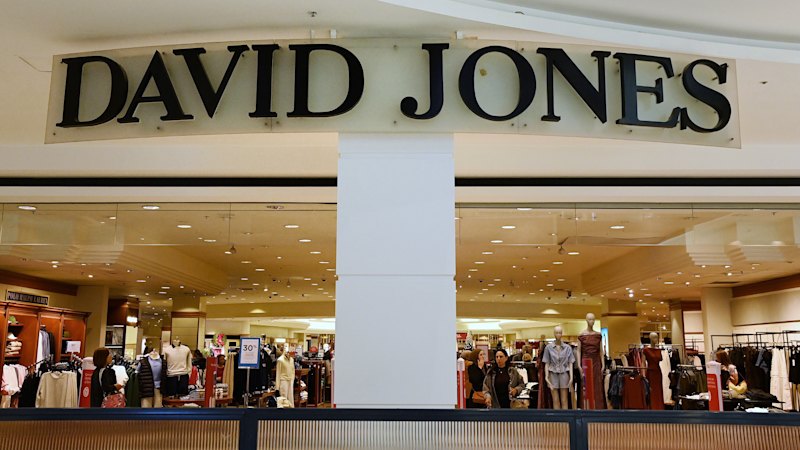
David Jones has not paid rent to Westfield, its biggest landlord, since September. Seventeen of the retailer's remaining 38 stores are in shopping centres owned by Scentre Group.
According to Scentre Group, David Jones paid $45 million in rent for the first nine months of the year, up to 30 September, while landlords also hold $45 million in bank guarantees that could be used to cover rent obligations.
But negotiations between the two parties broke down, with Scentre Group chief executive Elliott Rusanow saying David Jones was in breach of its lease agreements.
"We have made a generous offer to Anchorage Capital Partners that would have facilitated the continuation of David Jones trading and that offer has disappointingly been rejected by them," Rusanow said.
According to reporting by the Australian Financial Review, the company had been in talks with landlords over plans to close some physical stores.
David Jones will continue to trade under the control of administrators while its operations are reviewed, but it is believed at least some stores will close.
Erin Turner from the Consumer Policy Research Centre said the department store was entering a "period of uncertainty".
"This means that if you've got a gift card, you want to use it as quickly as possible," she told ABC News.
"If in the worst case, the company stops trading and closes its doors, you'll be considered an unsecured creditor and that means that you'll be waiting months or years to see if you get any of that money back."
She said it was possible accrued loyalty points and items on lay-by may not be honoured.
"In past company collapses, the big one is Dick Smith in 2016, we saw that people lost money that they had in gift cards, and even in deposits they'd made on some items that they'd pre-purchased."
While administrators have said David Jones will continue to trade, Turner warned consumers against buying gift cards or making lay-by purchases until there is more certainty about the retailer's future.
Australia is entering the end-of-year sales season, but Gary Mortimer, a retail marketing researcher at Queensland University of Technology, does not expect heavy discounting at David Jones.
"A lot of the David Jones model is the concession model," Mortimer said. "Those brands own that space and own that inventory."
He said many brands would likely remove stock from any shuttered stores and shift it to other locations.
While David Jones-branded products in closed stores could be discounted, Mortimer said the retailer may instead transfer much of that stock to remaining stores, limiting the scale of any clearance sales.
— With reporting by the Australian Associated Press.