By Gabrielle Katanasho , Cameron Carr
This audio is voiced by AI and may occasionally mispronounce words.
Share your feedback and help us improve this feature. Read more about how we use AI at SBS here.
Along the highways that trace Western Australia's Pilbara coastline, industrial salt pans stretch flat to the horizon, broken only by the railway lines that carry iron ore to the sea.
Beyond them, mounds of rust-coloured boulders rise from the spinifex, stacked as if tipped out by hand.
Here, the dry heat settles in early, before the sun has fully cleared the horizon.
This is mining country, home to some of the most lucrative stretches of land in Australia. Every day, vast shipments laden with hundreds of millions of dollars' worth of natural gas, salt and iron ore leave these shores, making their way into global supply chains.
Yet in this resource-rich environment, one of the most basic necessities is surprisingly hard to come by.
Your trusted source for staying up-to-date with the world around you. Get free daily news updates and analysis, straight to your inbox.
Across the Pilbara, access to fresh food is precarious: truckloads of fruit and vegetables must travel thousands of kilometres to reach remote communities in the region. The distance drives up cost, and supply can be unreliable.
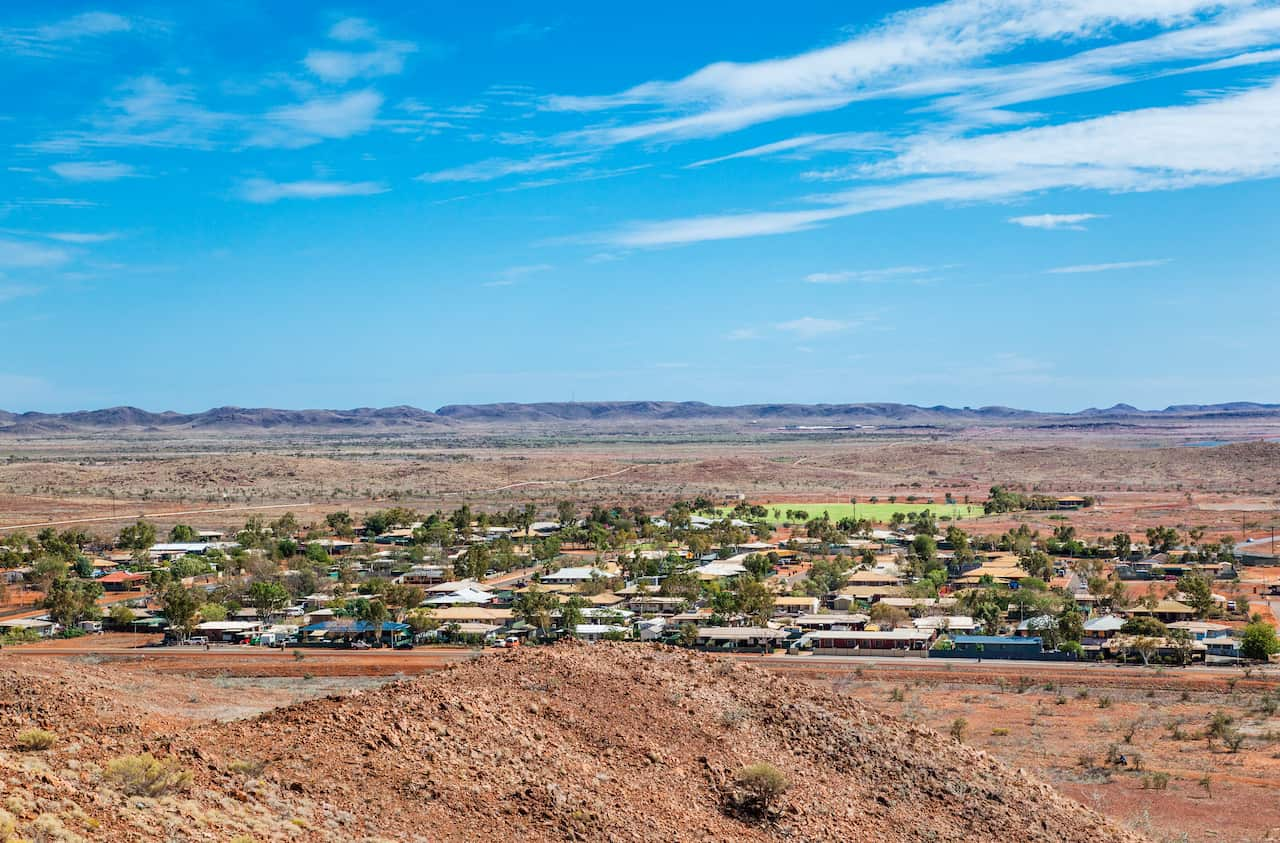
Roebourne, or Ieramugadu as it is known by its Traditional Owners, is one such community.
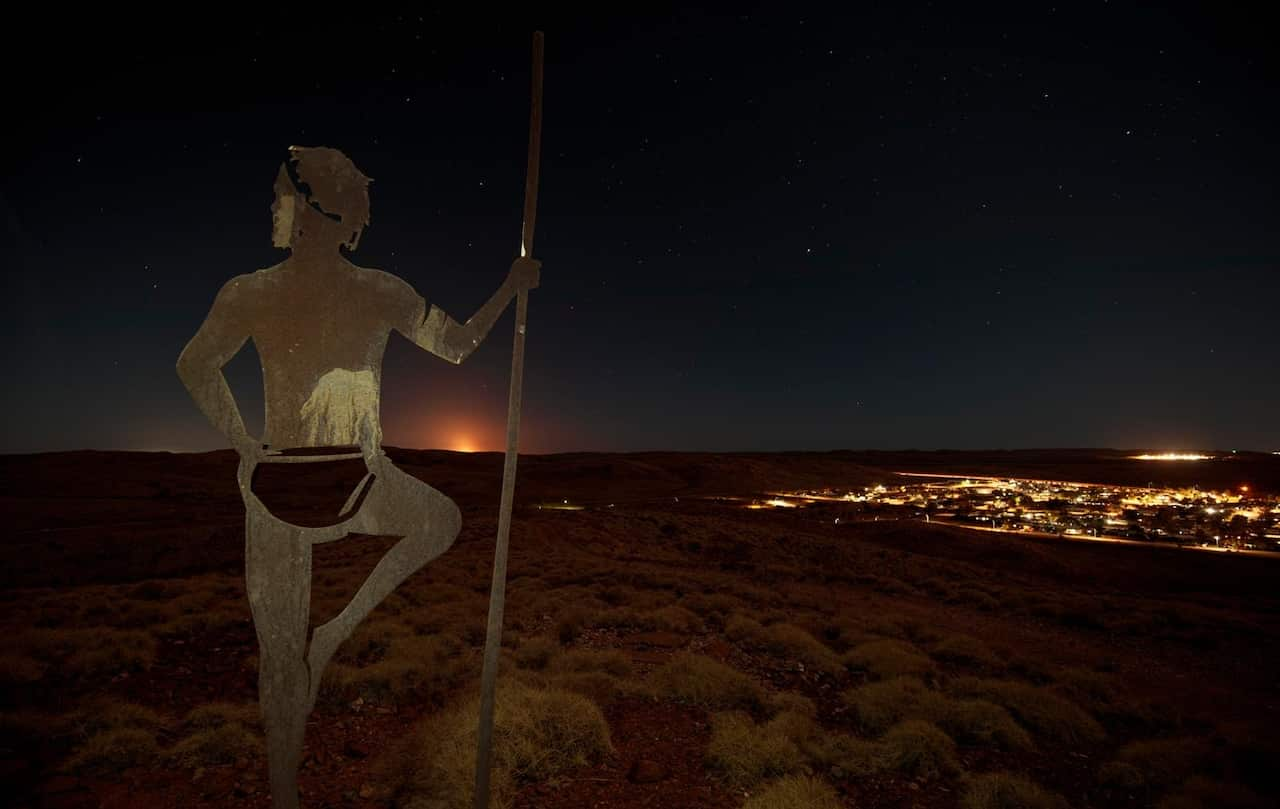
Hemmed in by rail lines heavy with iron ore, road trains thundering past and the gas plants of the seaboard, it is the oldest town in the north-west and home to a predominantly Aboriginal community of fewer than 1,000 people on Ngarluma country.
It is here, at the furthest reach of the food supply chain , that fresh produce and pantry staples arrive last, if at all.
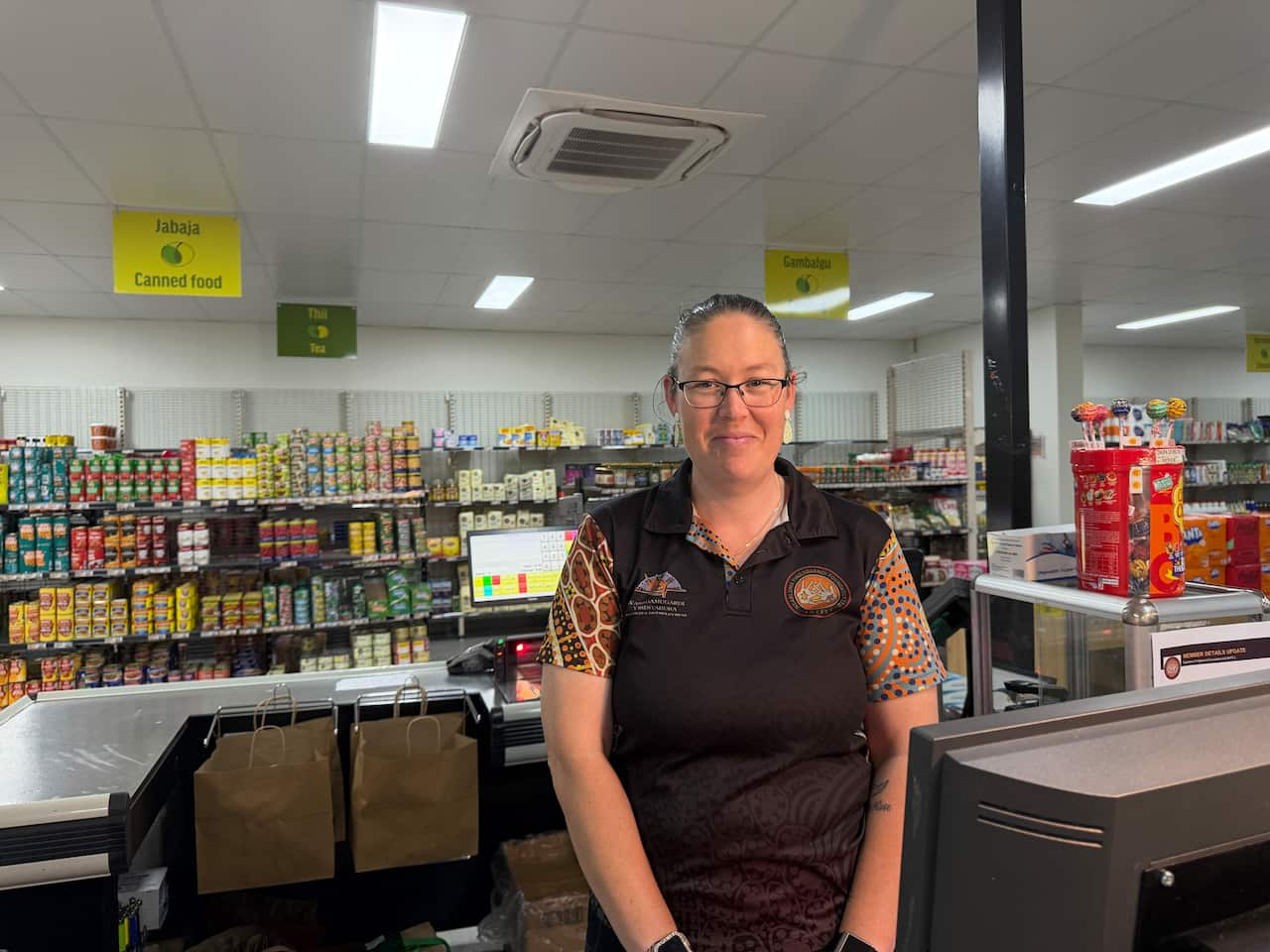
When SBS News visits in early spring, the shelves of the Ieramugadu store on Roebourne's main strip are unusually abundant. Located on Roe Street, it is the only place in town to buy fresh produce, with the nearest supermarkets 13km away in Wickham and 40km away in Karratha.
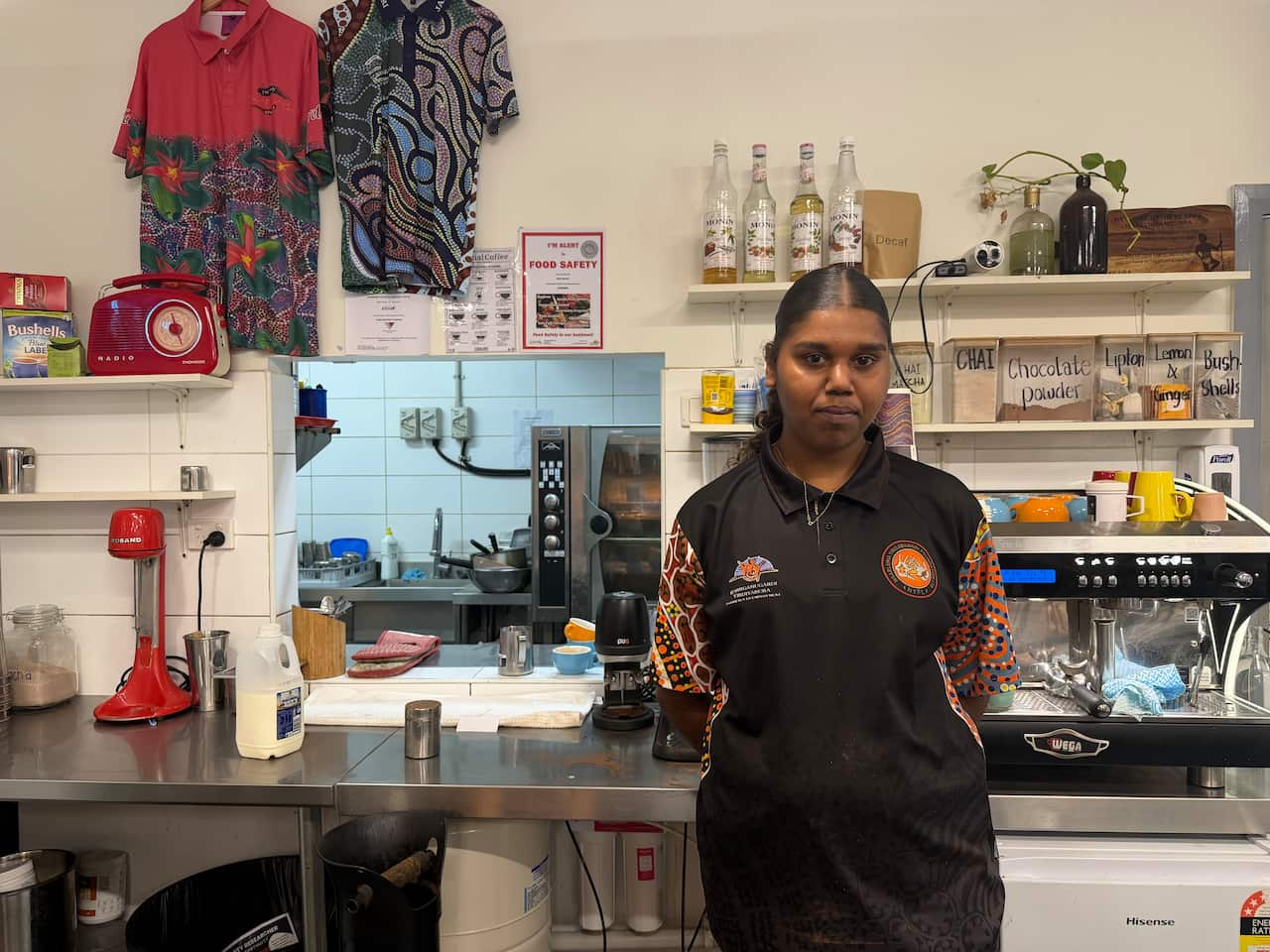
In the adjoining café, Amieriya Samson is already at the coffee machine. Affectionately known as Dolly, the softly spoken 21-year-old with a shy smile is one of the most familiar faces in town.
Plastered to the side of the machine is a word that guides the social enterprise she works within: 'nyinyart', meaning reciprocity, sharing and looking after one another.
"It's very busy. It's beautiful," the Ngarluma and Nyamal woman tells SBS News, gesturing to the street outside, which, until the café opened, was largely deserted.
"Locals, elders and other people coming in having tea, cakes and just coming in to see us, see their grandchildren working. I feel like it makes them happy."
Samson is proud that people here have watched her "grow up in this community" and then stay to serve in it, a path she says has made her "a young role model" too.
But Roebourne has not always had this hub, and there was a time, only a few years ago, when the shelves around her frequently stood empty.
Almost everything the remote town eats is hauled thousands of kilometres by road train from the state's south-west and other supply centres, through wheat country and saltbush, into the red-dirt Pilbara.
Along the way, regional centres draw on the same supply network, while Roebourne's distance from major distribution hubs adds to the cost and complexity of getting food to its shelves. Perishable goods are particularly vulnerable to delays and handling conditions, and transport costs can affect retail prices.
In October 2019, those costs forced Roebourne's only grocery store to close its doors, leaving residents with scant options for buying food locally.
For the next two years, residents had to rely on the lone service station's dehydrated and long-life stock to fill their pantries. Buying fresh food often meant travelling to Wickham or Karratha — a difficult option in a community with low rates of car ownership and licensing.
Greens became so hard to come by that the local pub raffled bags of salad leaves, a prize usually reserved for the meat tray.
In December 2021, the Ngarluma Yindjibarndi Foundation (NYFL), which represents the Ngarluma Traditional Owners and the neighbouring Yindjibarndi people, reopened the doors with backing from local government and industry.
NYFL sources its stock wherever it can: fruit too blemished for the major chains, goods in mislabelled packaging, surplus from the nearest supermarkets, meals frozen by mine-site caterers and deliveries secured through arrangements with industry partners.
Run as a social enterprise, the reopening of the Ieramugadu store has single-handedly restored Roebourne's access to fresh food. In 2025, it distributed 16.2 tonnes of donated food to the community, according to NYFL data.
Tourists pay the shelf price, while members discreetly use a card at the register to access discounted staples, sometimes at no cost — a dignified transaction designed to be indistinguishable from any other in the queue.
The model combines retail sales, donated food, and member support, helping the store serve customers with varying levels of financial need. But donations and surplus stock can be unpredictable, and the availability of particular products depends on what suppliers can provide.
Locals tell SBS News that irregular deliveries, poor-quality produce, fuel disruptions and floods that cut the roads along the supply chain still leave them regularly going without.
When deliveries fall short, the store turns to what it grows.
Cultivating food in Roebourne presents its own challenges. In 1864, settlers drove sheep onto the plains at the foot of Mount Welcome, where the town now stands. Generations of grazing — first sheep and then cattle — contributed to landscape degradation, leaving ground that some now describe as "dead earth".
With scant rain and fierce summer heat, little grows here without help.
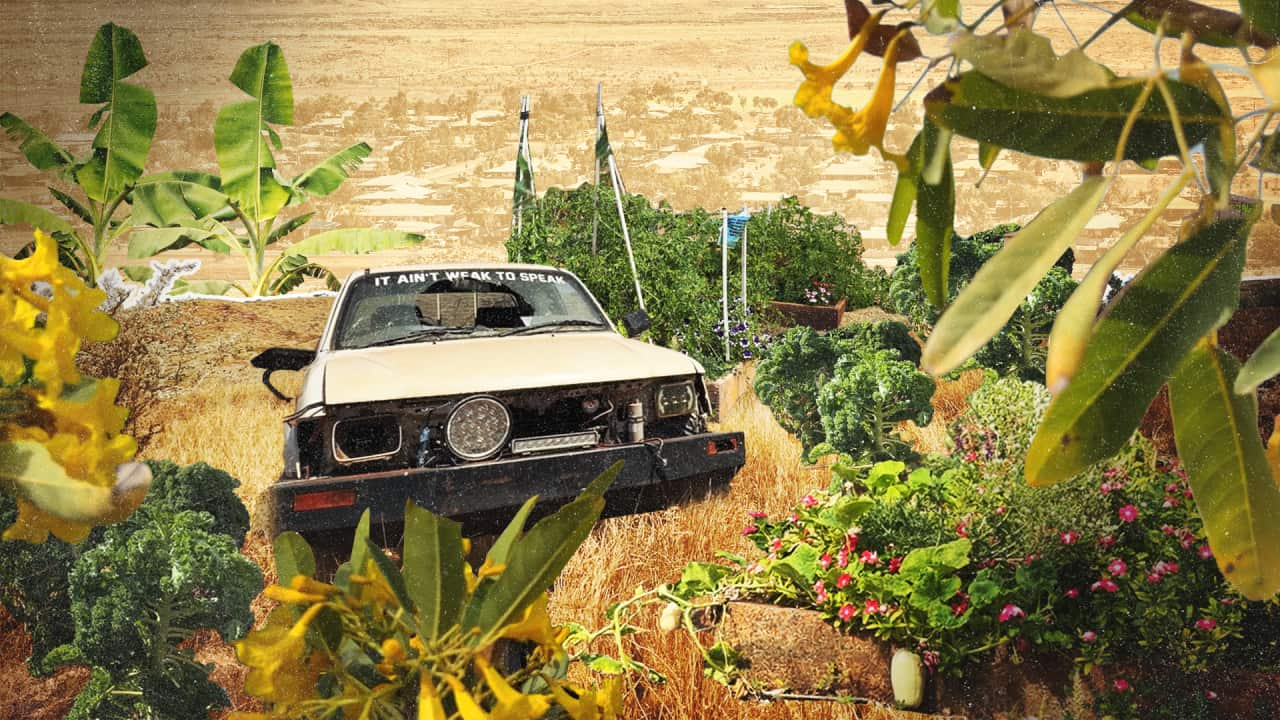
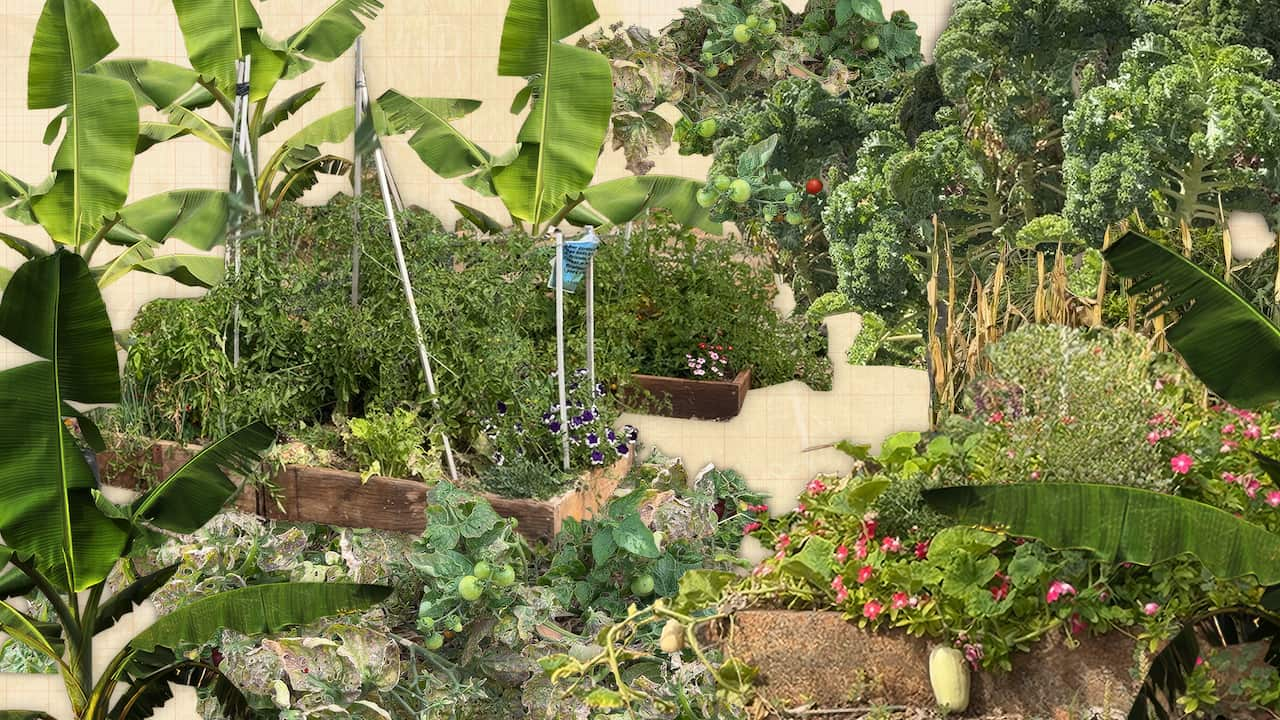
Yet out the back of the store, a lush community garden tumbles from expansive beds built by inmates at the nearby Roebourne Regional Prison.
Glossy banana leaves fan over sprawling pumpkin vines and their yellow flowers, while young fruit trees, bush foods and native herbs crowd the beds between them. In 2025, the garden yielded more than 60kg of vegetables for the store.
Samson often comes out here to pick tomatoes for the shelves and flowers for the café.
"We collect [the produce], weigh it and put it in the food section of the store for the community," she says.
Store manager Bec Gregory, who moved to Roebourne from the Kimberley, wants the young staff to see the whole journey, from the garden beds to the kitchen to the Elders it feeds.
"A lot of them then have purpose to come to work because they're providing for their own family, serving their Elders, which is a privilege in itself," she tells SBS News.
Many start as school students on traineeships, she explains: "So if we start them young, hopefully they'll keep going."
Empty shelves are only the most visible of Roebourne's shortages.
The town is one of only seven places in Australia to have recorded temperatures above 50C; homes under corrugated iron roofs hold the summer heat like kilns, and families spill onto porches as the power and internet cut out.
Data reveals a stark health burden.
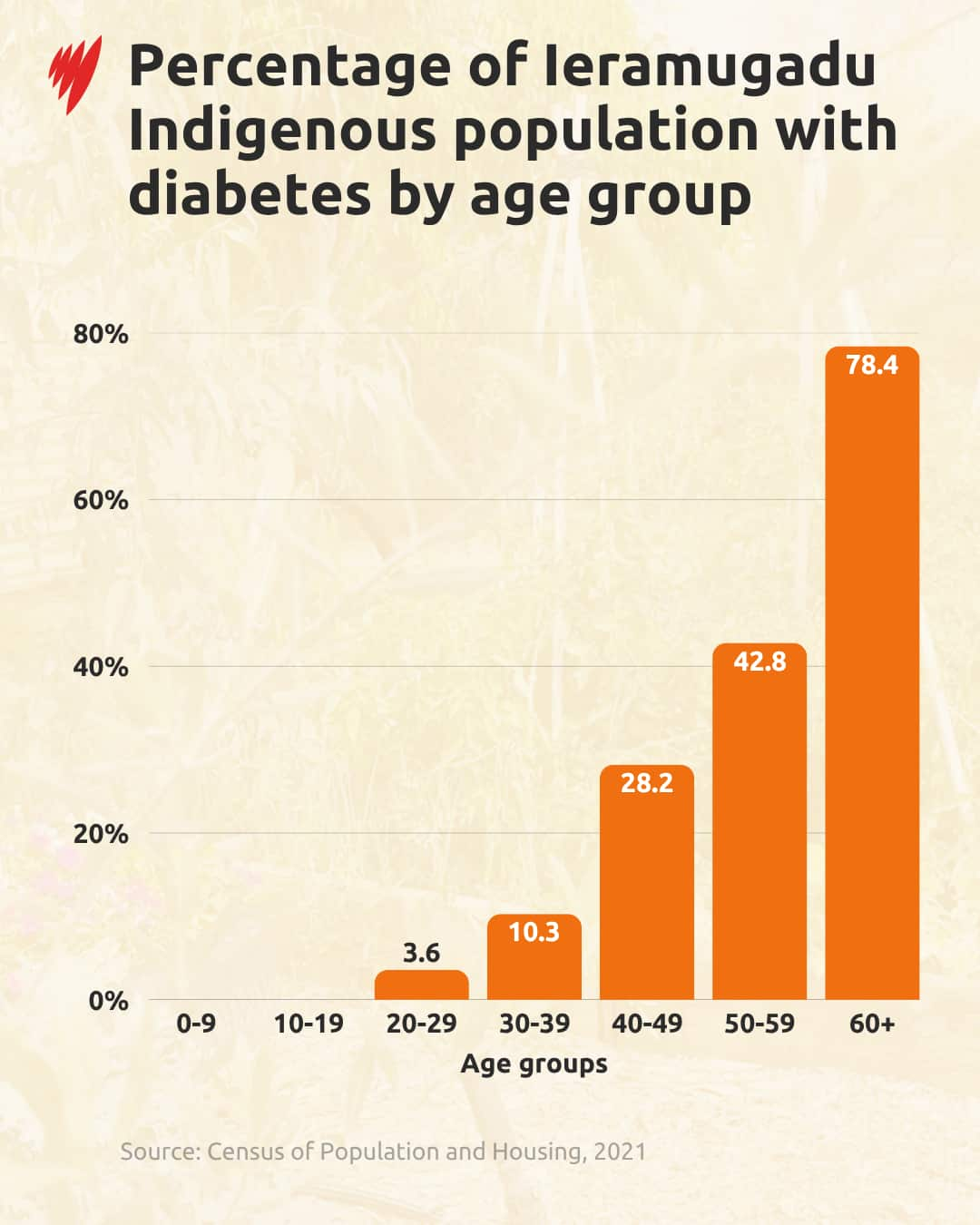
At the 2021 Census, diabetes was reported by 20.9 per cent of Aboriginal and Torres Strait Islander residents in Roebourne, compared with 5.9 per cent nationally. Kidney disease was reported by 3.2 per cent, compared with 1.2 per cent nationally.
Beyond these statistics are lives shaped by illness and loss.
In the NYFL office, a noticeboard is seldom without word of someone who has passed.
Saturdays are set aside for funerals, and sorry business is perpetual — much of the grief, residents say, is for young men, making loss a constant presence in community life.
In one of the store's aisles, we are greeted by Dorothy, who was widowed at 35. She is wearing a T-shirt screen-printed with a photo of her late husband.
Almost all of the available data about the town has been gathered by outside institutions, with limited community control over its collection, interpretation and use.
For Aaralyn Lockyer, a 22-year-old Yindjibarndi woman, that is the problem at the heart of her work as a community researcher on NYFL's Ieramugadu Indigenous Data Sovereignty Project, one of the first community-led data projects of its kind in Western Australia.
"We want to have sovereignty over our data rather than having it in organisations outside of Roebourne," she tells SBS News.
The project's first analysis, drawing on Census and socio-economic data, found Roebourne ranks among the most disadvantaged places in the country, with an estimated 87 per cent of Indigenous residents earning less than $805 a week, the national median personal weekly income recorded at the 2021 Census.
But Lockyer says many find the Census itself "quite intimidating", its official form a barrier for anyone not "well versed in reading and writing".
Working with the Australian National University, the project is now building its own measures of wellbeing. These include questions about whether people feel strong in their culture and can speak their language — tested through community focus groups.
The goal, NYFL says, is for the services, policy and investment that reach Roebourne to be shaped by what its people say they need.
Roebourne sits on the frontline of affordability pressures now being felt across the country.
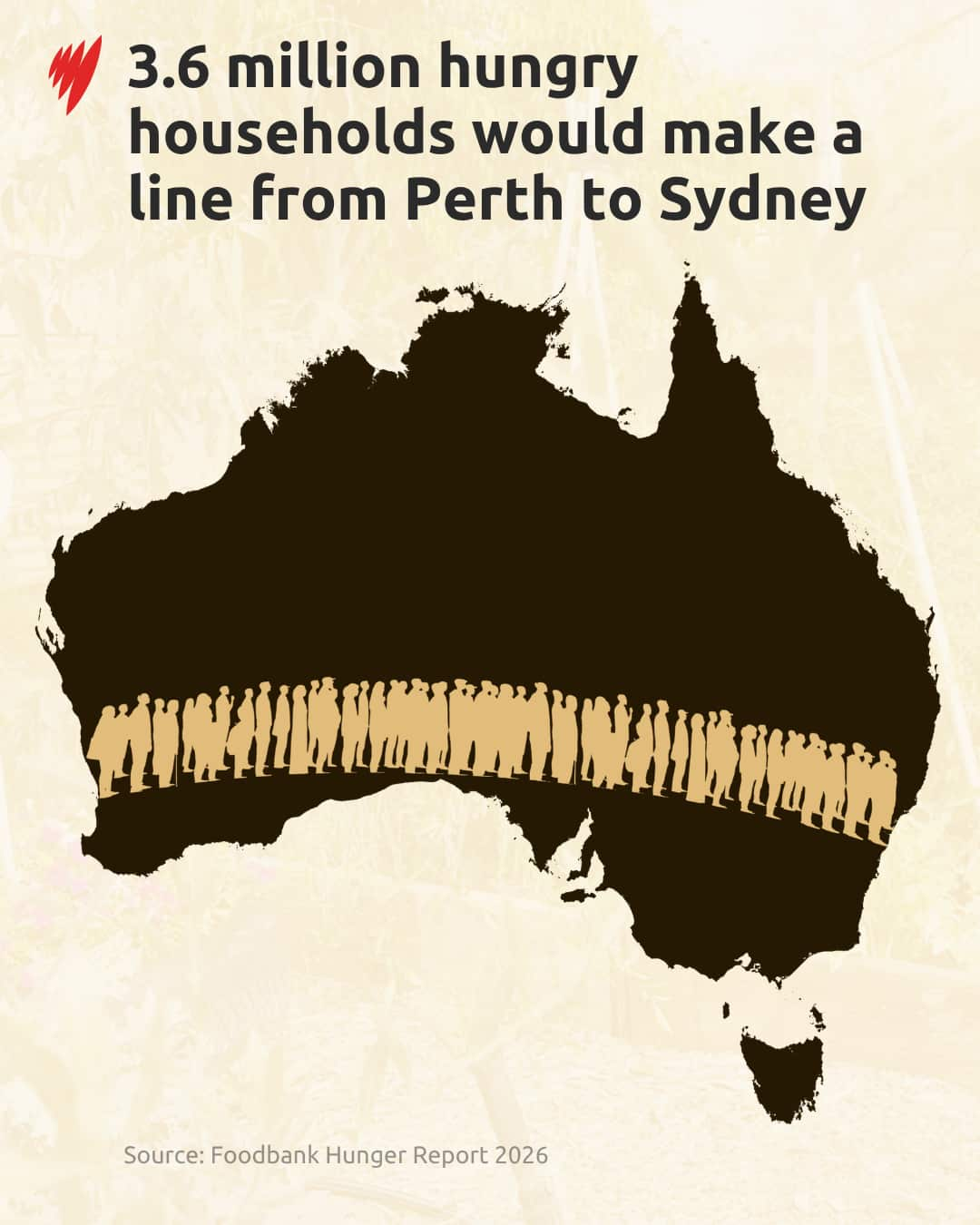
Foodbank's 2026 Hunger Report found one in three Australian households, or 3.6 million homes, experienced food insecurity in the past year, with the rate among First Nations households reaching 57 per cent.
The report describes people in regional areas "choosing fuel over food".
Elizabeth Jackson, an associate professor of supply chain management and logistics at Curtin University, says fuel accounts for "the lion's share" of the cost of moving food, and the risk does not end when the truck is unloaded.
"The freshness and perishability of many of the products that are being transported are very vulnerable. It's not only that [food is] vulnerable on its journey, but it's vulnerable when it gets to the destination as well," she tells SBS News.
"The more remote the community, the less access it has to reliable power sources, for example.
Desert communities around Newman, in the inland Pilbara, are interested in adopting the store's social enterprise model. But Roebourne has a logistical advantage that may be difficult to replicate elsewhere: proximity to the North West Coastal Highway, the region's main arterial route, where freight already travels.
Even so, a store built on nyinyart can only stock what reaches it.
For Ngarluma custodian Sam Walker, the problem extends beyond supermarket shelves to the loss of access to traditional food sources. She says mining and the infrastructure surrounding it have restricted her community's ability to hunt and gather on country.
"My people, all Indigenous people that are affected by mining, can never ever have the same diet as their ancestors, or the ones that are still living in their homelands that mining hasn't reached yet," she tells SBS News, speaking of the bush that once fed her people, much of it now cleaved by fences and mining tenements.
For now, Roebourne is tenuously sustained by what the road trains bring and what it can grow itself.
And on the small patch of country it can still firmly call its own, the garden hangs heavy with fruit, a reminder that in its people's hands, this land has never stopped giving.
Gabrielle Katanasho and Cameron Carr travelled to Roebourne with support from the Michael Gordon Fellowship, administered by the Melbourne Press Club.