First published 3 Nov 2026, 12:03pm
Welcome to our live coverage of the Reserve Bank of Australia (RBA) monetary policy board’s second-last meeting of the year. The RBA has raised the cash rate target to an 18-year high of 4.85%. RBA governor Michele Bullock is scheduled to address the media at 3:30pm.
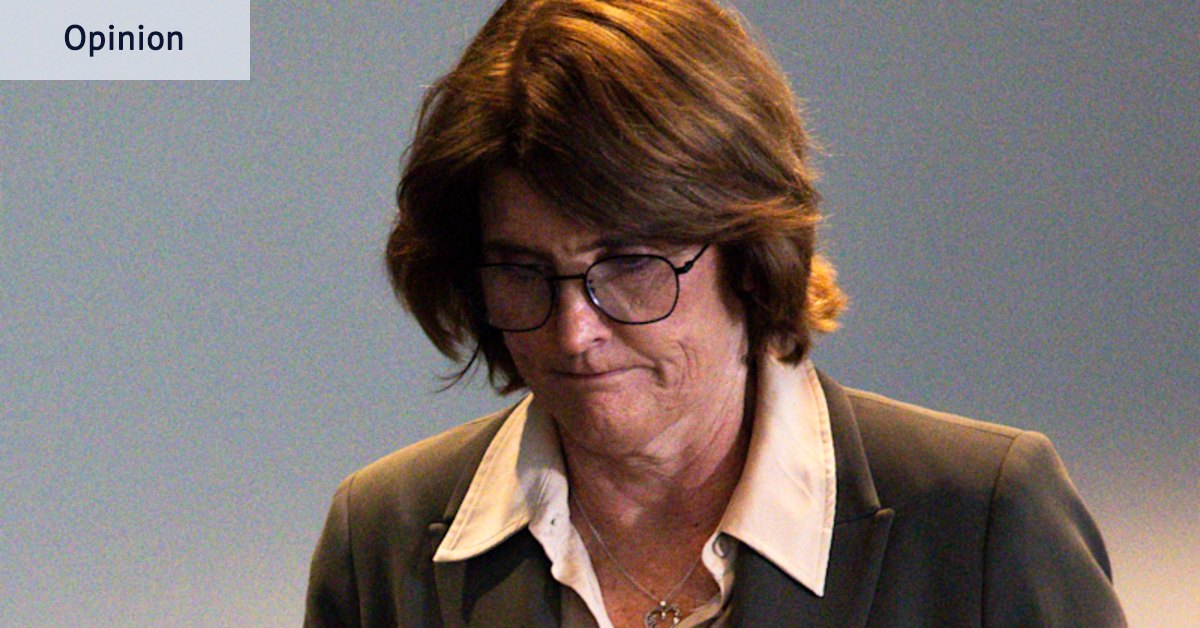
The RBA has increased the cash rate to 4.85%, the highest level in 18 years. RBA governor Michele Bullock will speak at a press conference scheduled for 3:30pm. Picture: NewsWire / John Appleyard
Governor Michele Bullock is set to appear in front of journalists shortly in her regular scheduled post-rates decision press conference. Ms Bullock is expected to set the tone for the board’s approach coming into this week and provide the contextual factors leading to the decision to hike rates, as well as speak through the different options the board considered.
Ms Bullock is expected to then face questions on RBA executives’ recent comments on the likelihood of a recession in Australia, as well as the bank’s forecasting for further price drops in the struggling property market.
Employment data concerns are likely to be covered, along with the board’s update view on the path forward for both headline and underlying inflation off the back of last week’s September data.
Forecasts for how the rest of the year is likely to play out are also expected, building on the comments shared by the MPB in its earlier statement.
This afternoon’s latest cash rate hike marks the fifth increase to interest rates in just nine months, with the bank confirming the tightening is successfully changing conditions and encouraging consumers and businesses to spend less.
It comes despite no noticeable improvement in the level of underlying inflation in more than six months, with recent data from the ABS also showing headline inflation is continuing to move in the wrong direction.
The bank’s post-rate decision statement, published earlier this afternoon, notes its actions are expected to continue pushing inflation back towards its 2-3% target range.
“The economy is slowing, housing prices have fallen significantly and the unemployment rate has risen,” the statement read. “The forecasts see growth in output slowing further over the coming year, which is expected to reduce capacity pressures.”
Six of the Reserve Bank monetary policy board members vote to raise the cash rate this month, while three members signalled it should remain on hold. Today marks the first divisive decision from the board in several months and comes alongside several concerning warnings.
In a statement released this afternoon alongside its decision to hike the cash rate, the board confirmed high inflation was inching closer towards being considered the norm in Australia. This has long been a well-communicated fear for the RBA, which says it relies strongly on public trust that low inflation can be maintained.
“Inflation is now expected to remain above 3% for the coming year and there is an increasing risk that higher inflation expectations will become embedded,” the statement read.
“The inflation outlook has also been revised materially higher in the updated staff forecasts. This partly reflects higher fuel and other commodity prices affected by the conflict in the Middle East but domestic capacity pressures are also judged to have been a little tighter than earlier thought.”
The new cash rate of 4.85% confirmed by the Reserve Bank this afternoon is set to place most Aussie households with a mortgage in a position with repayments they have never experienced.
Today’s property market also looks noticeably different from how it did in the years after the GFC. Economic capacity concerns were motivating the RBA to keep interest rates high as the nation experienced a strong resources boom, while Australia’s property market back then was worth $4.4trn. By comparison, the latest ABS data shows the total value of property has now almost tripled to $12.7trn as of June.
Approximately 20% more households held a mortgage in 2021 compared to in 2011, according to the ABS, while the average new loan size for an owner-occupier almost doubled in that ten-year period alone.
However, a different economic and lending environment 15 years ago meant households grappled with distinct balances between housing costs, incomes, employment levels and debt.
Read more: The suburbs where home prices have grown most since interest rates were this high
The Reserve Bank has confirmed the cash rate will rise to 4.85% – a move which brings rates to the highest level seen since November 2008 when Australia was in the midst of the Global Financial Crisis.
While the widely expected decision won’t be a surprise to households, borrowers are unlikely to welcome further increases to minimum mortgage repayments, while the squeeze seen in the property market is also expected to continue.
Today’s decision marks the fifth rate hike from the Reserve Bank this year, keeping households on their toes as high fuel and food prices continue to become the new norm for many.
The RBA board’s statement that accompanies today’s decision will be published shortly. An insight into board members’ deliberations over the last 48 hours will be central, along with latest outlooks for inflation pressures, economic growth and broader market conditions in the run up to the end of the year. It will also reveal how united the nine MPB members were on the decision.
Read more: RBA lifts cash rate to 4.85% in fifth hike this year
Market expectations for today’s rates decision have leaned heavily towards a hike over the past week in particular, with latest data from the Australian Stock Exchange showing pricing was trading at 95.22 as of Monday. This means there is an 80% expectation for the cash rate to rise.
Leading economists and all four of the nation’s biggest home loan lenders are forecasting a rate hike, thanks continuing concern around high inflation after last week’s ABS data and the RBA’s strong messaging around the likely need for further tightening.
While last month’s rate hike was the first since May, another today is set to significantly challenge stretched households in the lead up to Christmas after a small bit of breathing room over winter.
The RBA Rate Indicator calculates the probability of a rate change using market-determined pricing from the ASX 30-Day Interbank Cash Rate Futures.
Read more: Surging inflation raises RBA rate hike risk, threatening worst housing slump since 1987
The Reserve Bank is continuing to rule out any concerns about recession, despite stalling economic growth, rising unemployment and serious concerns over Australia’s productivity and demand and supply balance.
Governor Michelle Bullock, deputy governor Andrew Hauser and assistant governor Sarah Hunter appeared in front of the Senate Economics Legislation Committee in Canberra last week, facing questions as to whether its rate hikes were grinding the nation’s economy to halt.
“I recognise that higher interest rates can be difficult, particularly for households with mortgages who are also facing cost-of-living pressures but we can’t allow high inflation to persist,” Ms Bullock said. “High inflation hurts everyone. It means higher grocery costs, higher rent, and higher electricity bills.”
The RBA executives said they did not forsee a recession in the medium-term, with Dr Hunter confirming “none” of the indicators the bank monitors currently suggest Australia is even heading towards a recession-like situation.
Read more: Recession fears surges as high inflation force’s RBA’s hand
All four of Australia’s big four banks are expecting the RBA to hike the cash rate today, with Westpac and ANZ having locked in the grim forecast several weeks back.
“The RBA is especially worried that above-target inflation will become embedded in people’s expectations and pricing decisions,” Westpac chief economist Luci Ellis said. “The RBA has also made it clear that it is down-weighting the recent easing in the labour market, even though this was more than it forecast.”
National Australia Bank was slower to move away from its expectation for a hold, with the nation’s largest lender, Commonwealth Bank, also keeping its hold forecast in place until the release of September quarter inflation data last week.
“Recent RBA communication has emphasised upside inflation risks and domestic capacity constraints,” CBA senior economics Ashwin Clarke said. “There remains a risk of further rate hikes. We now expect the RBA to raise the cash rate by 25 basis points.”
Read more: Big bank job cuts could halt RBA rate hikes as unemployment rises
Coming into today’s decision, deputy governor Sarah Hunter made a rare television appearance, choosing to have Channel 9’s 60 Minutes come inside the RBA to hear her explanation of the work the bank undertakes day to day.
Dr Hunter acknowledged in the interview that government spending is contributing to demand, which in turn is pushing up inflation. With households feeling the pinch of increased mortgage costs, food and fuel prices, Dr Hunter was asked if government spending needed to be reined in as an alternative.
She said the RBA could not “tell politicians what governments should or shouldn’t spend money on”, saying Aussies should instead “have their say at the ballot box”.
Dr Hunter also warned the end of the year will be challenging for many households, saying the trade off pain of high interest rates “weighed heavily on the board”, as did the knowledge the most pressured homeowners might be pushed to sell as repayment costs become unmanageable.
Read more: RBA warns it can’t tell the government to rein in spending
With inflation still high, and higher than the RBA had forecast back in August, realestate.com.au executive manager of economics Angus Moore said it is “hard to see the RBA doing anything but hiking” this month.
The bank has been clear in its communications that it will not hesitate to continue raising rates if it feels it is necessary. It also will not be swayed by approaches being taken by other central banks across the globe.
“Their recent public commentary has focused squarely on their concerns about inflation,” Mr Moore added. “The September quarter inflation data we got last week won't have assuaged those concerns.”
Underlying inflation has yet to reach a clear peak and has been sitting around the same level since June. Expectations from the bank are grim, with its identified upside risks – factors which place pressure on inflation – continuing to grow.
Read more: Has spring sprung, or at least hopped?
Homeowners, renters and borrowers were expecting to have seen the back of rate hikes after the RBA’s decision to hold off on tightening in both June and August. The reason for the pause, according to the bank, was to see how its three earlier rate hikes would impact the economy.
Despite hope for some longer-term reprieve, the bank now says more tightening is likely necessary, with a potential rate hike today set to bring the total for 2026 to five.
The RBA has been hoping that an inflation peak would present itself in the ABS’ data, with the bank and government initially forecasting June as the most likely time. Despite this, inflation has not budged since then, leaving the RBA struggling to forecast a reliable timeline for cooling.
The last time the Reserve Bank raised rates five times or more in one calendar year was 2022, when eight hikes were pushed through between May and December off the back of Australia’s economic recovery from Covid-19.
Read more: November rate hike likely locked in as high inflation lingers
Australia’s housing market has now reach six months in downturn, with the latest Home Price Index showing Darwin – the nation’s most affordable capital – is the only major city not to have had a further downturn throughout October.
Values dropped most in Adelaide (-0.6%) over October, with Sydney and Brisbane both sliding down by 0.4%. Less of an impact was felt less across the other capitals, with prices in Darwin holding flat.
The national median home price was down by 0.3% to $871,000. By comparison, the March peak for property prices placed the median in Australia at $908,000.
Read more: realestate.com.au Home Price Report – October 2026
The RBA’s executives have undertaken a range of different media appearances in recent weeks, clocking up a higher than usual number of public appearances since the MPB’s last meeting at the end of September.
Deputy governor Andrew Hauser and assistant governor Sarah Hunter have used television and event appearances to send a clear message to households that Australia’s economic situation is likely to get worse before it improves.
Speaking at a Citi conference, Mr Hauser said the RBA was “facing hard choices” as it struggled to accurately forecast the path ahead for interest rates. He added risks to high inflation were rising, adding the outlook now is “materially worse” than the RBA had expected back in August.
Dr Hunter used an appearance on 60 Minutes at the start of last week to defend the bank’s excessive tightening, acknowledging increasing oil prices did not bode well for the trajectory of interest rates.
Read more: RBA hints at more rate hikes flagging unravelling public trust concerns
A crunch of RBA rate decisions between 1990 and 2026 reveals November is the most common month for the bank to hike rates, but when did households last face five rate hikes in one calendar year?
While today’s decision from the RBA could put the cash rate back to a position not seen since 2008, it was far more recently that the bank went down such a tough path of tightening.
The bumpy economic recovery from Covid saw eight consecutive rate hikes in Australia in 2022, taking the cash rate from 0.1% to 3.1% in the space of eight months. This was followed by five more rate hikes in 2023, spaced out in a similar pattern to what the MPB has decided on during 2026.
With Black Friday and Cyber Monday set to hit later this month to coincide with the start of traditional Christmas demand, the bank is likely to take action now to deter households from further adding to inflation with seasonal spending.
Read more: Four rate rises later, here’s how Australia’s housing market has changed
Hello and welcome to our coverage of this afternoon’s cash rate decision, which marks the end of the penultimate Reserve Bank monetary policy board (MPB) meeting for 2026. There are just a couple of hours to go until we find out whether interest rates will be raised again or remain on hold until at least early December.
Forecasts have painted a largely mixed picture in the short five-week gap since the last interest rate decision, though another month of high inflation data and comments from the bank’s senior executives have seen the needle swinging firmly over to expectation for a hike.
Follow along in the lead up to the 2:30pm announcement and keep up to date with the latest expert commentary, data, and forecasts. We’ll also set the scene with a wider breakdown on Australia’s economic position coming into today’s meeting and what we can expect from the MPB.
We’ll look at how mortgage holders, renters, owner occupiers and investors at every stage of the property journey will be affected by a rate hike or a rate hold as we approach the final 10 weeks of a transformative year for interest rates.
Read more: Latest RBA clues leave door open for pre-Christmas rate hike
Help us improve your reading experience
Got a minute? Your feedback will help us build a better experience for you.