For three weeks in October, Veridiana Cunha became a so-called “soldier” for a digital army fighting to reelect Brazil’s leftist President Luiz Inácio Lula da Silva .
Every few minutes, the 48-year-old would interrupt her day job in São Paulo as a copy editor and check WhatsApp for new instructions. She even reactivated an Instagram account she hadn’t used since 2022 and learned how to post on X for the first time for the cause.
“I’d edit a text, then go to the army. Edit another text, then go to the army,” she told CNN of a WhatsApp channel, led by Congressman André Janones, that became a virtual campaign headquarters during the final weeks of Brazil’s presidential campaign.
Cunha was one of millions of Brazilians who joined the channel called “Lula’s Army.” Their mission: to reverse Lula’s first-round defeat on October 4 to the right-wing senator Flávio Bolsonaro, scion of former President Jair Bolsonaro.
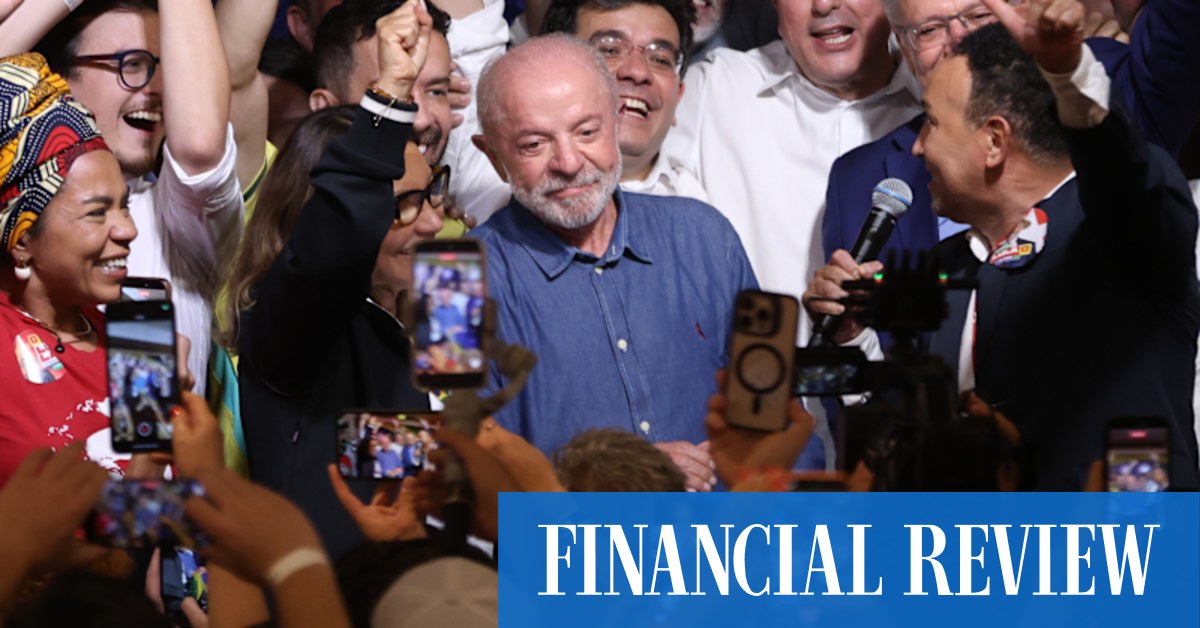
And they succeeded. Lula won the election on October 25 , which analysts partly attribute to the eleventh-hour strategy of harnessing a digital playbook long associated with Brazil’s right of using WhatsApp to amplify political messaging and mobilize voters.
From coordinated social media campaigns to reclaiming national symbols, the online strategy mobilized many to vote for Lula, in an effort that experts say offers a striking example of how the Brazilian left learned to fight the right on its turf.
WhatsApp is a powerful force in Brazilian politics. Jair Bolsonaro’s s uccessful presidential campaign in 2018 was supported by extensive networks of private groups that spread videos, political messages and disinformation.
But ahead of the October 4, first-round vote, Lula’s campaign had struggled to compete with the right’s digital operation. While Flávio Bolsonaro’s campaign had long made social media a central part of its strategy, Lula’s team underestimated its importance, according to Lucas Fernandes, a political analyst at BMJ Consultores Associados.
“The right understood this and applied it on several fronts, not just to Flávio’s candidacy, while the left failed to make that transition,” Fernandes said, highlighting social media as one of the key factors for Flávio’s victory in the first round.
That changed after Lula’s defeat when Janones, 42, emerged as a central figure in this new playbook.
The congressman for the state of Minas Gerais created the WhatsApp channel in April. After Lula’s first-round loss to Bolsonaro, Janones transformed it into a virtual command center, issuing coordinated instructions to supporters who were suddenly confronting the possibility of losing the presidency .
Viktor Chagas, a professor at Fluminense Federal University who researches political communication, described Janones as a politician who “fights the far right with the same resources it uses,” resorting to emotionally charged messages, aggressive language and, at times, content of dubious origin.
It was a strategy he deployed on the channel, which saw it swell from 50,000 followers before the first-round vote to nearly 11 million in three weeks as Janones rallied supporters to help Lula stage a historic comeback.
Within Congress, Janones is known for his combative style, which he dubbed “cultural Janonism,” adopting tactics associated with Bolsonarism, according to Chagas. This included provocative language, emotionally charged posts, and attacks on his adversaries. It also turned Janones into a polarizing figure, who last year was suspended by Congress for three months for offensive statements against another combative lawmaker, the right-wing politician Nikolas Ferreira.
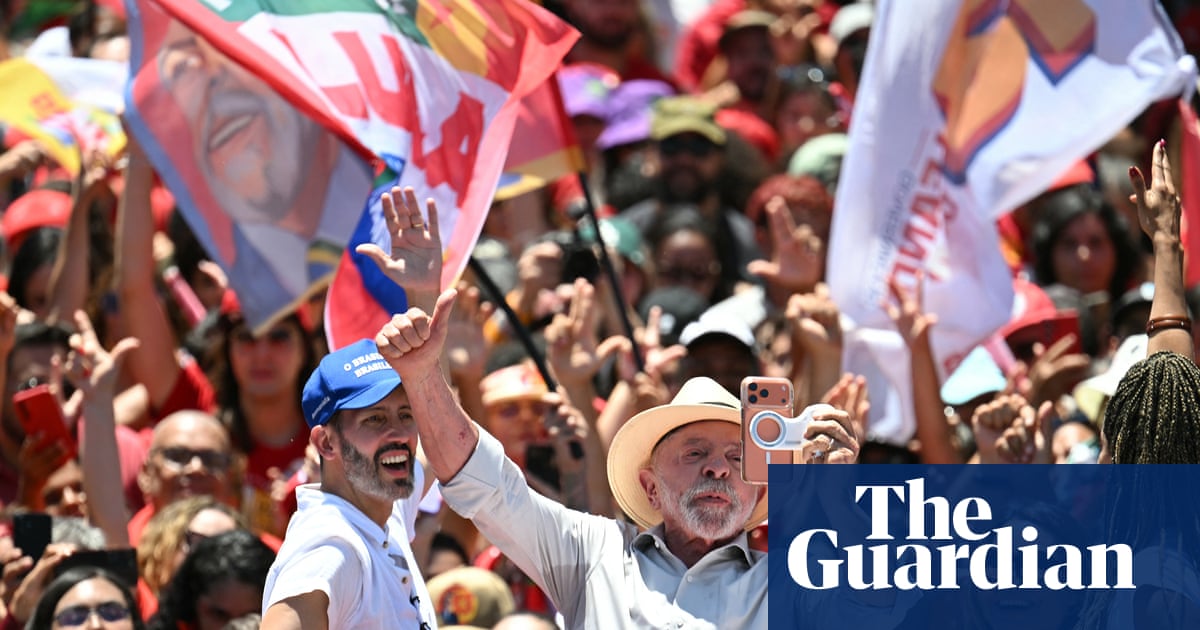
Through videos, audio messages and social media posts, Janones instructed his followers to promote hashtags, comment on livestreams, share videos, like posts, publish photos making the “L” hand gesture in support of Lula, and recruit new members.
He called for a panelaço — a traditional Brazilian form of protest in which people bang pots and pans — during Flávio Bolsonaro’s highly anticipated interview on TV Globo, as a way to boycott the broadcast. Janones also urged supporters to avoid commenting on opponents’ posts, warning that engaging with their content could inadvertently boost its visibility through social media algorithms.
The pace was so intense that Janones went so far as to condemn resting unless the “soldier” could find a replacement for the “missions.” On October 17, he wrote on the channel: “If there is a substitute soldier, the change is authorized. Pass him the cell phone. Rest and come back in ten minutes.”
Chagas described the strategy as a form of “gamification,” which fostered a sense of collective purpose. According to the academic, that structure gave progressive digital activism a level of coordination that had been absent even during Lula’s successful campaign in 2022.
Bolsonaro’s strategy focused on disseminating content from a few major influencers, while “Lula’s Army” had a centralized command that instructed its members to create and disseminate their own content as well as official lines.
Janones not only told them what to share but taught them how to do it, experts noted.
Leonardo Magalhães Firmino, chief executive of research firm IPSE Global, compared the method to training thousands of small social media managers.
But the rise in online activity also raised concerns about misinformation. In one widely circulated image by the left, Brazilian soccer legend Ronaldo appears to be wearing a national team jersey bearing Lula’s ballot number, 13, and making the “L” gesture. The image was manipulated by artificial intelligence and posted by a Colombian artist, according to Brazilian fact-checking outlet Agência Lupa. Ronaldo’s representatives said it had been used without his authorization.
While Janones’ tactics tend to pursue democratic ends, Chagas argues that they could also degrade public debate by reducing complex political discussions to a constant confrontation.
CNN reached out to Janones, who has previously denied spreading disinformation, for comment.
On the channel, Janones called himself “general,” assigned daily “missions” to Lula’s supporters, and urged them to take the campaign beyond their own social media.
The tactics frustrated Bolsonaro’s supporters. On October 11, a supreme court judge ordered the suspension of the WhatsApp group following a complaint by Bolsonaro’s campaign for alleged disinformation. The decision was later overturned.
Lula’s victory was decided by factors beyond the digital battle : electoral participation, the redistribution of votes from eliminated candidates, and geographical changes in support for candidates .
But Janones’ online mobilization was fundamental to Lula’s victory, says Firmino.
“I have no doubt. Without that, I don’t think the comeback would have happened,” he told CNN. “He organized the militancy, he gave them a method. I think that’s the main point.”
According to Firmino, the right underestimated Janones’ strategy, saying that he only spoke with Lula supporters . But that was the point: the goal was to speak directly with the “soldiers” who were already converted, not the undecided.
The “soldiers” were the ones who would take the message beyond the channel and to their family, friends, undecided voters, and those thinking about abstaining, he said.
For Cunha, the missions meant much more than a political cause. Her mother, a longtime Lula supporter, became seriously ill in August and she spent weeks by her side in the Brazilian state of Minas Gerais, so she did not vote in the first round. Back in São Paulo for work, she needed a distraction and a purpose, which she found in digital mobilization.
“The Army saved Brazil, it saved Lula and it saved me a little too,” she said. Participating in the campaign allowed her to feel closer to her mother and continue fighting for a cause they both shared.
But one of her greatest satisfactions came on election day, when a friend, who was thinking of abstaining, finally went to the polls and voted for Lula. “I managed to change a vote,” Cunha said.
No one can determine how many stories like hers translated into additional votes on a national scale. But for Cunha, the victory had an unexpected consequence: After three weeks spent almost entirely campaigning, getting back to normal proved harder than she imagined.
“I think we’re living through a kind of post-traumatic stress from the Army, like we’ve really gone to war,” she said. “We’re exhausted, but we want more missions. We feel like we can conquer the world.”