This audio is voiced by AI and may occasionally mispronounce words.
Share your feedback and help us improve this feature. Read more about how we use AI at SBS here.
At the heart of the Sonoran Desert in southern Arizona, a great green sea unfolds between sky islands, bringing unexpected lushness to an otherwise arid landscape.
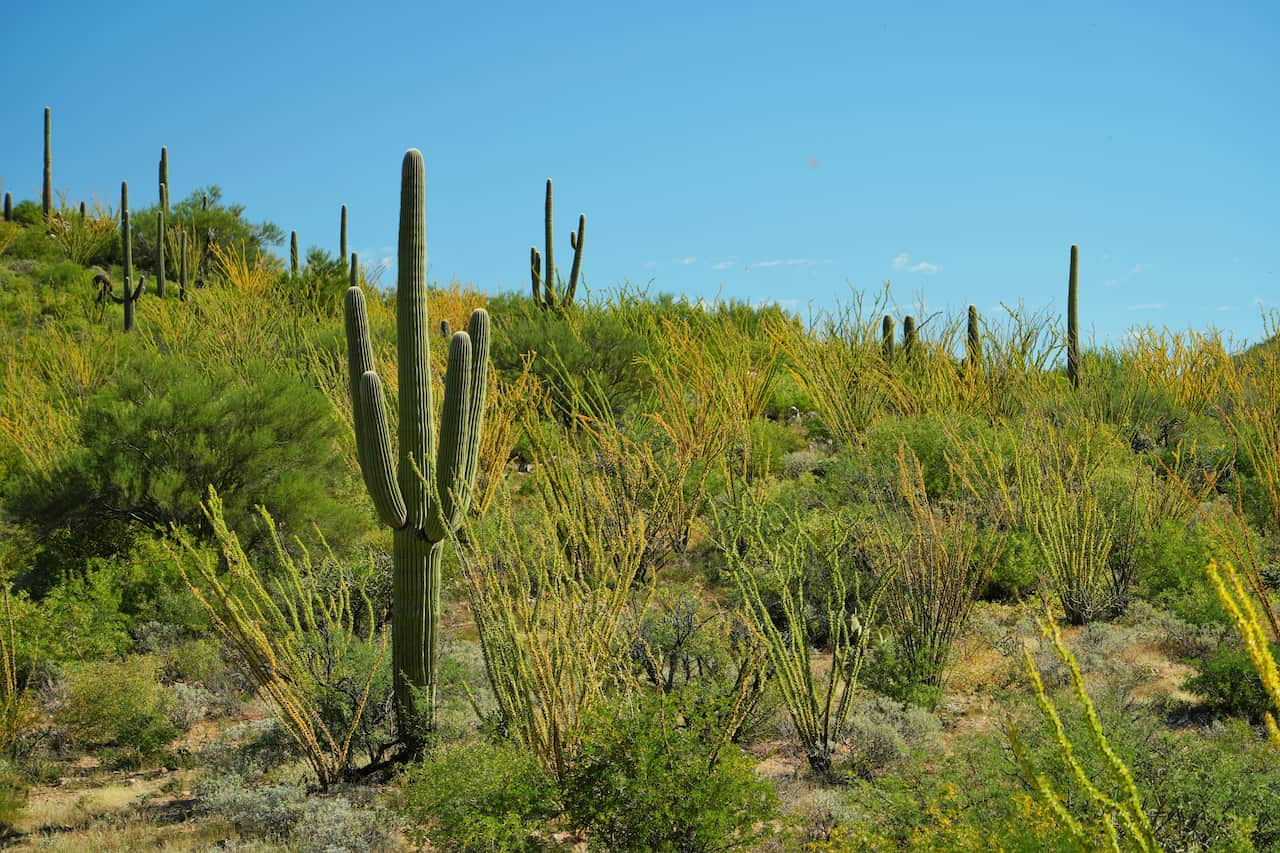
Thousands of towering saguaro cacti and fanned fronds of ocotillo rise from the dusty earth, while a road tracing the United States-Mexico border stretches as far as the eye can see.
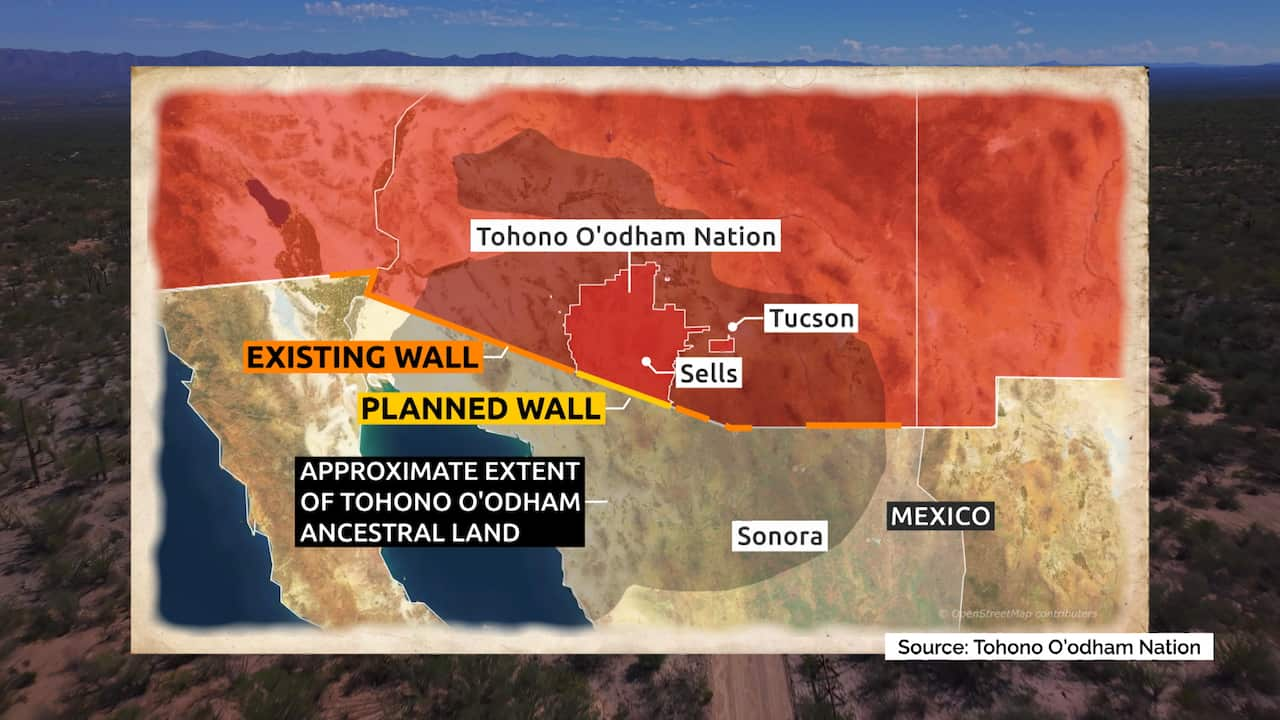
This is part of the Tohono O'odham Nation, a federally recognised Native American nation whose reservation, the second-largest in Arizona, spans 1.1 million hectares.
Its leaders are fighting plans by the Trump administration to build a 9m steel border wall along part of their boundary with Mexico, arguing it would divide their lands, threaten sacred sites and further disrupt a community whose cultural and family ties span both sides of the border.
Your trusted source for staying up-to-date with the world around you. Get free daily news updates and analysis, straight to your inbox.
The government, meanwhile, argues that the wall is necessary to strengthen border security .
Of the Nation's approximately 37,000 registered members, around 12,000 live on the reservation and 3,000 live across the border in the Mexican state of Sonora.
The Tohono O'odham – meaning 'desert people' — have been the traditional custodians of this area for more than 10,000 years, with ancestral lands reaching far beyond the boundaries of the present-day reservation.
The Nation's chair, Verlon Jose, remembers a time when there was no concept of a border.
"I used to travel with my dad or my grandfather; we would go across a fence line. I never knew we were going into another country," he tells SBS News.
"All I knew was we were going to the community, to help grandma and grandpa or go to some event."
Like many others on the reservation, Jose grew up on a cattle ranch.
"I was riding horses before I even learned how to walk. My dad was a cowboy. We were always working the land," he says.
"That's how it was growing up, lot of hard work, a lot of family time … a lot of culture and tradition shared, a lot of singing, dancing."
Jose says the Nation has worked with the federal government for decades to address drug trafficking, unauthorised migration and cartel activity across the border.
He says the Nation's opposition to the proposed wall does not mean it opposes border security.
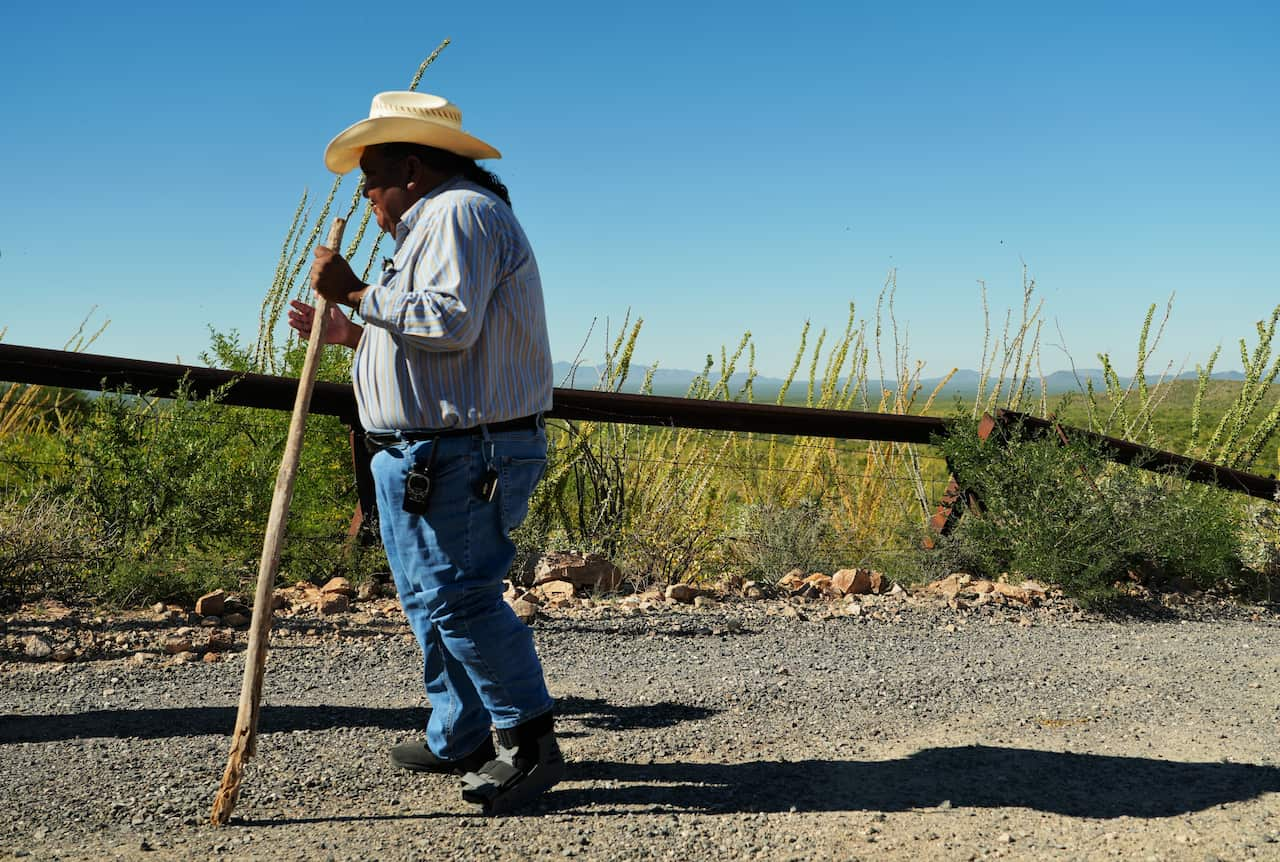
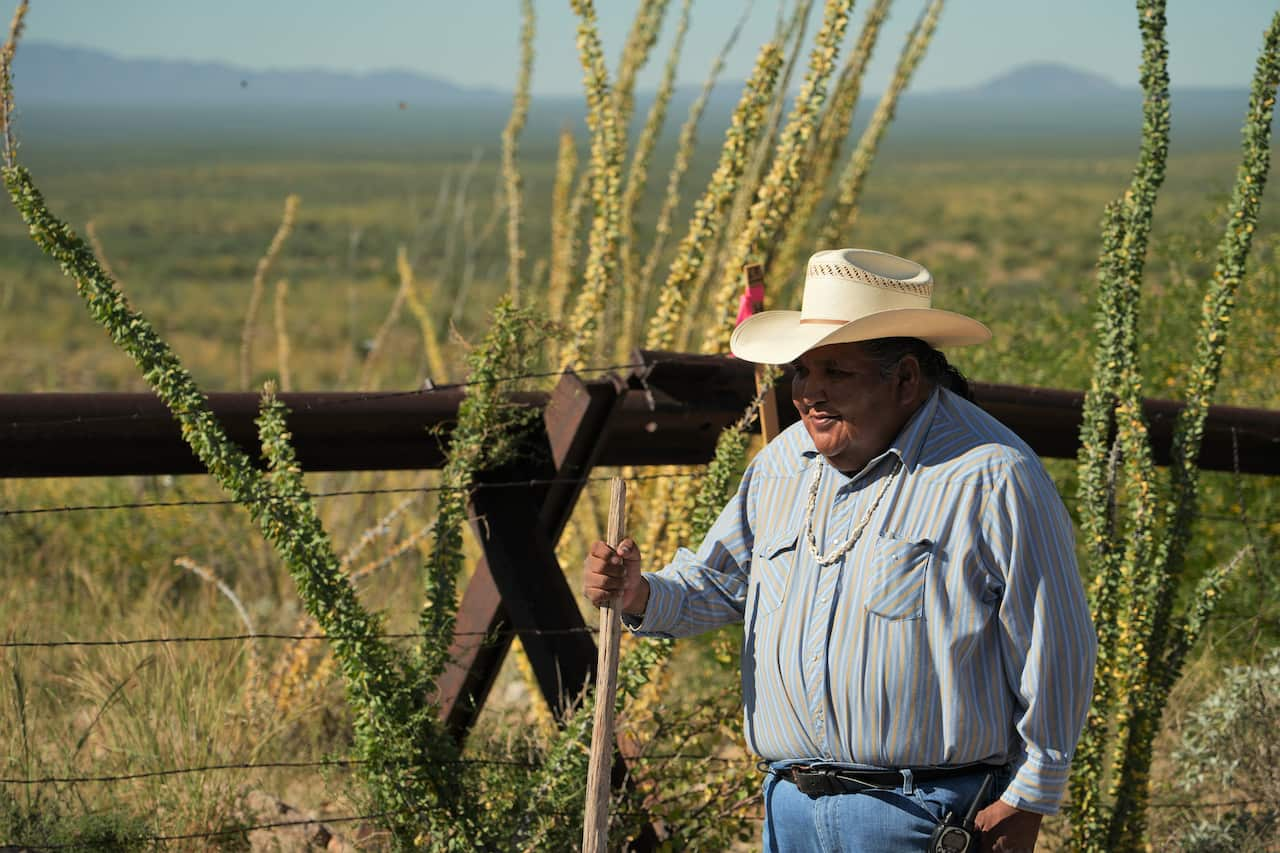
"I've seen from no barrier, to a fence barrier, to a vehicle barrier," Jose says, pointing to the barbed-wire fence and the dark, rusty-red, approximately 1m-high steel barricades known as "Normandy-style", installed nearly 20 years ago to stop vehicles crossing the border.
In recent months, the Nation has restricted access for outside visitors as it disputes the federal government's plans to build a pedestrian wall along about 100km of its international boundary with Mexico.
From Sells, the Nation's capital, the road stretches south to the Mexican border.
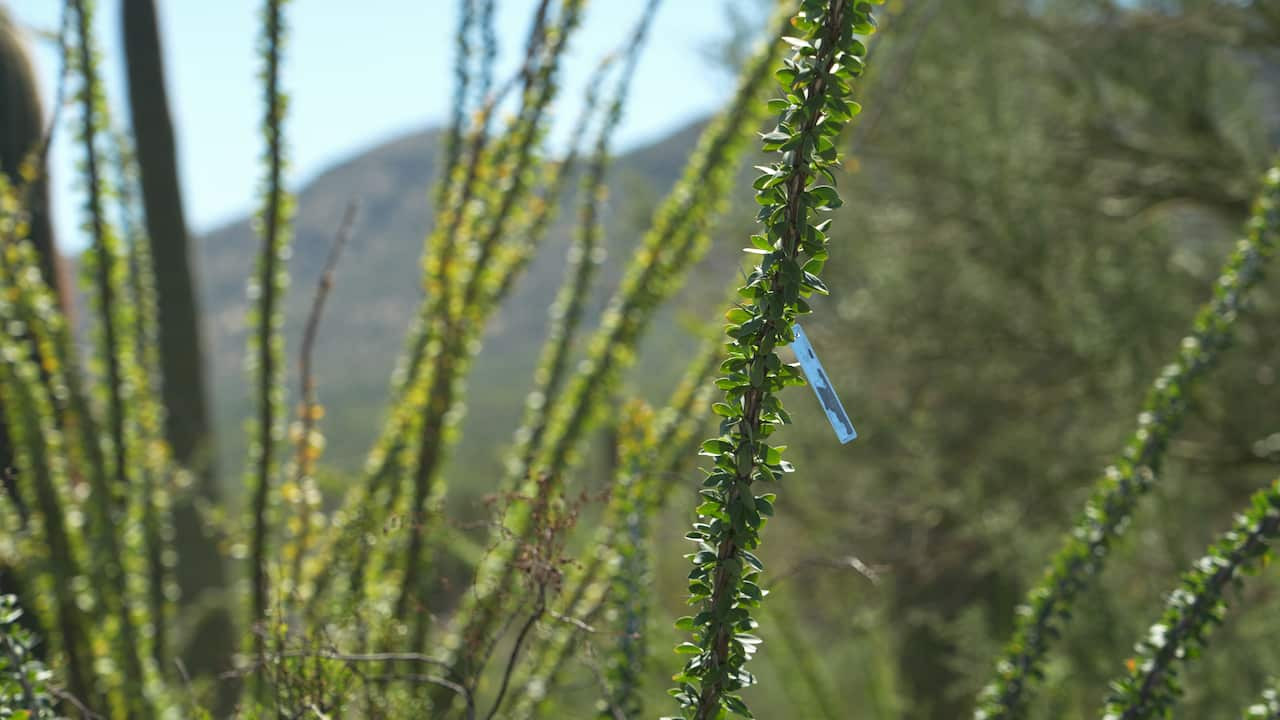
"See these plants here, they are tagged for removal," Jose says, showing us.
Small white tags hang from protected ocotillo and saguaro cacti along the border line. Jose says the plants are marked for removal and relocation to make way for construction.
The saguaro — Ha-San in the Tohono language — is sacred and was granted legal personhood by the Nation's legislative council in 2021.
"In our culture, in our history, is that the saguaro came from a child," Jose says.
"When I look at the saguaro out here, these are our people that have been here for hundreds of years."
"Would you like for me to go up and uproot your child … and send them on a path for destruction, to their deathbed? Because when we remove those, that's what we're doing."
Jose believes the push to accelerate construction is politically motivated, arguing that the administration is seeking to drum up support among US President Donald Trump's political base ahead of the midterm elections .
"The Trump administration is doing everything in their effort to expedite to make a political statement here.
"They say, 'We recognise the nation as a sovereign nation'. If you are, then let us protect our land."
In June, the Nation filed a lawsuit against the Department of Homeland Security (DHS) to stop construction. It argued that the wall would infringe on its sovereignty, threaten wildlife movement and put the Nation's fiercely guarded water resources at risk.
In August, a federal judge in Washington, DC rejected the Nation's request for an injunction to halt the project.
At the heart of the dispute is the Roosevelt Reservation, a federally designated strip of land along the border. The government maintains it has the authority to build barriers there, while the Nation argues that contractors would have to cross tribal lands to access the border strip, which would constitute trespass.
The Nation is appealing the ruling, citing a sharp decline in unauthorised crossings and arguing that its cooperation with law enforcement has improved border security.
The Trump administration argues that stretches of the border without a pedestrian barrier remain vulnerable, particularly as new sections of wall are built elsewhere.
Construction of new border wall sections has ramped up in recent months, including in Texas, New Mexico, and other parts of Arizona.
In nearby Lochiel, construction has begun on a double wall parallel to the existing barrier. There, protesters have clashed with authorities over the removal of so-called "grandmother trees".
Opponents of the construction have also raised concerns about damage to sacred sites and culturally significant landscapes.
In April, DHS contractors bulldozed part of the Las Playas Intaglio, an ancient, fish-shaped carving scraped into the earth, estimated to be at least 6,500 years old, in a separate border-wall construction area west of the Tohono O'odham reservation.
"There are human remains along here that would be destroyed," Jose says.
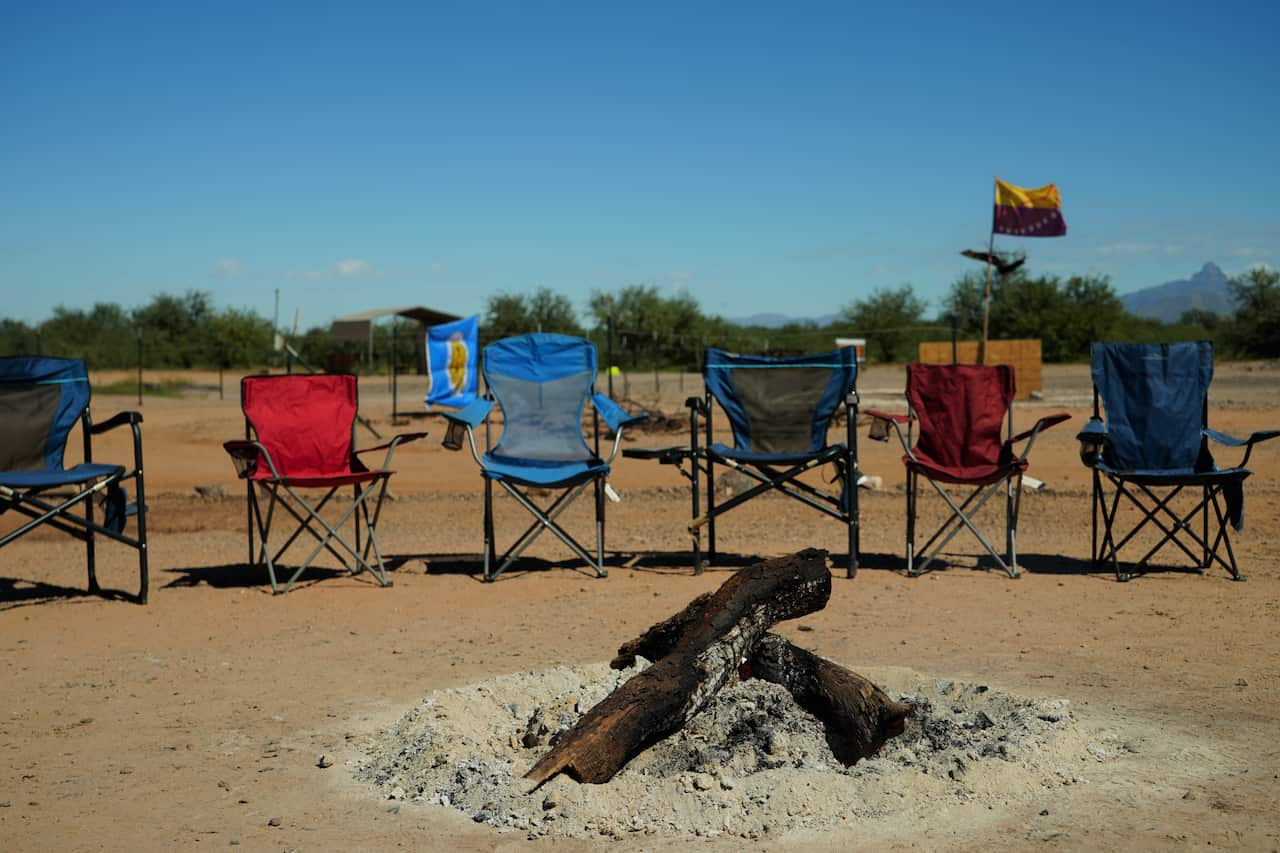
A protest camp has been established at the San Miguel gate since August.
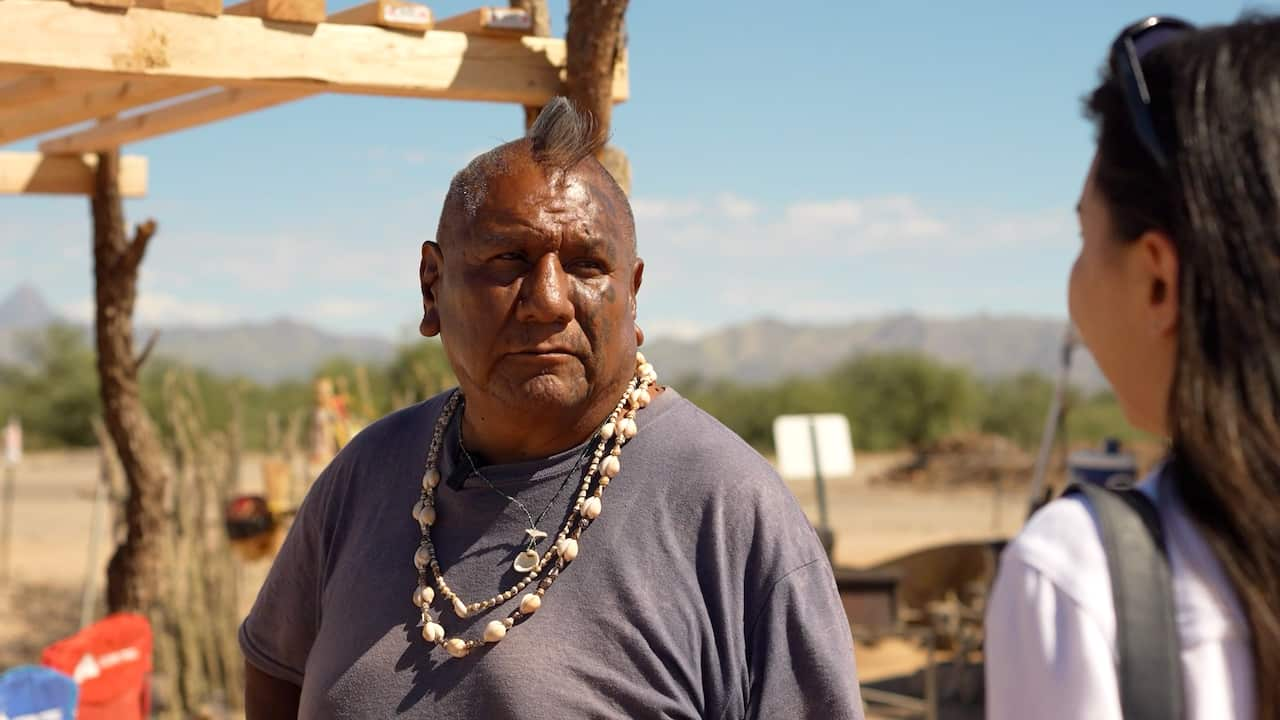
For community members, the dispute goes beyond the proposed wall. Nation member Davey Cross says crossing the border has already become increasingly difficult, even without the new barrier.
He says people who want to pass must press a button and wait for border patrol agents to unlock it.
"Before, there used to be people right here at the trees and there's a lady that came and set up and she sell, you know, tacos, burritos, whatever. And other people would come with fruit and jewellery, and sell to everybody," Cross tells SBS News.
The dispute is also drawing support from Indigenous communities and others beyond the reservation.
Church leaders from several denominations have spoken out against the wall, including at a rally on the San Xavier Reservation, a northern district of the Tohono O'odham Nation.
At the event earlier this month, a nation member, Lorraine Juan, described the emotional toll the plans are taking on the community.
"The people that are building this wall don't care that they're desecrating our land, our ancestors," Juan says, holding back tears.
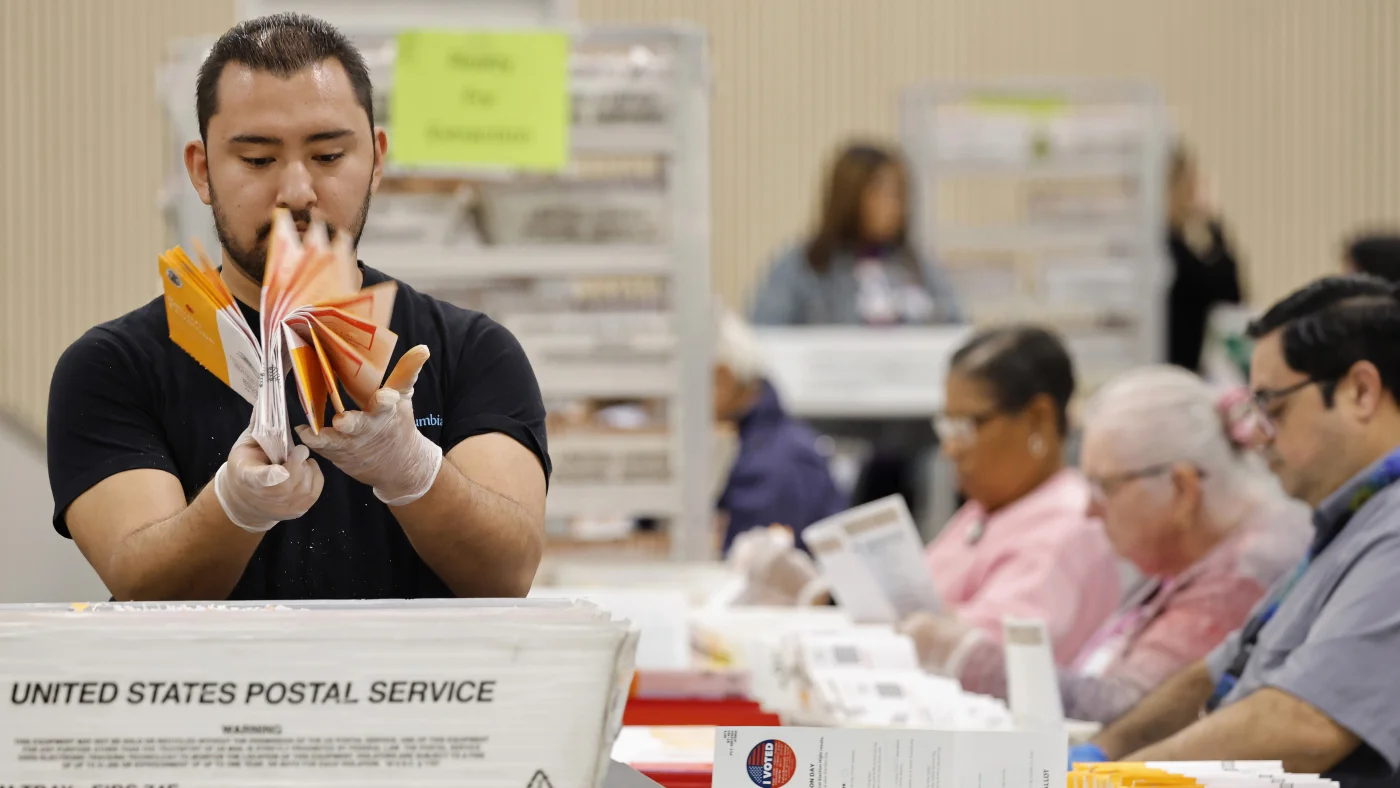
With the midterms on 3 November, Nation leaders are encouraging members to turn out to vote. Native Americans were granted the right to vote in Arizona in 1948, but many continued to face barriers for decades. It was only in 1972, when the state repealed its English-language literacy test, that one of the most significant hurdles was lifted.
Nation vice chair Carla Johnson tells SBS News: "It is within our lifetime that people could remember when they didn't have the right to vote.
"The Indigenous people, the first people here, did not have that right to vote. And now we do."
The Native American vote can be influential when it turns out in force. It helped swing Arizona for Joe Biden in 2020.
For Cross, however, the political system has done little to reassure him that the Nation's concerns will be heard. He says he feels little allegiance to either major party.
"Because of everything that's happening. It's sad the way they treat us."
Native American turnout is closely watched in Arizona's tight election, and Jose says Nation leaders have worked hard to ensure members can cast ballots, including arranging transportation to polling stations.
"We want to let the people know that they have a right, that they have a strong voice.