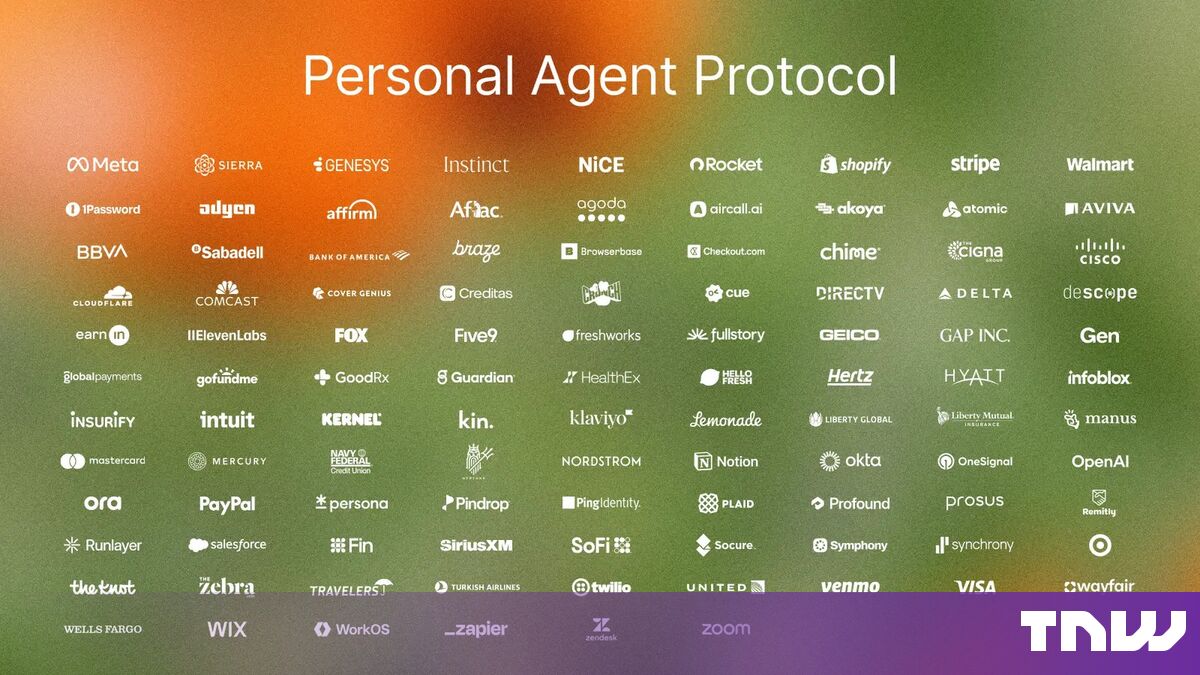
Meta’s Muse was among the hottest topics on corporate earnings calls in recent weeks. Meta has claimed that the agentic AI tool, which lets users automate various online tasks , is becoming a major force in shopping, with millions of people using it to make purchases of more than $200 on average.
Wall Street fears that proactive shopping assistants like Muse will erode brand loyalty, ignite price wars, and squeeze corporate profits. Yet on the earnings calls and in conversations with WIRED, executives across roughly 50 companies—spanning travel, internet providers, food, and self-storage—shrugged off immediate disruption. In fact, many insisted they would mostly benefit from any real widespread adoption of agents.
Food delivery app DoorDash described the number of orders from Muse and other agents as in the “hundreds.” T-Mobile remarked, “We haven’t seen anything of significance” from agents. Hotel chain Hilton was more direct, calling bookings from them “insignificant.” The banking provider Ally Financial characterized activity as “quite low,” while eBay termed it “very, very small.”
While financial experts have suspected that users may ask Muse to dump unused subscriptions and memberships, fitness chain Life Time Group said it has “seen zero” cancellations from agents. Public Storage and Hartford Insurance Group offered similar data. In India, the delivery app giant Eternal estimated agentic commerce as “close to zero.”
The comments leave questions about where users of Muse, Instinct, and other popular AI agents are spending their money. Meta CEO Mark Zuckerberg said on his company’s earnings call this month that more than 10 million people in the US and Canada had activated Muse. Over 25 percent used it for shopping, more than any other task and above the company’s expectations, he added.
Meta declined to comment beyond the earnings call remarks, but pointed to partnerships with 10 retailers including Walmart, Best Buy, and Gap to simplify shopping with Muse. Many of them last reported earnings before Muse launched and haven’t shared data about it yet.
Across the board, executives acknowledged agents are at an early stage. But immense public anxiety about AI technologies has left companies searching for any lessons they can from the outset.
Despite the seemingly slow uptake, some are already hard at work optimizing their websites for agents. Chipotle chief digital officer Arlie Sisson told reporters this week that the restaurant chain discovered agents struggling to complete purchases because of hiccups from applying loyalty discounts or ordering after-hours. Muse’s debut increased agentic orders by a single-digit percentage, she said. So Chipotle is now tidying up its website code to help agents better navigate and satisfy the hungry humans behind them.
Similar discussions are underway at Doordash, even though CEO and Meta board member Tony Xu said present hype about agents might be “delusional.” Costco and Extra Space Storage said sales originating from AI chatbots such as Gemini and ChatGPT are surging as the companies optimize their online content for the tools, so they plan to do the same for AI agents.
Reliance on agents could be costly. Zuckerberg said Meta plans to charge businesses a fee for transactions facilitated by Muse, and he predicted that this source of revenue would eventually top the company’s massive advertising business. InterContinental Hotels CEO Elie Maalouf is taking a cautious approach in ongoing talks with Meta. “We haven't come to any conclusions on what an eventual collaboration could look like, if any,” he said.
Security issues and errant orders remain top of mind. This week, Bank of America became the latest big bank to warn customers about giving login information to AI assistants. “If you do share your credentials, keep in mind that you're responsible for activity resulting from that access,” chief client care officer Ashley Ross wrote in an email.
There’s also the possibility that agents encourage comparison shopping in a way that hurts profits. Executives at many companies dismissed the notion. They suggested product quality, customer service, and brand trust would still factor into purchase decisions despite less human involvement.
Stances on agents are evolving quickly. Amazon blocked Muse last month, contending that users would prefer its own Alexa shopping agent . But this week the retail giant acknowledged that it anticipates working with outside agents. Insurance marketplace Insurify also blocked Muse but this week changed its mind after introducing technology to ensure agents could present accurate offers.
In your inbox: Go inside the world of digital security with Kernel Panic
We sexted with a Muse AI agent —and Meta says that’s totally fine
Big Story: Meet the DEA’s premier crypto detective
OpenAI is pissing off mathematicians
Want better search results? Make WIRED a preferred source in Google