Trending
Prev Story
Next Story

Once again, NASA is asking for ideas to rescue Hubble from certain death

Ars Technica •
October 31, 2026 • 12:07 AM
1
1 reads 0 reactions

The space agency solicited ideas for reboosting Hubble four years ago, but they didn't go anywhere.

Once again, NASA is asking for ideas to rescue Hubble from certain death

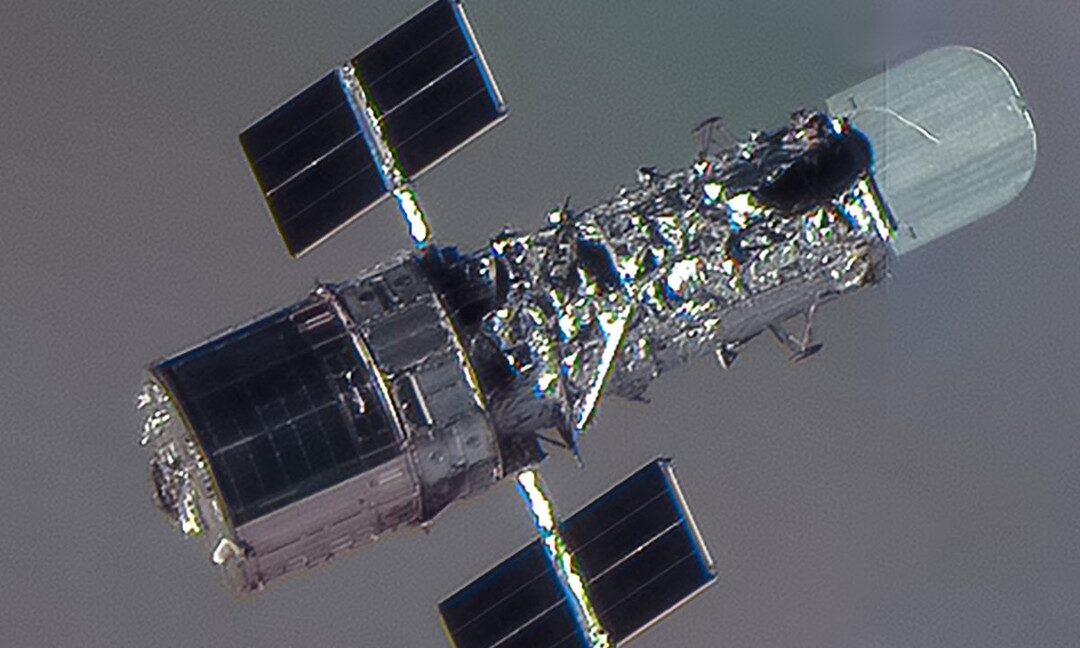
The Hubble Space Telescope still shines in the eyes of astronomers after 36 years in orbit, but it is not as nimble as it once was. Left alone, the observatory will plunge back into the atmosphere in the early-to-mid-2030s, closing the book on one of the most famous scientific instruments of the century.

NASA last raised the orbit of Hubble in 2002, when the Space Shuttle Columbia visited the observatory for a servicing mission. The final shuttle servicing flight in 2009 did not reboost the telescope’s orbit, and with the retirement of the shuttle fleet two years later, Hubble has steadily lost altitude with no way to stave off eventual destruction.

The space agency released a Request For Information (RFI) on Thursday asking commercial companies for ideas on how to reboost, service, or a controlled disposal of Hubble. Responses are due November 30. Specifically, NASA is looking for information about companies’ current and near-term capabilities for capturing Hubble and boosting it to an altitude of at least 373 miles (600 km), enhancing the telescope’s performance through, or guiding Hubble to a controlled reentry.

“The requirement includes that the boost and/or servicing mission must not harm the HST and that this mission is expected to occur by 2032,” NASA wrote in the RFI. The contractor would be responsible for providing the launch vehicle, servicing spacecraft, mission operations, and “crew if applicable.”

NASA is not committing to buying a Hubble rescue mission, but officials want to know who might be interested in mounting such a mission, how much it would cost, and which companies would have a realistic shot at reaching Hubble before it falls out of orbit and burns up on reentry. Orbital dynamicists currently predict that it will likely happen in 2033 or 2034 without intervention, but reentry forecasts can change based on solar activity.

It took 24 years for Hubble, which lacks onboard propulsion, to glide from its 2002 altitude of 362 miles (583 km) to its current orbit some 292 miles (470 km) above Earth. A reboost to NASA’s requirement of 373 miles (600 km) would likely keep Hubble in orbit for at least 25 more years.

Prev Swipe Story Next

Same Story from Other Publications

Compare how 5 other independent news outlets reported on this story.

5 Publications
Wired
12h ago
The Hubble Space Telescope Is Sinking. NASA Is Looking for Ways to Keep It Afloat

The Hubble Space Telescope Is Sinking. NASA Is Looking for Ways to Keep It Afloat

With Hubble expected to reenter the atmosphere by 2034 and several malfunctions on board, NASA is asking commercial space companies for proposals on how to extend the telescope’s lifespan.

#nasa #hubble #space
Compare →
The Guardian
5d ago
Nasa seeks next generation of astronauts to live and work on the moon

Nasa seeks next generation of astronauts to live and work on the moon

Applications due on 3 December for new generation of explorers who can ‘shape humanity’s future in space’

#nasa #space
Compare →
NPR News
12h ago
SpaceX's giant rocket may leave NASA in the dust

SpaceX's giant rocket may leave NASA in the dust

As it races to develop its new massive rocket, the space launch company is preparing to retire NASA's main ride to the International Space Station.

#nasa #space
Compare →
The Verge
5d ago
NASA is taking applications for its next class of astronauts.

NASA is taking applications for its next class of astronauts.

From now through December 3rd, would-be spacefarers can throw their hat in the ring to join NASA. This is the first time in two years the agency has opened up astronaut applications. Those who are selected are expected to start training sometime in 2028. You can file your own application here. [Link: NASA Seeks Next Generation of Explorers to Join Astronaut Corps | https://www.nasa.gov/news-release/nasa-seeks-next-generation-of-explorers-to-join-astronaut-corps/ | NASA]

Hamro Patro News
1d ago
European Spacecraft Hera Observes Asteroid After NASA Impact

European Spacecraft Hera Observes Asteroid After NASA Impact

London. Four years ago, a European spacecraft has started observing from close range the asteroid that the American space agency NASA had hit during Earth's defense test. As announced by the Europ...

Related Stories

Science & Climate
Build #2612