Midterm elections in the United States have long been viewed as a referendum on the sitting president, and this year is no exception. The results could also offer one of the clearest indications yet of what comes after Donald Trump.
While the US president isn't on the ballot at Tuesday's midterm elections, by his own telling, voters should act as though he is.
"Pretend I'm on the ballot, just one more time," Trump told supporters at a Republican convention in September.
Americans appear to be doing exactly that.
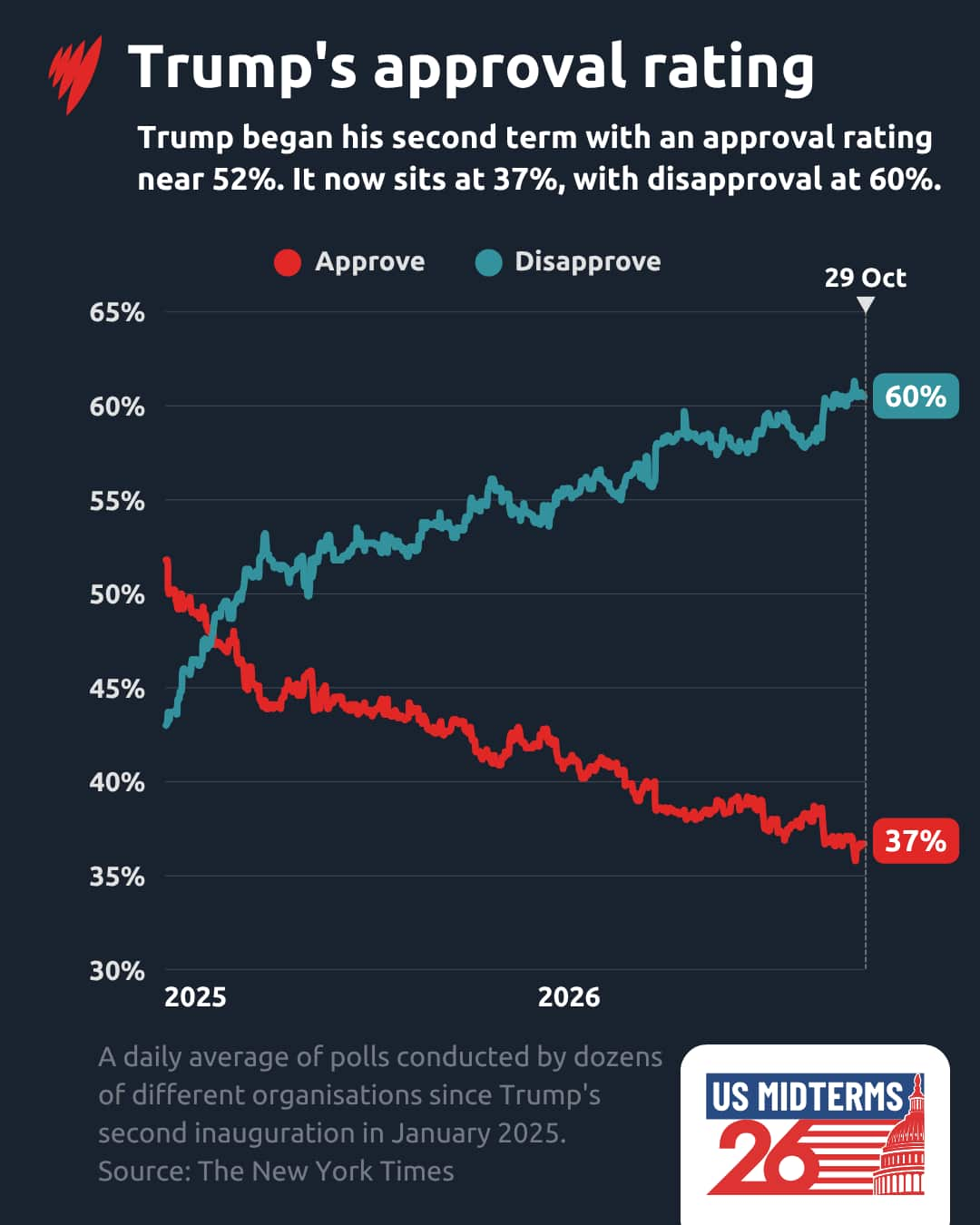
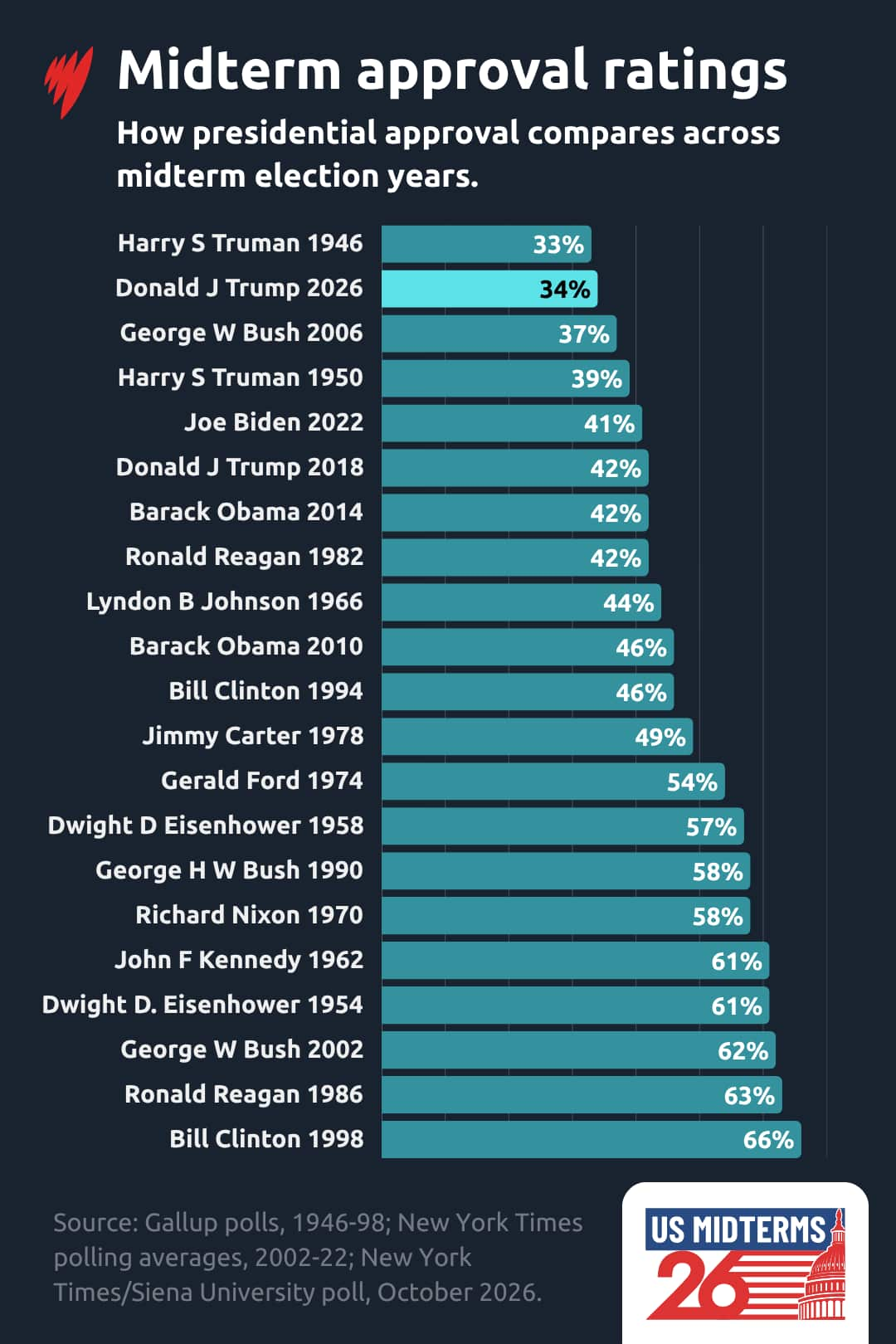
In the lead-up to the 3 November vote, polling has placed Trump's approval rating at its lowest level of his second term.
Your trusted source for staying up-to-date with the world around you. Get free daily news updates and analysis, straight to your inbox.
An aggregate of more than 1,000 polls since Inauguration Day, compiled by the New York Times, now shows Trump's approval rating is sitting at 37 per cent.
"Trump has made the midterms a referendum on himself," Emma Shortis, director of international and security affairs at the Australia Institute, tells SBS News.
"He said quite clearly, 'Imagine I were running. Imagine I'm on the ballot.'"
But this may have been a misstep on Trump's part, argues Jared Mondschein, director of research at the United States Studies Centre, as his declining popularity could potentially hamper the Republican Party's chances of retaining a congressional majority.
"We've seen in early polling for this midterm election that he's alienating many of the voters, or perhaps not energising the voters who he needs to energise for the midterm election to be competitive," Mondschein tells SBS News.
The midterms ultimately determine which party controls the two chambers of US Congress — the House of Representatives and the Senate — which will, in turn, shape the final two years of Trump's presidency.
But beneath the fight for Congress is another battle entirely: one that will decide the fate of US conservatism after Trump.
A decade after launching his 2016 presidential campaign, Trump remains the dominant figure in Republican politics.
Yet Trump's particular brand of conservatism has not always been the defining feature of the Republican Party.
For decades, Republicans were broadly associated with lower taxes, smaller government, strong national defence and traditional family values.
During the Cold War, anti-communism was a defining force within the conservative movement, while later generations of Republican politicians generally embraced free trade, international alliances and a more conventional style of politics.
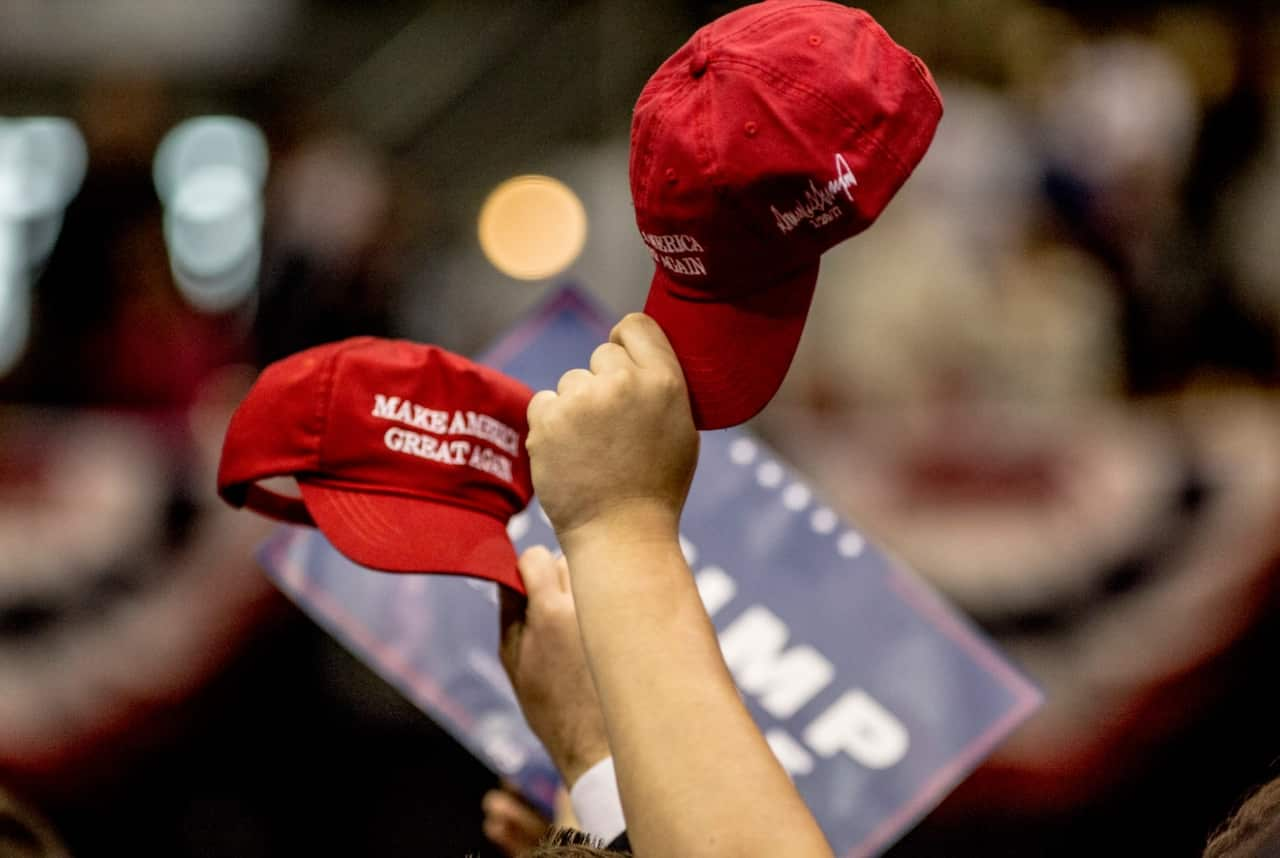
Trump borrowed from parts of that tradition, including his signature slogan, "Make America Great Again", which was famously used by Ronald Reagan decades earlier.
But his rise in 2016 was still widely seen as a departure from the Republican establishment.
Running as a political outsider, Trump built support through a more populist brand of politics centred on immigration, tariffs, trade protectionism and hostility towards political institutions.
Even many Republicans initially doubted he could become president.
During the 2016 Republican primary campaign, Marco Rubio — then a senator, now secretary of state — described Trump as a "con artist" and warned against making him the party's nominee.
A decade later, Trump's influence over the Republican Party remains far stronger than many Republicans anticipated when he first entered politics.
That dominance has led some observers to repeatedly predict a break between Trump and the Republican Party, particularly after election losses, investigations and controversies.
But Shortis says those predictions have so far failed to materialise.
"We keep thinking eventually they'll realise when he loses, when he becomes a liability, they'll abandon him," she says.
She argues many political careers have become enmeshed with Trump and the broader MAGA movement.
"I'm not sure even an electoral loss will shape that," she says.
Mondschein agrees Trump's grip on the party remains firm, but believes that may not last.
"Donald Trump is the one that [the party] have to pledge allegiance to in many ways, and so they will until they no longer need to," he says.
"But I think that era is coming sooner rather than later."
For a movement so closely tied to Trump's personal brand, the president's sliding public approval raises a quandary for any potential successor.
The most important question facing Republicans may not be who replaces Trump, but whether Trumpism itself will survive without him.
Trumpism is often associated with 'America First' politics, immigration restrictions, economic nationalism and a combative style of nationalism and populism. But even that definition is contested.
Mondschein argues Trump's movement is held together less by a coherent ideology than by the president himself.
He points to the movement's shifting positions on issues ranging from foreign policy to economic intervention as evidence that personal loyalty often matters more than any settled philosophy.
"There really is not something that unites the MAGA voting population more than just Donald Trump himself."
That could prove challenging for whoever eventually inherits the Republican Party.
Future candidates may adopt Trump's positions on trade, immigration or foreign policy — but replicating his political appeal may prove far more difficult.
For Mondschein, the president's most lasting impact may be on the style of American politics rather than any concrete ideological foundation.
"Are we in an era where the president needs to engage in the sort of constant media battles that he's been engaging in? That is something that I think President Trump has a unique patience for and a unique appetite for," he says.
"There very well may be an appetite for some to try to replicate that sort of style of politics."
But the Trump movement can also be seen as something much larger than the man himself, Shortis argues.
Rather than creating entirely new divisions, she argues Trump has successfully harnessed tensions that have existed in US politics for decades.
"He's exploiting foundational divisions that have always existed in the United States," she says.
"The movement is bigger than him. He's just been better at harnessing it than arguably anyone else."
Eventually, Republicans will need to confront the question of who comes next.
While the midterm results won't change who leads the Republican Party in the short term, they could provide insight into what conservatives believe a winning post-Trump party looks like.
For Mondschein, the most important question isn't simply whether Republicans win or lose seats, but which Republicans perform best.
"We saw that many of the candidates that Donald Trump had endorsed in 2022 did not do very well," he says.
"We saw more of the moderate candidates in 2022 do better against Democrats."
For some Republicans, those results suggested Trump's political appeal may be difficult to transfer.
"It was a clue for many Republicans that they couldn't win with a Trumpian approach to politics without Donald Trump on the ballot."
A similar result this year could strengthen arguments that the party needs to evolve beyond Trump once he leaves office.
On the other hand, a strong performance by Trump-backed candidates could reinforce claims that Trumpism remains the future of US conservatism, and that his eventual successor will need to channel the same political appeal.
Trump is constitutionally barred from seeking another term after 2028, forcing Republicans to back a new leader ahead of the next presidential election.
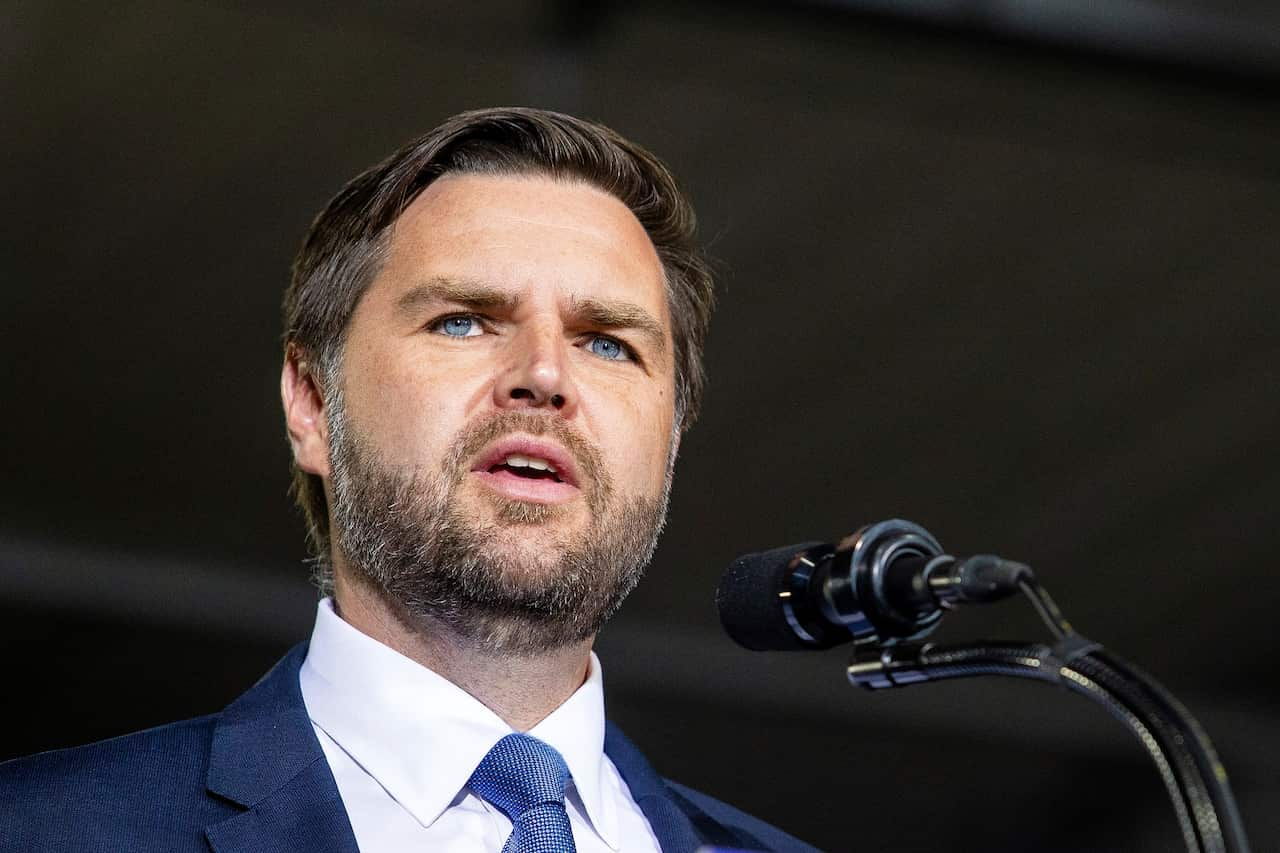
Vice president JD Vance remains the most obvious contender. Rubio is also regularly mentioned as a potential candidate, along with Trump's eldest child, Donald Trump Jr.
But experts caution against putting too much weight on current speculation.
"Every single time we try to predict where these parties are going or where the leadership is going, we get it wrong," Mondschein says.
For Shortis, the bigger concern is that Trump himself appears reluctant to facilitate a transition of power.
Normally, a party approaching the end of a presidential term would already be thinking seriously about its next generation of leaders.
Instead, Trump continues to dominate the political landscape and has given little indication of who he would ultimately back.
"He doesn't want to anoint a successor," Shortis says.
"And none of them [Republicans] are willing to challenge him in that way because that will attract his wrath and that's very dangerous for their political positions."
Asked recently whether he would endorse Vance as his successor, Trump declined to commit.
"It's early, very early right now. We have to get through the midterms," he told reporters.
Firm predictions about the future of conservatism post-Trump remain premature, but history shows political movements tend to be shaped by larger forces than any single election.
Economic insecurity, record government debt, and broader questions about America's role in global conflicts will continue well into the next presidency, regardless of who occupies the White House.
The next leader of the Republican Party will have to take a clear stance on these issues. They will also have to declare their intention to run while Trump is still in office.
Candidates from both major parties typically declare around 18 months before an election, meaning the next cohort could be known as early as March next year.
Political observers from across the ideological spectrum will be watching the midterms closely to gauge who may emerge as a contender.
Mondschein says we could see early signs of movement among Republicans. While Trump remains central to the party, his departure could eventually trigger a significant ideological realignment.
While the midterms may not answer who ultimately leads Republicans after 2028, they could provide the clearest clue yet as to whether Trumpism is a movement that can outlast the man who gave it its name.