You have reached your maximum number of saved items.
Remove items from your saved list to add more.
You've used all of your gift articles. 3 more will become available on the 1st of every month.
Donald Trump went to war demanding regime change in Iran but, instead, “Iran succeeded in regime change in America”.
Reuters reported this quote , attributed to a source close to a US Gulf ally, the moment the American people damned Trump and his party and handed control of the House and Senate to the Democrats. It is a powerful illumination of how Trump’s exuberantly reckless populism has delivered perverse outcomes. Politically, economically, geopolitically.
Trump now says that “Iran militarily is effectively over” and “we’re just keeping it the status quo”. Asked in a 60 Minutes interview why he wouldn’t step up attacks on Iran, he said there was no need, directly contradicting his threats just before the midterms. There is no nuclear threat from Iran, Trump said: “They have nothing. It’s buried under thousands of tons of rock.”
Just as it was in June last year after Operation Midnight Hammer. So he’s implicitly confirmed what we’ve known all along – the nuclear justification for the Iran war launched on February 28 this year was a lie.
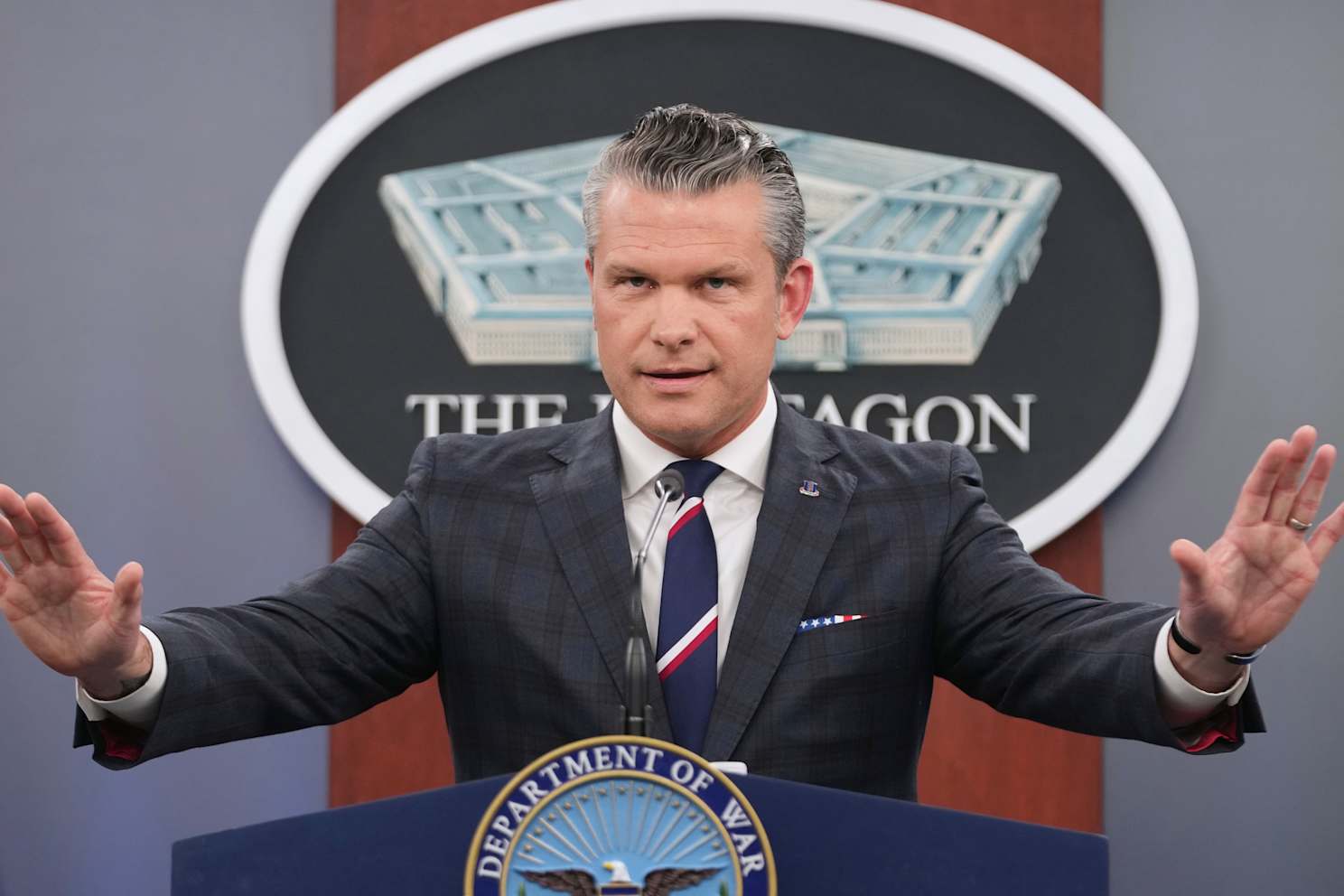
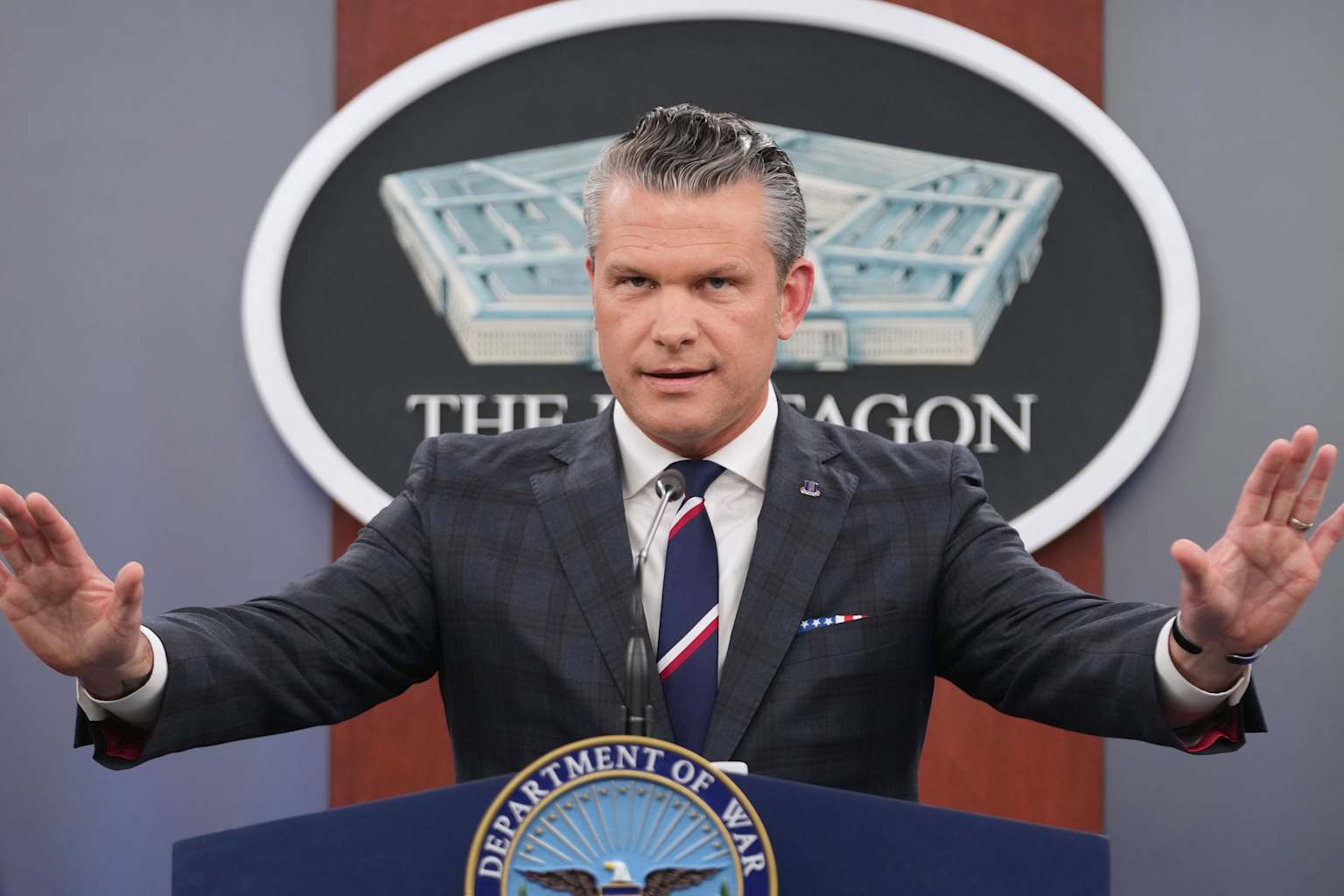
But now Iran, newly roused and with nothing to lose, is on the attack against the US and its allies. The US Secret Service now has moved the Treasury Secretary Scott Bessent out of his home and on to a military base for his protection against Iranian agents, The New York Times reported this week. Multiple US cabinet secretaries now live on military bases for the same reason, including Secretary of State Marco Rubio, Secretary of Defence Pete Hegseth and newly-appointed Chief of Staff Stephen Miller.
Iranian agents around the world are mobilising against US allies and assets. Iran’s regime this week threatened to attack any US bases used to attack Iran: “If American aircraft take off from an American military base, even one located in a European country or some other distant region, to bomb Iran, we will strike those bases as well,” said Mohsen Rezaei, the secretary of the Supreme National Security Council of Iran.
And Tehran this week lifted its self-imposed missile range limit of 2000 km to allow it to strike much of Europe and all the Middle East.
In the meantime, Iran continues to hold at risk any shipping trying to carry oil out of the Strait of Hormuz. The price of Brent Crude on Friday was $US95 a barrel, 35 per cent higher than its prewar level.
Trump’s Vice-President JD Vance had written to Tehran to propose peace talks, but Trump abruptly reassigned him on Friday (Australian time). He’s instructed to focus on “Massive Corruption and Crime taking place in Democrat run Cities and States”. He added: “We don’t need a deal with Iran.” There is no solution to the global fuel problem in prospect.
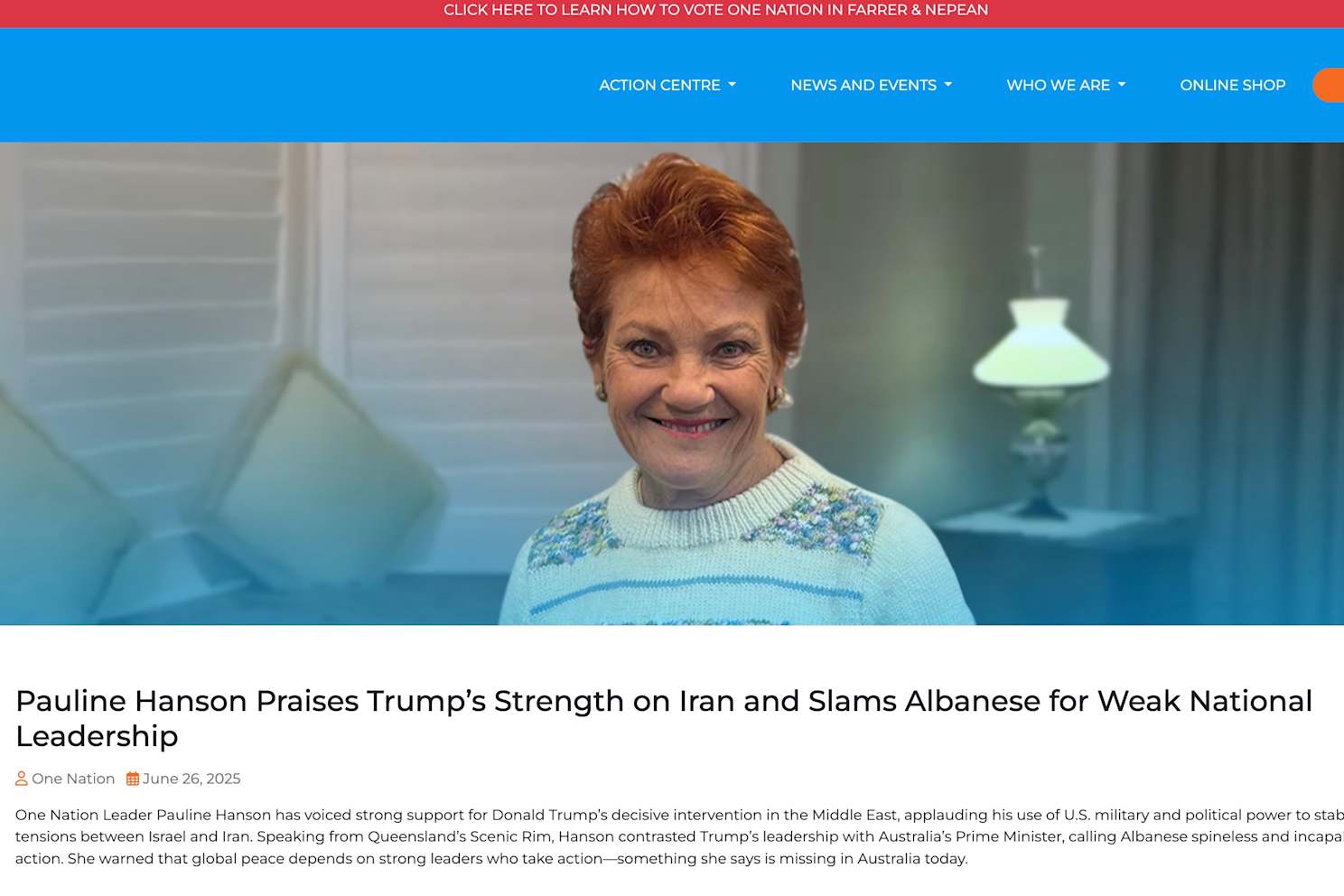
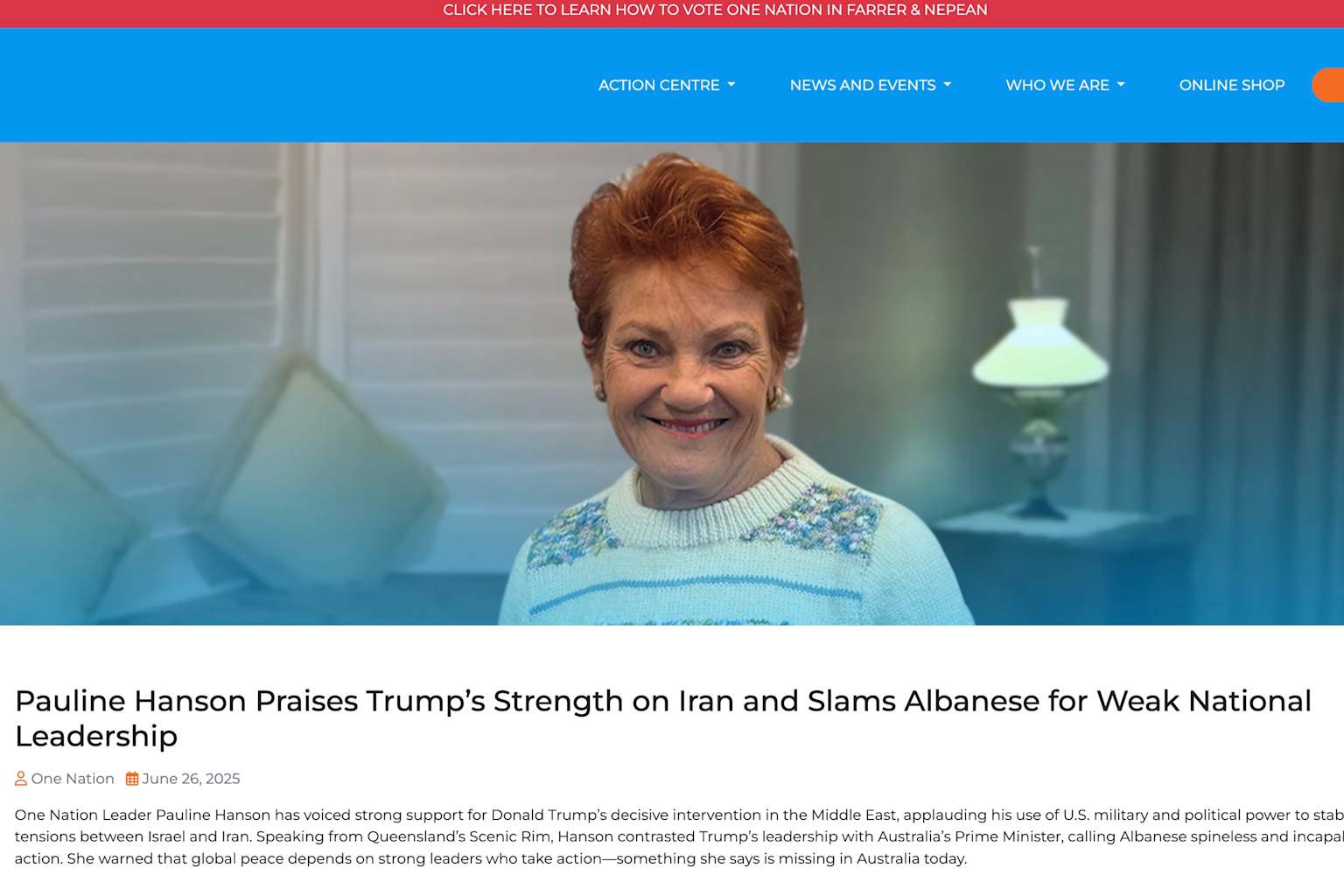
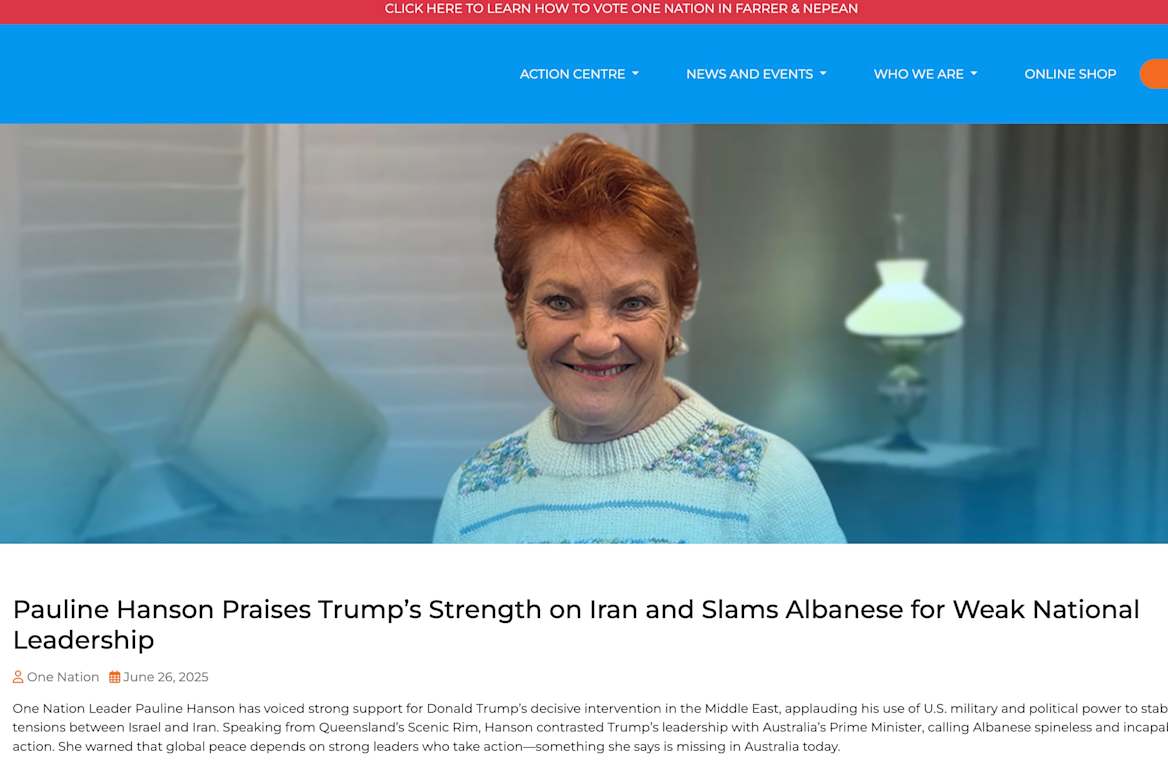
Where does this leave Trump’s Australian brand ambassador, Pauline Hanson and her party? Did Hanson apply any better judgment to the Trump-Netanyahu war on Iran? Of course not. She fully endorsed the war. Hanson issued a statement on her party’s website on June 26 headlined “Pauline Hanson Praises Trump’s Strength on Iran and Slams Albanese for Weak National Leadership”. It concluded: “Global peace depends on strong leaders who take action – something she says is missing in Australia today.“
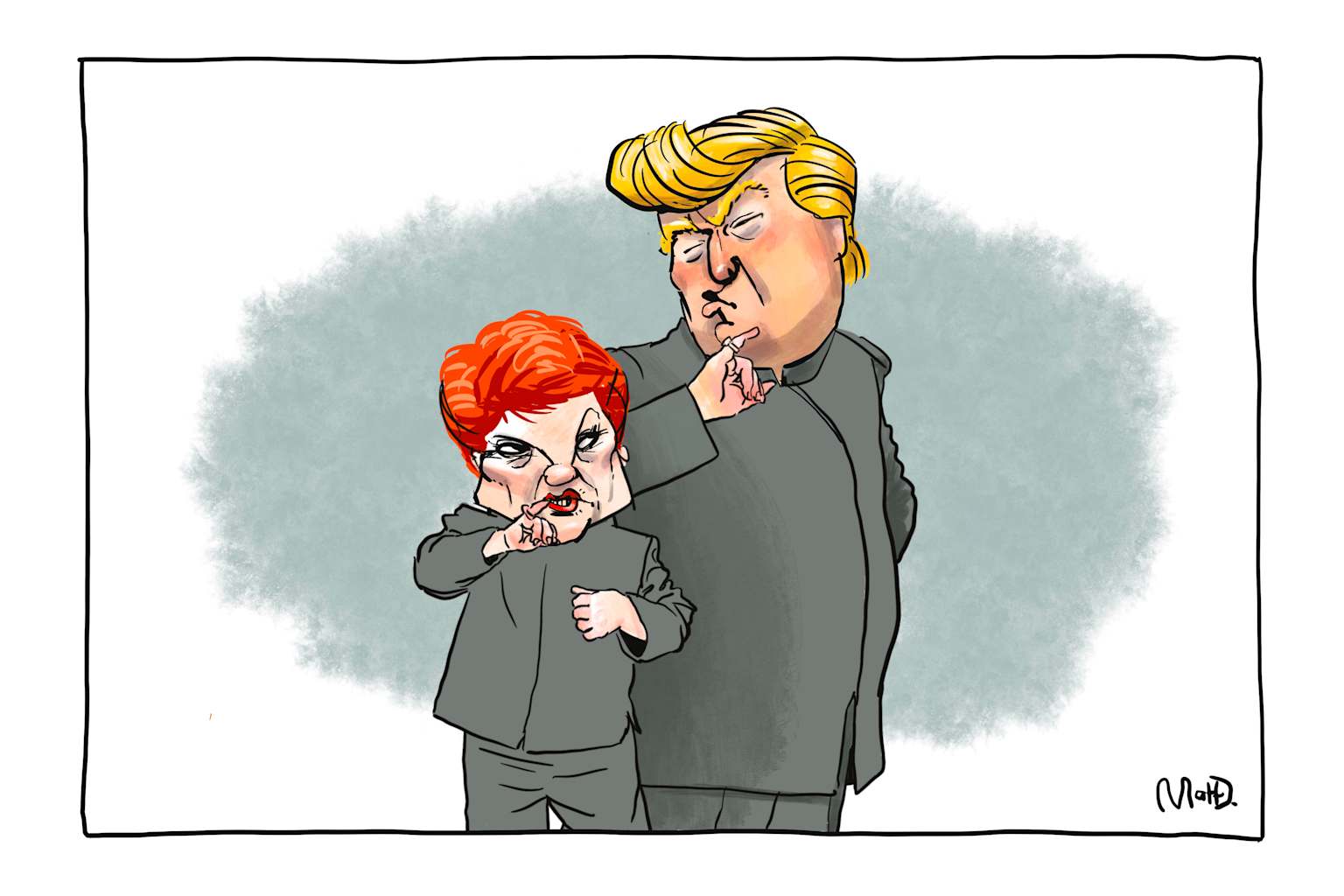
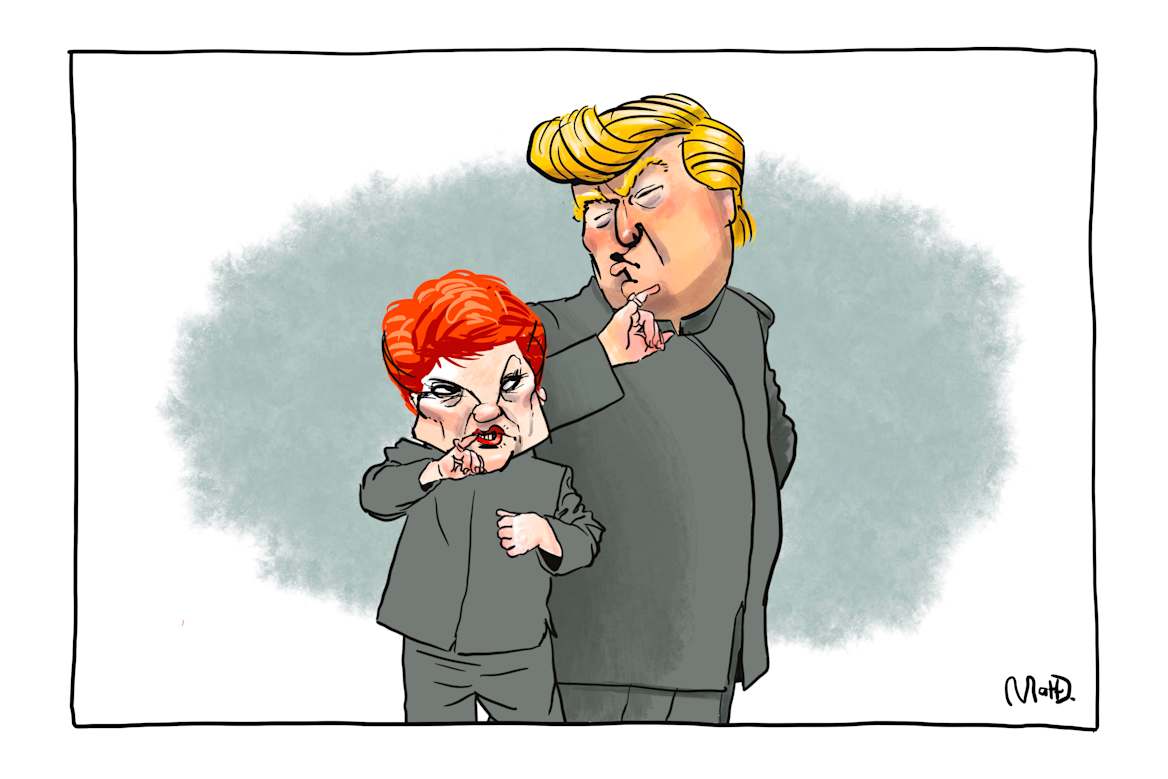
Trump last year published an image of himself as the Pope . Hanson apparently thought it was serious. Because she assigned papal infallibility to the American leader, knelt before him as a devoted acolyte and kissed his ring at Mar-a-Lago.
When my colleague Paul Sakkal asked her in a June interview whether Trump had done anything wrong, she replied that she couldn’t think of anything. Not a thing. The fact he’d imposed hostile tariffs on Australian steel and aluminium was a perfectly good idea, apparently.
As the Liberal Party’s Andrew Hastie witheringly observed months ago: “Pauline Hanson is MAGA first and Australia second.”
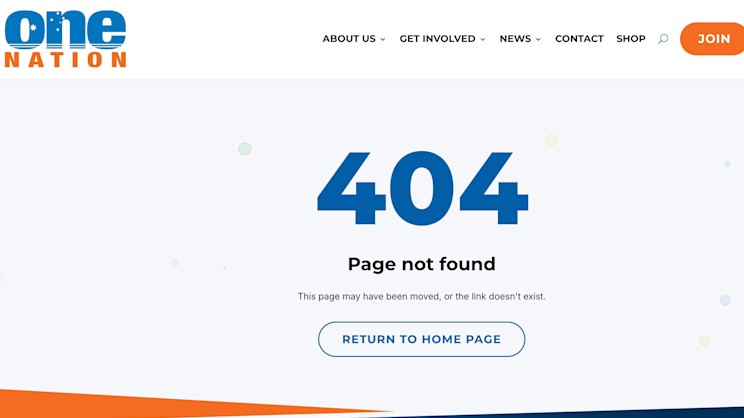
You won’t find her statement on the Iran war on the One Nation website today, however. It’s among the documents scrubbed in the past week. You can, however, retrieve it on the Wayback Machine internet archive .
Hanson has avoided commenting on the American result. But it’s too late to attempt to distance herself. She can’t hide from her well-known admiration and aping of Trump.
“Her problem,” says political analyst Kos Samaras of the Redbridge consultancy, “is that she’s baked it in as her brand.” In focus groups Samaras has run, “when you ask people which international leader she’s close to, they say Donald Trump”.
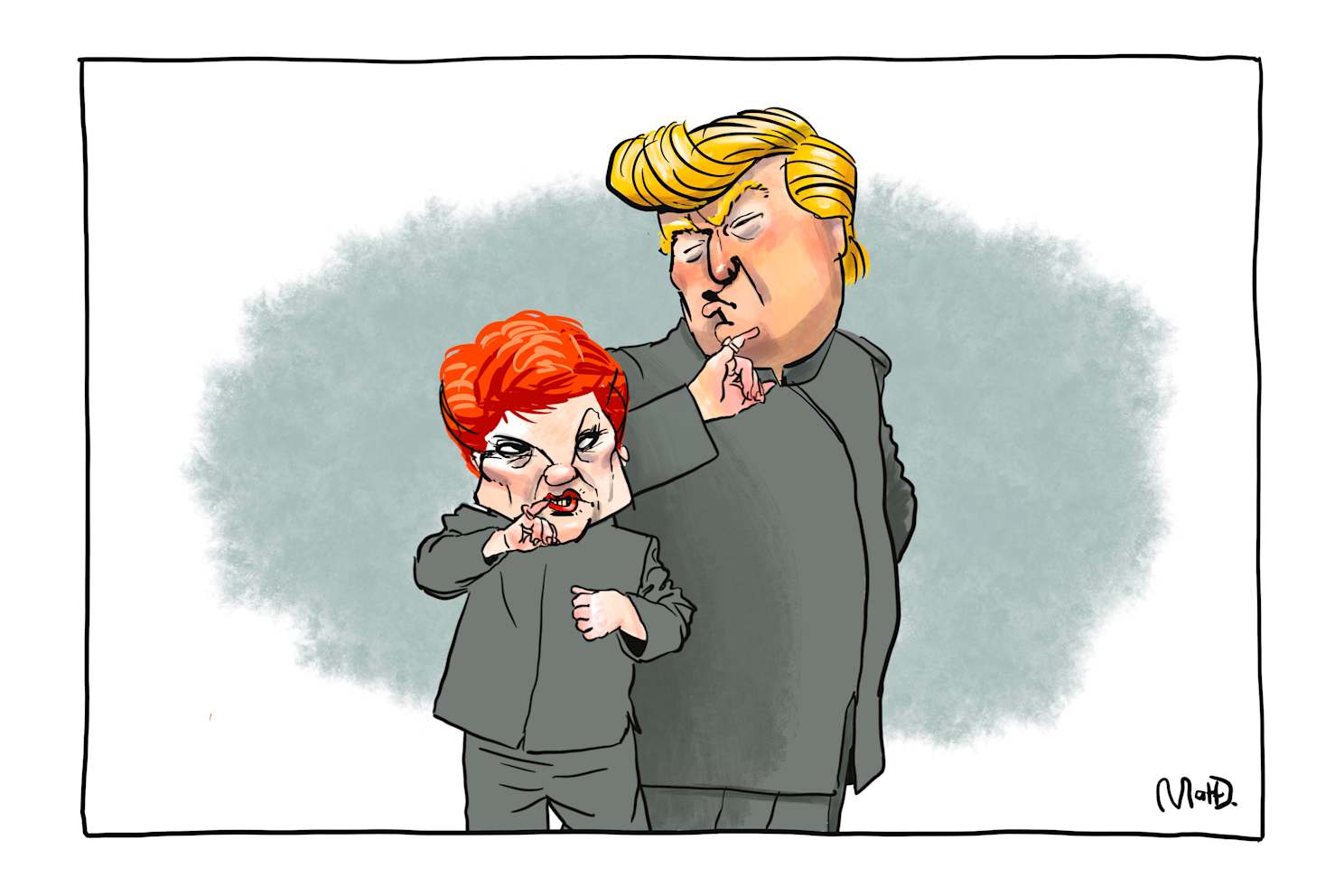
Mindlessly mimicking Trump seemed to be a guaranteed path to political triumph. It was the US midterms that shocked Hanson into realising that she wasn’t high priestess to the Pope but, in fact, Mini-Me to Dr Evil. She repeatedly supported the Iran war. And urged Anthony Albanese to get active in helping Trump attack: “I’d rather deal with the problems we have with Iran now before it gets totally out of control, yes, I support what he’s done,” she said in March.
Albanese was “spineless”, she spat.
But couldn’t she be an unwitting victim of Trump’s lies? Swept up in his insistent pre-midterm rhetoric, before he reversed position?
No one in any position of responsibility has that excuse. The authority on Iran’s nuclear program, the International Atomic Energy Agency head Rafael Grossi, said three days after the war began that “we don’t see a structured program to manufacture nuclear weapons” in Iran.
Trump’s own director of national intelligence at the war’s outbreak, Tulsi Gabbard, testified in writing to the US Senate in March that the intelligence community “continues to assess that Iran is not building a nuclear weapon and Supreme Leader Khamenei has not authorised the nuclear weapons program he suspended in 2003”.
Regular folk living busy lives can be forgiven for missing these critical evidence points. A political party competing to govern Australia, a woman who declares herself ready for the prime ministership, cannot.
It’s bad enough that Trump’s feckless “little excursion” imposed high oil prices, high inflation and high interest rates on just about the entire world. But the strategic analyst Mick Ryan, a retired Australian Army major general, points out some of the larger strategic consequences:
“The war has given a lot of insights to Russia and China; it’s emboldened Xi Jinping and Vladimir Putin because they have faced absolutely no pushback from America in lending their support to Iran in its war.
“They looked at this and thought, ‘ah, we are more powerful than we thought’, and that’s a recipe for catastrophic miscalculation, none of which is helpful to Australia and other US allies.”
Ryan tells me that Australia, Japan, the Philippines and Taiwan, among US allies and partners in the Indo-Pacific, are all exposed to the risk of such miscalculation.
When I asked a former head of Australian defence strategy, Paul Dibb, to name a war as aimless as Trump’s Iran war, he had to reach back in history to the Crimean War. One hundred and seventy years ago.
The words of Trump that will echo down the years are the ones he spoke in the White House situation room on February 11. After he and his top advisers had listened to Netanyahu’s hour-long sales pitch on why the US should join Israel’s proposed war on Iran, Trump agreed on the spot: “Sounds good to me”, he declared, according to reporting by The New York Times which has not been contested.
This, in fact, is also the Hanson doctrine. If Trump said something, did something, thought something, Hanson’s response was, in effect, “sounds good to me”. Without exercising any critical faculties.
Gratefully, Hanson was not prime minister when Trump chose to launch his war. The Albanese government broke with over a century of Australian precedent and declined to join the US assault, despite Trump’s harangues against allies who refused the fight. Gratefully, the Coalition shared Labor’s view. Only Hanson was sufficiently captive to Trump’s blarney to support him against the Australian and global interest.
Eventually she will have to answer for her wilful misjudgment in putting a foreign leader first. The regime change in America, the rejection of Trumpist misjudgment, doesn’t yet have a parallel in Australia.
But Kos Samaras says there are signs of weakening One Nation support in Victoria, where a state election is due in two weeks. “We have seen the ceiling for One Nation support, there’s no doubt about it. Its support in Victoria has gone from the high 20s to the low 20s in the last few months because people realised that the Coalition can win, and they’ve jumped over. A lot of people saying they’ll vote One Nation have some reservations about it, so now some of them are saying ‘I don’t have to hold my nose while I vote One Nation’.”
Nationally, says Samaras, he sees signs that voters are reconsidering their support for One Nation. “To now, they’ve said they’re voting on grievances from the past, but as the economy gets more serious they don’t think they can rely on the clown show.”
Where such voters might have rejoiced in Hanson’s promise to “tear the joint down, the way the world is going they’re thinking ‘I can’t afford for that to happen’”.
One result is that, “after the latest interest rate rise, One Nation should have been the beneficiary, but the votes went to the Coalition instead”. One Nation’s vote in the latest national Redbridge poll fell by one percentage point while the Coalition’s gained 4 percentage points.
About half of One Nation’s national support level is “rented”, as he puts it. But voters are deciding they can get a better return elsewhere, notably with the Coalition.
It appears that some One Nation voters are drawing the same conclusion as America’s voters; they can’t rely on a clown show.
Peter Hartcher is political editor and international editor of The Sydney Morning Herald and The Age.
You have reached your maximum number of saved items.
Remove items from your saved list to add more.
You've used all of your gift articles. 3 more will become available on the 1st of every month.