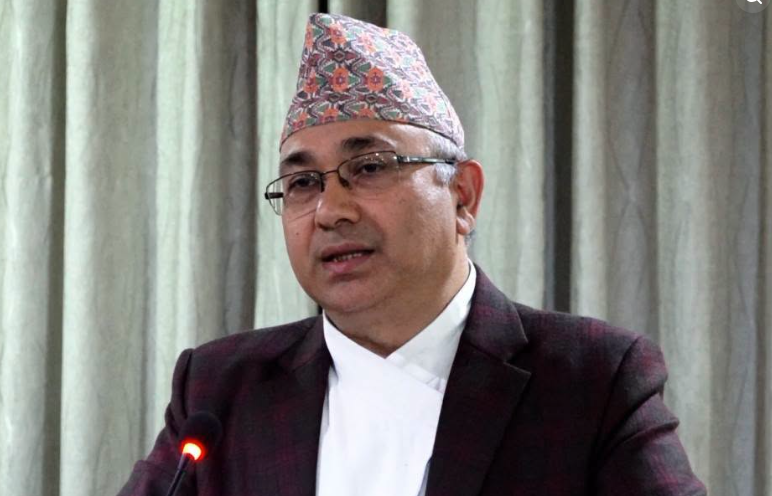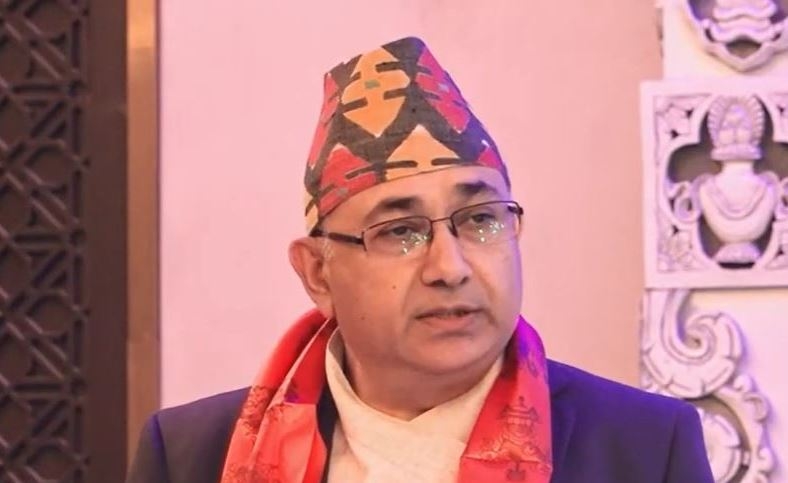
Reports of WhatsApp exchanges between Inam Sapkota and Supreme Court Justice Hari Phuyal have raised serious questions about the circumstances and nature of their communications.
Phuyal has since denied wrongdoing, explained the circumstances that led to his contact with Sapkota, and said that he and other judges eventually reported their concerns to the authorities.
The issue is not whether Phuyal should be presumed guilty. It is whether the circumstances, including those described in his own account, raise legitimate questions about judicial independence, propriety and accountability that warrant further scrutiny.
Here are five questions that remain unanswered.
1. Why did he engage with someone whose claim to represent the prime minister had not been verified?
Phuyal says he and other judges did not initially verify Sapkota’s claim that he was conveying a message from Prime Minister Balendra Shah.
Why this matters : A claim to speak on behalf of the prime minister does not establish that it is genuine. When a purported message concerns a pending judicial matter, why rely on an intermediary rather than verify the claim through an official channel?
2. Why was a hotel meeting considered an appropriate way to deal with a purported message concerning a pending case?
Phuyal has explained the circumstances surrounding the meeting at Hotel Himalaya and said that other judges were present.
Why this matters: The presence of other judges does not, by itself, resolve questions about the meeting's propriety. What was its purpose? What was discussed? And what safeguards were in place to protect judicial independence?
3. What exactly was communicated about Rohit Gupta’s case, and how did Phuyal respond?
The reported WhatsApp exchange has brought the communication concerning Gupta's case into public scrutiny. The precise messages, their sequence and their context are central to understanding what happened.
Why this matters: There is a fundamental difference between receiving an unsolicited attempt to influence a judge and participating in a conversation that could compromise judicial independence. The exchange must be examined in its entirety to establish what was communicated and how Phuyal responded.
4. When did Phuyal first suspect that Sapkota's approach was improper, and what did he do then?
Phuyal says suspicions developed over time and that information about Sapkota was subsequently communicated to government offices.
Why this matters: The chronology comes into play. When did suspicions arise? What prompted them? When were the authorities informed? Are there records corroborating his account? These questions can be answered through evidence and should not be left to speculation.
5. Do the circumstances warrant scrutiny under the constitutional framework governing Supreme Court justices?
Phuyal has denied wrongdoing and called for an investigation.
Why this matters: Any consideration of formal proceedings must be grounded in evidence and follow the constitutional framework. The question is whether the circumstances warrant examination by the institutions empowered to act under the law, not whether any particular outcome should be presumed in advance.
These questions go beyond Phuyal’s individual conduct. They concern the standards expected of those entrusted with judicial authority and the safeguards necessary to protect the judiciary from external influence. His explanation must be assessed against the available evidence and the circumstances surrounding the exchanges. Whether it adequately addresses the concerns can only be established through careful examination.
A judge’s position carries responsibilities that extend beyond personal integrity. It requires adherence to standards of conduct that protect the judiciary from actual or perceived external influence. Even the appearance of inappropriate engagement in a pending judicial matter can raise questions that deserve a clear and credible explanation.
Judicial independence is not merely a constitutional guarantee; it is also a matter of public confidence. That confidence depends on judges being free from external influence, but also on their willingness to account for circumstances that could call their independence into question. The reported exchanges do not, by themselves, establish misconduct. But the questions they raise deserve satisfactory answers. The credibility of the judiciary depends on its ability to address such questions openly, fairly and in accordance with the law.