Israel has just voted, but the country could face another election within months if its deeply divided political parties fail to negotiate alliances to form a new government.
Israelis know this scenario all too well. Between 2019 and 2022, the country held five elections in less than four years, as coalitions repeatedly struggled to assemble majorities or fell apart once they did.
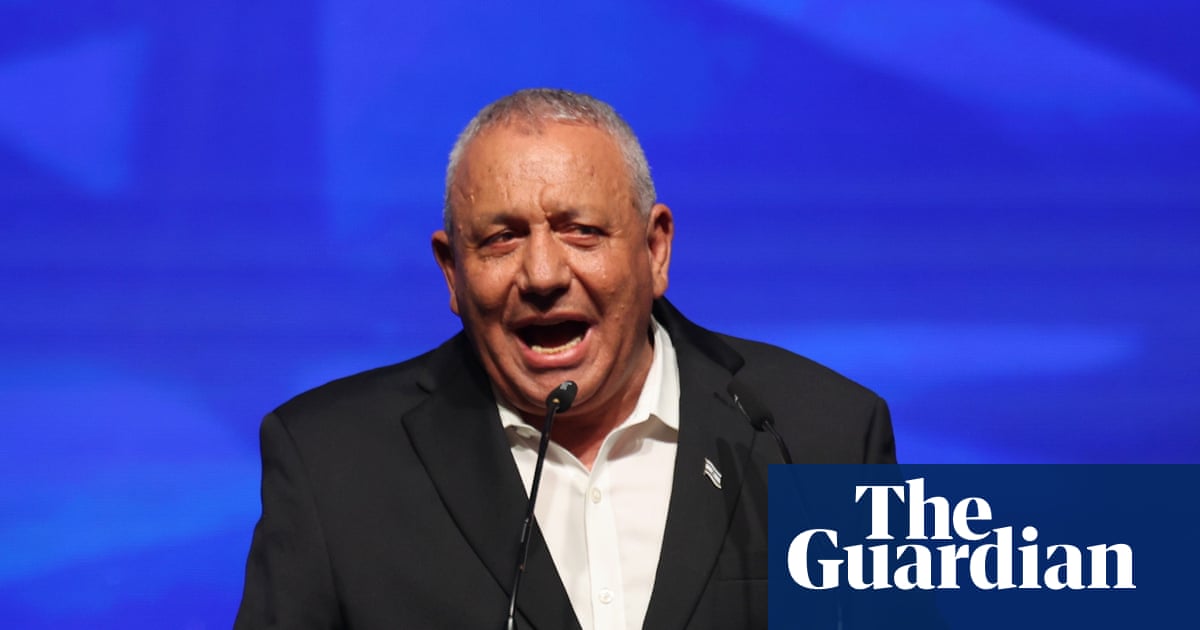
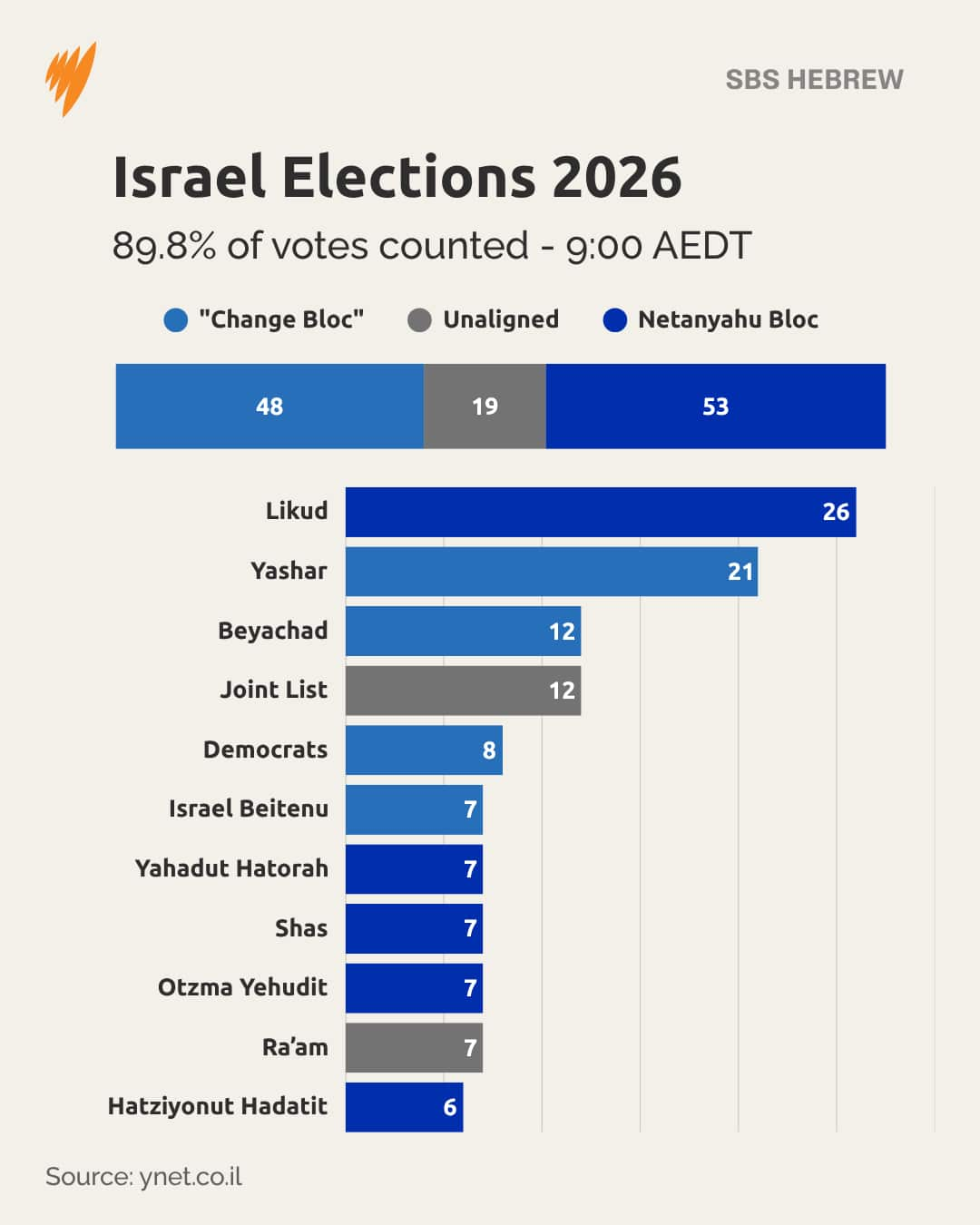
With around 90 per cent of votes from Wednesday's election counted, neither Prime Minister Benjamin Netanyahu nor his main rival, Gadi Eisenkot, have enough seats in their coalitions to assemble a majority.
Netanyahu's bloc is projected to win 53 seats, while Eisenkot's opposition is set for 48, though these figures may still change. The threshold for a majority is 61.
Meanwhile, two Arab parties — the Joint List and Ra'am — are on course for a historic combined 19 seats, potentially handing them significant influence over who forms the next government. But neither side has expressed willingness to work with them, limiting the Jewish blocs' paths to a majority.
Your trusted source for staying up-to-date with the world around you. Get free daily news updates and analysis, straight to your inbox.
"Maybe everybody lost in these elections but the Arab parties. And for the Arab parties, it's unclear that they can make use of their huge success," Hebrew University of Jerusalem political scientist Gideon Rahat said.
Israeli President Isaac Herzog is now tasked with choosing a leader with the best chance of forming a government, with input from each party.
"We must do everything we can, certainly after yesterday, to avoid another round of elections," he said after early results arrived, urging parties to keep "an open mind".
Israeli politics is known for its twists, turns and unlikely alliances, and many different scenarios could play out in the weeks to come — including a very real possibility of a stalemate that could take months to resolve.
So what happens if neither side can form a government?
No party has ever won enough seats to govern Israel alone, forcing leaders to negotiate alliances with other parties.
Eisenkot faces particularly difficult choices, including the prospect of working with Netanyahu in a unity government, or with Arab parties, both of which he said he would not do.
His bloc includes both right-wing parties and the left-wing Democrats, the only Jewish party open to partnering with Arab-led parties.
Joint List leader Yousef Jabareen has indicated he would support an opposition government to oust Netanyahu without formally joining it, potentially opening the door to a fragile minority government.
But working with Arab parties could cost Eisenkot the support of right-wing allies, leaving him with few straightforward paths to power.
Netanyahu's options for partnerships appear more limited. Neither the Arab parties nor any of those in the opposition bloc have expressed willingness to work with him, though in Israeli politics, it's never wise to say never.
"As they say, politics is the art of the possible. In Israeli politics, it's the art of the unimaginable," Ran Porat, an Israel and Middle East lecturer and analyst at Monash University, told SBS News.
A prolonged political deadlock could work in Netanyahu's favour, allowing him to remain caretaker prime minister until a new government is formed.
That prospect has raised questions about how he might use his powers in the interim, particularly amid speculation over a renewed Israeli attack on Iran.
In the days leading up to the election, Netanyahu called for the overthrow of Iran's government. Media reports, which he denied, suggested senior military officials had pushed back against his plans to strike Iran ahead of the vote.
Following the election, Eisenkot warned Israel's security chiefs against allowing Netanyahu to put his political survival ahead of the national interest.
Porat says another deadlock could also result in lower turnout in a future election, disillusioning voters who turned out in force for this vote.
"The side that is anti-Netanyahu, the Arab sector, and the liberals, will be much less motivated to go and vote after they made this enormous effort this time around and did not reach a victory," he said.
In the April 2019 election, Netanyahu's party tied with the Blue and White alliance led by Benny Gantz, both securing 35 seats.
But efforts to form a government failed amid disagreements over military conscription exemptions for ultra-Orthodox Jews, triggering another election in September.
That vote also failed to produce a government.
A third election in March 2020 eventually resulted in a unity government between Gantz and Netanyahu who agreed to share the prime ministership on a rotating basis.
That government collapsed after less than a year over a budget dispute, before Gantz could take his turn as leader, prompting a fourth election in March 2021.
That vote produced an unlikely eight-party coalition spanning the political spectrum — including an Arab Islamist party for the first time — bring Netanyahu's premiership to an end.
The government was led initially by the right-wing Naftali Bennett and later the centrist Yair Lapid under a power-sharing agreement. But the coalition struggled to reconcile its ideological differences and lost its majority.
Its collapse saw Lapid take over as caretaker prime minister ahead of a fifth election in November 2022, which returned Netanyahu to power.
Porat says the lessons from the last political crisis "have been internalised [by Eisenkot] quite significantly".
He said the collapse of the previous anti-Netanyahu coalition highlighted the importance of party loyalty over ideology, after several right-wing politicians broke ranks, leading to the breakdown of the government.
"So the first lesson is to get people who are loyal to you, which they did, on Eisenkot's side," he said.
The second lesson, he added, is to avoid addressing how to resolve issues with Palestinians, particularly in the West Bank.
"Because if there's something that all parties disagree about ... is what should be done with the settlements and possibly future annexation or compromise."
That issue is "toxic" for the anti-Netanyahu bloc, he explained, particularly if it ultimately ends up including an Arab party.
Views across such a coalition could range anywhere from calling for an immediate two-state solution to annexing the West Bank.
Eisenkot has been cautious about articulating a long-term vision for Palestinians during his campaign, though he has rejected the prospect of a two-state solution under current conditions while opposing Israeli annexation of the occupied West Bank.
Many analysts say it's unlikely, even under a new government, that there will be any significant progress towards territorial compromises with Palestinians in the immediate future.
"Avoid that [issue] at all costs, because that will break down the government," Porat said.
— With additional reporting by Agence France-Presse.