
I n April of last year, dozens of students set off from Serbia , intent on making it to Strasbourg, France on bicycles. The aim of the arduous, 13-day transcontinental journey was simple: to make their voices heard in Europe and beyond.
In their home city of Novi Sad, students had been holding near-daily protests after a deadly roof collapse at the city’s main railway station. As their push for accountability and justice spread across the country, it was met with baton-wielding police, teargas and a political class that branded these young people as traitors.
Their trek to Strasbourg was aimed at casting a spotlight on the deepening erosion of democratic values in their home country. “Serbia needs Europe’s support,” the students explained in an open letter to the French president, Emmanuel Macron, as they arrived in Strasbourg and met with MEPs and officials. “We are not riding toward Europe to flee Serbia. We are riding to bring it back.”
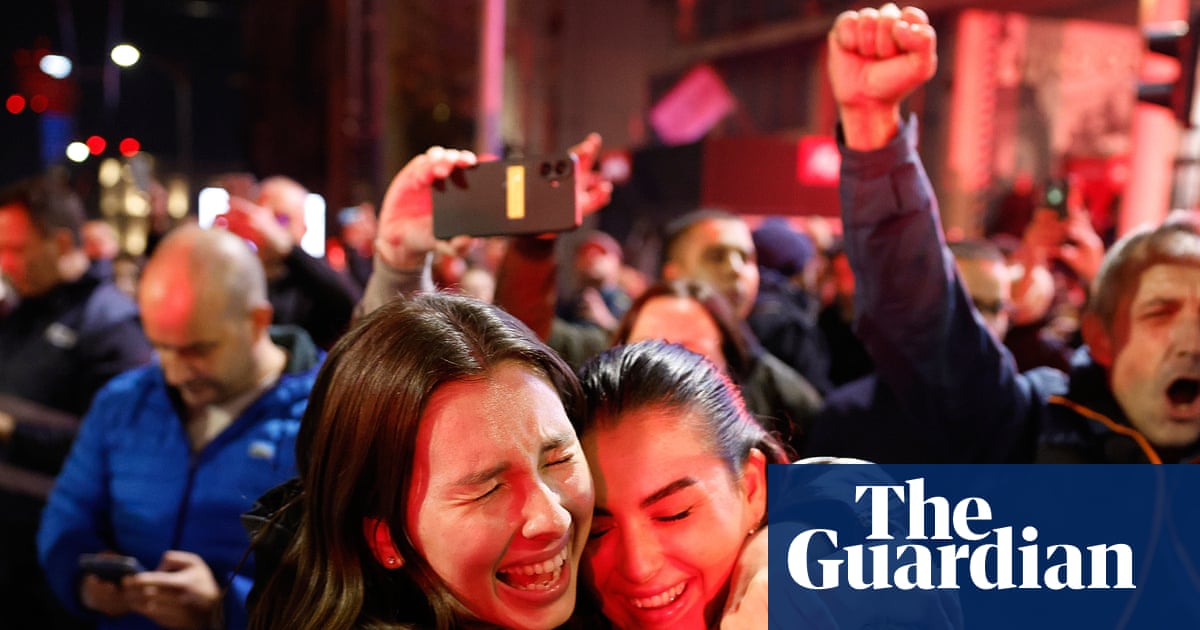
On Sunday, their movement made headlines across the world as the students were catapulted from the streets of Serbia into the halls of power. In a ballot that saw the highest turnout since the breakup of Yugoslavia in 1992, over 50% of voters backed the students to oust the increasingly authoritarian leader, Aleksandar Vučić, and end his party’s 14 years in power.
It was, as a Guardian editorial noted, “one of the most remarkable election outcomes in recent European history”.
The students’ extraordinary feat came as Europe has been rocked by weeks of protests. From Porto to Paris and Madrid to Milan, analysts have pointed to the common thread that weaves through the diverse protests: a view that the social contract has broken down, leaving younger generations bracing for a future in which they will be worse off than their parents.
The election result in Serbia lays bare the power of these protests to reshape politics, postdoctoral researcher Aleksandar Matković noted this week . Could it be, as WikiLeaks founder Julian Assange once told an interviewer in Belgrade, that Serbia is “a country where the future happens first”?
Matković drew on his involvement inside the student movement to offer a singular window into all that had gone into their win, citing discussions that had stretched as long as six hours as the students laid the groundwork for their entry into politics. “The world should be watching closely: it may be witnessing the start of a very different kind of politics,” he wrote.
Their win sparked joy across Serbia, sending tens of thousands of jubilant revelers on to streets across the country. “It’s very strange that on the very streets where the police beat us, on the streets where we retreated countless times in the face of the gendarmerie, we are now standing here as the victors,” Sara, 24, told the Guardian.
Hours later supporters of the movement appeared again, this time to clean up after a night of raucous celebrations.
The movement now faces a tremendous task – particularly given that it has no hierarchy or leader. For more than a decade, Vučić’s party had transformed the state, tightening its grip on media, stuffing institutions with loyalists to the party and wielding ministries and Serbian institutions as political tools.
The movement won 140 of the 250 seats in parliament, giving a comfortable majority to a slate of candidates who range from academics to athletes, and who were chosen via student assemblies in the lead-up to the election. As one candidate told my colleagues on Monday, the top priority was “the social and psychological detoxification” of the country.
Underpinning the movement is an 11-point plan, which includes ridding the country of corruption, reforming the judiciary and media and improving access to healthcare. “We are neither promising, nor expecting overnight miracles as a result of this victory,” one member of the movement wrote in the Guardian this week. “Rather we hope for something fundamentally radical for Serbia: normal, functioning institutions.”
And while their plans for power take shape, the impact of their bold experiment will certainly be felt far beyond Serbia. The country applied to join the European Union in 2009, but the process has largely stalled in recent years. Now, much like in neighbouring Hungary, the elections have ushered in the possibility of a fresh start along with hope of a democratic resurgence in central Europe.
As EU officials sent their congratulations this week to the students, whose policy platform promises to put the question of future EU membership to a referendum, a note of optimism laced their messages. “We stand ready to support reforms on the rule of law, media freedom, the fight against corruption and strong democratic institutions and to work together to advance Serbia’s future in the European Union,” the European Commission chief, Ursula von der Leyen, said on social media.
Marta Kos, the EU’s enlargement commissioner, was more direct. “A new chapter can begin for Serbia. The door to the EU is open, and we are ready to move forward together,” she wrote on social media.
It was a stunning reversal of fortunes for the students who last year felt they had to cycle more than 1,300km (780 miles) to make their voices heard. Now – after nearly two years of protests that were met with detentions on trumped-up evidence, illegal surveillance, threats and job losses – it seems they might have a chance to fulfil their wish of bringing Europe to Serbia.
To receive the complete version of This Is Europe in your inbox every Wednesday, please subscribe here .