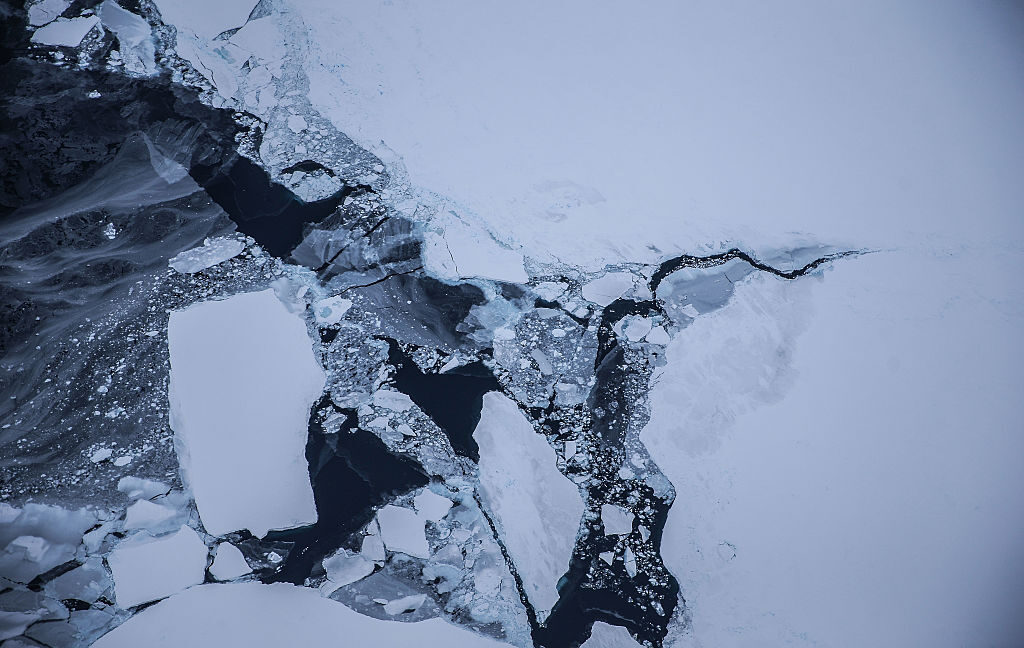
The rapid decline of Antarctic sea ice since 2016 has triggered a dramatic shift in a crucial part of Earth’s climate system, scientists say.
In a paper published Wednesday, researchers documented a sharp salinity increase in a vast layer of the Southern Ocean, extending from 2,300 to 4,000 feet deep and encircling Antarctica. The shift reverses decades of freshening and echoes ocean changes usually associated with major global climate shifts over millennia but is now happening in just a few years.
The switch from a decades-long trend of freshening water to increasing salinity has implications that could extend beyond Antarctica. The layer, known as Antarctic Intermediate Water, spreads northward into the Indian, Pacific, and Atlantic oceans, transporting heat, carbon, oxygen, and nutrients toward the tropics, and even across the equator, said co-author Bishakhdatta Gayen , a researcher and professor at the University of Melbourne and at the Centre for Atmospheric and Oceanic Sciences in Bengaluru, India.
Gayen said the study combined six independent datasets to track changes in the Southern Ocean from 2004 to 2024. The data came from Argo floats, which drift through the ocean and periodically descend to different depths to measure water properties such as density and salinity, then resurface to transmit the readings. A 2025 study also detected increasing surface salinity linked to declining sea ice, he added.
Antarctic sea ice reached its highest extent in the satellite record in 2014 and suddenly dropped to a record low just two years later. The sea ice remained well below the 2014 extent and reached another low point in 2023, when it measured about 1 million square miles below the 1981 to 2010 average, with an area of ice about four times the size of Texas gone. As the ice dwindles, there’s less freshwater available during the melt season, making the Antarctic Intermediate Water saltier.
Changes to the density, thickness and salinity of the layer influence how heat moves between the surface of the ocean and deeper waters, which “could affect how the ocean stores and redistributes heat,” Gayen said. More monitoring is needed to track the changes, he added, because impacts are potentially “knocking on your door” within five years.