First published 28 Oct 2026, 1:56pm
There is a new push for Australia to embrace prefabricated housing to lift construction productivity, reduce building costs and accelerate supply, with ambition for modular housing to become a mainstream option by 2036.
The country builds around half as many homes per construction worker as it did 30 years ago, according to the Productivity Commission, while significant prefabrication accounts for just three to five per cent of new housing.
The Federal Government is committing $120m through the National Productivity Fund to help states and territories address regulatory barriers to modern construction methods, alongside a planned national certification scheme to simplify compliance for manufacturers.
Assistant Minister for Productivity, Competition, Charities and Treasury Andrew Leigh is set to outline his calls for prefab housing to go mainstream at an Australian Sustainable Built Environment Council event at Parliament House on October 29.
Mr Leigh says while there has been enormous technological progress from computing power, automated manufacturing to digital design – housing construction productivity has gone backwards.
“Much of our construction industry still operates in ways that would have been recognisable to builders a century ago,” he said.
MORE: ‘Don’t work’: Stalled unit builds need factory fix
Assistant Minister for Productivity, Competition, Charities and Treasury Andrew Leigh is calling for prefab housing to go mainstream. Picture: Hilary Wardhaugh
Prefabrication allows walls, bathrooms and entire housing modules to be manufactured in factories before being transported to sites for assembly, reducing exposure to weather delays and enabling work to progress concurrently, Mr Leigh says.
A CEDA and Urbis report estimates modern construction methods can reduce building times by 20 to 50 per cent, with costs potentially falling by about 20 per cent, at scale.
Mr Leigh says modernising the National Construction code is critical.
“Today, significant prefabrication is used in only around three to five per cent of new Australian housing,” he said.
“Compare that with Sweden, where the great majority of detached homes incorporate prefabricated construction.
“Industry group prefabAUS has set an aspiration of prefabrication reaching 30 per cent of construction by 2033.”
Pictured Clare O’Neil, Andrew Leigh and Jim Chalmers, announcing more measures to boost housing supply. Picture: Supplied
The Productivity Commission estimates a 2 per cent increase in construction output could lift Australia’s gross domestic product by about $5.7 billion.
Mr Leigh highlights there have already been demonstrations in the country of this approach.
In 2014, a nine-storey apartment building in Melbourne, One9, containing 34 homes, was assembled in five days using 36 prefabricated modules that were craned into place.
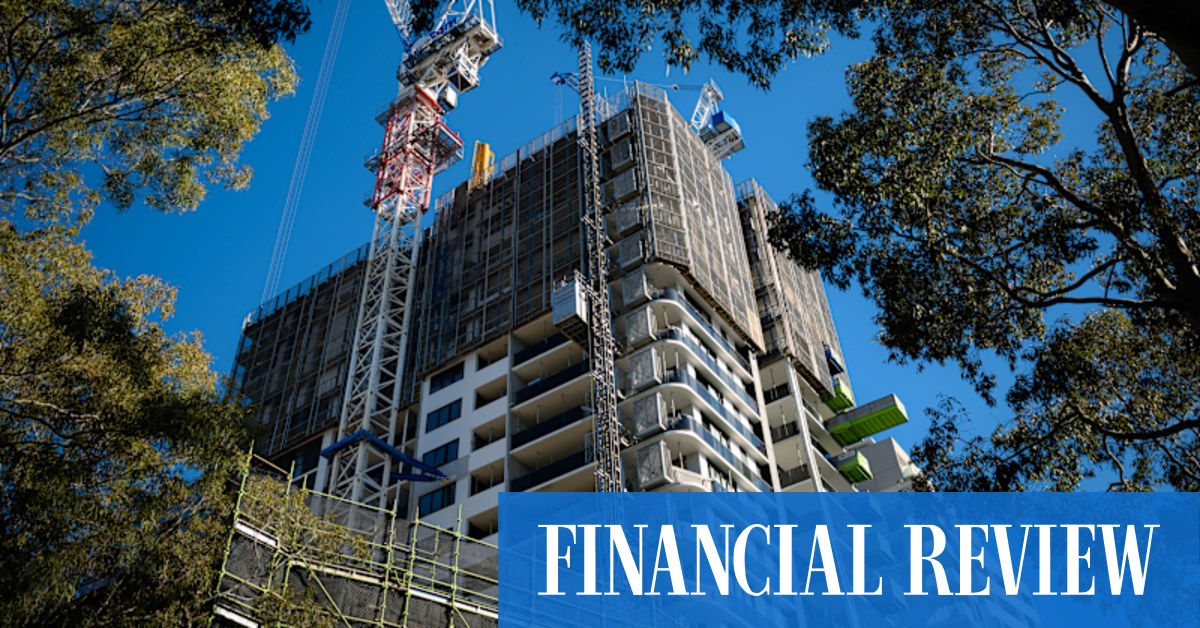
Today, a 20-storey student accommodation tower in Sydney’s Macquarie Park is being constructed using volumetric modular technology, expected to be Australia’s tallest volumetric modular building.
The development is set to contain 528 student rooms, with 12 levels assembled by September, about 13 weeks after the first modules arrived.
Mr Leigh says this could also help address housing shortages in regional and remote communities, where labour shortages, transport expenses and weather can delay construction.
Under the Housing Australia Future Fund, $71m is supporting 117 crisis and transitional homes using modern construction methods, including homes for women and children escaping family violence.
In 2014, One9 in Melbourne was assembled in five days using 36 prefabricated modules. Photo credit: Hickory Group
“When construction time falls, people who urgently need secure accommodation can get it sooner,” Mr Leigh said.
“The Albanese Government is providing $120m through the National Productivity Fund to help states and territories place modern construction methods on an equal regulatory footing with conventional building.
“We’re also investing $4m in nationally consistent definitions and a voluntary manufacturer certification scheme, with full commencement scheduled for mid-2028.
“Led by Housing Minister Clare O’Neil, the aim is to give manufacturers a clearer route to demonstrating compliance with the National Construction Code.
“We’re supporting standardisation through the $39.3m Kit of Parts initiative.”
Mr Leigh says this will make Australian-designed building components freely available, allowing architects and builders to combine standard elements in different ways.
“Think of it as applying some of the logic of manufacturing to housing, while leaving plenty of room for architectural creativity,” he said.
One9 Melbourne contains 34 homes. Photo credit: Hickory Group
“And we’re backing manufacturing capacity.
“In August, the National Reconstruction Fund Corporation announced an investment of up to $120 million in Built Living, a joint venture between Built and Wesfarmers.
“This will support a housing manufacturing facility in Neerabup, Western Australia, designed to produce components for more than 2,000 apartments annually.
“The company’s ambition is to build apartments up to 50 per cent faster and 20 per cent cheaper than conventional construction.
“Those targets show the scale of investment that could emerge as the industry matures.
Modern methods of construction also illustrate why Treasurer Jim Chalmers is revitalising National Competition Policy.”
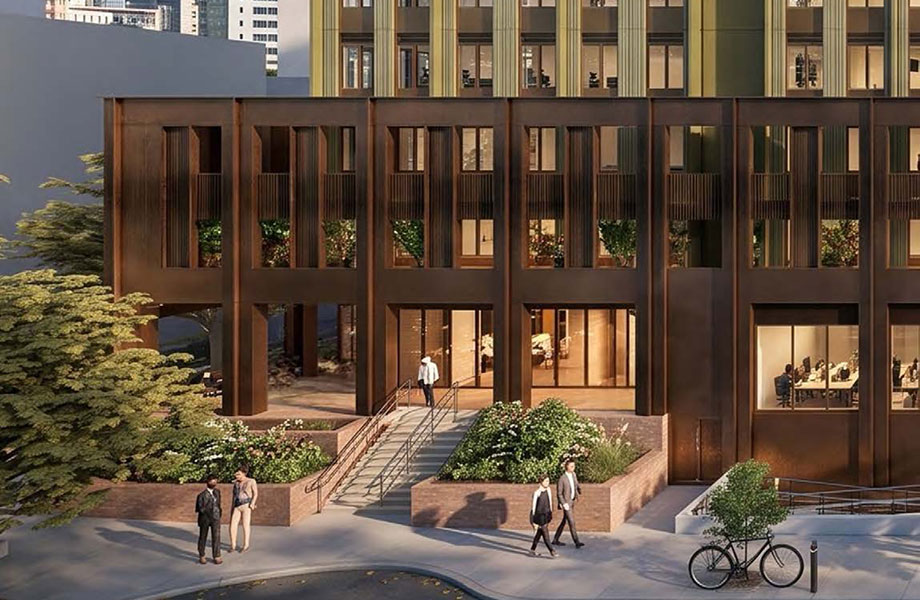
Breaking ground on a Belconnen project that will add 315 affordable apartments to the community. Picture: Supplied
Mr Leigh says a decade from now, perhaps this kind of construction will be commonplace.
“We’ll still need skilled builders and creative architects. Their skills will be applied in different ways,” he said.
“And if we succeed, the gains will be measured in more than construction statistics.
“They’ll be measured in young people able to afford a home. In families spending a smaller share of their incomes on housing. In vulnerable Australians getting secure accommodation sooner.
“Australia has spent decades wrestling with the problem of how to build enough homes.
Part of the answer lies in changing how we build them.”
Private businesses are also investing in modern methods of construction, with Chandolin Construction, in partnership with Cuby Technologies, set to see three pilot homes being built for a Bathurst not-for-profit supporting displaced teenagers by the end of this year.
MORE: Matt Damon’s Aus home sells with big discount
Chandolin Construction director Sarah Dimitrievski with colleagues Andrew and Emmanuel
Chandolin Construction director Sarah Dimitrievski said the technology transformed housing from a labour-intensive process into a digitally controlled manufacturing system.
The process uses portable, containerised Mobile Micro-Factories (MMFs) to manufacture home components, with QR codes and artificial intelligence helping co-ordinate production, packing and delivery to building sites.
then sent to the building site. The process is QR coded.
“It drastically reduces the time, cost and labour required to build high-quality homes, delivering units in 30 to 60 days at a cost that is often one third below traditional methods,” Ms Dimitrievski said.
“This unlocks the ability to scale housing supply rapidly, even in regions with tight labour markets or high material costs, making it an ideal solution for Australia’s housing shortage.”
MORE: Bombshell today: Aus’ worst time in 100 years
Help us improve your reading experience
Got a minute? Your feedback will help us build a better experience for you.