Polling indicates Israel's Prime Minister Benjamin Netanyahu could face a stiff challenge to hold onto power in a vote largely seen as a referendum on his leadership and handling of Hamas's October 7 attacks.
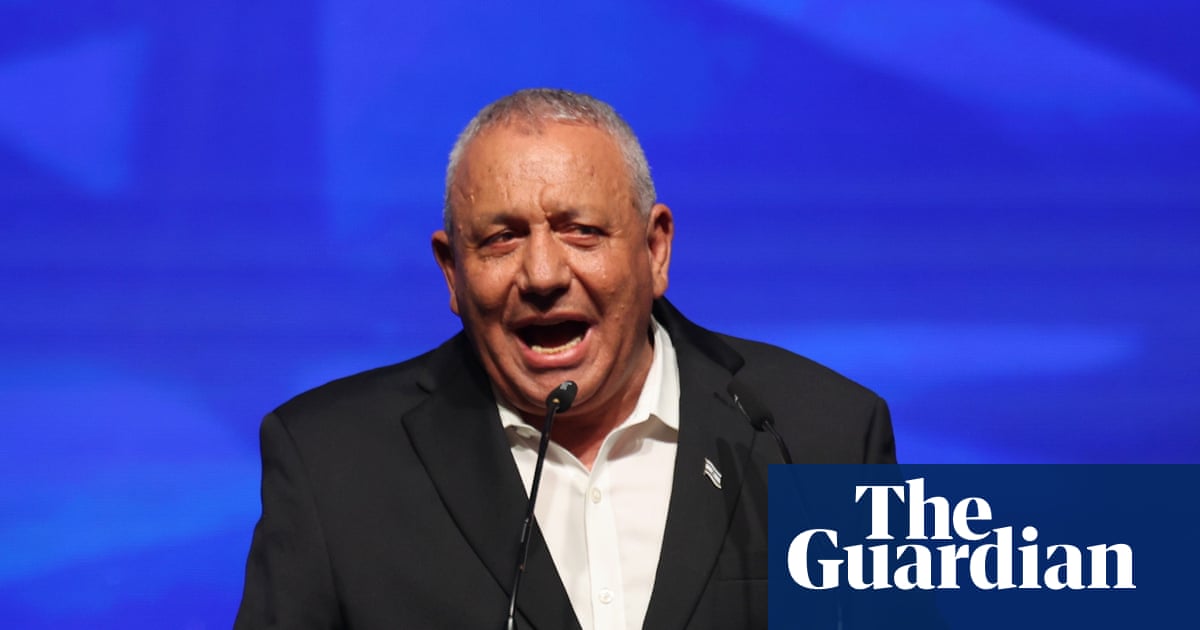
His main challenger is Gadi Eisenkot, a former Israeli military chief who leads the newly established Yashar opposition party.
Join our live coverage as the polls close and Middle East Correspondents and Academics explain what it all means.
Choose what information you see below by using filters
At the polling station in Rehavia , we picked out of the crowd a familiar face in Israeli politics.
Mossi Raz has been a member of the Knesset, the Israeli parliament, having represented the former left-wing Meretz party from 2000 to 2003, 2017 to 2019, and 2021 to 2022.
This time, he's running for The Democrats - which is the party formed out of the merger of Meretz and the former Labor party.
Anyway, Mossi was fairly clear eyed about how he believed voters would be behaving at the ballot box.
"There is a feeling of people, unlike previous elections campaigns, know what they want,” he said.
The Democrats are one of the parties which commentators argue would likely join with other anti-Netanyahu parties, such as Gadi Eisenkot's Yashar, to form a coalition.
I asked Mossi whether he was worried about polling showing support from the right wing of Israeli voters still propping up the prime minister's Likud party and others in his current government.
“The groups who support Netanyahu in the society grew increased in this last four years," he said.
“There are more religious people, more settlers, more ultra-orthodox, and many liberals who left the country.
“The opposition was very successful in turning people who were supporters of Netanyahu last time to vote for the opposition.
Raz said after polling day, there would be a test for the anti-Netanyahu camp.
“The only question is if it is enough and if the heads of the opposition, I hope the next prime minister, will be honest enough to cooperate with the two Arab Palestinian lists - because without them [a change of government] will not happen.”
By Middle East correspondent Matthew Doran
Having covered Australian politics for a few years before moving to Jerusalem, I can tell you the election looks and feels somewhat familiar when voters are arriving at polling stations.
It was just a bit messier, as there are so many more parties running.
Just like in Australia, there are party volunteers lining up outside the entrances armed with flyers trying to win over voters at the last minute - although in Rehavia, a more affluent Jerusalem suburb, they weren't as aggressive as they may have been in other parts of the country.
There were also no democracy sausages on offer.
A lot of the campaign material focuses on white slips of paper with Hebrew letters on them. This reflects how Israeli voters actually cast their ballot.
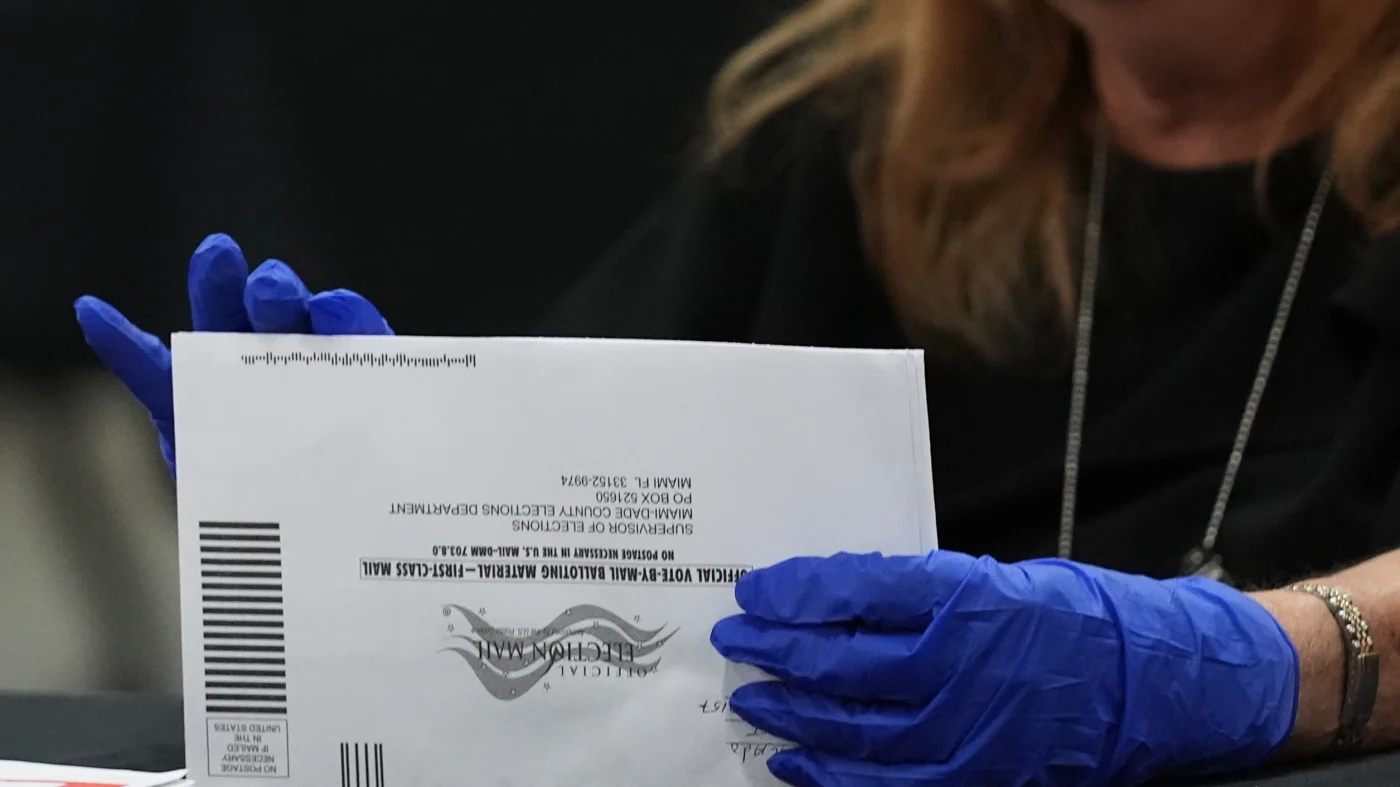
Rather than marking a piece of paper, each voter picks a ballot with the lettering representing their desired party - putting it in an envelope.
Parties pick their lettering based on part of their messaging. Gadi Eisenkot's Yashar has a ballot paper saying the Hebrew word for "way" or "street" - saying a vote for them is a vote to put Israel on the right path.
I did see some racist campaign material from one of the far-right Haredi parties, called Noam, littered on the ground.
It showed a number of Muslim women, and a slogan along the lines of 'are these the people you want to teach your children?'
Noam is not expected to secure enough votes to secure even a single seat in the Knesset.
And some of the other right wing party volunteers were having a crack at their team, saying they were pinching votes from the parties which do have a chance of getting in.
On election day, ABC Middle East correspondent Matthew Doran takes a look through the headquarters of Israeli PM Benjamin Netanyahu's Likud Party campaign headquarters.
By Middle East correspondent Matthew Doran
There are a handful of parties all trying to chip away at Benjamin Netanyahu and his Likud party . But few seem to have garnered as much support, at least in terms of public polling, as the brand new Yashar party led by Gadi Eisenkot .
Eisenkot is the son of Moroccan Jewish immigrants and a former chief of the Israel Defense Forces (IDF) — a position he held under Mr Netanyahu from 2015 to 2019.
After retiring from the military he entered politics, joining Benny Gantz's Blue and White party.
It's interesting to note here that Mr Gantz, a one-time high flyer in the Israeli political system, pulled out of this election a week out from polling day because his numbers were so poor.
After the deadly October 7 attacks by Hamas in October 2023, Eisenkot joined the emergency war cabinet — an attempt by Mr Netanyahu to bring together politicians from outside his ruling coalition to show unity of purpose after the terrorist attacks.
But Eisenkot, and Gantz, quit a few months later. And this is where the cracks in the relationship between Eisenkot and Netanyahu really started to emerge.
He accused the government of being beholden to extreme right-wing voices, making decisions about the war which were more about annihilation of an enemy rather than the safety of Israeli hostages.
In mid-2025, he quit the Knesset altogether. A few months later, he established Yashar — which translates to "straight" or "honest".
Netanyahu has spent a lot of time trying to paint Eisenkot as an inept leader and weak on security. He says the former general's grasp on English is weak, calling that a problem for a country like Israel on the world stage. The prime minister also accuses him of being prepared to roll over to Israel's enemies.
But Netanyahu's criticism overlooks one of the key markers in Eisenkot's military career: He was the man who developed the so-called Dahiyeh Doctrine, named after the Hezbollah stronghold suburbs in southern Beirut. It calls for the disproportionate use of force against an enemy, to effectively bomb them into submission.
By Middle East correspondent Matthew Doran
Back in Rehavia , a few more voters shared their views on the election with us.
Menachem Lorberbaum said his vote was "private" when asked who he backed at the ballot box.
But he said there was "no doubt" it was time for a change of leadership.
"You don't have to vote for [Gadi] Eisenkot or for anybody, you know, on that side to see that, to speak to people on the street and they'll tell you that people have to know when it's time to go home," he said.
Menachem added that Israel was "undergoing a very deep realignment" of values and attitudes.
"The shifts and the deep divides are elsewhere from where they were 30 years ago, and I think you see this quite dramatically," he said.
Israel is in a different place today ... no democracy is perfect, no polity is perfect, but I think that this is one of the most dramatic tests of the ability of the self-corrective principles within a republic, a democratic republic, to renew itself.”
That division Menachem was speaking about was perhaps evident on some of the Likud party flyers being handed out to voters as they arrived at the primary school.
For weeks, Mr Netanyahu has painted his political opponents as being supporters of the Palestinian cause, as he tried to whip up support and fear about the issue.
His flyers read "Right or Palestine", which in Hebrew rhymes, and featured photos of the anti-Netanyahu party leaders such as Gadi Eisenkot, Yair Golan, Avigdor Liberman and the leaders of the two Arab-Palestinian groups running at the election, Yousef Jabareen and Mansour Abbas.
Netanyahu supporter Etti Brand was clutching one as she arrived to vote.
"He is the only one," she said of the prime minister when asked who she was voting for.
"Yair Golan and Eisenkot are going to bring us to Palestine."
By Middle East correspondent Matthew Doran
We spent a bit of time talking to voters at a primary school in the Jerusalem suburb of Rehavia earlier in the day.
It's just around the corner from Benjamin Netanyahu's personal residence in the city, and a short drive from the prime minister's official Jerusalem home.
It was also where Israeli president Isaac Herzog cast his ballot.
Something we've heard a lot in recent weeks from critics of Mr Netanyahu is that it's 'time for him to go home.'
And some of the residents we spoke to certainly agreed with that sentiment.
Meira Partem didn't say which party she specifically backed, but said she had voted for a "new dawn" - a government without Mr Netanyahu at the helm.
"First of all, it's not democratic, it's the same Prime Minister for so many years.
"The second thing, after this terrible semi-Holocaust that happened here in my Jewish sovereign state, anyone should have stepped down and apologised.
"And the gall not to do that is very, very disturbing.”
She's talking there about accountability for the defence and security failures which allowed the October 7 attacks to occur in 2023, where around 1,200 Israelis were killed and 251 taken hostage.
Meira described the prime minister as an "opportunist" who would work with any partner as long as it meant holding on to power.
"If a prime minister tries to have everybody loyal to him, and not to the country, not to the law, that's destructive to the country.”
Mr Netanyahu did have support in Rehavia.
"I'm voting Bibi, obviously, because he's our wartime leader and we're still mid-war," voter Yosef Abraham told us.
"I think anybody who wants the government to switch is actually anti-Israel, he wants us to get weaker, because mid-war, you don't change leadership.
“I think we need other leadership in different times, but right now we have to continue to support Bibi.”
Mr Abraham had very strong views about the Palestinian or Arab citizens of Israel, and insisted they needed to assimilate or leave.
“Each Arab can place the flag of Israel in their schools, in their houses, and then they remain citizens,” he said.
“If they refuse, they are our enemy from within, and we need to cleanse them out.”
20 per cent of Israel's population are of Palestinian or Arab descent, and they typically have a much lower turnout at elections as a result of decades of marginalisation.
By Middle East correspondent Matthew Doran
It's still early, and polls haven't closed.
But Benjamin Netanyahu's Likud Party HQ is buzzing... with journalists.
No members of the public are filling the hall at the moment.
There are bundles of Likud party placards sitting in plastic wrapping on the side of the room, for when those supporters do materialise.
We're in a large hall in central Jerusalem, along with hundreds of journalists from around the world.
While you were sleeping, Israeli citizens voted for their next prime minister.
The polls are set to close in the next hour, but due to the country's parliamentary system, the winner won't be immediately obvious.
In Israel, the leader who can assemble a governing coalition with a majority of 61 or more Knesset seats takes office and this can take several weeks of political negotiations.
The incumbent, Benjamin Netanyahu , has polled poorly leading into the election despite an endorsement from great ally Donald Trump.
After three years of Israel's war with Gaza and most recently the war it launched with the US against Iran in February, the world has its eyes on the outcome of the election.
To make sense of the complex political system and what it means internationally and on Australian shores, Middle East correspondents and academics will join us on the blog this morning.
Have a question? Log in to comment below.