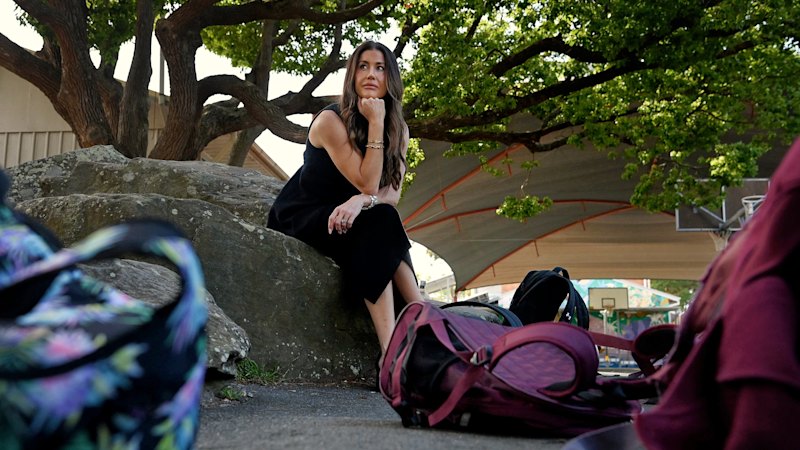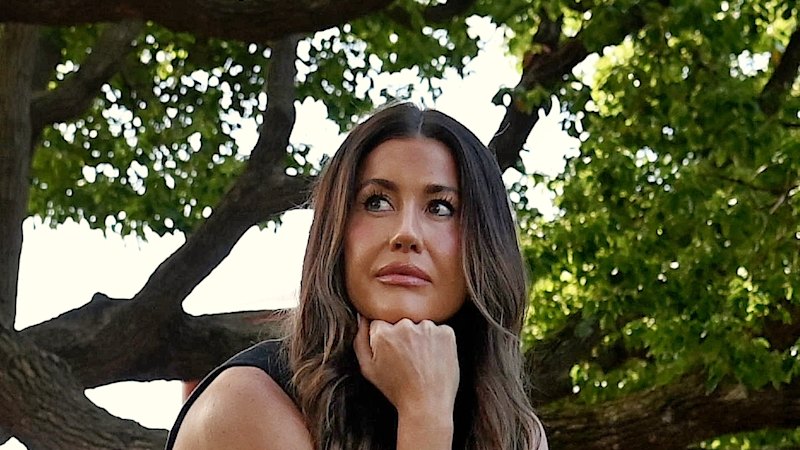
They might be the highest calibre schools in the public education system and the top of league tables. But working as a school counsellor, Lisa O’Sullivan caught a glimpse of another side of selective schools.
“I could have probably said 90 per cent of the kids who came to see me were because of the academic stress,” she said.
“And the pressure and the family expectations of: ‘You are to be a doctor’, whether or not they wanted to be a doctor or not.”
O’Sullivan now works across primary and secondary schools on the northern beaches and has formerly worked at Northern Beaches Secondary College Manly Campus, which is selective and places near the top of HSC league tables each year.
She met students entering their teenage years, when they were discovering who they were and developing aspirations for the future. “And they’re finding that a little bit hard to navigate with their parents, who have got these expectations of what they should do,” she said.
While she says it is impossible to generalise and cannot discuss specific cases, she says: “There would definitely be those parents there, particularly in that selective, competitive setting with academic excellence, that might behave in an extreme way.”
O’Sullivan, who had a 15-year career in the corporate world including in banking before retraining as a psychologist, began work in public schools two and a half years ago, drawn by a desire to help students get mental health help earlier.
She is one of more than 260 counsellors and psychologists who have so far been recruited to public schools under the present NSW government, bringing the total workforce to over 1500 and exceeding initial targets.
It comes as the mental health of young people has deteriorated since the pandemic and never recovered. Schools have beefed up their wellbeing programs, banned mobile phones in a bid to insulate students from worsening effects of technology while the federal government also has banned under 16s from accessing social media.
For O’Sullivan, her work in primary school assists families with mental health assessments and learning disabilities such as dyslexia, dyscalculia and dysgraphia. In a high school setting, she mainly counsels students and listens to their problems.
Friendship complexities are greater and the social dynamics are trickier to navigate in high schools. “Then, there’s also relationships,” she says.
She says exposure to problematic ideas, such as self-harm and eating disorders on social media, has negatively affected mental health across the board. Younger people globally have experienced worsening health outcomes since about 2010, with a small rebound in recent years.
“It’s stuff that we’re dealing with now that we didn’t have to deal with when we were growing up,” she says.
Students came to her with issues they were uncomfortable discussing with their parents, including self-harm and suicidal ideation.
“The youngest I’ve now had is year 3, who decided that she didn’t want to be here any more,” she said.
She noted access to phones had meant children were accessing the internet and social media platforms where they’re absorbing things which they’re not “developmentally ready to understand what those words or terms mean”.
“And they’re hearing about it because they’re accessing it, their friends are seeing it, or they see it online, or they go down a rabbit hole.”
The social media ban has not changed a thing.
“Obviously, there’s a social media ban in place, but I can tell you that that doesn’t work,” she said.
O’Sullivan says that’s because children know if their peers were using it or not.
“If you’re not on it, it’s known that you’re not on it, and you’re kind of viewed as an outcast.”
Lorren Krilich took up a job in the NSW Department of Education as a school psychologist in 2018 and has since become a leader in psychology practice, overseeing staff working from Campbelltown to the Southern Highlands.
She said self-harm had become the majority of her staff’s workload.
“It’s not as stigmatised as it used to be, and so kids are not frightened to come forward and ask for help where maybe previously they may have been cutting or had suicidal ideation, and just not been as open.”
Social media content meant children can be given “quite explicit instructions around how to do certain things” on social media or the internet.
She is slightly more optimistic about the potential for the government’s social media ban.
“Maybe a parent who was considering giving their child a phone with access to social media maybe thinks twice about it now and doesn’t do that, and that then alleviates that child’s potential access and exposure.”
Education Minister Prue Car said supporting the mental health and wellbeing of our young people is one of the most important responsibilities of her government.
“We promised to recruit hundreds of new school counsellors in our public schools to support students to thrive academically and socially, and that is exactly what the Minns Labor government has delivered,” she said.
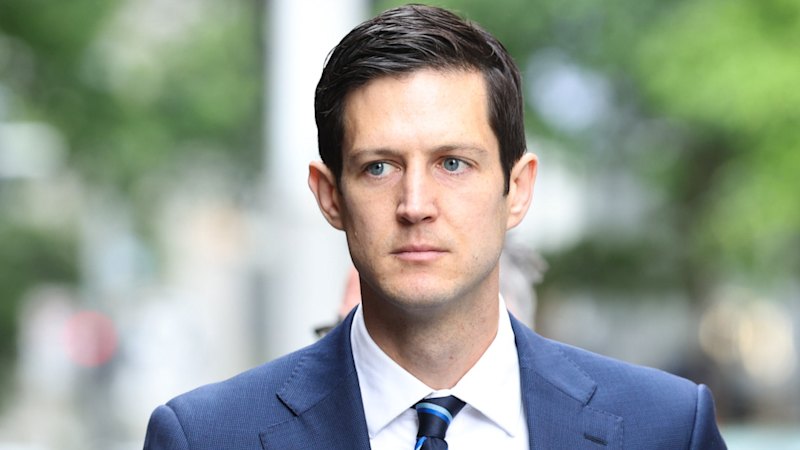
Douglas Hofman retrained as a psychologist after teaching for five years. This year, he became a counsellor working across Ambarvale High, Appin Public and Thomas Acres Public School. One of the biggest issues he has noticed is sleep, as students become irritable, uninterested and disengaged. Students report being awake until 2am, he said.
“It just feels like their brain is in overdrive in a way, and they can’t stop thinking,” he said.
He retrained because he felt he could help more school students in this way.
“One thing that actually really surprises me is how open a lot of the students are in talking about the things that are going on in their life,” he said. “From primary school through to high school, I have had some really genuine, open, honest conversations.”
If you or someone you know is experiencing a personal crisis, please contact Lifeline on 13 11 14 or lifeline.org.au.
You have reached your maximum number of saved items.
Remove items from your saved list to add more.
You've used all of your gift articles. 3 more will become available on the 1st of every month.