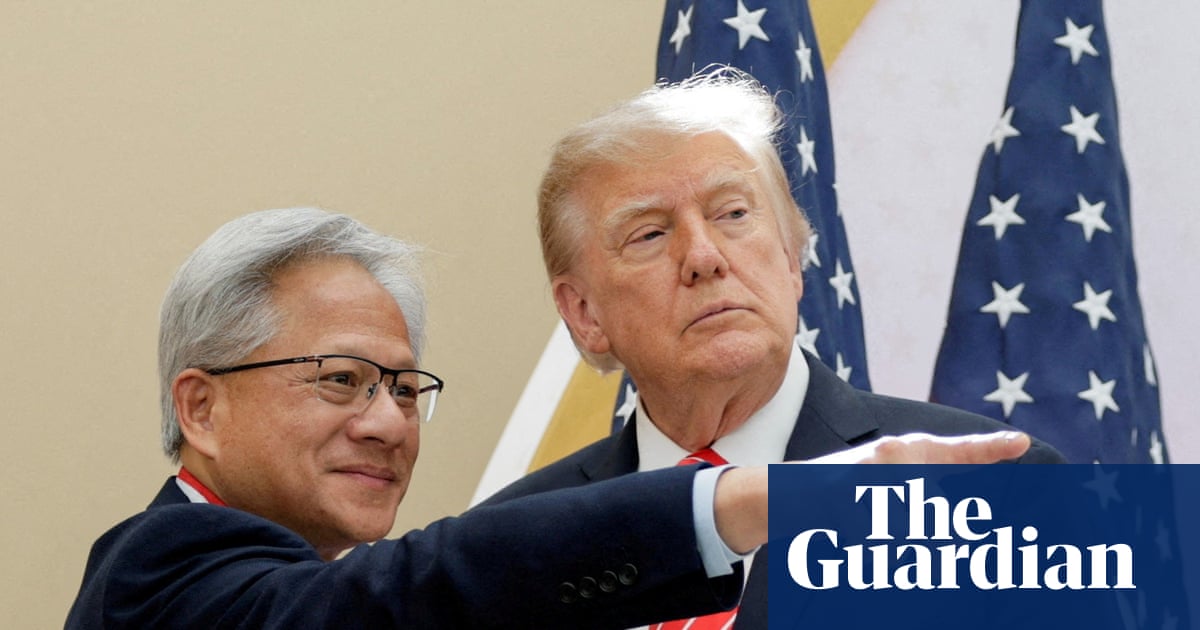
President Donald Trump has cast America's artificial intelligence race with China as a national-security imperative, pushing faster development of the technology and an immense buildout of the data centers and power infrastructure needed to fuel it.
But the new CNBC All-America Economic Survey reveals a growing political tension beneath that agenda: Republican voters broadly support the push for AI development, but many oppose building the sprawling infrastructure needed to power it in their own backyards.
Nearly 55% of MAGA supporters want companies to keep developing advanced AI while Congress works on regulations, versus 27% who favor a pause. But only 29% would support a data center within 10 miles of their home, while 40% oppose one. Among all Republicans and Republican-leaning voters — not just those who identify themselves with the MAGA movement — those who say they would support a data center near their home falls to 24%.
Across the electorate, 63% don't want a nearby AI data center and just 13% support one. Democrats lead the opposition: 80% oppose nearby facilities while just 4% support them.
That resistance is increasingly forcing Trump and vulnerable Republicans who once championed data centers to recalibrate as they head into a bleak midterm election environment for the party.
"Many people are annoyed by these data centers," said Brad Carson , a former Democratic congressman from Oklahoma and co-founder of Public First Action PAC, an AI-industry-backed political group pushing for stronger regulation and safeguards. "People are also strongly insistent upon reasonable guardrails of AI, and that's going to be hard to beat."
The CNBC survey of 1,000 registered voters nationwide was conducted Oct. 14-18 by Hart Research Associates and Public Opinion Strategies and has a margin of error of plus or minus 3.1 percentage points. The data-center proximity question was asked of a half-sample of roughly 500 voters, with a margin of error of plus or minus 4.38 percentage points.
The politics have shifted from the early AI boom, when Washington and Silicon Valley sold the technology as an avenue for investment, growth and American dominance.
But as the buildout accelerates, its physical costs are becoming harder to ignore. Communities are fighting data centers over spiking electric bills , soaring electricity and water demand, noise, land use and taxpayer subsidies. Coupled with job- displacement fears from AI, opponents now point to the facilities as a physical symbol of who benefits from the boom and who gets stuck with the bill.
“The data center industry provides significant, tangible benefits,” said Dan Diorio of the Data Center Coalition, pointing to jobs, investment and tax revenue while adding that operators are committed to “paying for the energy we use."
But when asked their top concerns if Republicans retain Congress, 18% of voters in the survey cited a failure to regulate AI and data centers. That tied continued military efforts in Iran and outranked continued Immigration and Customs Enforcement deportations at 15%, cuts to health insurance subsidies at 10% and an extension of Trump's tariffs at 5%.
Even among voters who want Republicans to retain control, 17% cited weak AI and data center oversight — second only to a failure to bring down prices.
In August, the National Republican Senatorial Committee warned AI companies that data center backlash was threatening Sen. Jon Husted's reelection in Ohio, calling the issue a midterm "sleeper" that could sour politicians nationwide on future projects, Axios reported .
As Ohio lieutenant governor in 2024, Husted helped announce a $10 billion Amazon Web Services expansion, calling AI facilities " crucial to America's economic superiority ." Now, in a tight Senate race against Democrat Sherrod Brown , who has made data-center opposition a campaign issue, Husted is promoting stalled legislation to make large facilities cover their own grid and generation costs rather than pass them on to residential ratepayers.
Texas tells a similar story. Less than a year after Gov. Greg Abbott hailed the state as an " epicenter of AI development ," he halted data center permits pending grid- and water-impact reviews and called for ending state tax incentives.
Trump himself is showing signs of the political pressure. In a Truth Social post Wednesday, he said data center developers should pay host communities a financial "dividend" and generate their own power, arguing that local payouts can turn unpopular projects into popular ones.
For now, Democrats hold a modest edge on managing the issue: 32% of voters trust them to handle data center expansion, versus 24% for the Republicans. But 27% said neither party would do a better job than the other.
And the CNBC survey indicates this skepticism runs deeper than local zoning. Overall, 52% of registered voters want advanced AI development paused until Congress passes safety regulations, compared to 32% who favor moving ahead to keep pace with China. Democrats remain far more cautious: 70% favor a pause, while just 18% support pushing forward.
"The debate has shifted dramatically," Carson told CNBC. "A year ago, there were many people who said, 'Let it cook, no regulation at all, exempt the companies from normal rules.'" Carson said sentiment toward AI has "deteriorated a lot over the last six months."