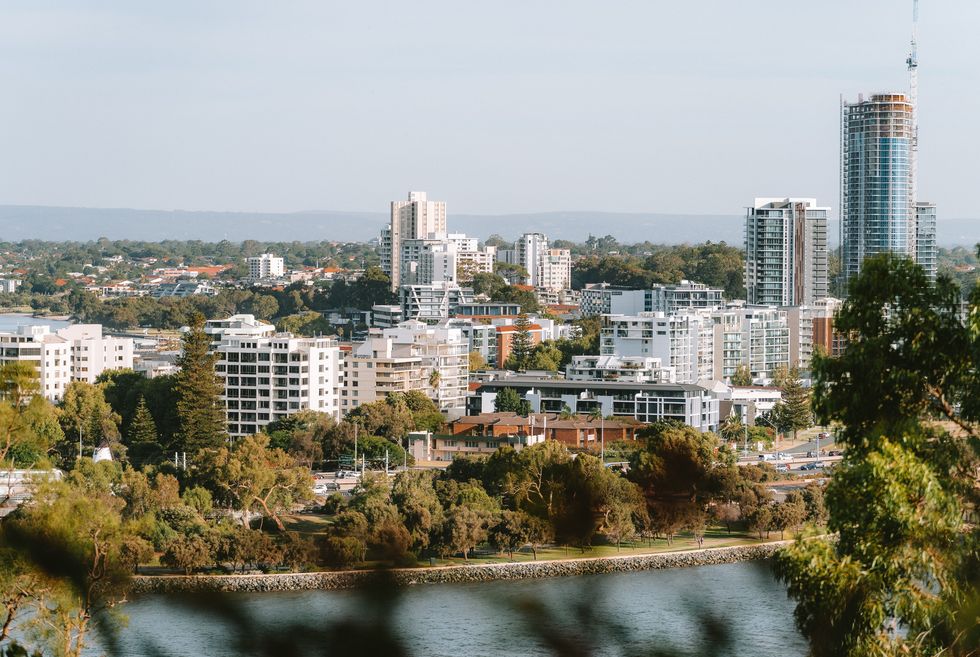
The Western Australian Planning Commission is inviting feedback on a draft improvement scheme for eight initial station precincts across Perth.
The draft Station Precincts Improvement Scheme comprises eight initial station precincts that have been slated for increased residential development through “significant upzoning”, promising to facilitate greater infill and density.
The Western Australian Planning Commission has opened public consultation on what they describe as a “bold vision to boost the supply of housing” around Perth’s Metronet rail stations.
The draft Station Precincts Improvement Scheme comprises eight initial station precincts that have been slated for increased residential development through “significant upzoning”, promising to facilitate greater infill and density.
WA Planning and Lands Minister John Carey remarked that the program will enable “thousands of more homes in well-connected locations, close to public transport, jobs and services.”
“This draft scheme gives communities, landowners and industry more certainty, by painting a clearer picture of where and how new development may occur,” he said. “It’s about enabling more housing choice in established suburbs.”
The first precincts that have been targeted are Bassendean, Carlisle-Oats Street, Claisebrook, Cottesloe, Glendalough, Morley, Mosman Park and Swanbourne.
According to the WA government, “The draft scheme aims to support greater housing choice and a consistent planning approach across the eight precincts while responding to the character of each local area.”
“The draft improvement scheme takes a place-based approach, with proposed changes tailored to the qualities and opportunities of each precinct. This includes responding to local character and heritage, the existing urban form, access to transport and services, and the potential for new housing to be appropriately integrated into each area,” the government’s website notes.
Each precinct plan allows for a density of up to 20 storeys and a transitional area for medium density between two to eight storeys, the government has said, with “minimum density settings proposed to ensure land in these key precincts isn’t underdeveloped.”
The public is invited to give their feedback on various parts items: scheme maps, which show the boundaries, residential densities and proposed planning controls in each precinct; scheme text, which contains the statutory provisions that would apply in each precinct area; the scheme report, which explains the strategic basis for the scheme and the planning direction for each station precinct; the station precincts heritage policy, which outlines heritage places and guides how development that affects those places should be addressed; and the public realm contributions discussion paper, which “seeks feedback on a simplified framework for contributions to public realm improvements,” the government has said.
“We want to hear what you think about the proposed approach and what is important to get right as these precincts grow and change,” the government notes on their website, encouraging “everyone with an interest in the future of these station precincts” to contribute.
Feedback on the draft station precincts improvement scheme can be provided on the WA government website until 12 February.
The scheme is set to be finalised in mid-2027, with the next tranche of station precincts is expected to be announced in early 2027.
The Parramatta tower scheme, designed by FK Australia with HTA, is “set to be one of the tallest volumetric modular construction buildings in the world.”
Thirty emerging architects have been selected to proceed to the second stage of judging in the Australian Institute of Architects’ 2027 Dulux Study Tour.