This story contains references to suicide.
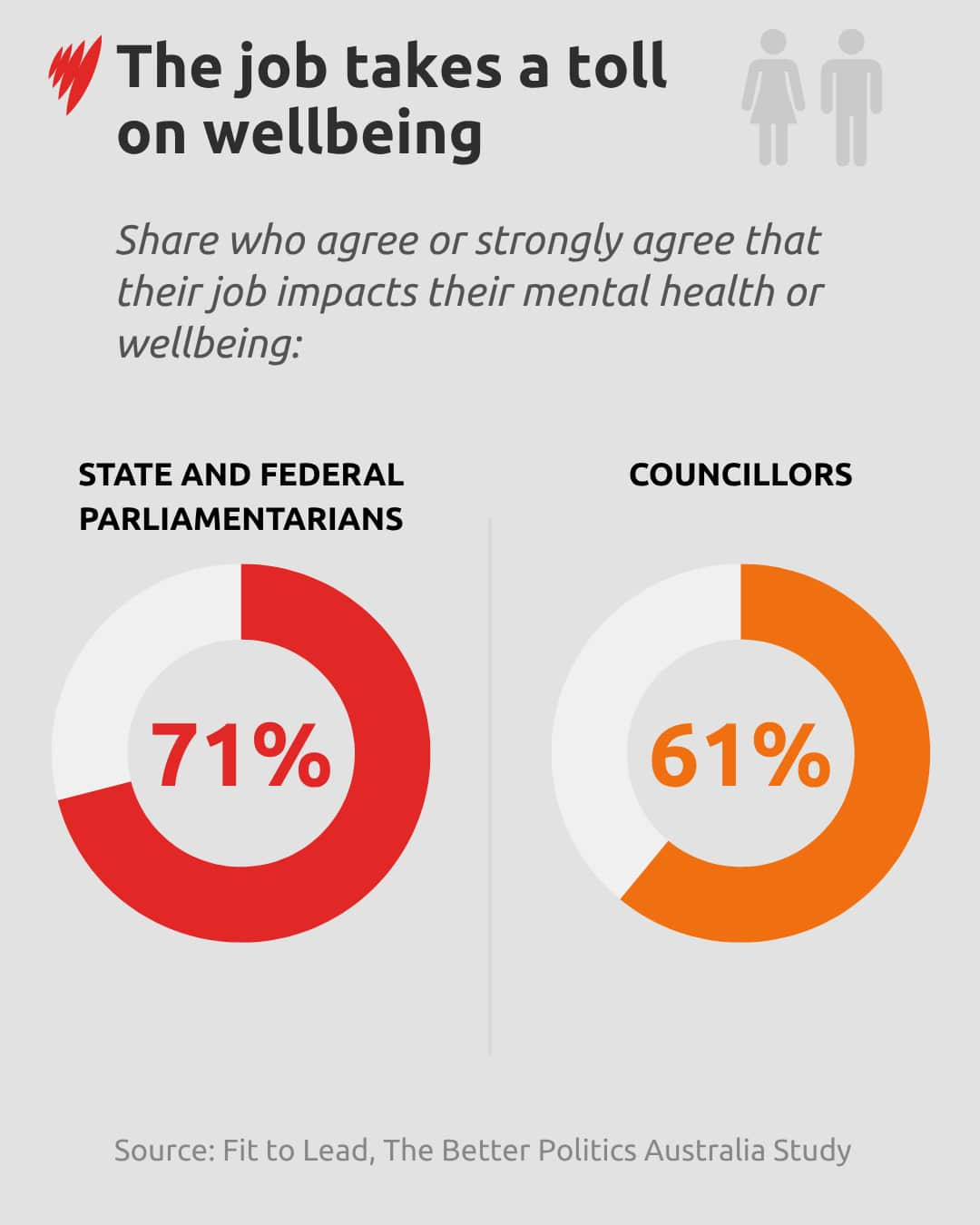
Over 70 per cent of Australian politicians say the job has damaged their mental health, with concerns including gender-based harassment, social media-trolling and threats to safety having an impact across all levels of government, according to a new report.
Adverse mental health effects, concerns for physical safety and thoughts of self-harm were reported by politicians across all levels of government in the Fit to Lead report produced by the Better Politics Foundation, a nonprofit organisation that focuses on political leadership.
The report, which included the experiences of 288 current and former elected representatives, was released on Monday at Parliament House in Canberra.
Former spokesman for ex-UK Prime Minister Tony Blair and host of The Rest is Politics podcast Alastair Campbell helped to launch the report, saying the study "can have an impact not only in Australia, but across the democratic world".
Your trusted source for staying up-to-date with the world around you. Get free daily news updates and analysis, straight to your inbox.
"We need good and effective politicians more than ever, and this report suggests we are failing those who serve, and deterring others from wanting to serve in the first place," Campbell said.
Independent MP Allegra Spender told SBS News that listening to politicians' experience in their roles is important.
"If we want our citizens to be well represented, we need to understand the culture that shapes how politicians work, and improve the culture that leads to so many politicians managing mental health issues," she said.
The report found 71 per cent of state and federal parliamentarians agreed their work has adversely affected their mental health or wellbeing, with state parliamentarians affected at a higher rate (74 per cent).
Social media was identified as the single biggest stressor for politicians, with 97 per cent of federal and state parliamentarians who had been adversely affected by the job reporting that social media abuse and negativity had impacted their mental wellbeing.
Politicians were also seriously concerned about safety for themselves, team members and family, with 44 per cent of the parliamentarians who reported adverse mental wellbeing effects reporting safety concerns.
These concerns were particularly strong for female parliamentarians and it was reported as their third-most significant stressor in their job.
Jonathan Granger, a director from Compassion in Politics Australia, a cross-party think tank and one of the report's partners, told SBS News he has heard disturbing stories about threats made against politicians.
"I know a minister who had to get a security guard because someone rang up and said 'I'm going to bring a gun to the office and going to get you and your family'. I mean, that is just abhorrent," he said.
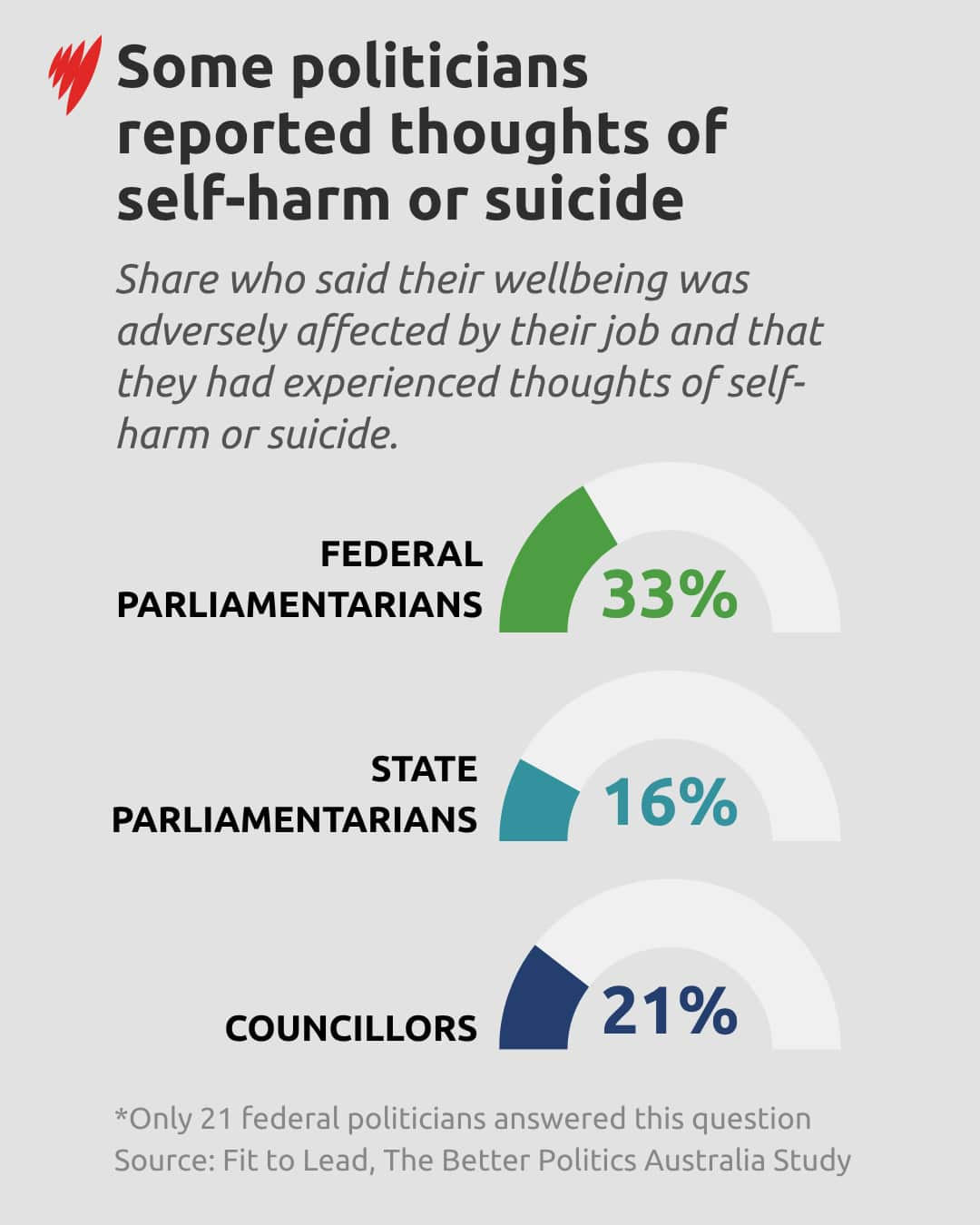
Thoughts of self-harm and suicide were also common. Among politicians who said they have been adversely affected by their job, around a fifth had thoughts of harming themselves or ending their life as a result of the job's pressures.
Among the 21 federal parliamentarians who answered this question, this number grew to 33 per cent.
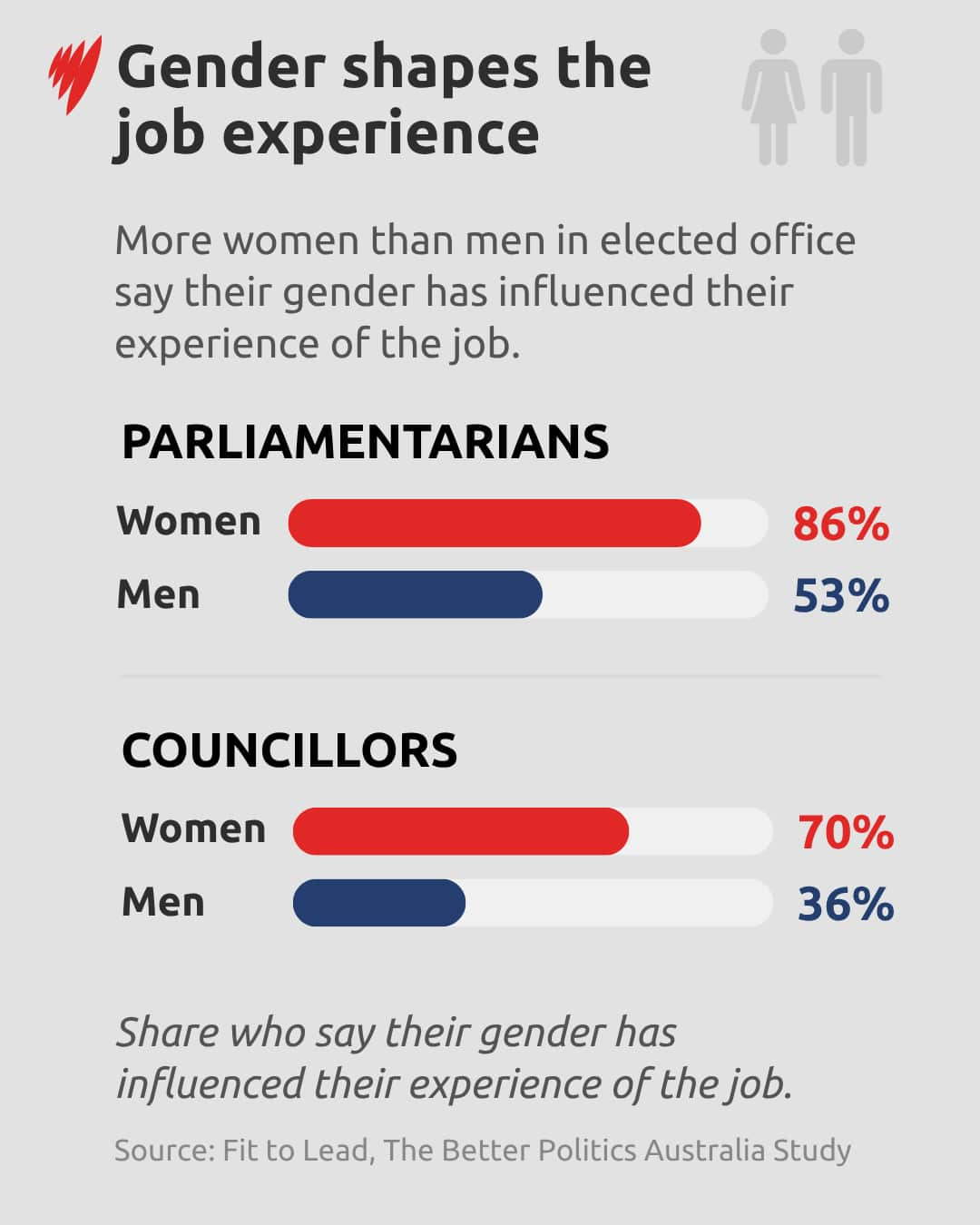
Experiences of working in politics also appear to be gendered, with 86 per cent of women parliamentarians and 70 per cent of women councillors feeling their gender has influenced their experience of the job.
By comparison, 53 per cent of male parliamentarians and 36 per cent of male councillors say the same.
Kimberly McArthur, co-CEO of the Better Politics Foundation, told SBS News she found the results "shocking but not surprising".
The foundation has conducted similar studies in the US, UK, Ireland and Germany and McArthur said she has seen similar results in those international reports.
"We work with aspiring and current leaders all over the world and we just kept hearing about the low wellbeing, the burnout, the trauma essentially that they were suffering, which was preventing them from doing the job they wanted to do," she said.
The report said the poor wellbeing of politicians is taking its toll on Australia's political system, with 39 per cent of politicians reporting the wellbeing toll has stopped them speaking out on issues they believe in.
Concerns about repercussions also effect who runs for office in Australia. According to research from the Australian National University, two-thirds of politically active Australians women and gender-diverse people rate online harassment as a barrier to running.
The report also noted that in the 2024 Victorian council elections, nearly 50 seats were filled with no contest at all.
Professor of political science from Charles Sturt University, Dominic O'Sullivan, told SBS News these issues have broad consequences for Australia's political system.
"These things can have an effect on people's willingness to serve their communities as councillors, for example, and I think that's something we should be desperately worried about," he said.
O'Sullivan said the report's findings about politicians backing down from issues shows the quality of public debate can influence the quality of decision-making in politics.
"It means the violent trolls are winning. If that's true — and it's as widespread as the report suggests — then we all have a problem because the people we elect to represent us are, in effect, saying they're too scared to do that."
McArthur said independent MP for Indi Helen Haines was one of the first politicians to enter the survey and complete an interview.
McArthur said the alleged attack on 19 October that led to her losing both her legs shone a light on the need for good mental health and safe workplaces in politics.
"I hope that if there's any good thing to come out from this awful event — and it's just so awful what happened to Helen — it's that it helps to spur even more action," she said.
"It made it very real and very visceral for a lot of people."
In a statement to the Better Politics Foundation and its partner organisations months before the attack, Haines said that while politics doesn't need to be comfortable, "we do want it to be safe".
"You shouldn't have to wear a flak jacket, emotionally or physically, to do the job."
However, despite the common toll on mental wellbeing, 85 per cent of politicians across all levels of government in the report said they would still encourage others to stand for office.
McArthur said this shows a "conflicting story" of the job being both taxing and fulfilling.
"I think [politicians] feel a sense of duty," she said. "I think there is that feeling of responsibility that Australians have and honestly, the response rate to this study is far higher than we've had in any other country, so I think there's a willingness to speak about it."
The Better Politics Foundation made a number of recommendations in the report, including reviewing policy around security for elected representatives, reviewing laws around violence, threats and harassment against elected officials and encouraging politicians to speak out by finding or building peer networks.
McArthur said there are also a number of Australian organisations trying to address politicians' safety, including Compassion in Politics.
She also suggested media could play a role in improving the standard of public debate.
"I do think there needs to be some media standards and codes that actually provide journalists with the information that they need on maybe how to report on politics, politicians, policy that gives a fair reporting of the good and the bad."
Readers seeking crisis support can ring Lifeline on 13 11 14 or text 0477 13 11 14, the Suicide Call Back Service on 1300 659 467 and Kids Helpline on 1800 55 1800 (for young people aged up to 25). More information and support with mental health is available at beyondblue.org.au and on 1300 22 4636.
Embrace Multicultural Mental Health supports people from culturally and linguistically diverse backgrounds.