The protests engulfing Europe represent a new level of popular mobilisation quite unlike any historical precedent. In France, Spain, Italy, Serbia, Germany and other countries across the continent, mass movements are challenging austerity and government failures.
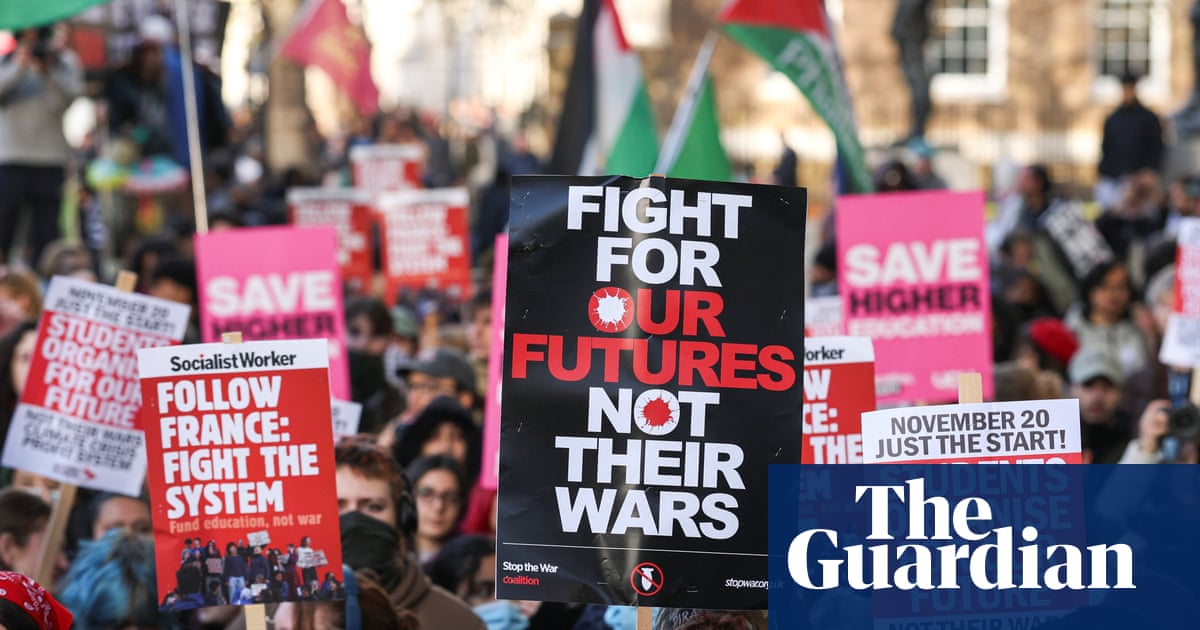
On Friday, the United Kingdom saw what is likely to be the beginning of its own wave of youth-driven demonstrations. Thousands of students walked out of hundreds of schools and universities around the country, from Aberdeen to Brighton, Swansea to Nottingham, making it one of the largest student mobilisations since the tripling of tuition fees back in 2010.
The protests were called by organisations involved in the International Conference Against War, a pan-European initiative aimed at coordinating the movements against militarism. The University and College Union (UCU) was the first union to back the initiative with a National Day of Action, urging members across the university sector to hold protests and rallies alongside students.
That major unions followed UCU in supporting the walkouts, including Unison, Unite, the National Education Union (NEU), GMB and the Educational Institute of Scotland (EIS), speaks to the potential of union support.
In London, demonstrations from universities and colleges converged on Trafalgar Square to chants of “fight for our future, not their wars” before moving to Downing Street to hear student activists and trade union leaders berate the government for prioritising defence spending over education and public services.
There is indeed much for British youth to be angry about. Like in the rest of Europe, young people in the UK are facing a convergence of high inflation, unemployment, economic stagnation, the gutting of public services and deteriorating living standards, including a housing crisis stoked by property speculation. Combined with police brutality over solidarity with Palestine, unrestrained racism and sexism and expectations of environmental and climate catastrophe, mass protest is rather predictable.
According to government estimates, close to one million people between 16 and 24 years of age are “Neets” – not in education, employment or training; this is more than 13 percent of that age group. Young people make up more than 40 percent of the unemployed in the country. Apart from a tough job market, there is also a rampant mental health epidemic and an education system that few can afford.
Here we have the makings of a social and economic crisis waiting to happen, and yet the government response has been to seek more austerity.
It is a wonder that Alan Milburn, former Labour minister responsible for introducing private finance into the NHS in the late 1990s, was commissioned to write the controversial report on Neets for the government. Why bother to provide welfare when the private sector can solve the crisis? Unsurprisingly, Milburn’s recommendations are market-focused and include cutting certain benefits for youth, including for those with disabilities.
This comes on top of years of austerity in the higher education sector. Job cuts and course closures have become standard responses from university management dealing with the lack of direct government funding. Many describe it as academic vandalism . What funding cuts have produced is extreme dysfunction, chaos and mismanagement: Faustian bargains with banks, management consultants and corporate outsourcing that serve efficiency and profit over quality provision.
While education and civilian job openings are dwindling, British youth are offered more opportunities in the army, which is now promoting a fully paid 18-month “foundation scheme”.
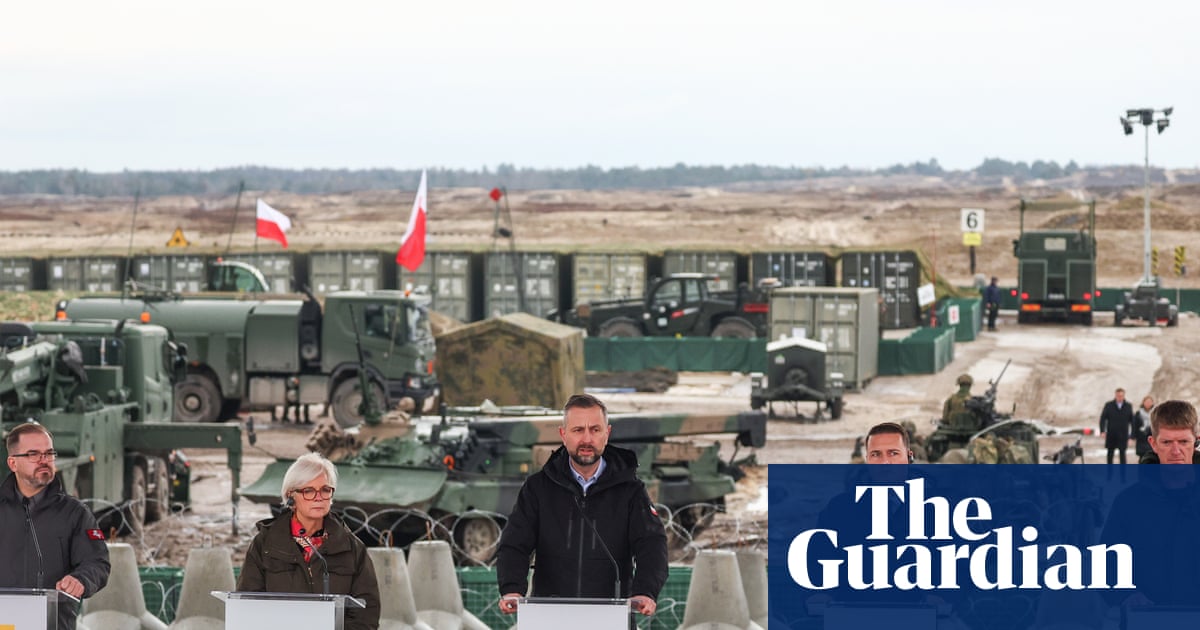
Military training, bolstered by a public campaign around “warfighting readiness” as part of last year’s Strategic Defence Review, was the brainchild of ministers under Keir Starmer, one of the most unpopular prime ministers in British history. True to form, Starmer pushed through an additional 15 billion pounds ($19.6bn) towards defence immediately before leaving office, for a total of 298 billion pounds ($389.8bn) over four years.
This is a worrying trend across Europe: While there are diminishing funds for public services, military spending is shooting up. This fact has not been lost on young people.
But what is driving this rearmament frenzy is that the European project is increasingly being bound together by NATO, along with Trump’s insistence that the EU should pay its fair share in maintaining the alliance. Support for Ukraine against Russia is at the centre of that project.
If youth mobilisation in the UK reaches the same level as in France, for example, this could be the first major test of Andy Burnham’s government. The French revolt was started over education – not the first strikes in French history over education, considering the origins of the 1968 uprisings. Still, France spends 5.1 percent of GDP on education .
The UK spends 4.1 percent of GDP on education, and even part of this budget has been diverted to defence, with less funding for schools in the coming years.
The UK has had seven prime ministers in the past decade, each one unable to deliver desperately needed income and wealth redistribution. A decade of Tory prime ministers allowed the rich to get very rich. Starmer continued the tradition. He was hammered by Reform and the Greens in the last local elections, firstly because he was unable to come through on the social democratic promises that many were hoping a Labour government would provide.
But second, he failed to recognise the genuine anger over British complicity in the Palestinian genocide, and then responded to mass protest with punitive legislation. Notwithstanding the Burnham bounce, the sitting prime minister has stuck to the same tack as his predecessor. His new foreign secretary has admitted that the government got it wrong over Palestine, but this needs to be backed up by action.
As Burnham faces growing protest, a heavy-handed approach will not work. Nor will more neoliberal reforms. A half-century of privatisation, deregulation and cuts to social welfare has produced the current malaise, and the crisis is only deepening.
The youth and the rest of European society are demanding change – real, lasting change in the political and economic spheres.
The revolutions that convulsed Europe in 1848 were a response to severe economic crisis, unemployment and bad harvests that caused famine. The European protests today unfold under comparable conditions. The task of those who want to see change is an internationalism that can generalise grievances, coordinate the movements and deliver concrete solidarity against austerity and war.
The views expressed in this article are the author’s own and do not necessarily reflect Al Jazeera’s editorial stance.