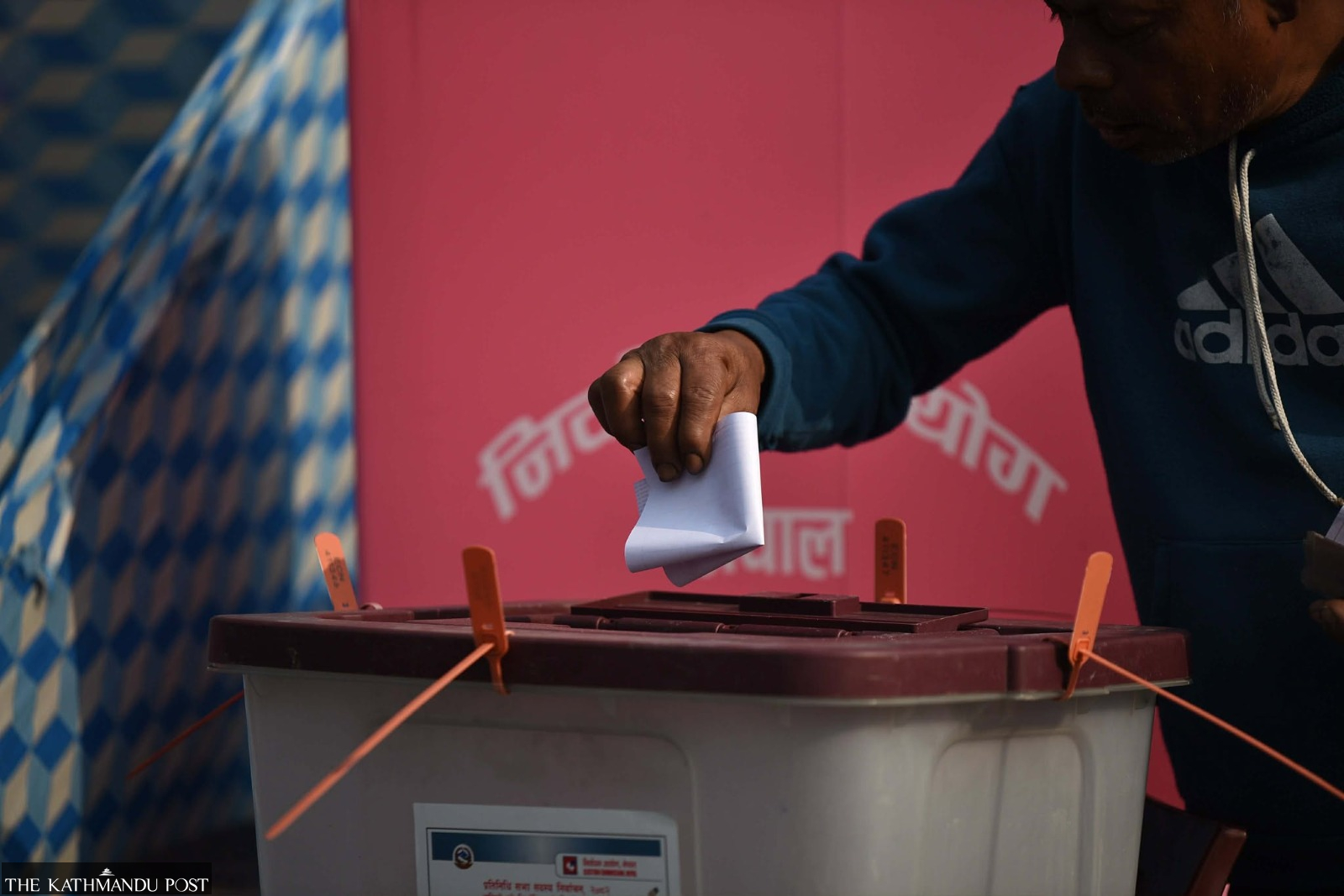
Local and provincial assembly elections could be held simultaneously next year, potentially saving public money and reducing disruption to government operations. But differences in the constitutional terms of elected representatives and provisions in existing election laws pose significant challenges for the simultaneous polls.
Former election officials say simultaneous elections are technically feasible if the government, Election Commission (EC) and political parties reach an agreement and make necessary legal changes. They argue that holding the two elections together would be more economical and administratively convenient than organising them separately.
The issue gained prominence during a meeting between the Election Commission and senior leaders of major political parties on Friday. The ruling Rastriya Swatantra Party (RSP) and the main opposition Nepali Congress both supported the idea of holding the local and provincial elections together.
The terms of elected representatives in local governments and provincial assemblies will expire six months apart next year. The terms of representatives in all 753 local governments end in May, 2027 while the terms of 550 provincial assembly members across the seven provinces expire in November, 2027.
Dinesh Thapaliya, a former chief election commissioner, said the commission had already gained experience in conducting two major elections simultaneously and could apply that experience to local and provincial polls.
“We have the experience of conducting House of Representatives and provincial assembly elections together twice,” said Thapaliya. “Therefore, holding local and provincial elections simultaneously is technically possible. It would also be appropriate.”
Some legal procedures may need to be cleared, he suggested, arguing that simultaneous elections would be a better option if there’s an agreement.
The difference in the dates is the main obstacle to holding both elections together. The constitution and existing laws prescribe five-year terms for both levels of government, but their election schedules do not match.
The last local elections were held on May 13, 2022, while provincial assembly elections were conducted on November 20 the same year alongside elections to the federal parliament.
The parliamentary and provincial assembly elections were held together also in 2017 and 2022. However, the practice was interrupted after the House was dissolved before completing its five-year term, leading to a separate election last year.
The constitutional and legal provisions governing local elections are particularly complicated. Article 225 of the constitution states that the term of a village or municipal assembly is five years from the date of election. It also requires another election to be completed within six months after the expiry of the existing assembly's term.
However, Section 3 of the Local Level Election Act, 2017 requires elections to be held two months prior to the completion of the existing assemblies' terms. This creates a potential conflict between the two provisions. While the constitutional provision allows a six-month period after the expiry of the existing term, the election law requires polls to take place before that term ends.
Even during preparations for the 2022 local elections, the timing of the polls triggered disagreements among political parties, the government and the EC. The commission had maintained that elections should be held before the expiry of local representatives’ terms in accordance with the election law.
If the local elections are postponed till November 2027 to coincide with provincial polls, the country could face another complication: local governments might remain without elected representatives for several months after their terms end.
An election commissioner said the constitutional and legal provisions could create confusion, but postponing local elections simply to align them with provincial polls should not result in a situation in which local governments are left without elected representatives.
The official said the commission had not yet had an opportunity to consult the government formally on the election schedule. Commission officials have also not held discussions with the prime minister on whether the two elections should be conducted together or separately.
“We have not had an opportunity to sit with the government and discuss the advantages, disadvantages and shortcomings of holding the elections together or separately,” the commissioner told Kantipur. “Whether the elections are held simultaneously or at different times depends on the government’s decision.”
If necessary resources are available and the 120 days stipulated by law given, the commission is ready for either scenario, the commissioner said.
The authority to announce election dates for both local governments and provincial assemblies rests with the federal government, but it must consult the EC before making a decision.
Section 4 of the Local Level Election Act states that the government shall determine the date of local elections after consulting the commission. The law also allows elections to be conducted in a single phase or in two or more phases on different dates.
The EC maintains that it is prepared to conduct local elections within the timeframe prescribed by the existing law, which requires polls two months before the completion of the assemblies’ terms.
The legal position concerning provincial elections is governed by a separate set of provisions. Article 177 of the constitution stipulates that a provincial assembly, unless dissolved earlier in accordance with the constitution, has a five-year term.
Former acting chief election commissioner Ram Prasad Bhandari also believes that simultaneous elections would be desirable and that the legal complications could be resolved through amendments. He said the difference in the expiry dates of the two elected bodies was the principal difficulty, rather than any insurmountable constitutional barrier.
Legal arrangements could be made to hold provincial elections alongside local elections, with the new provincial assembly’s term taking effect after the existing assembly’s term expires, Bhandari said. The government, the commission and political parties could work out the details through consultations and coordination.
However, bringing provincial elections forward to May or June would require careful consideration. An EC official said the federal government could not dissolve provincial assemblies before the completion of their terms. Under the constitutional arrangement, a provincial assembly can be dissolved by the provincial chief upon the recommendation of the chief minister.
This means the federal government cannot simply shorten the provincial assemblies’ terms to align their elections with local polls. Nor can the terms of elected representatives whose mandates have expired be extended without a constitutional or legal basis. The election official said these restrictions made the proposal more complicated.
“The local elections should not be postponed in a way that leaves local governments without elected representatives. We are studying the issue from every possible angle and have also heard the views of political party leaders,” the official said. “There are legal, technical and logistical complications in holding both elections together.”
Financial implications are another major consideration in favour of simultaneous elections. Conducting the two elections separately would require the state to mobilise security personnel, election officials and other resources on two occasions.
An election costs the state around Rs30 billion to Rs35 billion, including expenditure by the commission, the Nepali Army, Nepal Police, Armed Police Force and the Ministry of Home Affairs.
Thapaliya said holding both elections together would allow the government to conduct them within a single budget, reducing the burden on the treasury. A combined election would also help avoid duplication of logistical arrangements, security mobilisation and administrative preparations.
He also pointed to the wider impact of repeated elections on government functioning. When elections are conducted twice, the country can remain occupied with election-related activities for as long as nine months in a single year, including preparations and the period following the polls.
Separate election codes of conduct would also restrict regular government activities for extended periods, delaying policy decisions and development work. Thapaliya said simultaneous polls would reduce these disruptions while allowing the state to use its administrative and security resources more efficiently.
At Friday's consultation, RSP chair Rabi Lamichhane argued that conducting elections repeatedly imposed an unnecessary financial burden on the state. He also said election codes of conduct affected the government’s regular work.
Congress president Gagan Thapa also supported the proposal. During the meeting, he recalled that discussions during the drafting of the constitution had envisaged holding parliamentary and provincial assembly elections together in November-December every five years, followed by local elections in April-May.