Topic: Environmentally Sustainable Business
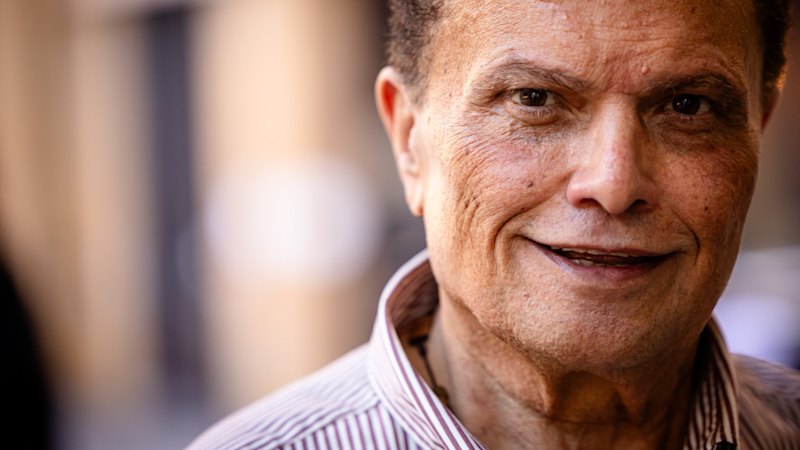
Raf Wood plans to spend another $20 million on Cobungra Station's redevelopment. ( ABC Landline: Tim Lee )
Carbon credit schemes are in the spotlight after the recent sale of two blue-chip Australian rural properties to investment companies for tree-planting ventures.
Rushy Lagoon in north-east Tasmania and Cobungra Station in Victoria's high country comprise 22,000 and 31,000 hectares, respectively.
Both sales were finalised in August.
Proponents say it is proof that Australia can and should play an important role in the emerging demand for carbon offsets.
Cobungra Station is a blue-chip cattle property. ( ABC Landline: Billy Draper )
"Globally, there's a lot of need for carbon offsets for emitters around the world," Raf Wood, co-managing director of Silva Capital, the new owner of Cobungra Station, said.
Mr Wood's company bought the Cobungra cattle property for $51 million.
The company focuses on generating high-grade carbon products through agricultural and environmental planting projects.
Tree-planting preparations have just begun on Rushy Lagoon. ( ABC Landline: Tim Lee )
Carbon market analysts have estimated there are about 3 million hectares of Australian farmland that would be suitable for such projects and capable of producing carbon credits for the Australian Carbon Credit Units (ACCUs) scheme.
Both Cobungra and Rushy Lagoon are regarded as prime agricultural assets.
Their imminent redevelopment to reap carbon credits will involve extensive tree planting across grazing and cropping land.
In both cases, news of the sales and the change in land use has sparked a public and political backlash.
Rushy Lagoon had been on the market for some time, but local Dorset Mayor Rhys Beattie said the new owners gained a financial advantage over other potential buyers.
Rhys Beattie believes Rushy Lagoon's agricultural and economic potential will be underutilised. ( ABC Landline: Tim Lee )
Of the purchase price of $142 million, $69 million came from the federal government's Clean Energy Finance Corporation (CEFC).
"Which is the Australian government and it can be spun any way you like, but the view from the taxpayer is that government money is being used to prop up an enterprise," Mr Beattie said.
Speaking for the property's new owners, the Tasmanian National Assets Trust, its national manager Jono Craven disagreed.
About half of Rushy Lagoon's area, or 11,000 hectares, is protected natural vegetation, which will be preserved and will earn some carbon credits.
That includes a 300-hectare wetland listed under the Ramsar Convention, an international treaty aimed at protecting wetlands.
The project's main carbon generator will be approximately 11 million pine trees planted across 10,000 hectares over the next five years.
The ground preparation for their planting next autumn has just begun.
At maturity in 30 years, the trees are forecast to produce 5 million tonnes of high-grade construction timber.
Jono Craven in a field of potatoes. He says the forestry plan will exclude the best cropping land. ( ABC Landline: Tim Lee )
"There's absolutely a deficit now and looming for Australia," Mr Craven said.
Rushy Lagoon's other partners are global asset manager Aviva Investors and UK-based forestry and investment company Gresham House.
With some $12.5 billion worth of assets under management, it is the world's third-largest forestry manager.
But there are community concerns about the arrival of the corporates chasing the carbon market.
Cattle on Rushy Lagoon. ( ABC Landline: Tim Lee )
Those fears include fewer livestock and crops, fewer local jobs, more bushfire risks and bigger problems with pest plants and animals.
Mr Wood said those concerns were unwarranted.
"In fact, with fire being the key risk to our carbon sequestration with the trees burning, we've got to manage that with more gusto than your average farmer might."
Mr Wood added that while Silva Capital's plans for Cobungra included tree planting across about 3,500 hectares, it would not resemble conventional plantations.
"It's our intent to plant an open woodland. To get it back to what it was when it was first opened up before it was cleared," Mr Wood said.
Overseeing the redevelopment is Justin Glass, whose company specialises in carbon projects and land restoration.
Justin Glass believes carbon projects can bolster, not harm, farm productivity. ( ABC Landline: Tim Lee )
He wanted to achieve what he saw as a perfect ratio of trees to pasture that protected the ground from extremes of heat and cold.
Mr Glass believed the carbon market could give Australian farmers a new income stream that could fund environmental restoration on their farms and make them more productive and profitable.
"That bringing together of cows and carbon. I can see the opportunity that this presents to create a better Australia and a better world."
Watch ABC TV's Landline at 12:30pm AEST on Sunday or stream anytime on ABC iview .