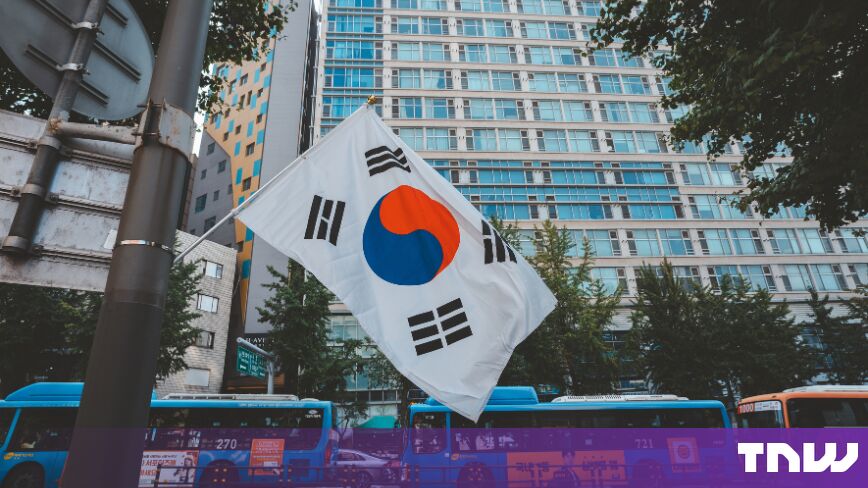
South Korea has cut household food waste going to landfill from 97% to almost nothing. New York City has started sending its scraps the same way.
On a Saturday afternoon in Yeouido, Seoul, South Korea, Seunghwan Hong collects the week's vegetable trimmings, leftover rice and fruit peel, and heads downstairs to the food waste disposal unit in his apartment complex. He taps his card on the scanner, the lid pops up, the weight of the scraps is displayed, and a charge is added to his household account.
The transaction takes less than a minute. But behind it lies one of the most ambitious waste management experiments in the world.
South Korea has gone further than any other country in committing to solve the problem of household food waste. Today, New York is taking its first steps toward replicating its success.
Food waste is an almost universal problem in developed countries. In the US, a family of four wastes around $56 a week (£42) in discarded food. Globally, more than a billion tonnes of food is wasted each year, making up 10% of the world's climate-warming emissions.
South Korea's answer was sparked by a waste crisis driven by rapid urbanisation in the 20th Century. Landfill and sanitation issues abounded where food scraps were discarded with general waste.
The cumulative effect of the changes to the country's food waste management since the 1990s (see below) has been remarkable: South Korea's food waste recycling rate rose from just 2.6% in 1996 to nearly 97% in 2023 .
How South Korea got to almost-zero food waste
In 1995 , the South Korean government introduces a volume-based waste fee
In 1997 , food waste separation is made mandatory
In 2005 , the government bans food waste from landfill altogether
In 2010 , a pilot programme introduces smart bins
In 2013 , the government prohibits dumping food waste leachate (the liquid released from food scraps) into the ocean
One of the most visible changes to residents has been the smart bins, like the one Hong uses for his weekly scraps, enabled with RFID (radio-frequency identification) scanners. Government figures for 2025 show 151,934 smart bins in use across the country, serving over 8.61 million households .
"Seeing the weight and the cost of my food waste made me more aware of how much I am throwing away," says Hong.
Not only does this cut emissions from household food going to landfill, but these scraps can become a source of energy and reduce the need for fossil fuels.
Hong's food scraps, and those of millions like him, are among those that reach an energy facility that turns the waste into power.
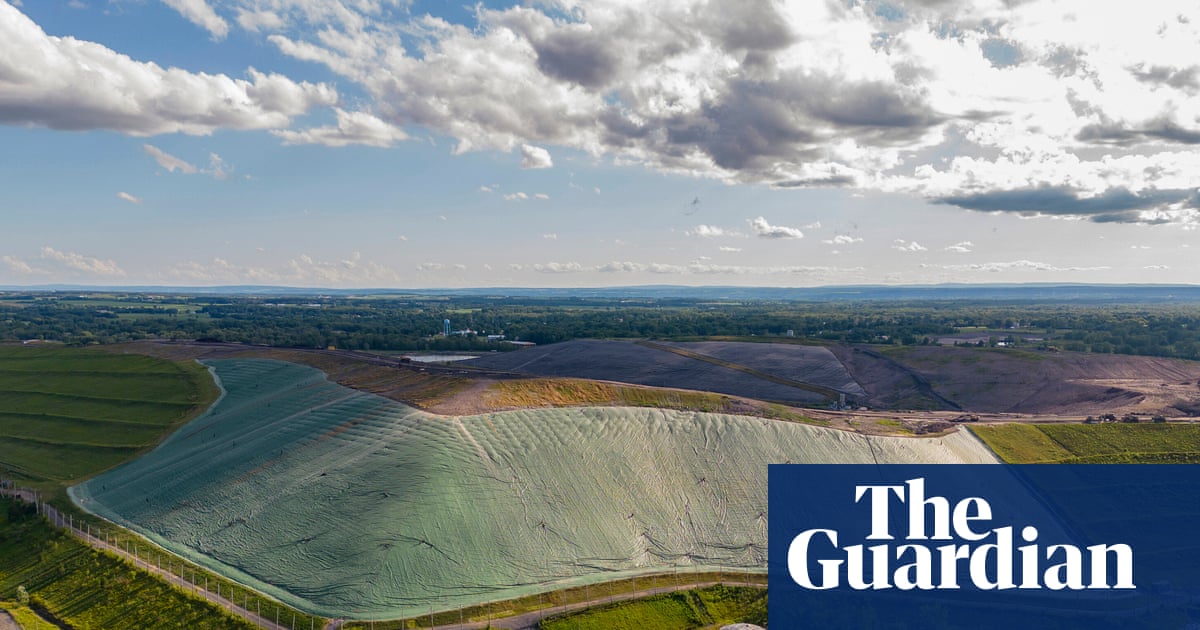
It's a more climate-friendly answer than landfill. When organic waste is buried in landfill, it breaks down without oxygen and releases methane, a greenhouse gas that has more than 80 times the heat-trapping potency of carbon dioxide over a 20-year period. The waste also releases leachate – a dark, noxious liquid that can percolate through soil and contaminate groundwater.
When food waste is sent to a bioreactor, this methane can be collected and burned as fuel instead. Climate-warming carbon dioxide is produced as a result, but the potent methane is prevented from being released into the atmosphere.
The Daejeon Bio Energy Centre in central South Korea recycles 70-75% of what it receives into energy. It produces enough electricity to meet the daily needs of approximately 6,000 South Korean households, and there are more than 340 facilities like it across South Korea .
The energy produced from the plants reduces the need for fossil fuels. In 2024, the government aimed to displace fossil fuels valued at roughly 230 billion Korean won ($170m/£126m) by 2026.
Challenges remain. The cost of running the system is considerable. Despite household fees contributing to running costs, the government spends more than 600 billion Korean won ($430m/£319m) on managing municipal waste, including food waste.
"South Korea has made significant progress in food waste recycling, but we're now at a turning point, with new technologies and policies helping to take this progress even further," says Munsol Ju, a senior research fellow at the Korea Environment Institute.
New York City made food waste separation mandatory for residents in October 2024, citing South Korea as a model. Residents are required to separate food scraps into a designated bin or a labelled container with a secure lid, set out for curbside collection alongside recycling. The programme covers nearly 3.4 million households, making it the largest organics recovery effort in the United States . But compliance has been challenging, with many residents not consistently separating food waste.
Getting residents on board has been a considerable effort. The NYC Department of Sanitation carried out more than 60,000 conversations with residents in a recent door-to-door campaign across all five boroughs. Enforcement has been active too: the department has issued over 63,000 notices of violation to households failing to comply since the programme launched.
In addition to the mandatory curbside composting programme, New York City has placed more than 400 smart composting bins across the five boroughs to make food composting more accessible. Unlike the designated bins collected weekly from homes, these solar-powered bins are accessible around the clock via mobile app and free to use.
"I love having these bins because it makes composting a lot more convenient," says Grace Fu, a resident of East Village, Manhattan.
The bins do come with practical challenges. "They have attracted so many rodents near our apartment that we had to move ours inside the building," Fu says. "More frequent clean-outs would help."
In 2025, New York City Department of Sanitation managed around 140,000 tonnes of the city's residential organic waste – roughly 9% of the approximately 1.5 million tonnes generated by households annually. That is a significant uptick on previous years, but still a long way off South Korea's 97%.
Once collected, household food waste is sent to one of two destinations, depending on the district: some goes to the Staten Island Compost Facility to become fertiliser, while the rest is co-digested with sewage sludge at the Newtown Creek Wastewater Resource Recovery Facility in Brooklyn to produce biogas and biosolids.
As about 70% of New Yorkers live in apartments, the South Korean approach has potential, says Steven Cohen, director of the Sustainability Management programme at Columbia Climate School.
"South Korea's RFID bins could make each resident directly accountable for their own organic waste," says Cohen. "In a circular economy, organic waste needs to be separated, recycled and reused as energy."
• Eat the peel: Why you might be throwing away the best part of your fruit
• How to make fruit and veg last longer
New York still has an extremely long way to go. "The problem is that most people in this city still don't separate their organic waste properly," Cohen says, adding better education on why food waste recycling matters would boost participation, as could incentives.
Back in Yeouido, Seoul, Hong picks up his empty food waste bin and heads back upstairs to his apartment. The screen on the disposal unit has already gone dark. It's a chore that has simply become a part of life.
"Food waste is a collective responsibility," Hong says.
For essential climate news and hopeful developments to your inbox, sign up to the Future Earth newsletter, while The Essential List delivers a handpicked selection of features and insights twice a week.
For more science, technology, environment and health stories from the BBC, follow us on Facebook and Instagram .