T hey beat the All Blacks for the first time in 73 years and they make four changes. The Wales coaching team could barely have shrugged their shoulders with any more nonchalance after what the rest of us thought was a pretty spectacular achievement last weekend if they had picked their under-20s for Saturday night’s follow-up against Australia in Cardiff. But, no, they are actually adding depth as well as quality to this new generation tasked with keeping the creaking structures of Welsh rugby upright for the foreseeable.
If anything, the changes make the team stronger. No matter they are without Adam Beard (shoulder injury but hopefully back for the finals next weekend), they see fit to drop/rest/let-attend-birth-of-first-child three other players too, including the player of the match last weekend.
James Botham may have claimed that gong with something in the region of 30 tackles, but Steve Tandy, Wales’s head coach, insists he would not have played on Saturday, even if his partner were not due (yes, a great-grandchild is on the way for Botham Sr). That is because his replacement, Alex Mann, has been a mainstay in the back row for Tandy.
Alongside him, Aaron Wainwright has been a mainstay since long before Tandy arrived. Now ripping up trees at Leicester, the No 8 comes in for Taine Basham. However heroic the departing players last weekend, Wales are in no way weakened by their replacements. The same applies to the one change in the back division, where Josh Adams, all 74 caps of him, returns to replace Gabriel Hamer-Webb.
In the engine room Beard is replaced by Ben Carter, who may not have quite the former’s experience but is well integrated into the setup. On the bench, Taine Plumtree, a replacement last weekend, covers the second row.
Tandy, who this week confessed to being more of an “Atari man” than one for Grand Theft Auto VI , has remained unruffled and serious throughout the wild fluctuations of the past year or so, since he took over. To make these changes represents good practice, despite the hysteria billowing around his nation , not to mention the wider world.
“We made nearly 350 tackles,” he said. “The ball-in-play time was one of the highest in Test rugby in the last three years. But the plan was always to freshen up.”
Tackle statistics should be treated with caution, given the different ways in which they can be counted, but it is claimed that last weekend Wales broke the record for most tackles by a team in a Test match. The Nations Championship website credits them with 348 against New Zealand. Dafydd Jenkins alone made 38 of them, a statistic that, if we could all agree on what defines a tackle, matches the oft-quoted count achieved by Thierry Dusautoir in the same stadium against the same opponents 19 years earlier, when France recorded an equally famous win over the All Blacks in the 2007 World Cup quarter-final.
But enough of such earthy, bloody yeomanry, Wales has been set alight by the heroics of its rugby players, so recently humiliated in a terrible run of results since the 2023 World Cup, when the last of a golden generation took its leave. That there were 20,000 empty seats in their world-famous stadium for the visit of the All Blacks shows just how far Welsh enthusiasm for its rugby had fallen – and the degree to which their chances of avoiding a 35th consecutive defeat by the All Blacks had been written off.
At time of writing there are still tickets left for Saturday night, but the Welsh Rugby Union is reporting an unsurprising surge in sales this week. More than 60,000 have been sold.
And yet, for all the excitement, those cold arbiters of the status quo, the bookies, remain unmoved. Wales are underdogs for this match too, available at nearly 2-1, which equates to a five-point handicap in their favour. World Rugby is not exactly cock-a-hoop either, its ranking system allowing Wales a measly improvement of one place, leap-frogging Fiji into ninth, still two places adrift of their visitors on Saturday.
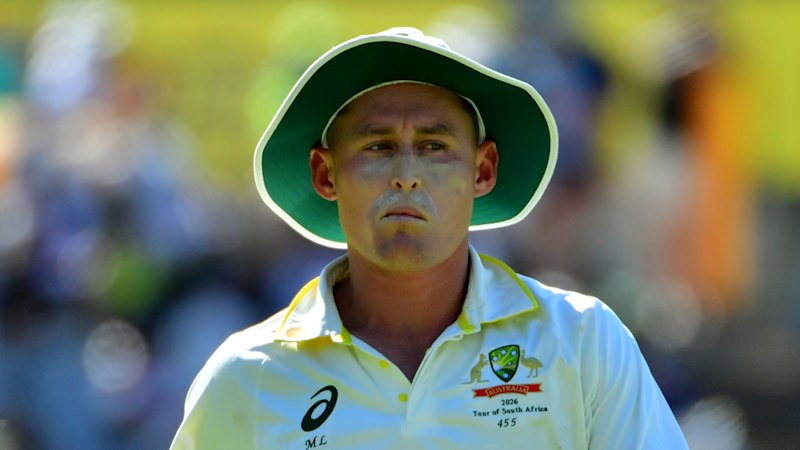
The Wallabies are hardly rolling into town in a blaze of glory. After their chastening experience in Edinburgh on Sunday , hard on the heels of borderline humiliation at Twickenham the weekend before , they have their own reasons to fear the future – all the more so as hosts of next year’s World Cup.
They make five changes to the team that lost to Scotland, all in the forwards. A new front row is swapped in, with a further change in each of the rows behind. Tom Hooper, the Exeter flanker, comes into the second, where he will link arms with one of Australian rugby’s reasons for hope, Josh Canham.
Wales know only too keenly how quickly euphoria can turn to flop in sport, in rugby particularly. When the kind of emotion stirred by a Welsh revival from the seeming dead is involved, that danger becomes acute. Tandy has the air of a man who knows this. A back-up win against opposition who do not conjure awe like the All Blacks would suggest progress indeed.