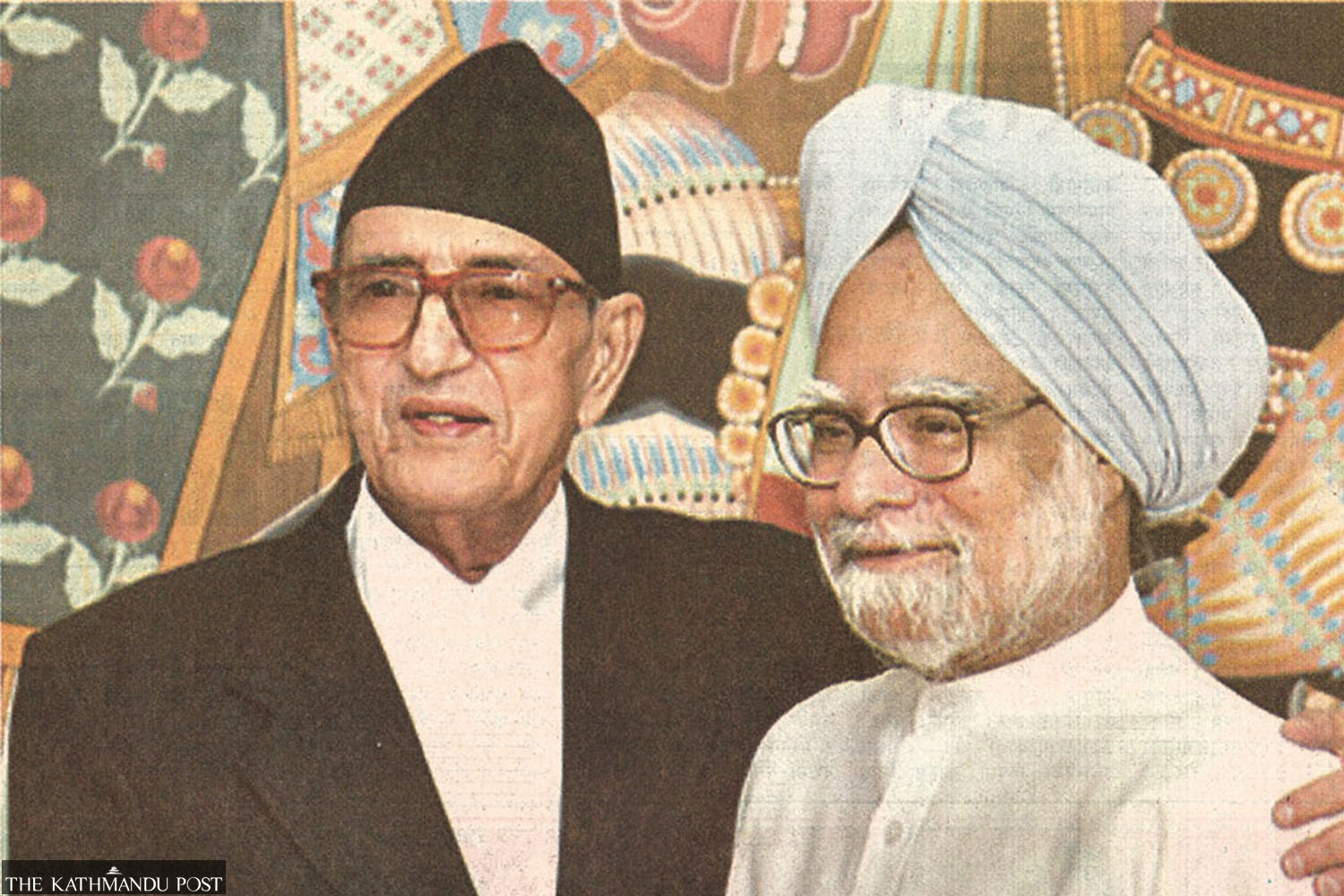
Nineteen Nepali prime ministers have travelled to New Delhi since the restoration of multiparty democracy in 1990. Yet many have returned with similar assurances—discussions on the 1950 Treaty of Peace and Friendship would continue, the boundary dispute would be addressed, and the detailed project report (DPR) of the Pancheshwar Multipurpose Project would be completed soon.
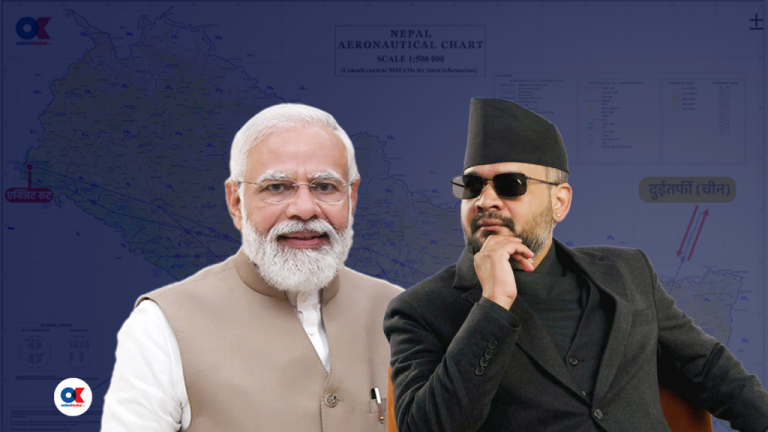
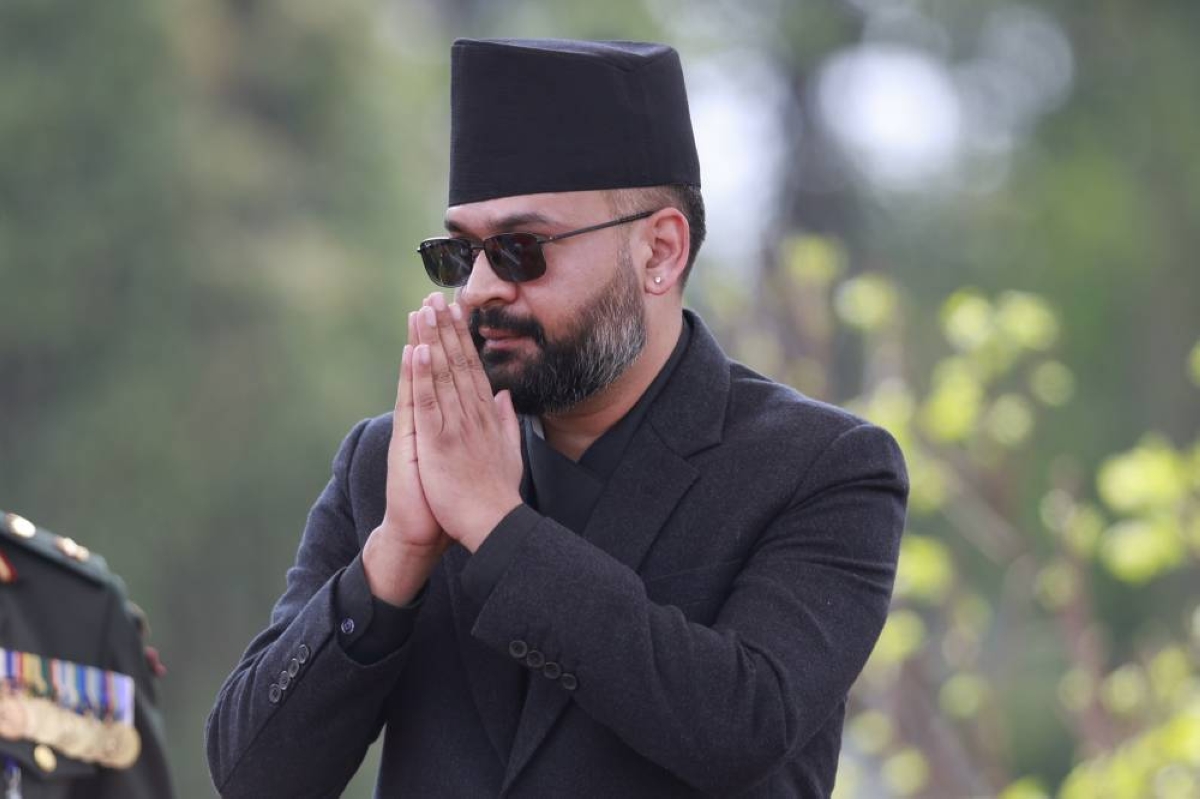
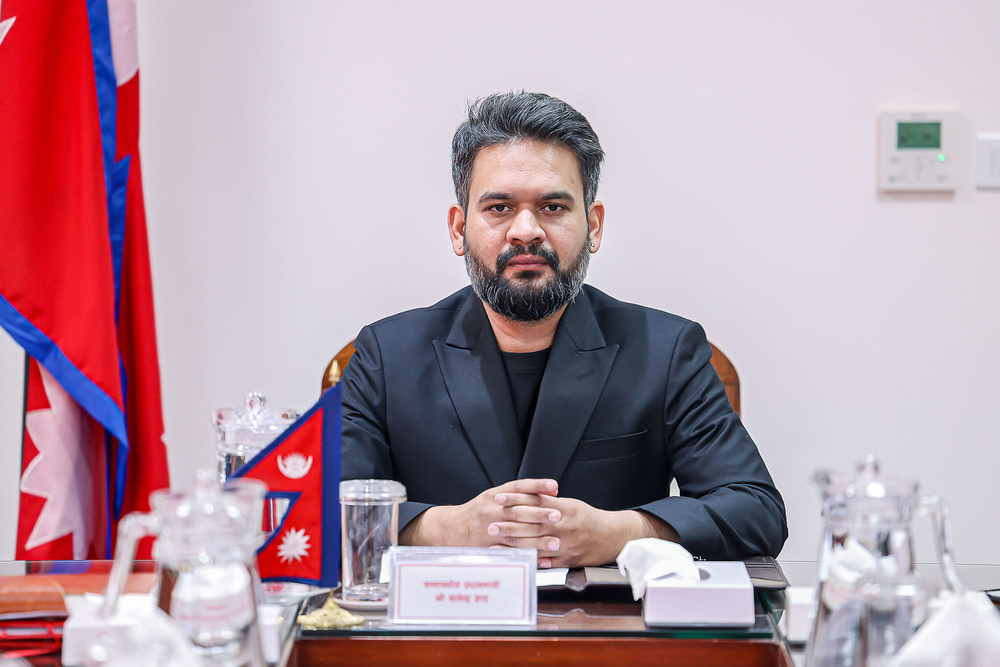
More than three decades later, these commitments remain largely unfulfilled. Prime Minister Balendra Shah, who is preparing for his first official bilateral visit to India, will now have to navigate the same longstanding issues while seeking fresh agreements on economic cooperation, energy, trade, and connectivity.
Shah is scheduled to fly to Delhi on November 22 and meet his Indian counterpart Narendra Modi the next day. Although several agreements and development initiatives are expected, the history of previous visits suggests that securing political commitments is considerably easier than ensuring their implementation.
The pattern has been consistent. Smaller projects involving education, health, sports, connectivity, and people-to-people relations often receive immediate attention and result in agreements. However, politically sensitive and strategically important matters are generally referred to ministerial, secretarial, or bilateral mechanisms, where progress has remained slow.
Former Foreign Minister Pradeep Gyawali says India has not been sufficiently positive or cooperative on several sensitive issues concerning Nepal.
He says that while Indian officials listen to Nepal’s concerns and acknowledge them, significant challenges remain in translating those acknowledgements into action. These issues include the border dispute, the 1950 Treaty, the utilisation of Nepal’s water resources and the trade treaty.
“There is a huge gap between commitments and implementation,” Gyawali says. “In some cases, there are no commitments at all. Our experience so far suggests that India has been neither cooperative nor forthcoming on issues of serious concern to Nepal, nor has it shown a willingness to resolve them.”
The priorities of successive governments have changed with Nepal's political circumstances. After the restoration of multiparty democracy, the focus was on normalising relations, negotiating new treaties, and resolving flooding problems. During the Maoist insurgency, Kathmandu sought India's security cooperation. Following the 2006 people's movement, peace negotiations and constitution-making became priorities. In recent years, economic development, energy, trade, and connectivity have dominated bilateral discussions.
Nevertheless, issues concerning the boundary, the 1950 treaty, and water resources have remained unresolved.
Former prime minister Baburam Bhattarai believes Nepal and India should address their outstanding problems comprehensively rather than treating them as separate issues. In a recent interview with Kantipur, he said Nepal's dependence on India would not change unless the 1950 treaty was revised and the longstanding problems were addressed together.
He argued that India should agree to update the treaty to reflect contemporary realities. Bhattarai said he had proposed the Eminent Persons' Group (EPG) to facilitate comprehensive discussions covering the treaty, border disputes, trade, transit, water resources, security and strategic interests. “I still believe that this was the right initiative,” he said, adding that India had shown reluctance to address Nepal's concerns regarding the treaty, boundary and other sensitive matters. The EPG, formed in 2016, was a joint Nepal-India panel mandated to review bilateral relations and treaties. It finalised its report in July 2018, but India has remained reluctant to receive the report. The report, among other things, advises replacing the 1950 treaty.
Lok Raj Baral, a former Nepali ambassador to India, attributes the lack of progress to mutual suspicion and a persistent deficit of trust.
“We have a mindset that India will cheat us and that Nepali prime ministers go there and betray the country. We tend to engage in performative diplomacy. We create noise and stage demonstrations before sitting down for talks. We spoil the atmosphere even before diplomacy begins,” he said.
India, being the larger country and having its interests served by the existing situation, does not feel sufficient pressure to prioritise Nepal's concerns, Baral added. Nepal's domestic political environment, where leaders are frequently accused of compromising national interests, has also made constructive negotiations difficult, he said.
Before the EPG was formed, the 1950 treaty and border disputes regularly featured in joint statements following prime ministerial visits. In recent years, neither the report nor these longstanding concerns have received meaningful attention.
The first visit after the restoration of multiparty democracy was made by interim prime minister Krishna Prasad Bhattarai in May 1990. Nepal was emerging from the Panchayat era, while relations with India were strained by a trade blockade, the expiry of trade and transit arrangements and Nepal's purchase of weapons from China.
Bhattarai travelled to New Delhi to normalise relations. He returned with agreements to ease fuel supplies and reopen 13 border points. At a joint press conference, Indian Prime Minister VP Singh declared, “We have now fully normalised our relations.”
However, the optimism did not last.
Girija Prasad Koirala, the first elected prime minister after the political change, visited India in November 1991. The two countries signed separate trade and transit treaties and reached understandings on the Karnali, Pancheshwar, and Koshi projects.
But the disclosure of an understanding concerning the Tanakpur barrage overshadowed the visit. Koirala maintained that he had signed an understanding rather than a treaty. The matter reached the Supreme Court, which ruled that it constituted a treaty. The controversy subsequently affected Nepal-India relations.
When Manmohan Adhikari visited India in 1995, the joint statement did not mention Tanakpur. It merely agreed to continue discussions on the 1950 treaty.
Sher Bahadur Deuba's first visit as prime minister in 1996 resulted in the signing of the Mahakali Treaty and an electricity trade agreement. He also raised the need to revise the 1950 treaty, resolve the Bhutanese refugee problem, and reduce the growing trade imbalance.
Koirala returned to India in 2000 on a goodwill visit. He raised the presence of Indian security personnel in Kalapani and the flooding of villages in Banke caused by the Laxmanpur barrage. India did not agree to withdraw its troops. Instead, the joint statement called for the boundary committee to complete its investigation promptly and assigned foreign secretaries the responsibility of reviewing the 1950 treaty.
India acknowledged the damage caused by the barrage and promised measures to control flooding. However, the Bhutanese refugee issue remained unaddressed.
As the Maoist insurgency intensified, security cooperation became a major subject of successive visits.
Deuba travelled to India again in March 2002, seeking assistance to prevent Maoist rebels from using Indian territory. India promised cooperation. The Mahakali Treaty, Kalapani dispute, and the 1950 treaty were also discussed, but no concrete decisions were reached at the prime ministerial level.
Prime Minister Surya Bahadur Thapa visited New Delhi in December 2003 as SAARC chairman. Indian Prime Minister Atal Bihari Vajpayee advised Nepal's monarchy and political parties to demonstrate flexibility in resolving the political crisis in Nepal.
Deuba made another visit in September 2004, when the House of Representatives had been dissolved and the Maoist insurgency was growing. He sought India's assistance in addressing the conflict. However, New Delhi made clear that the problem could not be resolved through military means alone.
He also raised revision of the 1950 treaty, faster boundary demarcation, flood control, proper implementation of trade agreements and additional port facilities in Mumbai. Neither the treaty nor Pancheshwar made substantial progress.
After the 2006 people's movement forced King Gyanendra to relinquish power, Koirala became prime minister for a third time and visited India in May that year.
Indian Prime Minister Manmohan Singh welcomed him at the airport, describing him as ‘a great leader of South Asia’. The visit focused primarily on immediate assistance rather than longstanding disputes.
India announced a concessional loan of $100 million for infrastructure development and increased its annual Nepal assistance budget from 650 million to 1.5 billion Indian rupees. It also agreed to support Nepal's bid for a non-permanent seat on the United Nations Security Council.
When Maoist leader Pushpa Kamal Dahal became prime minister following the declaration of a republic, he visited India in 2008. Before his departure, the Cabinet had decided that no treaty or agreement would be signed during the visit.
The joint statement proposed establishing a foreign secretary-level mechanism to review the 1950 treaty and other agreements. Although Pancheshwar was discussed, it did not feature in the statement. India announced IRs200 million in relief and rehabilitation assistance after devastating floods in the Koshi basin.
Prime Minister Madhav Kumar Nepal's 2009 visit secured Nepal's access to Visakhapatnam port and an understanding on a revised version of the 1996 trade treaty.
Baburam Bhattarai's 2011 visit produced two important outcomes: the signing of the Bilateral Investment Promotion and Protection Agreement (BIPPA) and an agreement in principle to set up the EPG. Bhattarai subsequently explained that the initiative was conceived because traditional diplomatic approaches had failed to resolve difficult bilateral issues.
During Sushil Koirala's visit in May 2014 to attend Modi's swearing-in ceremony, Nepal sought India's support for accelerating infrastructure development. Koirala highlighted the postal highway, Kathmandu-Tarai fast track, and flood control. Modi promised India would provide assistance once Nepal presented concrete plans.
But relations took a sharp turn for the worse after Nepal promulgated its constitution in September 2015, despite India’s calls to delay its promulgation. India imposed an economic blockade. KP Sharma Oli refused to visit New Delhi until the blockade was lifted. He eventually travelled in February 2016, with normalising relations as his principal objective.
Modi described Nepal's constitution as an ‘important achievement’, but the two sides failed to agree on including the remark in a joint statement. Consequently, no joint communiqué was issued.
Dahal's goodwill visit in 2016 focused on implementing previous agreements and securing Indian endorsement of the constitution. However, India was unwilling to do so. The 1950 treaty and border disputes received less attention because they were supposed to be addressed through the EPG.
Deuba's 2017 visit brought Modi's expression of confidence in the successful implementation of Nepal's constitution. However, Deuba faced criticism after discussing constitutional amendments while in India. The joint statement also instructed officials to complete the Pancheshwar DPR within a month.
Oli returned to India in March 2018 with a strong electoral mandate, declaring that his objective was to establish relations between the neighbours on an equal footing. The two countries reached understandings on a railway connecting Raxaul with Kathmandu and cooperation on inland waterways. Claiming the visit had been successful, Oli remarked, “The pictures speak for themselves.”
Deuba's goodwill visit in March 2022 produced neither a joint statement nor progress on major disputes. He raised the boundary issue, but Modi did not publicly respond. The EPG report was not even discussed.
Dahal's June 2023 visit produced more tangible outcomes, particularly in the energy sector. India announced plans to purchase 10,000 megawatts of electricity from Nepal over 10 years. The two countries also opened the way for electricity exports to Bangladesh through Indian territory, agreed to provide access to waterways under transit arrangements and advanced cross-border digital payment cooperation.
However, Nepal's requests for additional air-entry routes through Bhairahawa, Nepalgunj, and Mahendranagar remained unresolved. The EPG report and recruitment of Nepali youths into the Indian Army under India's Agnipath scheme were not discussed.
“The EPG issue did not come up at all, and we did not try to spoil the atmosphere by raising it,” Dahal told journalists then. The Pancheshwar DPR was again promised within three months, but the commitment remained unfulfilled.
Prime Minister Shah's upcoming visit comes against this historical backdrop. Nepal is seeking more than $2 billion in Indian assistance for reconstruction following the August 26 Bhotekoshi catastrophe. Its proposal includes $1 billion in concessional loans, $500 million in grants and another $500 million for reconstruction and rehabilitation.
Additional air-entry routes, progress on Pancheshwar and discussions on boundary disputes involving Kalapani, Limpiyadhura, and Susta are also among Kathmandu's priorities.
Air connectivity could produce a relatively immediate outcome. Nepal has sought additional entry routes through Indian airspace since 2014 to improve international operations at Bhairahawa and Pokhara airports. Indian officials have recently responded positively to Nepal's request for a route through Mahendranagar, although technical details remain to be settled.
Baral, however, remains sceptical about progress on difficult bilateral matters. He believes insufficient preparation before the visit could limit its outcomes.
“The issues may be raised, but they may not be settled,” said Baral. India might agree to provide an air route through Bhairahawa, while referring other matters to foreign secretary-level discussions.
“Pancheshwar requires a great deal of preparation. Otherwise, it will not move. It may be written into the communiqué, but implementation will not follow,” said Baral.
Dahal coordinates the opinion desk at Kantipur Daily. He has a keen interest in political history and parliamentary traditions.