Trending
Prev Story
Next Story

NASA's new Moon plans have a problem: Orion wasn't designed to fly this way

Ars Technica •
November 19, 2026 • 01:40 PM
2
2 reads 0 reactions

We also have a responsibility to not go too fast and cut too many corners."

NASA's new Moon plans have a problem: Orion wasn't designed to fly this way

NASA recently announced a significant shakeup to the Artemis program that will land humans on the Moon.

The moves were designed to give the agency’s lunar lander providers—SpaceX with its Starship vehicle, and Blue Origin with Blue Moon—more flexibility in reaching the Moon. For Starship, this means docking with Orion in Earth orbit, and then traveling to the Moon in tandem. For Blue Moon, it shifts the rendezvous with Orion all the way to low-lunar orbit.

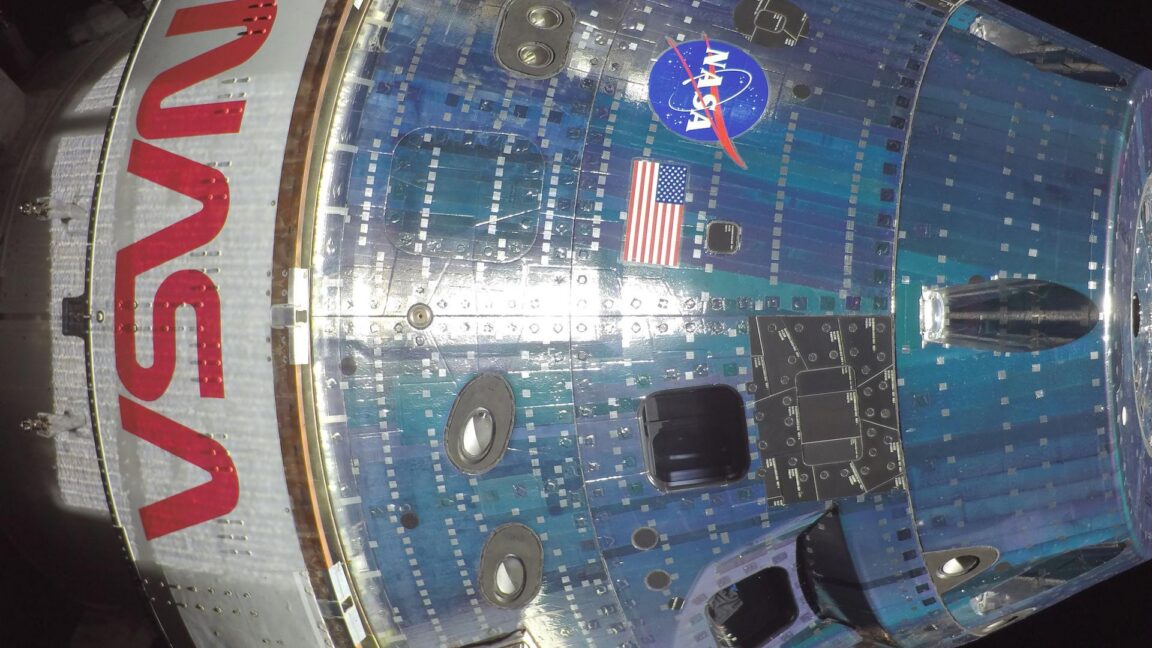
These changes benefit the lunar landers, but in turn impose more of a burden on the Orion spacecraft, which is built for NASA by Lockheed Martin. To understand the implications for the spacecraft, Ars spoke with Kirk Shireman, Human Spaceflight Exploration and Orion program manager at Lockheed.

For Starship, the evolved plan has SpaceX fueling a Starship lunar lander in low-Earth orbit before docking with Orion in high-Earth orbit. The crew will fly to the Moon on board Orion before two of the four astronauts transfer into Starship for a landing on the Moon.

Due to the docking configuration with Starship, Orion must now fly backward to the Moon, with its Service Module at the top of the stack. This is a fundamentally different flying posture than Orion was designed for, Shireman said, and creates issues for Orion’s propulsion system.

As a result, the Service Module, which is provided by the European Space Agency, will require modifications to its propellant tanks. This is because liquid propellant would move toward the gas inlet side of the tanks, rather than settling in the direction expected during normal operation.

“When you push it the other way, the liquid goes to the gas end of the tank, and you don’t want the liquid in the gas part,” Shireman said. “Bad things can happen to you.” To address this, he said, the European Space Agency and its main contractor, Airbus, are modifying the vehicle’s tanks for Starship lunar missions.


Prev Swipe Story Next

Same Story from Other Publications

Compare how 6 other independent news outlets reported on this story.

6 Publications
NPR News
6d ago
Fill in the blank in the quiz: NASA will pay astronauts $___ to live on the moon

Fill in the blank in the quiz: NASA will pay astronauts $___ to live on the moon

Plus: Have you been following news about cars and Pete Hegseth this week?

#nasa #moon
Compare →
The Age
5h ago
The physics behind Sandpapergate, according to a NASA expert in aerodynamics

The physics behind Sandpapergate, according to a NASA expert in aerodynamics

When former Test batsman Cameron Bancroft took sandpaper to the field in Cape Town, there was science behind the decision.

Al Jazeera English
14h ago
NASA’s Voyager 1 hits record one light-day distance, 50 years after launch

NASA’s Voyager 1 hits record one light-day distance, 50 years after launch

Voyager 1 reaches one light-day from Earth, marking a historic milestone nearly 50 years after its 1977 launch.

The Verge
1d ago
NASA’s Voyager 1 probe is now one light-day away

NASA’s Voyager 1 probe is now one light-day away

It’s taken Voyager 1 almost 50 years to journey further from Earth than light can travel in 24 hours.

The Guardian
1d ago
After 49 years, Nasa’s Voyager 1 is one light-day away from us. Can we save this ‘pale blue dot’? |

After 49 years, Nasa’s Voyager 1 is one light-day away from us. Can we save this ‘pale blue dot’? |

Since the spacecraft’s 1977 launch, our wonderful and terrible species has done great damage to our planet. Voyager has offered us a clear view of ourselves

ABC News Australia
1d ago
NASA's Voyager 1 probe to reach historic light-day milestone today

NASA's Voyager 1 probe to reach historic light-day milestone today

Later today, Voyager 1 will have travelled more than 26 billion kilometres, one light-day away from Earth. It is the first human-made object to achieve such a milestone.

Related Stories

Science & Climate
Build #2612