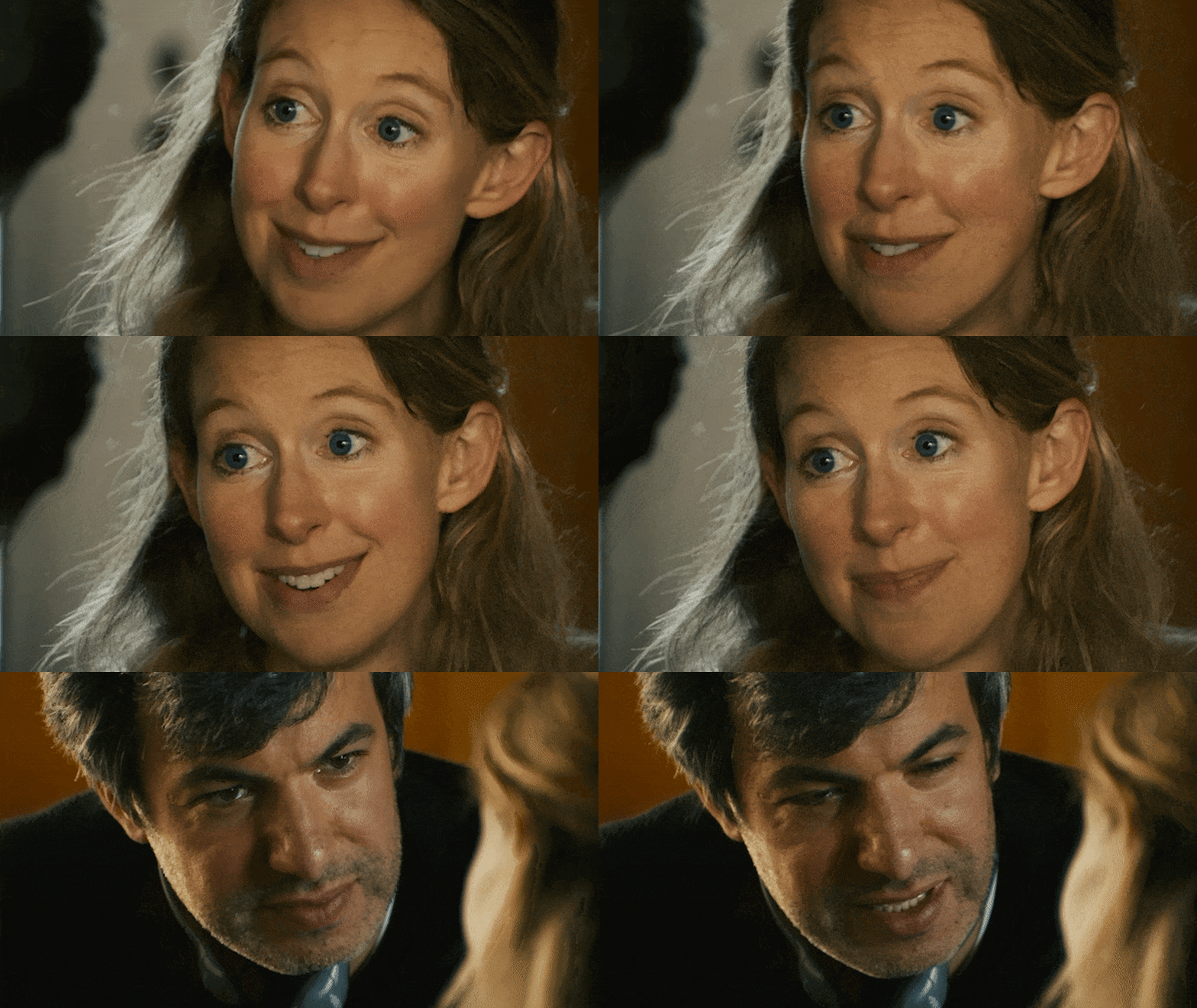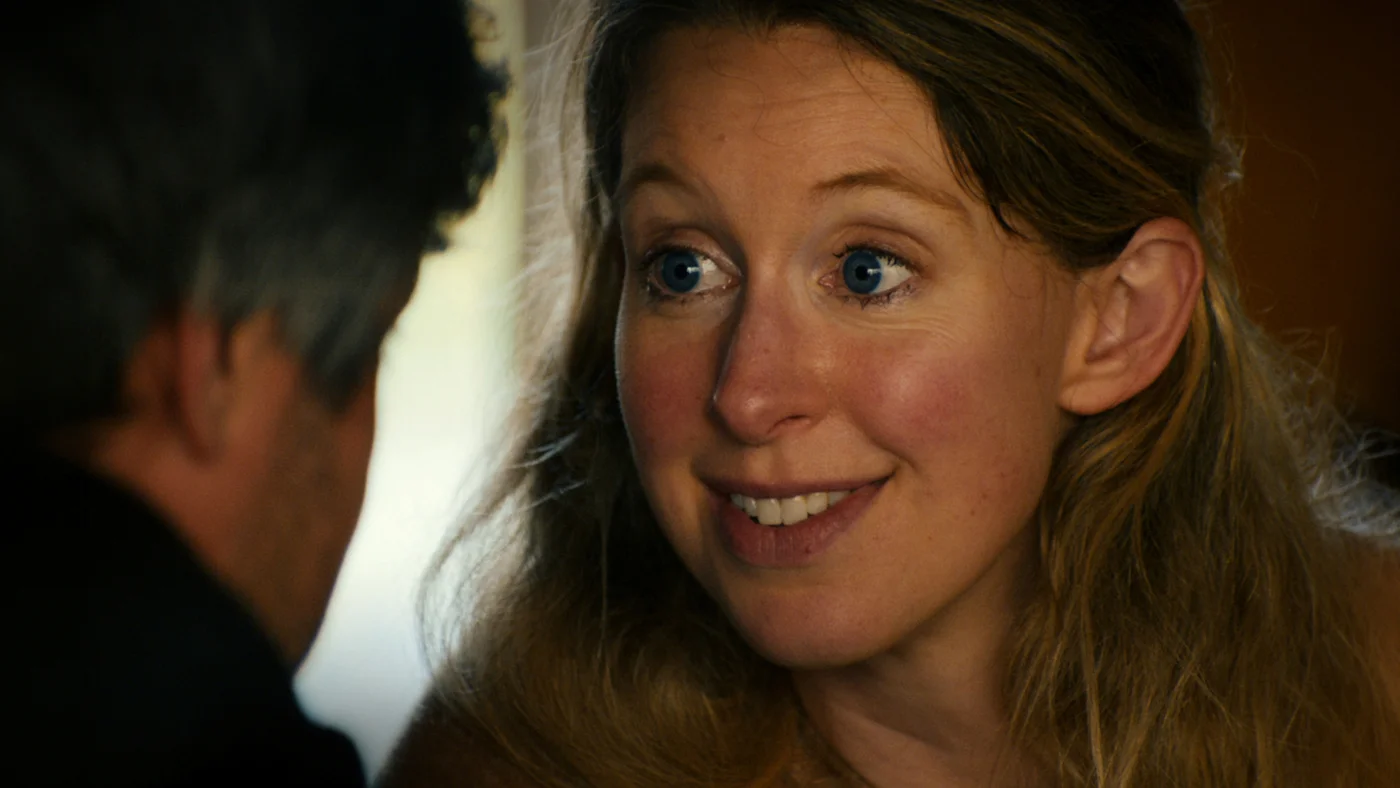


T hrillingly reckless, deliciously irresponsible and as gripping as any thriller, this situationist docu-hybrid masterpiece from co-directors Nathan Fielder and Lance Oppenheim gets up close and personal with convicted fraudster Elizabeth Holmes . It was Holmes’s US biotech firm Theranos, run jointly with her then partner Sunny Balwani, which in 2003 notoriously claimed to have invented a little box that could diagnose all manner of illnesses from a single drop of blood, its corporate prestige pumped by credulous board members including George Schultz and Henry Kissinger.
Yet Holmes has now met her match, perhaps even her predatory-platonic love match, in the film’s presenter Nathan Fielder , who is basically the Aleister Crowley of modern documentary satire, the hilarious dark master of turning truth into fiction and back again. His film delivers an extraordinary twist at around the halfway mark, and readers wanting to preserve the shock had better bail out here.
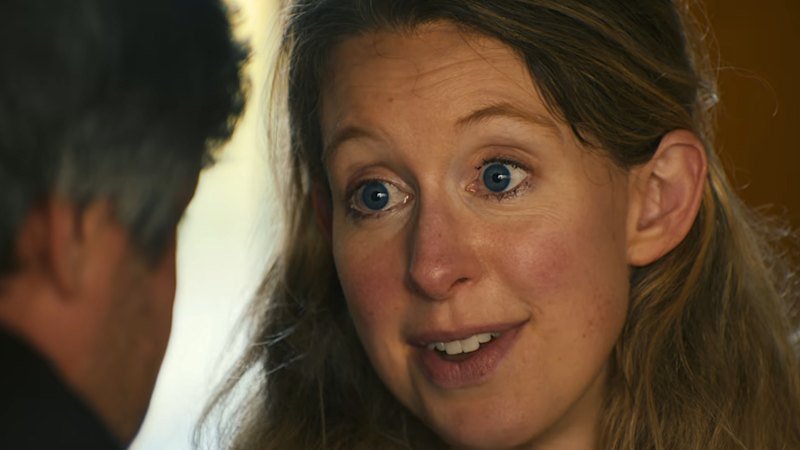
Fielder was invited by Holmes to spend intimate time with her in 2023 in the weeks before prison, in the rented San Diego beachfront home she shared with her protective new partner Billy Evans , an alpha-dog blowhard, wannabe tech entrepreneur and Charlie Kirk enthusiast, with whom she has two small children. Holmes still claims to be innocent, a position she maintains here with the wide-eyed gaze and vacuous smile of a beauty pageant victor. (When she switches from contact lenses to glasses for the final car ride to prison it is a poignant moment of vulnerability.) It is Fielder’s mission to find out if she knows she is lying and to make her admit the truth, a job that will need considerable indirection and sympathetic subtlety, rather like Gitta Sereny’s conversations with Albert Speer . At any rate, he might discover how and why she has bought into her own delusional mythology.
What we get is an Olympic stare-out contest between two gladiators of the polite straight face. Fielder’s conversations with the equally pop-eyed Evans have the same tension. Who is going to lose their cool first? Holmes repeatedly insists that the technology works, by which she appears to mean that the technology has caused her to be certain in the present that it could and will work in the future; the theory is impeccable and all that remains is the small matter of getting whatever tech stuff they need to go in the little box.
You could call this approach fake-it-till-you-make-it, but Holmes clearly believes that faking it and making it are the same thing. Fielder is fascinated and suspicious at her evasive, ersatz-childlike failure to grasp what he is asking her, yet she appears also genuinely to lack a sense of truth and falsehood. She also seems to lack a sense of humour, revealed when Fielder shows her a clip of Abbott and Costello performing the legendary “Who’s on first” bit – a gloriously funny, insightful sequence. But Holmes flinches and sobs when Fielder shows her clips of Amanda Seyfried playing her in the dramatised miniseries The Dropout .
Is Holmes exactly the villain of this film? What sort of a dysfunctional, co-dependent relationship did she once have with Balwani? Is her gift for disingenuous idealism, ersatz innocence and a demure need to be insulated from the consequences of her actions something that always attracts a Rasputin, an abusive puppetmaster? Why did Evans and Holmes agree to Fielder as their interrogator anyway? It was supposedly because they liked the way he “thought outside the box”. But perhaps they appreciated the humour behind Fielder’s superb HBO TV show The Rehearsal , which recreates with elaborate sets real situations in ordinary people’s lives, a show that famously involved him getting a pilot’s licence to fly a 737. Maybe Holmes and Evans liked the way reality and fiction were merged or superimposed, and that this relativist approach to the facts would be congenial.
But what can Fielder and Oppenheim do, what should they do, once Holmes has been packed off to prison with questions still unanswered? The answer is purely outrageous: they call up Seyfried and get her to re-enact for the camera conversations with Holmes and Evans which they haven’t been able to film. Seyfried is explosively incredulous and overexcited about the whole business, in contrast to Fielder’s cool priestly reserve. Unlike everyone else, you can see everything of Seyfried’s emotions. But is she being directed in such a way as to be an unknowable enigma as well?
This is a film which, like the production history behind Andrew Jarecki’s Capturing the Friedmans from 2003 , executes a whiplash change-of-mind about what the story actually is. The appearance of Seyfried, the one person who is allowed to be open about how uproarious this all is, creates a vivid kind of hyperreal version of Holmes, a shimmering uncanny-valley mirage, which refocuses the mind on how Holmes could be playing a role anyway – a suggestion first made by the New York Times, which she rejects . As for Evans himself, he has his own ideas about how he is going to keep Holmes present in his life and on his computer screen.
Of course, much of the narrative mystery has been created in the edit and by the musical score. Who knows how much has been withheld from us? But what an amazing high-wire act of audacity this is.