
At least one person is taking weight-loss drugs in 8.5% of households in Great Britain, according to research, meaning there are more homes with GLP-1 users than those containing vegetarians and pescatarians combined.
About 2.6 million adults were using weight-loss medication in August, a rise of about 700,000 people since February, according to a survey by Worldpanel by Numerator .
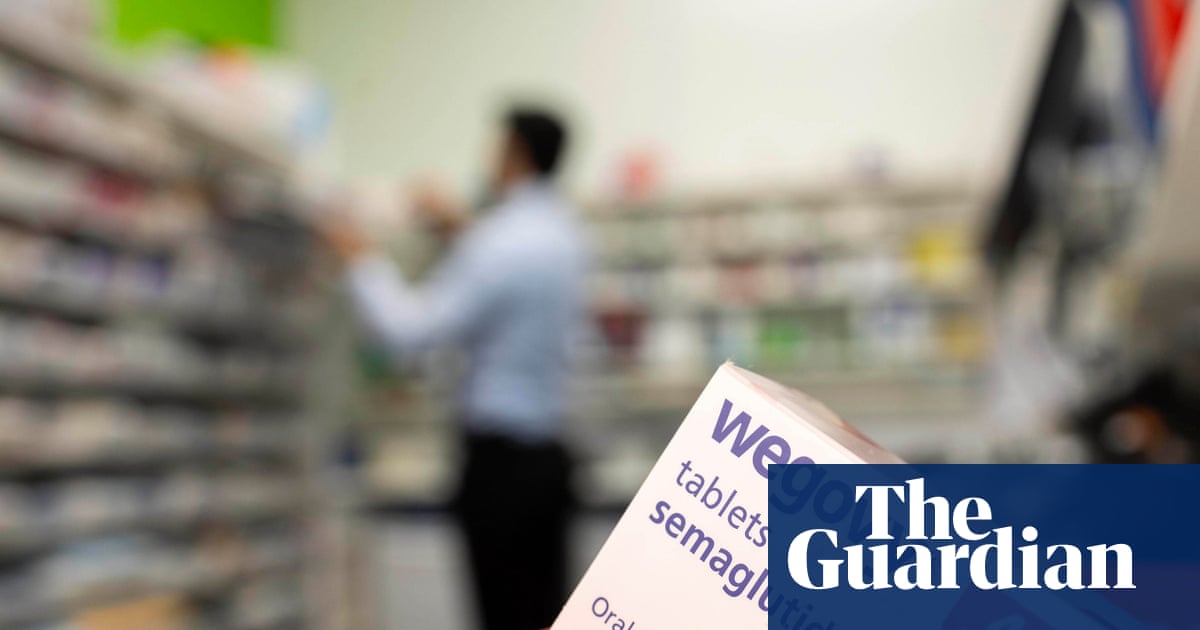
In February 6.3% of households had someone using GLP-1 drugs, rising to 8.5% in August. Weight-loss pills such as Wegovy were approved in the UK in June. Patients previously had to use the injectable version.
Pills now account for more than one in 10 (11.2%) of GLP-1 users, while men are also driving the increase. Men make up just under a third (32%) of people taking weight-loss medication, up from 23% in February. Male users have nearly doubled to 830,000, up from 440,000 nine months ago.
The increased use of medications such as Mounjaro and Wegovy is causing people to buy less food at the supermarket and change their buying habits, according to a survey of more than 9,600 households.
In the year after starting to take the drugs, households with a GLP‑1 user collectively spent £1bn less on groceries than expected compared with similar households. In June, Worldpanel calculated the total saved by households with a GLP-1 user was £780m.
This represents 415m fewer items bought, or £389 a year displaced from the shopping baskets of households with a GLP-1 user, according to the research by Worldpanel, which has been tracking the effects of the drugs on buying behaviour since March 2024.
Nishita Pattni, a senior consultant for Worldpanel by Numerator, said: “In just six months, between February and August 2026, user numbers rose almost as much as they did in the whole of the previous year.
“For many people, a daily pill is far easier than an injection, and with the surge in male users, we only expect the appeal of these drugs to grow.”
GLP-1 users are now found in a similar percentage of households in Great Britain as those that buy popular branded products such as Kellogg’s Rice Krispies (8.6%) and Corona beer (8.4%).
People taking weight-loss medication were not simply buying fewer groceries, the research found. Spend and volume were falling at a similar rate, creating winners and losers.
Products associated with indulgence, as well as impulse purchases, have taken the biggest hit.
Alcohol spend has fallen by 15% more among GLP-1 users than in households where no one uses GLP-1, while the spend on crisps has fallen by a similar percentage, as users tend to snack less.
Conversely, portion-controlled products are growing in popularity. There has been a 30% rise in the number of frozen ready-meals sold, and an increase in the volume and spend on hot chocolate and malt drinks as people who take weight-loss drugs continue to enjoy small treats.
Chantel Kennaugh, the head of public sector and nutrition for Worldpanel by Numerator, said estimates suggest that GLP-1 usage is likely to surpass 10% of households in Great Britain in 2027. “This is not a flash-in-the-pan trend, but a seismic change that requires retailers and manufacturers to rethink their strategies.”